
Industrial Epoxy Floor Systems
Manufacturing Flooring
Forklift-rated systems with coated-in striping — installed in stages, production never stops
Request a Free Estimate
Manufacturing Epoxy Flooring
A manufacturing floor is part of the equipment. It carries forklifts and point loads that would crater a commercial floor, takes chemical drips and hydraulic leaks as routine events, and doubles as the plant’s safety documentation — walkways, staging zones and keep-out areas all live on the slab. When that floor is bare or failing concrete, everything on top of it gets worse: dust in the product, patched trip hazards on the aisle, striping that peels every quarter.
An industrial coating system fixes the floor by treating it like an engineering problem. High-build, hundred-percent-solids epoxy puts millimeters of rated wear surface over diamond-ground concrete. Urethane cement covers wet-process and wash-down zones where thermal cycling destroys ordinary coatings. Novolac chemistry handles the chemical bays. Line striping and safety zones are coated into the system under the wear layer — permanent, forklift-proof and repaint-free. And because production cannot stop for flooring, installation is staged: section by section, around shifts, with each zone handed back on a cure schedule your operations team can plan against.
Top Epoxy Flooring manufactures its own materials and installs with in-house crews across Southern California, under a plain three-year commercial warranty. See the full commercial and industrial flooring range or request a free on-site estimate below.
Industrial-Grade Systems for Plant Floors

High-Build 100% Solids Epoxy
High-build, 100%-solids epoxy lays down a thick rated wear surface — measured in mils, chosen for your traffic, not a paint-thin roll coat.

Urethane Cement Wet Zones
Urethane cement owns the wet zones: thermal shock from process heat and scalding wash-downs that delaminate ordinary epoxy overnight.

Novolac Chemical Resistance
Novolac formulations resist acids, caustics, solvents and hydraulic fluid — the chemistry bays get the chemistry-proof floor.

Quartz Broadcast Traction
Quartz broadcast builds sand-finish traction where slips meet forklift traffic — specified by grit, zone by zone.

Self-Leveling Slab Repair
Self-leveling underlayments and rigid polymer repairs flatten spalled, trenched and worn slabs before the system goes down.

Moisture-Vapor Barriers
Moisture-vapor barrier basecoats stop slab vapor drive — tested during the estimate, engineered into the system where readings demand it.
Production Floors & Assembly Lines
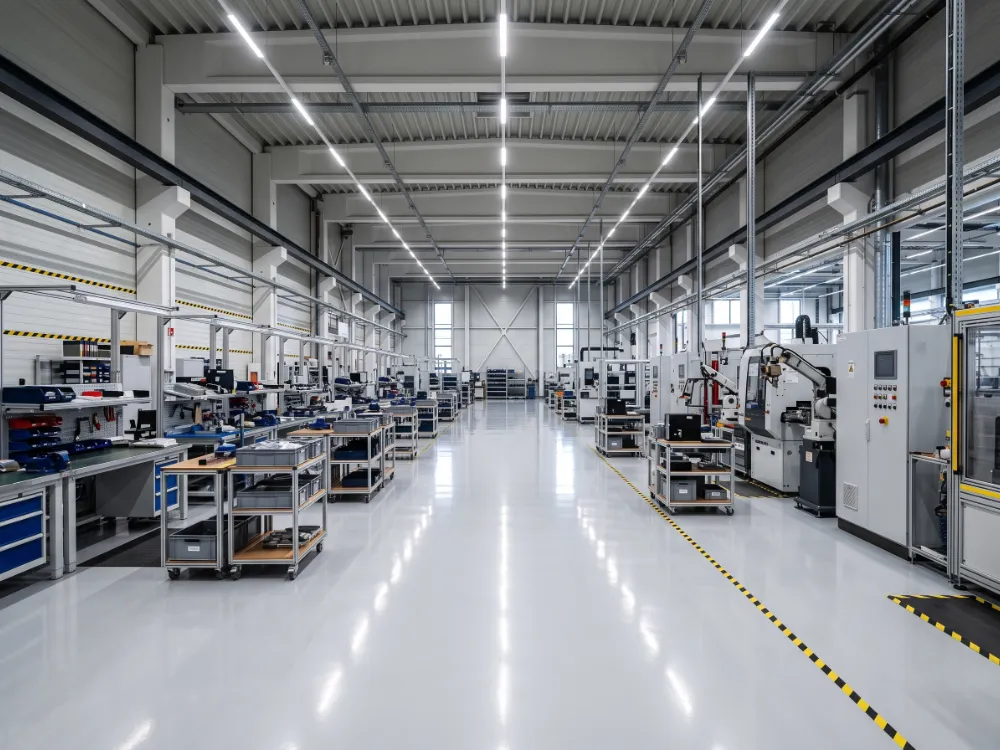
The main floor gets the workhorse system: diamond grinding to a clean profile, repairs at every spall and joint, then a high-build epoxy with a wear coat rated for your actual traffic — pallet jacks, tugger trains, swing shifts. The light-reflective surface brightens the plant measurably (and drops lighting costs with it), seals concrete dust out of your product and processes, and cleans with a ride-on scrubber pass instead of a maintenance project.
Forklift Aisles & Safety Striping
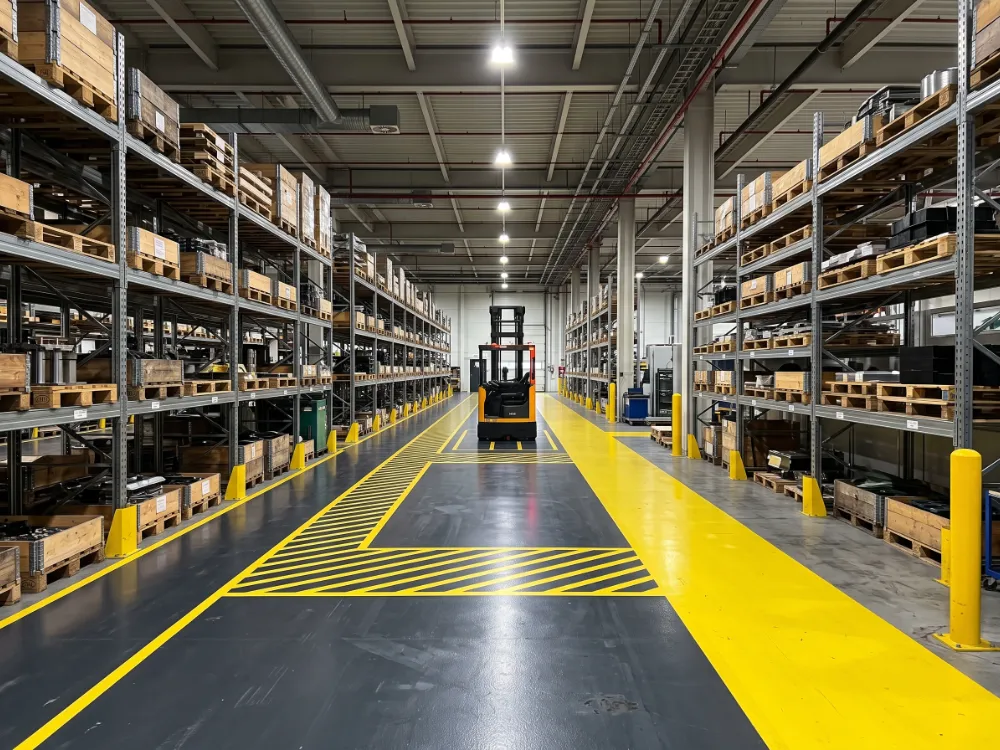
Striping that lives on top of a floor dies on a schedule. Ours is part of the floor:
- Walkways, aisles and hatched keep-out zones coated in, then sealed under the wear layer
- Forklift-proof — no peeling tape, no quarterly repainting, no faded OSHA lines
- Color-coded zones for staging, pedestrian routes and equipment parking
- High-contrast colors that stay legible under industrial lighting for years
Chemical & Process Areas
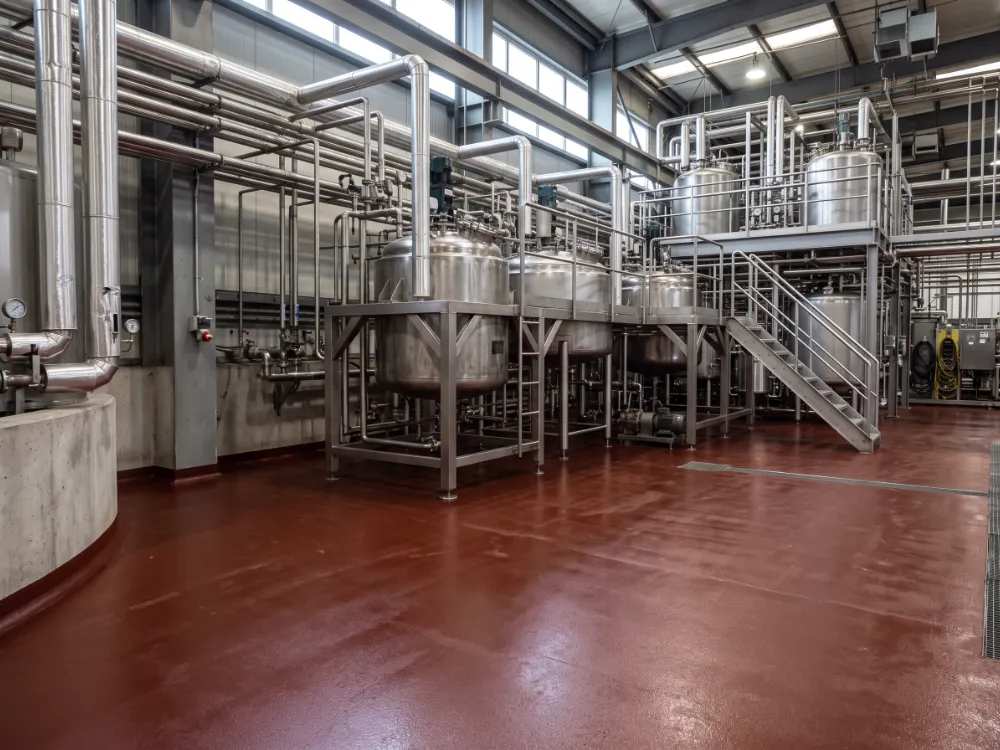
Where the process involves acids, caustics or solvents, the floor is a containment device. Novolac epoxy systems — the high-performance chemical-resistant chemistry — take direct exposure to aggressive media without etching or softening, and coved bases carry the protection up the wall line where spills run. Corrosion and acid protection, abrasion resistance, and resistance to detergents and alkalis are what this system is formulated around; it is the difference between a spill event and a floor replacement.
Advantages on the Plant Floor
Industrial flooring earns its keep in uptime. The right system takes the traffic without becoming a maintenance line item, keeps the safety layout permanently legible, and goes in without ever idling a line — which is why the schedule and the specification get equal engineering attention.
Forklift & Point-Load Rated
Wear surfaces rated for forklift axle loads and racking point loads — specified to your equipment, not a brochure average.
Striping Coated In, Not Taped On
Staged installation around shifts and production cells — each section cures on a posted schedule and hands back on time.
Staged Around Production
Striping, zones and hazard marking coated permanently into the floor — your safety layout stops being a repainting budget.
Wash-Down & Wet Process Zones
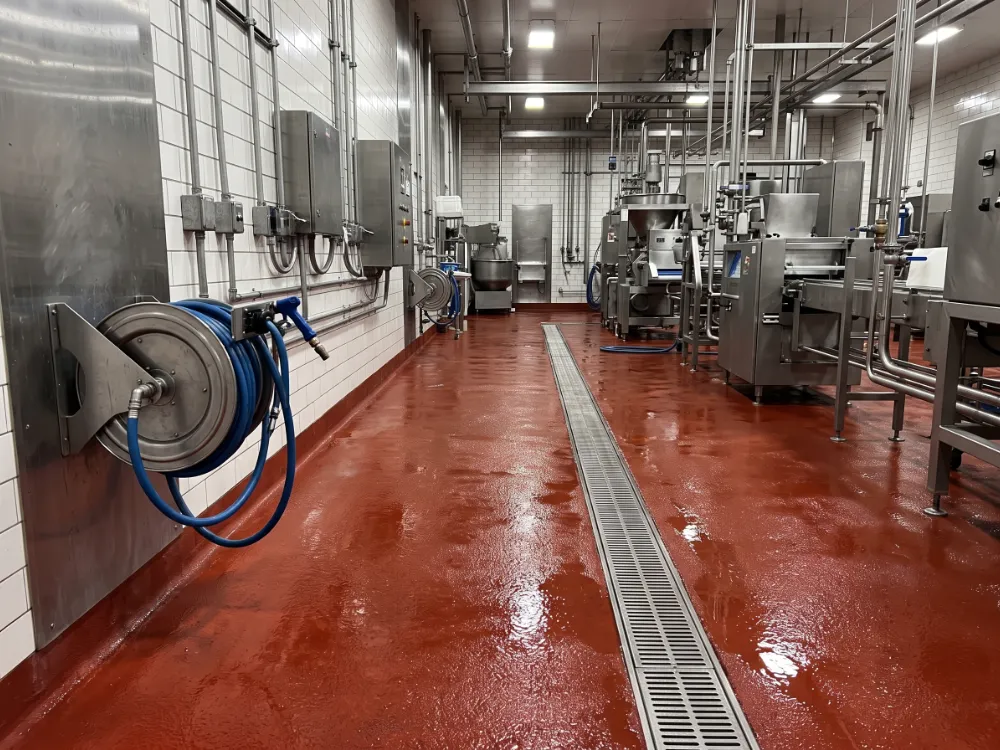
Food, beverage and any process line that ends the day under a hose needs urethane cement — the system built for water, heat and the violent temperature swings between them. It slopes to drains, coves at the walls, tolerates steam and caustic cleaners, and keeps its grip when the floor is running with rinse water. This is the same specification we install in commercial kitchens, scaled to plant square footage and trench drains.
Maintenance Bays & Tool Rooms
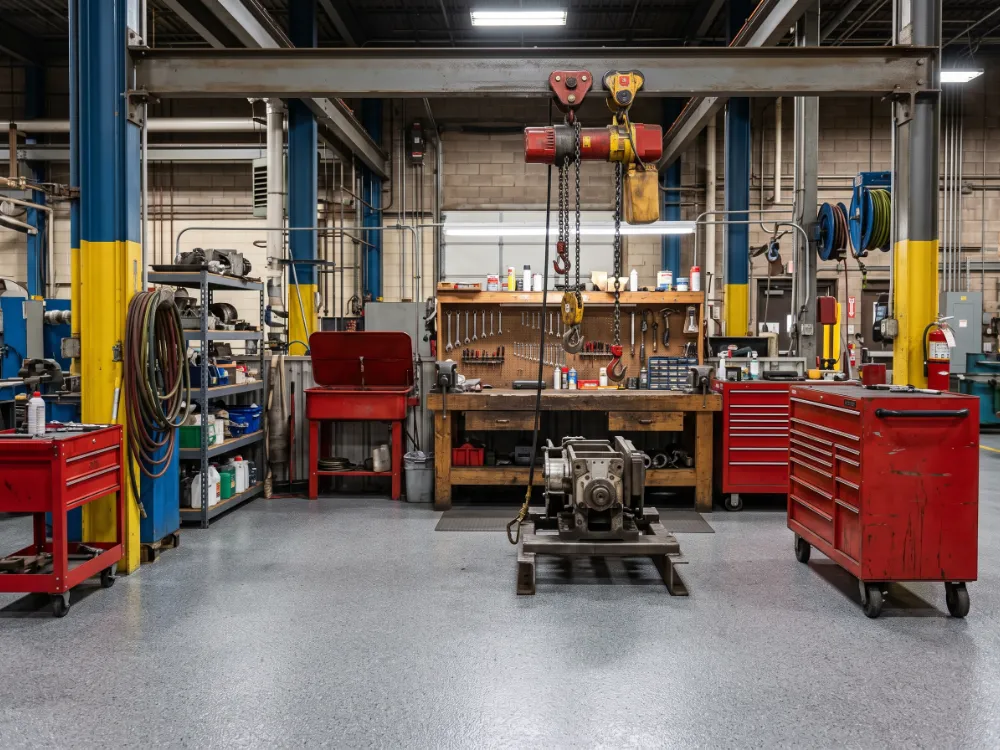
Support spaces take a different kind of abuse: dropped tools, rolling jacks, hydraulic drips and solvent wipe-downs. A flake or solid high-build system gives these rooms a bright, seamless floor that shrugs off impacts and oil, marks out equipment zones if you want them, and makes a shop feel run rather than endured. One finish standard across production and support keeps housekeeping honest everywhere.
Installed in Stages, Never a Shutdown
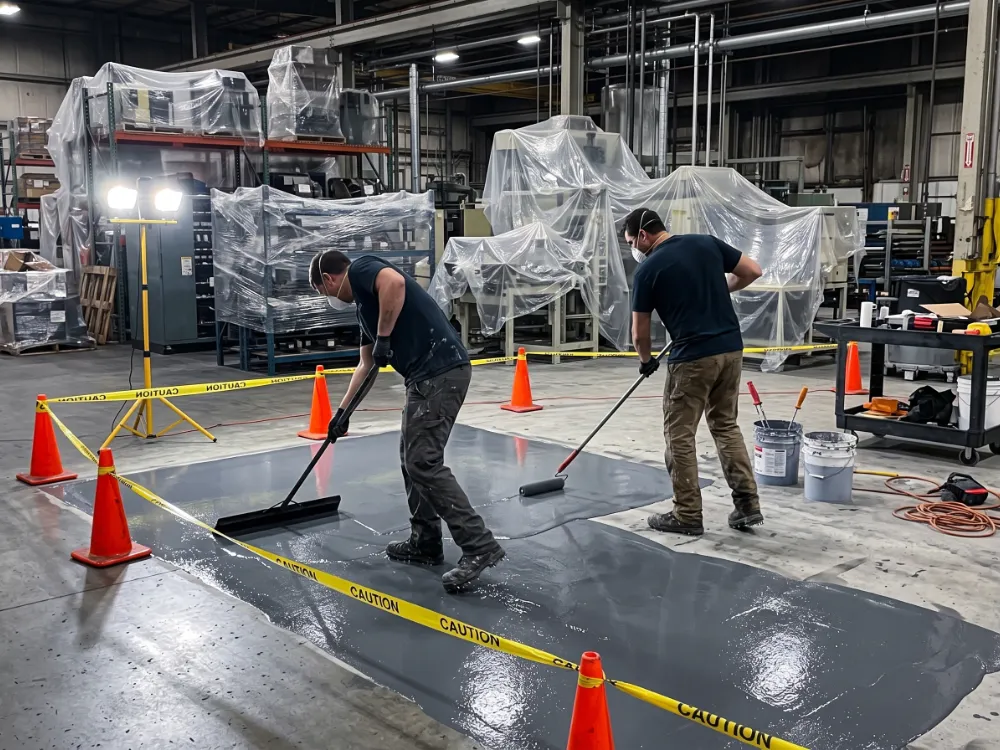
Plants do not close for flooring, so the project plan starts from your production schedule and works backward. Sections are cordoned, ground, repaired and coated while the surrounding cells run; fast-cure systems take traffic on a posted timeline; and the crew sequence follows your process flow so material handling always has a route. Nights, weekends, planned-maintenance windows — the floor goes in around the work, and the work never stops.
Frequently Asked Questions
Can the floor go in without stopping production?
Yes — staged installation is the default for plants. We section the floor with your operations team, coat zones during shifts or windows when they are clear, and hand each section back on a posted cure schedule. Material-handling routes stay open through every phase.
What system handles forklift traffic long-term?
A high-build, hundred-percent-solids epoxy with a wear coat rated for your axle loads and traffic pattern. Thickness is specified in mils to the duty, not rolled on by feel — which is the difference between a floor that lasts a decade under forklifts and a coating that fails in the aisles first.
Our slab is oil-soaked and spalled. Can it be coated?
That is the normal industrial starting point. Diamond grinding cuts through surface contamination to sound concrete, oil-saturated areas get treated and tested, spalls and joints are rebuilt with rigid polymer, and self-leveling underlayment flattens the worst sections. The prep is engineered per slab — and it is most of the job.
How does coated-in line striping hold up versus paint or tape?
It is not a comparison — it is a different category. Painted lines wear through in months and tape peels under the first forklift turn; coated-in striping sits under the clear wear layer, so forklifts polish it instead of erasing it. Your safety layout stops being a recurring work order.
What floor goes in chemical or battery areas?
Novolac epoxy — the chemical-resistant formulation — with coved bases and, where needed, containment detailing. It resists acids, caustics, solvents and hydraulic fluid without etching, which is exactly what standard epoxy cannot promise.
Do you handle wash-down and food-grade areas?
Yes — urethane cement, sloped to drains and coved at the walls, is our standard for wet process. It tolerates steam, caustic cleaning chemistry and the thermal shock of hot-to-cold cycles, and it is the same system family used across food and beverage plants.
What about slab moisture — our building is on grade?
We test before we specify. Where readings show vapor drive, a moisture-vapor barrier basecoat goes down first — the failure mode that bubbles and delaminates cheap coatings is designed out rather than discovered later.
How long does an industrial epoxy floor last?
Specified and installed correctly, ten to fifteen-plus years under forklift traffic, with high-wear aisles refreshed by recoat rather than replacement. The three-year commercial warranty covers material and workmanship together, because we manufacture one and perform the other.
What does a plant floor cost?
It depends on square footage, slab condition and the system mix — a chemical bay and an assembly aisle are different specifications. Because the materials come from our own production, pricing is distributor-direct; the free on-site walk-through and moisture testing produce a per-zone number.
Can you match our safety color standards?
Yes — OSHA-convention colors and your internal standards both. Yellow walkways, red fire lanes, hatched staging, equipment shadows: the layout is applied from your drawings and sealed under the wear coat, so the floor and the safety plan become the same document.
One Specification, Wall to Wall
Production floors, forklift aisles, chemical bays, wash-down zones and the shop spaces between them — engineered as one system set, installed in stages, warrantied for three years, across Los Angeles, Orange, Ventura and the surrounding counties.
Related: commercial and industrial flooring, restaurant flooring (the wash-down standard at kitchen scale), and office flooring for the front of the building.
FREE onsite Estimate
5 stars rated company
Get it done right the first time...


