
Coated Floor Care & Refresh Service
Epoxy Floor Maintenance
The honest care guide from the people who make the coating — plus the refresh service that resets the clock
Request a Free Estimate
Epoxy Floor Maintenance
The best-kept secret about epoxy and polyaspartic floors is how little they ask: a dust mop for grit, a pH-neutral cleaner for everything else, and a short list of products to keep away from them. There is no waxing, no resealing schedule, no specialty regimen — which is precisely why so much maintenance advice online is padding around ten sentences of truth. This page is those sentences, plus the professional service that matters when the years add up.
Top Epoxy Flooring manufactures the coatings it installs across Los Angeles, Orange, Ventura, San Bernardino, Riverside and San Diego counties — so this guidance is not generic blog wisdom; it is the maker of the material telling you exactly what it tolerates, what dulls it, and when to call. For floors under our limited lifetime residential warranty, following this page is the whole of "proper care."
And when a floor has honestly earned its wear — gloss gone flat in the traffic lanes — the answer is our topcoat refresh: a one-day professional service that restores the shine and resets the sacrificial wear layer for a fraction of what anyone should pay for a new floor.
What Goes Into Caring for a Coated Floor

pH-Neutral Cleaning Only
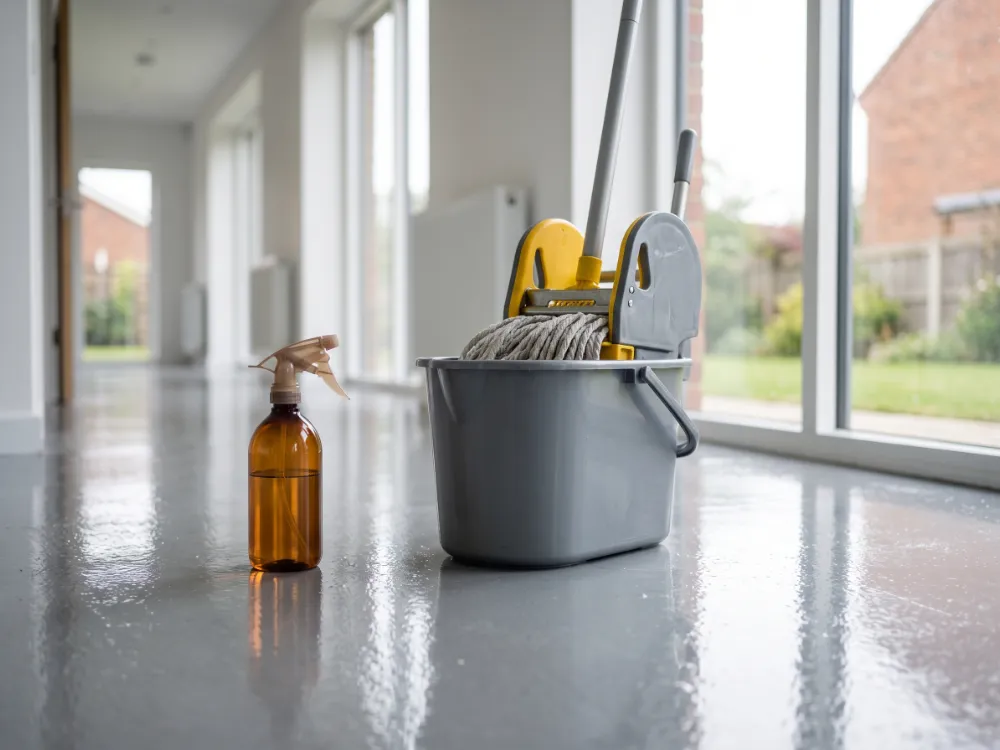
pH-neutral cleaner and water — the only chemistry a coated floor ever needs, and the only one we recommend.

Dust Mop or Soft Broom Routine
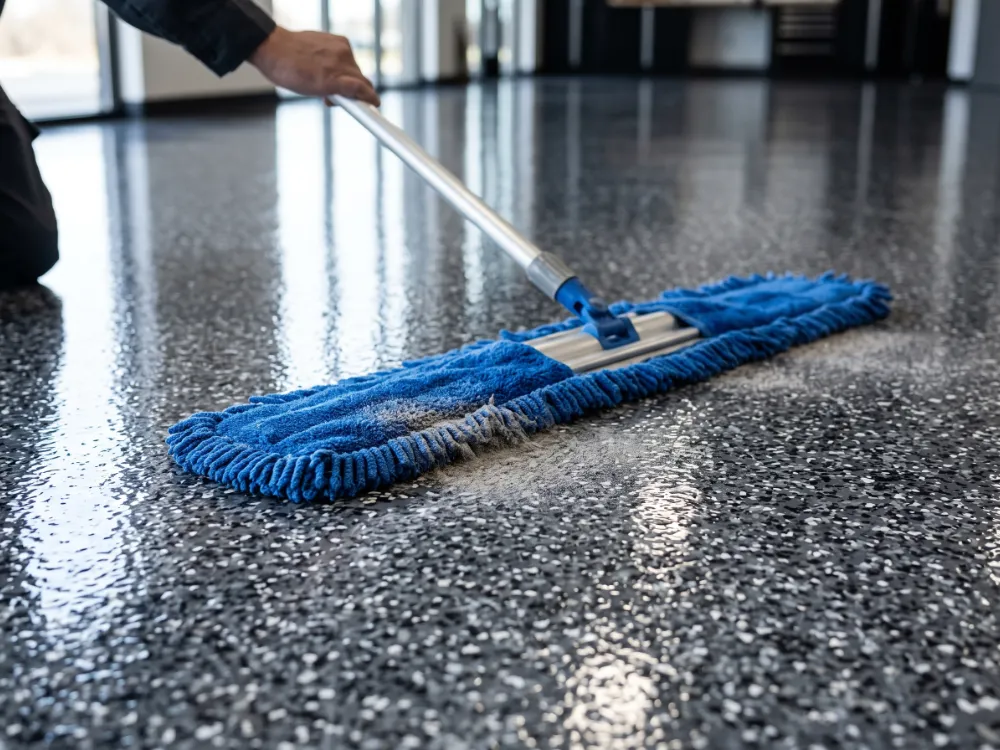
A weekly dust mop or soft broom removes the grit that does more wear than tires do — the highest-value minute of care.

Prompt Spill & Oil Wipe-Up
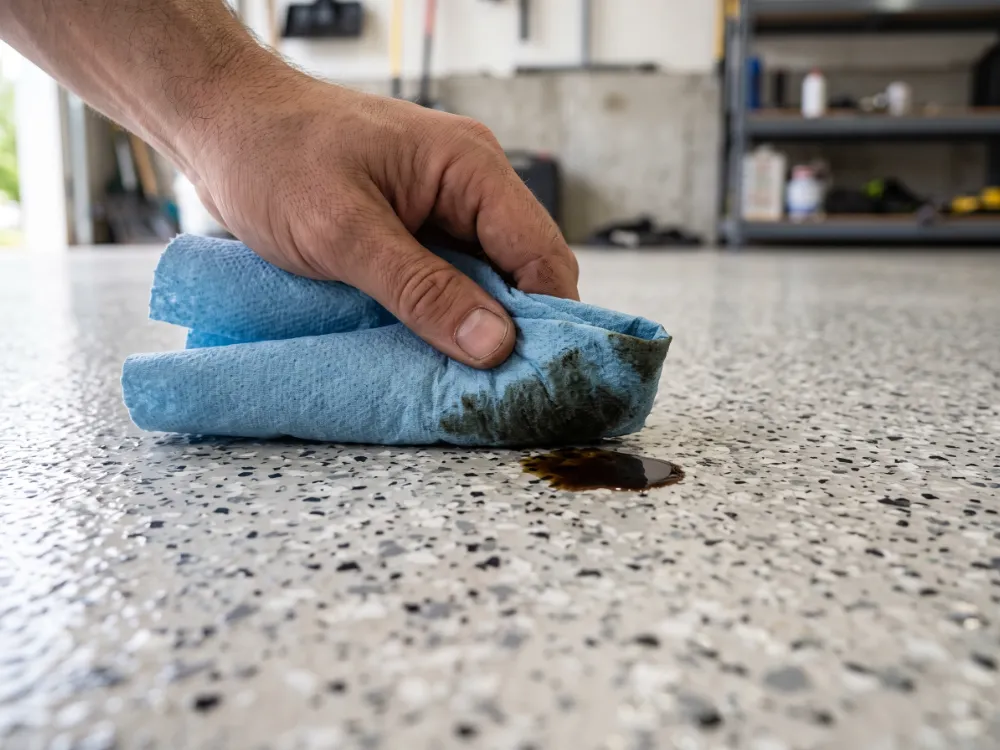
Spills, oil and brake fluid wipe promptly off the non-porous film — nothing soaks in, so nothing stains.

Scratch Sand-and-Touch-Up
Fine scratches sand and touch up invisibly; deeper damage gets a quick professional repair before it grows.

Periodic Professional Recoat
A periodic professional recoat renews the sacrificial topcoat — gloss and protection reset in a single day.

Warranty-Safe Care Practices
Every practice here is warranty-safe by definition: the coating's manufacturer wrote this list.
The Whole Routine, Honestly
Weekly: run a dust mop or soft broom over the floor — grit underfoot is sandpaper, and removing it is most of the job. Every week or two: damp-mop with pH-neutral cleaner in warm water; a splash of clear dish soap handles workshop grime. Spills: wipe when you see them, on no particular deadline, because nothing penetrates the film.
That is the entire program. A garage takes minutes a week; a kitchen takes the mopping it already gets. Floors that look showroom-new at year ten were not babied — they were dust-mopped.
The Do-Not-Use List
Short, and worth taping inside a cabinet:
- Vinegar and citrus cleaners — acids that etch gloss away wash after wash.
- Bleach — discolors and hazes the topcoat; it disinfects nothing a neutral cleaner can't.
- Abrasive pads, powders and steel wool — permanent scratches in exchange for nothing.
- Soap-heavy products — leave a slick, dulling film that builds coat by coat.
- Pressure washers over ~1,200 PSI — capable of finding and lifting a coating edge.
Everything on that list has a gentler substitute that cleans better. When a mystery mark resists the neutral cleaner, photograph it and ask us before experimenting.
Protecting the Floor From Its Owners
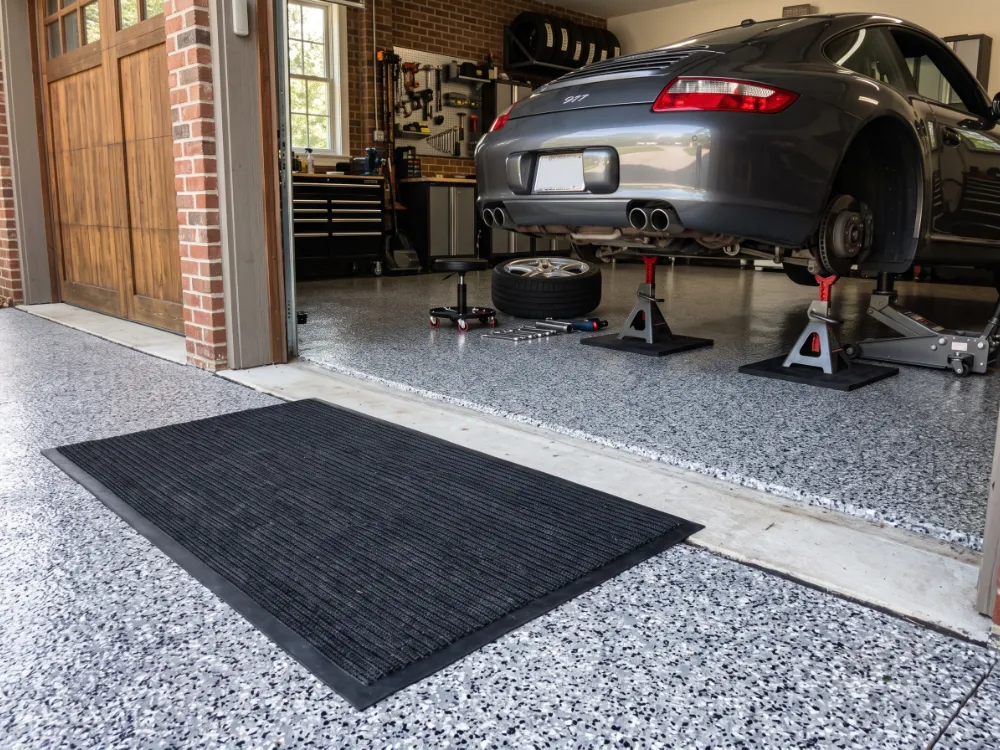
A few cheap habits multiply a floor's life: a walk-off mat at the garage entry catches the grit that would otherwise grind in circles under tires; rubber pads under jack stands and jack points spread loads that could imprint any surface; plywood under a dropped-engine project spreads the sins of the weekend mechanic; and furniture feet get felt indoors, as on any fine floor.
None of this is required — the system is built for real use — but the floors that come back to us looking untouched after a decade all share these habits.
Advantages of Manufacturer-Backed Care
Care advice with authority behind it: the company that formulated your coating telling you exactly what it tolerates, a refresh service that renews gloss for a fraction of replacement, and a warranty that this page's routine is designed to protect.
Advice From the Manufacturer
No guesswork: the maker of the coating defines its care — ten honest minutes a week, no specialty products.
Gloss Is Renewable
The topcoat is renewable by design: professional refresh resets gloss and wear protection in one day.
Minutes a Week, Decades of Floor
Following this guide is the warranty's definition of proper care — maintenance and coverage are the same plan.
The Topcoat Refresh Service
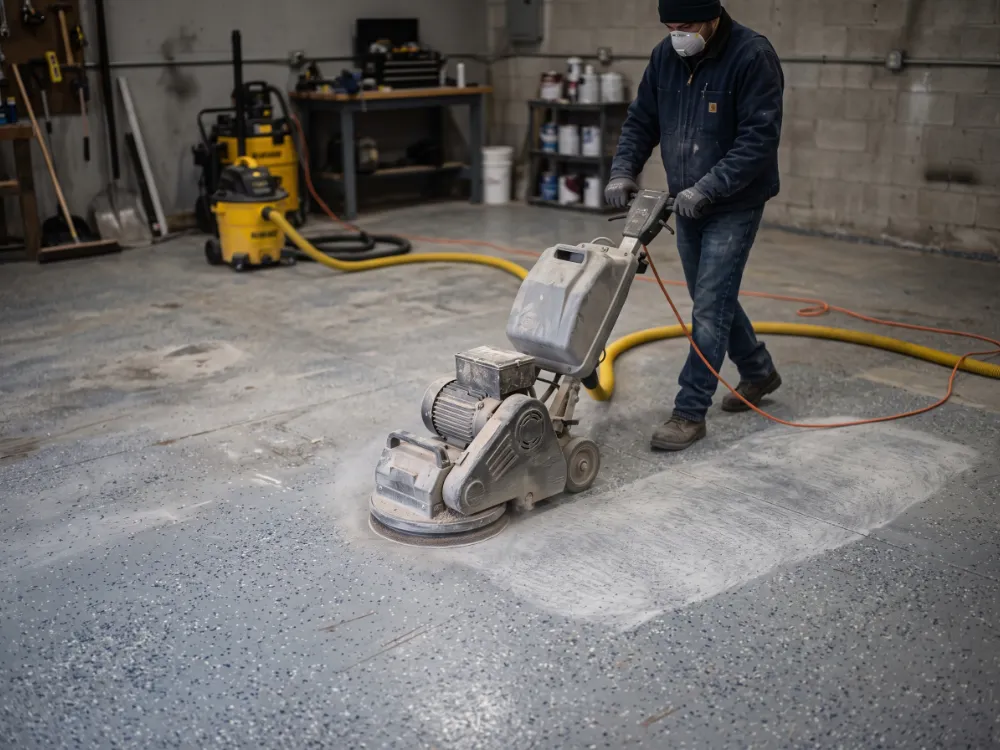
Coated floors are built with a sacrificial logic: the clear wear layer absorbs the years so the system beneath never has to. When traffic lanes finally dull, the refresh puts that armor back — deep clean, light abrasion to key the surface, and a fresh UV-stable polyaspartic topcoat rolled wall to wall. One day of work; gloss, slip texture and protection reset to day one.
It is the most cost-effective service we offer and the least requested, because owners assume dull means done. Ask for the refresh assessment first — replacement should be the last resort, not the first quote.
Commercial Maintenance Programs
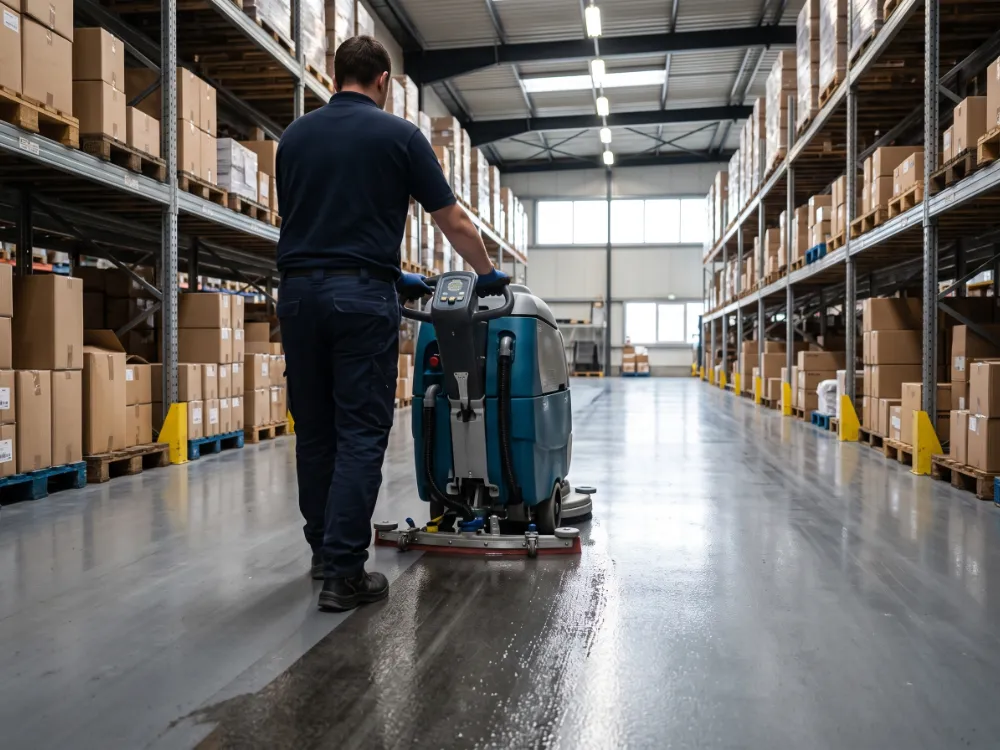
Commercial floors earn schedules, not sentiments: auto-scrubbers with neutral chemistry and soft pads for the daily clean, traffic-lane inspections on a calendar, and recoats planned around slow seasons instead of emergencies. We build the program from your traffic — retail, kitchen, warehouse — and keep the floor permanently ahead of its wear curve.
The economics are unglamorous and decisive: scheduled refreshes cost a fraction of the shutdown-and-reinstall that deferred maintenance eventually demands.
When Maintenance Ends and Repair Begins
Care has borders, and crossing them changes the service: coating that chips or peels anywhere, blisters or bubbles rising, cracks telegraphing from the slab, or moisture marks spreading under the film are not cleaning problems — they are diagnosis problems, covered on our repair page and often by your warranty.
The practical rule: anything a mop can address is yours; anything that changes the film's bond or shape is ours. A photo sent early is the cheapest repair we know.
Frequently Asked Questions
What is the best cleaner for an epoxy floor?
A pH-neutral floor cleaner diluted in warm water — that is the whole answer. A few drops of clear dish soap handles grime, and diluted ammonia works for stubborn films. The coating needs nothing stronger, and the gentle rule is not about weakness: harsh chemistry dulls the topcoat's gloss over time without cleaning any better.
Which products damage epoxy and coated floors?
The acid family — vinegar and citrus-based cleaners — etch gloss away with repeated use; bleach discolors and hazes; abrasive pads, scouring powder and steel wool scratch permanently; and soap-heavy products leave a slippery film that builds up. Every one of those has a gentler substitute that works better anyway.
How often should I clean, and how?
Grit is the real enemy — it acts like sandpaper under feet and tires — so a dust mop or soft broom weekly (daily in busy shops) does more than anything else. Damp-mop with pH-neutral cleaner every week or two at home, more often commercially. Total honest time for a garage: minutes.
Can I pressure-wash my coated floor?
Outdoors, gently: keep pressure under roughly 1,200 PSI, use a wide fan tip and keep the wand moving. Aggressive close-range pressure can find a coating edge and lift it. Indoors, a mop and bucket beat the pressure washer at everything except making puddles.
How do I remove tire marks and oil stains?
Oil, brake fluid and coolant sit on the non-porous surface — wipe promptly with a shop towel and follow with pH-neutral cleaner; nothing soaks in. Tire rubber transfer lifts with a soft nylon brush and the same cleaner. If a mark won't budge, resist the urge to reach for solvents — call us before improvising chemistry.
My floor has lost its gloss — is it worn out?
Almost certainly not; it is telling you the sacrificial topcoat has done its job. A professional refresh — deep clean, light abrasion, fresh UV-stable polyaspartic topcoat — restores full gloss and resets the wear layer in about a day, at a small fraction of a new floor's cost. Dull is a maintenance milestone, not a funeral.
How often does a floor need a professional recoat?
Traffic decides: many residential garages run a decade or more before wanting one, busy commercial floors sooner on a schedule we set from inspection. The signal is uniform gloss loss in traffic lanes. Recoating on time is the entire secret of coated floors that never seem to age.
Can I fix a scratch myself?
Fine surface scratches often polish out with pH-neutral cleaner and a soft cloth. Anything deeper is a light-sand-and-touch-up repair we perform quickly — and doing it professionally keeps the sheen uniform and the warranty intact. Photograph it and send it over; diagnosis by phone is free.
Do outdoor coated surfaces need different care?
Slightly: rinse more often (dust, leaves, sprinkler minerals), respect the pressure-washer limit, and let us renew the urethane wear coat on its schedule — sun-exposed surfaces consume topcoats faster than garages do. The chemistry rules are identical: pH-neutral, nothing abrasive.
Does maintenance affect my warranty?
Reasonable care keeps the warranty perfectly healthy — and this guide IS the manufacturer's definition of reasonable care, since we made the coating on your floor. What voids trouble is the harsh-chemistry list above and ignoring damage until it spreads. When in doubt, one photo to us beats one experiment on the floor.
Keep the Whole System Healthy
Maintenance is one chapter of a floor's life — the neighbors cover the rest.
Epoxy floor repair · Garage floor coating · Driveway coating · Epoxy flake flooring · Urethane cement flooring · Warehouse flooring · Restaurant flooring · Commercial & industrial flooring
FREE onsite Estimate
5 stars rated company
Get it done right the first time...


