
Grow Facility Epoxy Floor Systems
Greenhouse Flooring
Light-reflective, drain-sloped, pathogen-proof — installed between planting cycles
Request a Free Estimate
Greenhouse Epoxy Flooring
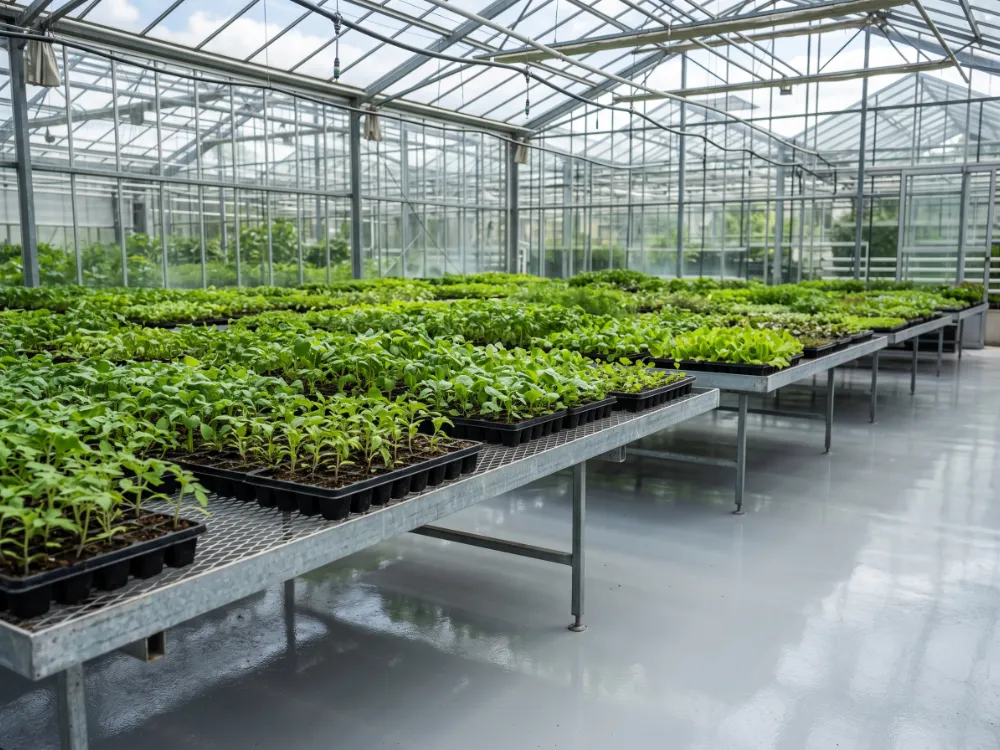
A greenhouse floor is part of the growing system whether the grower planned it or not. Bare concrete and gravel harbor exactly what an operation spends money fighting — fungal pathogens, algae, weed seed, pest habitat — while soaking up irrigation runoff and nutrient solution into a permanently damp, permanently contaminated slab. A sealed epoxy floor removes the reservoir: seamless, non-porous, washable bench-to-drain, so the between-cycle sanitation reset actually resets.
Then there is the yield argument nobody expects from a floor. A light-colored, glossy epoxy surface reflects growing light back up into the canopy — onto the undersides of leaves that overhead light never reaches — which growers running the numbers on supplemental lighting notice immediately. The systems are built for the environment’s realities: moisture-barrier basecoats for slabs that never fully dry, chemistry that resists fertilizers, nutrient salts and sanitizing agents, slope-and-drain detailing that sends runoff where the design intends, and quartz texture in the wet aisles where crews work fast on wet concrete today.
Top Epoxy Flooring manufactures its own VOC-free materials — relevant around living crops — and installs with in-house crews across Southern California under a three-year commercial warranty. See the wider commercial and industrial flooring range or request a free on-site estimate below.
Systems Built for Growing Environments

Moisture-Barrier Basecoats
Moisture-barrier basecoats handle slabs that live damp — vapor drive from constant irrigation is designed out, not discovered later.

Slope-to-Drain Builds
Slope-to-drain builds move irrigation runoff and wash-down water to the trench instead of into puddles and algae blooms.

Gloss That Feeds the Canopy
Light-colored gloss finishes bounce grow light back into the canopy — free photons on the leaf undersides overhead lighting misses.

Nutrient & Fertilizer Chemistry
Chemistry rated for fertilizers, nutrient salts and sanitizing agents — the solutions that stain and etch bare concrete.

Seamless Pathogen Control
Seamless, non-porous surfaces give pathogens, algae and weed seed nowhere to establish between crops.

Quartz Wet-Aisle Traction
Quartz broadcast texture keeps wet aisles and wash areas safe underfoot for crews working on running water.
Grow Floors & Bench Aisles
Under the benches is where greenhouse floors succeed or fail. A sealed system keeps spilled media, drained nutrient solution and daily irrigation from ever reaching the slab, stays bright under the canopy to bounce light where it works, and lets end-of-cycle sanitation happen with a hose and a squeegee instead of a shovel. Cart and boom traffic runs the aisles all season; the wear build is specified for exactly that.
Irrigation & Drainage Zones
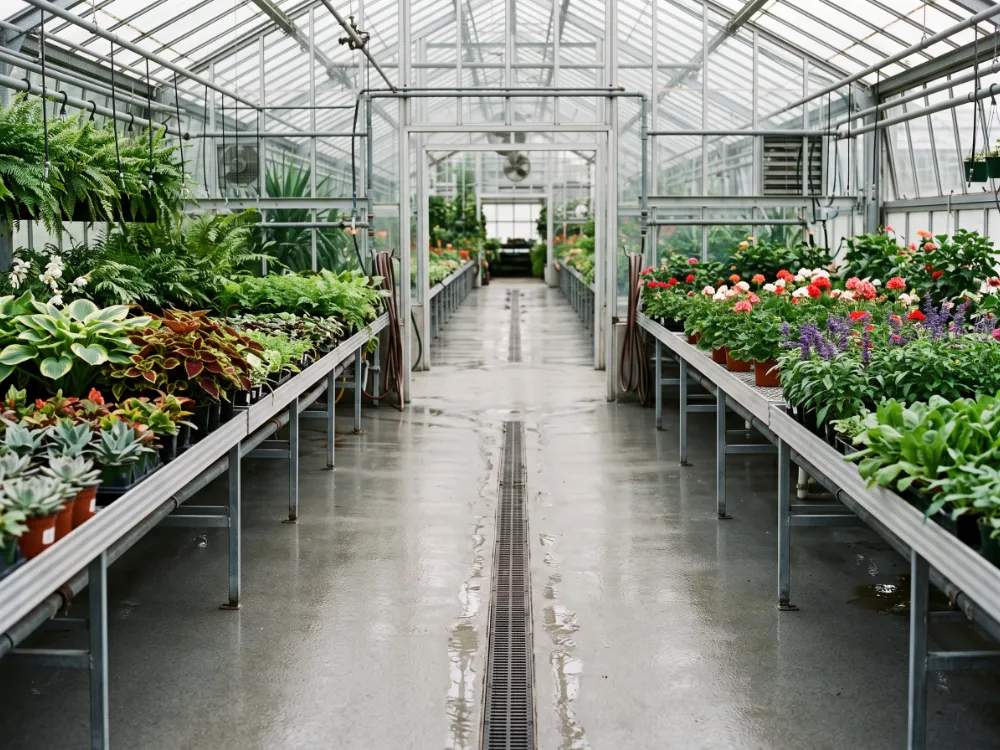
Water management is floor management in a greenhouse:
- Slopes corrected and built into the system so runoff finds the drains, not the corners
- Trench and point drains detailed seamlessly into the floor
- No ponding — the standing water that breeds algae and fungus gnats never forms
- Cove bases at knee walls so wash-downs push everything to the drain line
Hydroponic & Vertical Farms
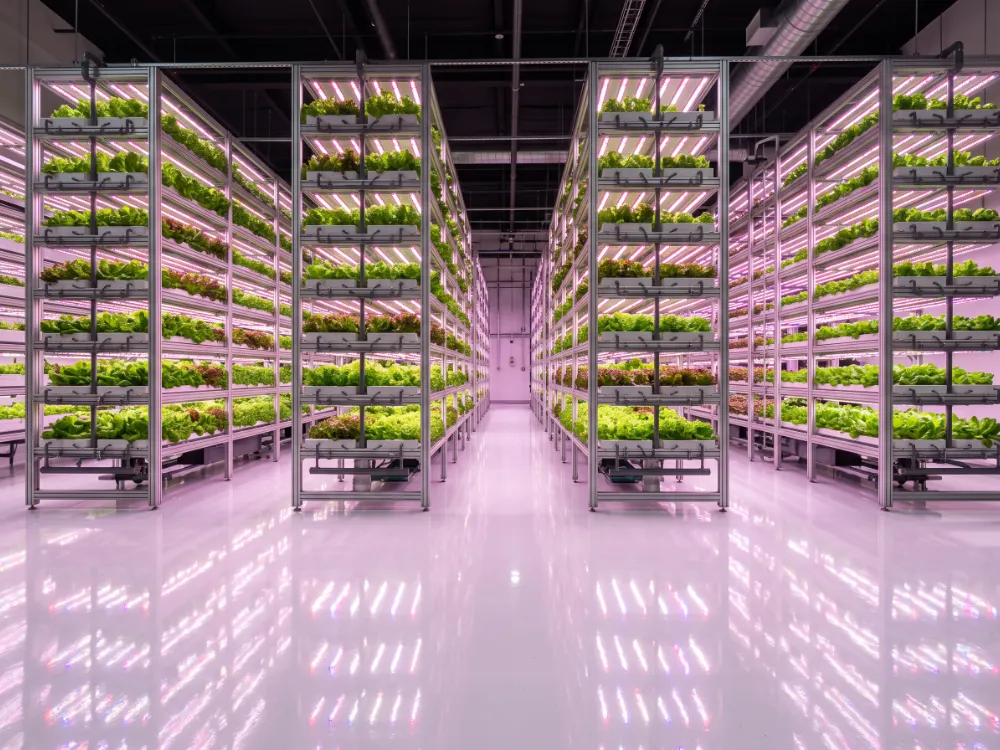
Indoor farms concentrate the greenhouse’s demands into controlled square footage: constant humidity, nutrient reservoirs, sanitation protocols closer to food processing than agriculture. A white seamless system under the racks maximizes reflected light from every LED watt, takes nutrient spills and peroxide sanitizers without staining, and supports the audit-friendly cleanability that indoor-farm buyers and inspectors expect to see.
Advantages for Growers
A grow floor pays back in the operation’s own units: cleaner cycles, brighter canopies, faster resets, fewer places for problems to start. The install is timed to the crop calendar, because the crop calendar does not move.
Light Back Under the Leaves
Installed between planting cycles — bays rotate with your crop schedule, never against it.
Wash-Down Between Cycles
Sanitation resets become hose-and-squeegee work — the between-crop clean actually gets to zero.
Humidity-Proof by Design
Light-reflective surfaces return light to the canopy — measured in the same lumens you pay for.
Nurseries & Garden Centers
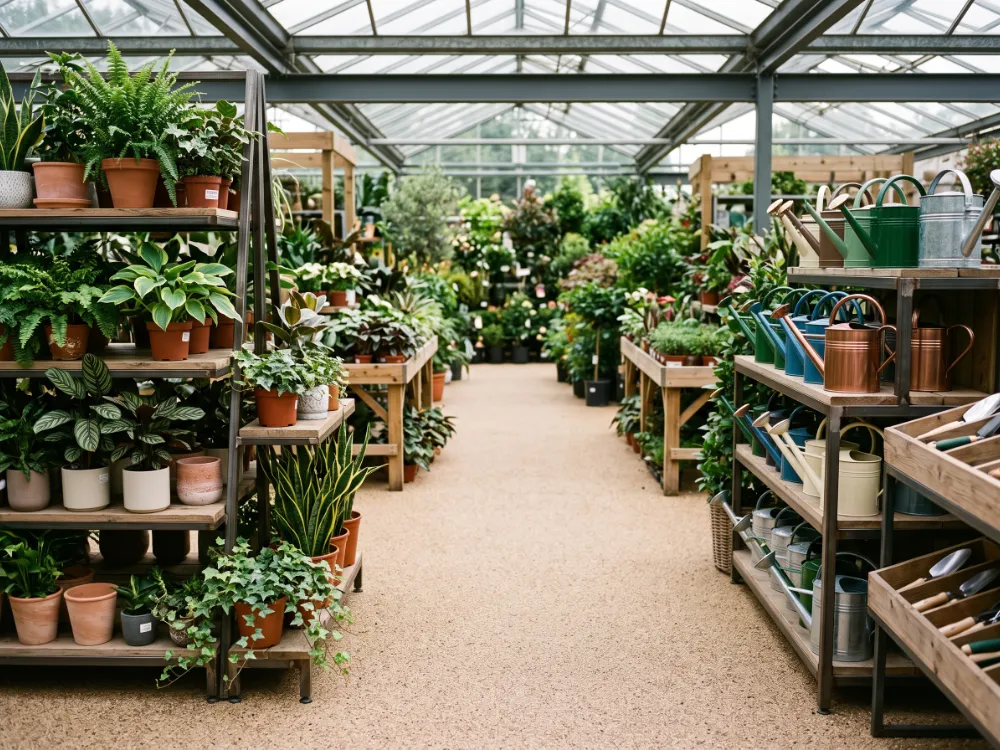
Retail growing spaces split the difference between greenhouse and store. Quartz-textured systems keep customer aisles safe under daily watering, drainage detailing keeps display areas puddle-free, and the sealed surface takes soil spills, plant food and seasonal restocking traffic without wearing into the shabby concrete look garden centers fight. The same system runs into the checkout and indoor retail areas without a seam.
Packing, Processing & Cold Storage
Where the harvest leaves the growing space, food-handling rules arrive. Packing floors get seamless, washable systems with the same specification family we install in food facilities; cold rooms get low-temperature-cure chemistry with slip texture for condensation; and loading areas get the industrial build that pallet jacks demand. One installer covers the whole path from bench to truck.
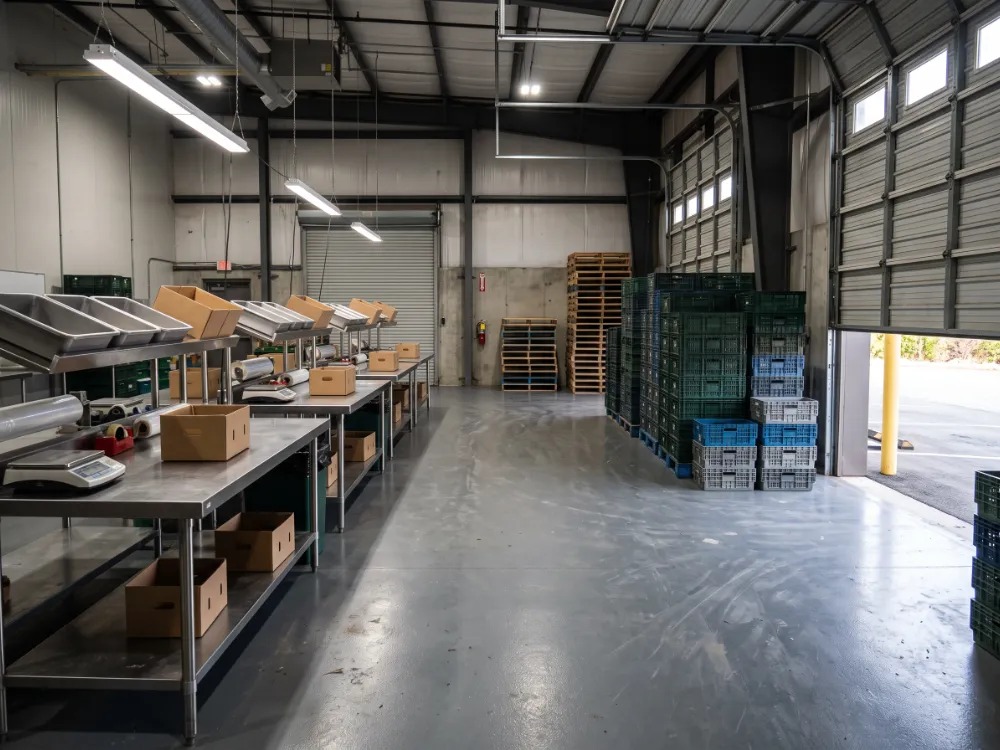
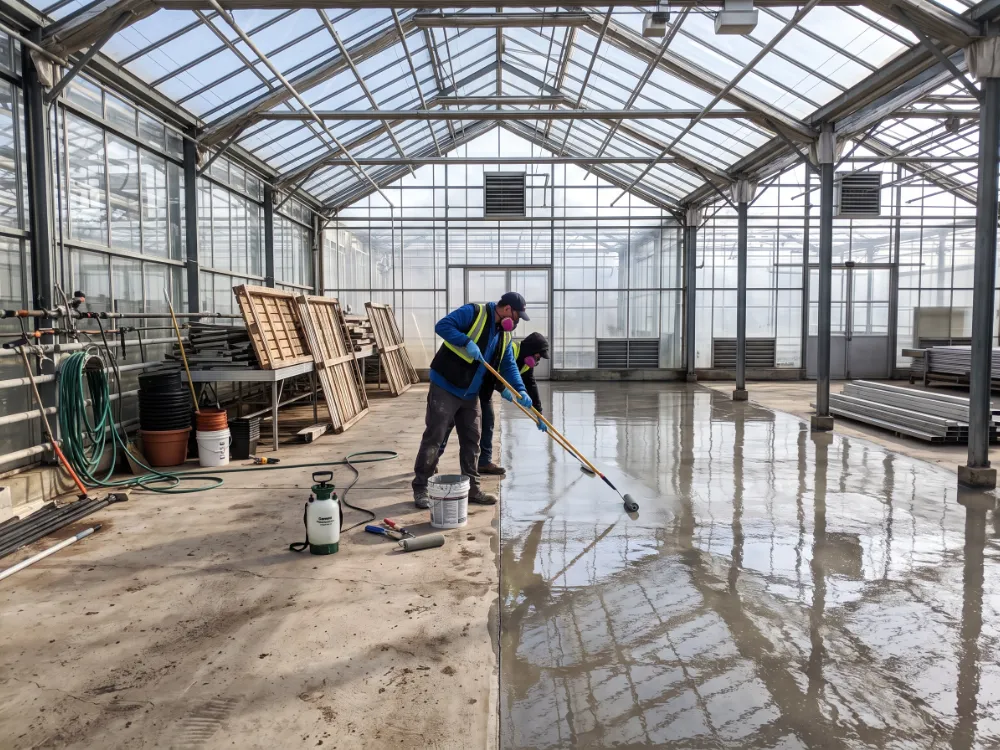
Installed on the Crop Calendar
Greenhouses schedule everything around the crop, and the floor is no exception. Bays are coated between cycles — cleared, ground, repaired, sloped and sealed in the turnaround window — while production continues in the rest of the range. Moisture-tolerant, fast-cure systems handle the reality that greenhouse slabs are never laboratory-dry, and VOC-free chemistry means adjacent bays full of living crop are never at risk from the work next door.
Frequently Asked Questions
Can the floor be installed while crops are growing nearby?
Yes — the work phases bay by bay between planting cycles while the rest of the range keeps producing. The chemistry is VOC-free and low-odor, so adjacent bays with living crop are unaffected, and each bay rejoins the rotation on schedule.
Our slab is always damp — will a coating even stick?
This is the core greenhouse flooring problem, and it is solved at the basecoat: moisture-tolerant primers and vapor-barrier systems are specified from actual slab readings taken during the walk-through. Constant-irrigation slabs are our assumed starting condition, not an exception.
Does a glossy floor really improve growing light?
Measurably — a light, glossy surface reflects a meaningful share of incident light back up into the canopy, reaching leaf undersides that overhead light never touches. Growers paying for supplemental lighting are effectively recovering purchased photons.
How does the floor help with disease and pest pressure?
By removing habitat. Sealed floors hold no damp pockets for fungal pathogens, no cracks for algae and weed seed, no gravel for fungus gnats to breed in. Combined with slope-to-drain detailing that eliminates standing water, the floor stops being part of the pest cycle.
Will fertilizers and nutrient solutions stain it?
No — the chemistry is rated for nutrient salts, fertilizers and the acids and sanitizers a grow operation uses. Solutions that permanently stain bare concrete rinse off the sealed surface at wash-down.
Can you fix our drainage while coating the floor?
Yes — slope correction is built into the system with underlayments before the finish goes down. Runoff is directed to existing or new trench drains, ponding areas are eliminated, and the drainage plan is agreed on the walk-through.
What about the retail side of our nursery?
Customer areas get quartz-textured, slip-rated surfaces that stay safe under daily watering, in warmer retail tones — continuous with the growing areas but dressed for shoppers. It is the same system family our garden-center and retail clients use.
Is the floor safe around food crops?
Yes — the materials are VOC-free, and the cured surface is inert and non-porous, the same specification family used in food-processing facilities. Packing and processing areas step up to the full food-handling detail with coves and washability.
How long does a greenhouse floor last?
Specified for the environment — moisture, chemistry, cart traffic — a decade and more of cycles, with high-traffic aisles refreshed by recoat during a turnaround window. Material and workmanship carry our three-year commercial warranty together.
What does grow facility flooring cost?
Square footage, slab moisture readings and drainage scope set the number — a bench bay and a packing room are different specifications. Materials are our own manufacture, so pricing is distributor-direct, and the free walk-through prices each zone with the cycle-schedule plan attached.
From the Bench to the Loading Door
Grow floors, drainage, vertical farms, retail and packing — one specification set, installed on the crop calendar, under one three-year commercial warranty, across Los Angeles, Orange, Ventura and the surrounding counties.
Related: cannabis farm flooring (regulated facilities), warehouse flooring, and the commercial and industrial overview.
FREE onsite Estimate
5 stars rated company
Get it done right the first time...


