
Full-Broadcast Garage Floor Specialists
Epoxy Flake Flooring
The classic flake garage floor, done to rejection — double topcoats, slip-resistant, installed in a day
Request a Free Estimate
Epoxy Flake Flooring
Flake flooring is the system that made coated garage floors famous: vinyl color flakes broadcast into a wet basecoat, locked under clear wear coats, tough enough for hot tires and good-looking enough for a showroom. But the same look hides an enormous range of quality — from a handful of flakes scattered over paint to the system described on this page, where the broadcast continues until the floor physically rejects another flake and the finish is sealed under two separate polyaspartic topcoats.
Top Epoxy Flooring manufactures its own resins and flake blends and installs them across Los Angeles, Orange, Ventura, San Bernardino, Riverside and San Diego counties — residential garages above all, but also commercial spaces, showrooms and the outdoor patios and pool decks where our five-layer exterior version of the system lives. Materials are VOC-free, pricing is distributor-level because there is no middleman, and residential floors carry a limited lifetime warranty.
Much of what ranks online for flake flooring is written by DIY-kit sellers with something to sell you in a box. This page explains how the professional system is actually built, layer by layer, so you can compare any quote — including a kit — against the real thing.
What Goes Into Every Flake Floor

Diamond Grinding Preparation
Diamond grinding opens the slab into a bonding profile — the anchor for everything above. No acid etching, no shortcuts over sealed concrete.

Moisture-Barrier Epoxy Basecoat
The basecoat is matched to your slab: a moisture-vapor-barrier epoxy where testing finds dampness, so ground moisture can never push the system off.

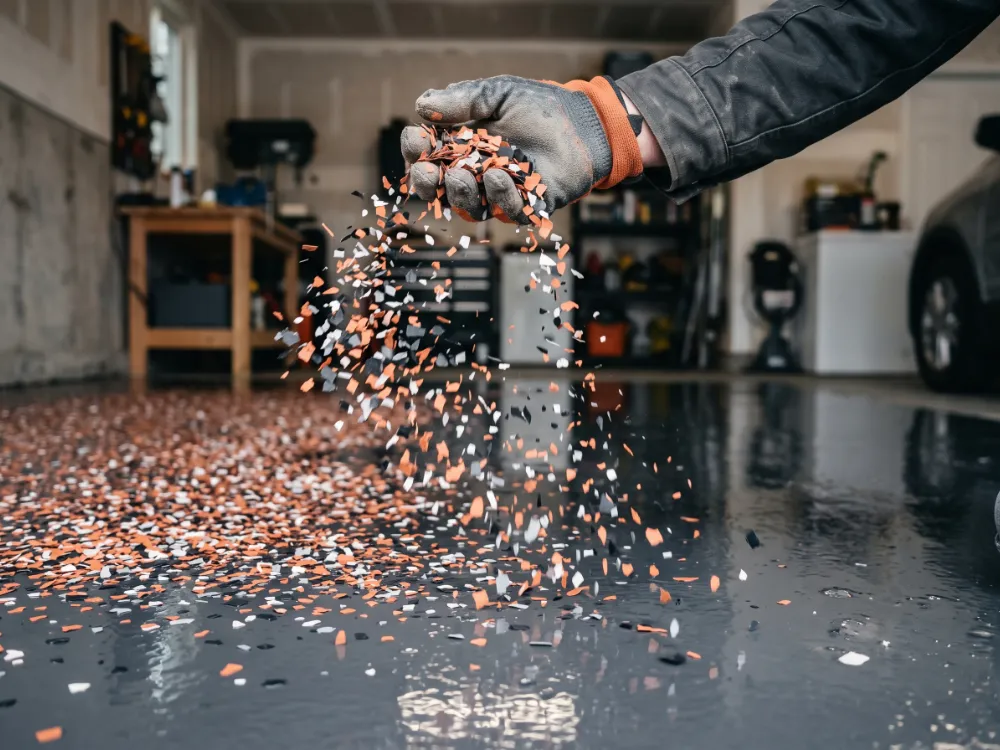
Full-Rejection Flake Broadcast
Flakes are broadcast into the wet basecoat until the surface accepts no more — full coverage, full thickness, no exposed basecoat anywhere.

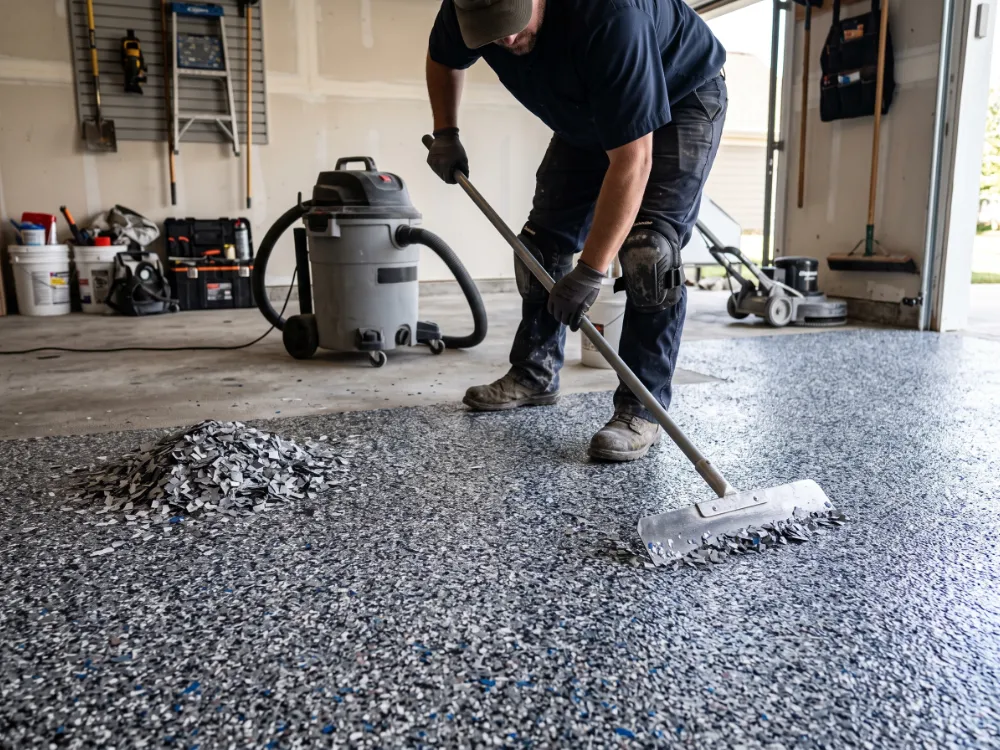
Scrape & Vacuum Finishing
Once the broadcast sets, the excess is scraped and vacuumed to a uniform texture — the step that separates a crisp professional floor from a rough one.

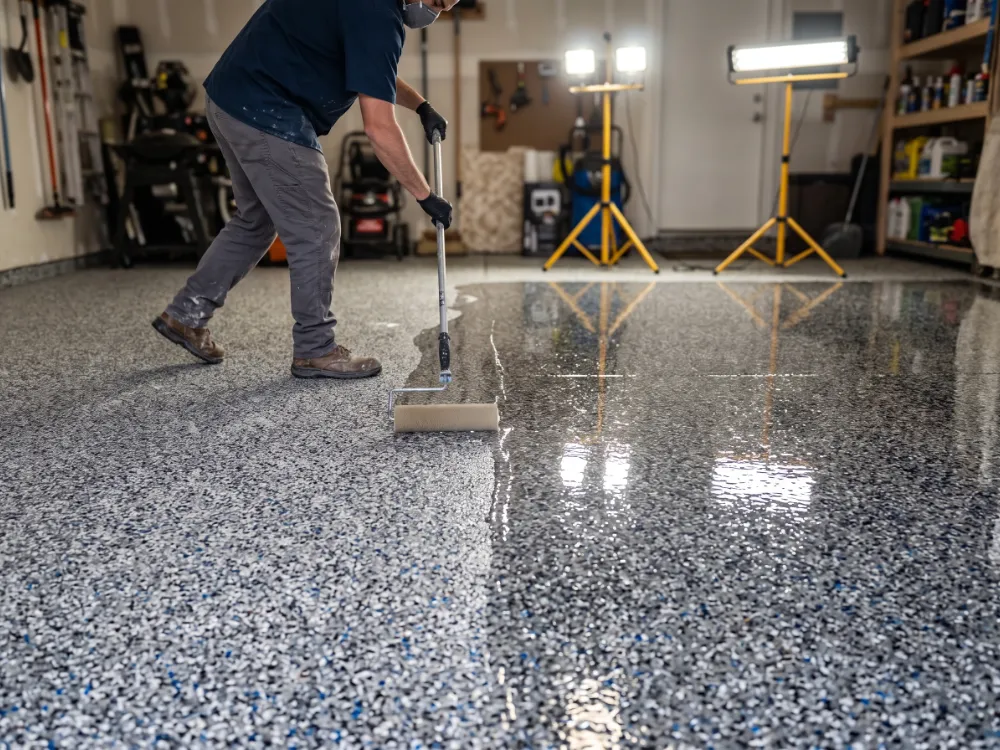
Double Polyaspartic Topcoats
Two UV-stable polyaspartic clear coats follow: the first locks the flakes, the second builds a deeper wear layer that never yellows.

Slip-Resistant Additive
A slip-resistant additive rides in the final coat on garage and outdoor work, so the finished gloss still grips wet shoes and tires.
One Day From Bare Concrete to Done
The flake system is engineered to finish inside a single working day without skipping a layer:
- Morning — diamond grinding, crack and spall repairs, moisture check, vacuum-clean slab.
- Midday — basecoat rolled wet, full-rejection flake broadcast thrown into it while it is open.
- Early afternoon — cured broadcast scraped level and vacuumed clean.
- Afternoon — first polyaspartic topcoat locks the flakes; second topcoat with slip additive seals the floor.
- Evening — walk on it. About a day later, park on it.
Fast here does not mean thin — it means polyaspartic chemistry lets full layers follow each other in hours instead of days.
Full-Rejection vs. a Sprinkle of Flakes
The phrase to remember when comparing quotes is full-rejection broadcast. It means the installer keeps throwing flake into the wet basecoat until the surface rejects more — every inch covered, the texture uniform, the build at its maximum. It uses several times the flake of a light scatter, which is exactly why cheaper bids skip it.
A partial broadcast leaves islands of exposed basecoat that wear glossy while the flaked areas stay matte, telegraphs roller marks, and thins the floor where it needs body most. Ask any bidder which broadcast they price — it is the fastest way to compare apples to apples.
Two Topcoats, One Tough Floor
Most flake floors get one clear coat. Ours get two, and the difference shows up years later: the first polyaspartic coat wets into the broadcast and locks every flake down; the second builds a genuinely thick sacrificial wear layer above them and carries the slip-resistant additive. Tires, jack stands, dropped tools and dragged trash cans spend their energy in that upper coat — not in your flakes, and never in your basecoat.
Both coats are UV-stable polyaspartic, so the system finishes as bright in year ten as on install day, even in a garage that faces the afternoon sun.
Advantages of Our Flake System
The most forgiving, most durable finish we make: a full-rejection broadcast that hides a slab's history, sealed under two wear coats with traction built in — from the company that manufactures the flake and the resin, with a limited lifetime residential warranty.
Thickest Flake Build Available
Full-rejection broadcast builds the thickest flake floor available and erases slab imperfections under uniform texture.
Two Wear Layers, Not One
Two polyaspartic clear coats double the wear layer and carry slip-resistant additive — gloss that still grips when wet.
Made and Installed by One Company
Manufacturer-direct flake blends and resins at distributor pricing, VOC-free, warrantied for life on residential floors.
Blends, Colors and Texture
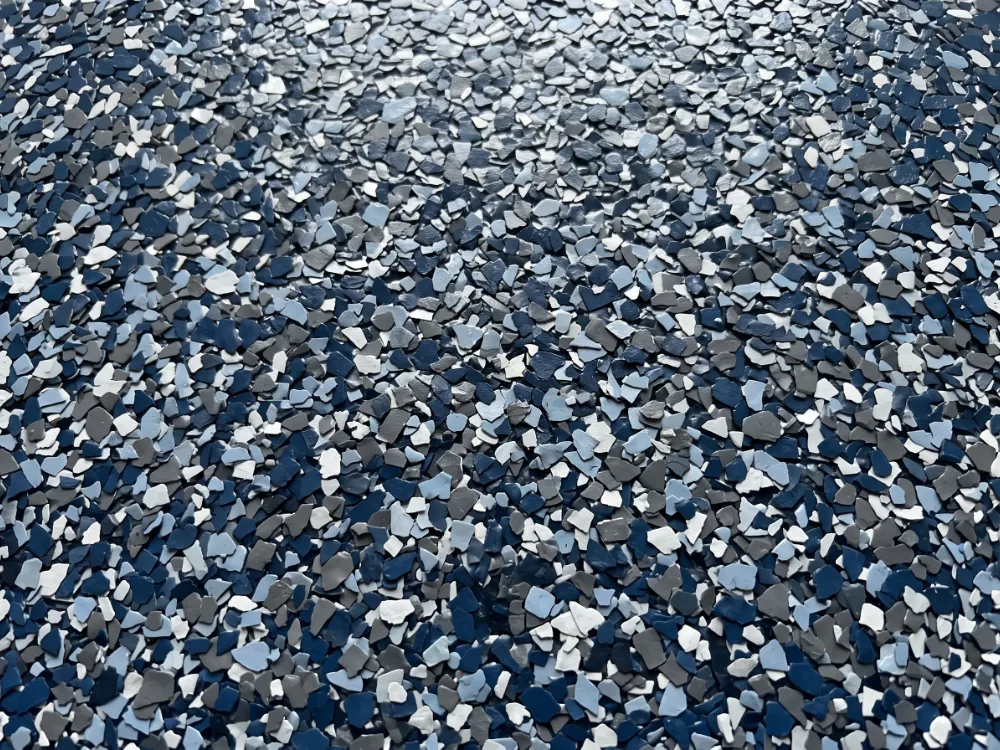
Flake is the most customizable finish in our lineup. Standard blends run from quiet gray-and-white speckles to warm earth mixes and bold black-with-color statements, and flake size alone can shift a floor from fine confetti to broad terrazzo-style chips. Every blend on our color chart is shown under the same clear coats we install.
Because the flake comes out of our own supply rather than a distributor's catalog, custom blends are a conversation, not a surcharge — match a team color, a cabinet line or an existing interior palette on larger projects.
Flake Beyond the Garage
The same system scales into commercial duty: showrooms, retail back-of-house, restrooms, locker rooms and shop floors use flake for the same reasons homeowners do — it hides traffic, cleans with a mop and takes abuse without showing it. Commercial installations carry a three-year warranty and schedule around your operating hours.
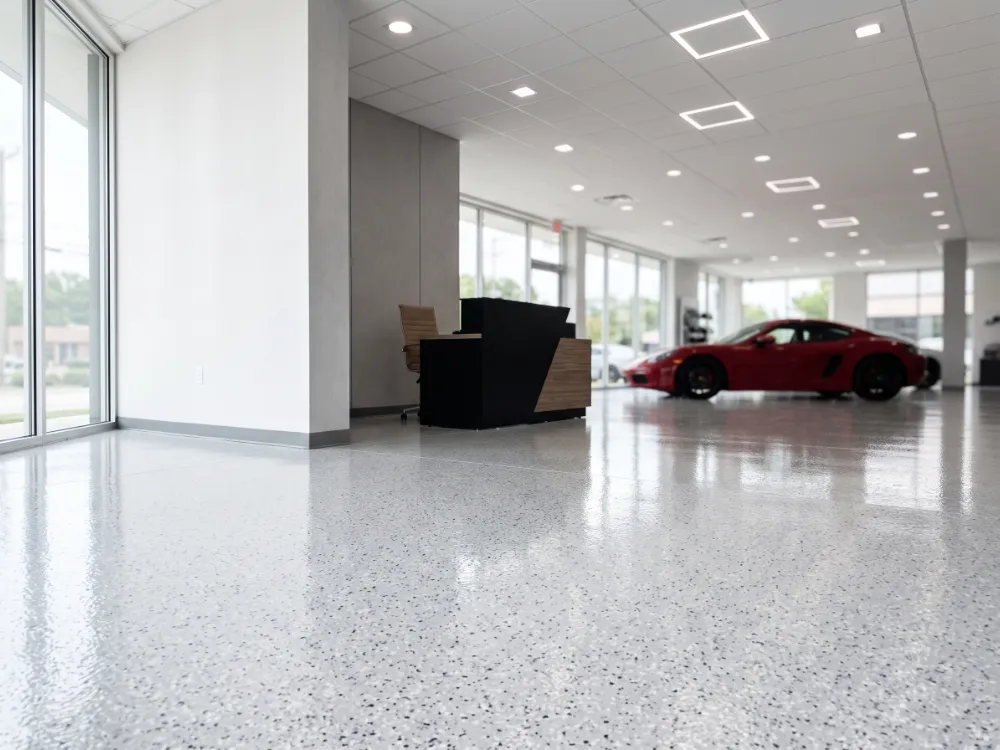
For spaces where a showroom polish matters, tighter flake blends under high-gloss topcoats read as sophisticated speckled stone rather than a garage finish — one system, very different personalities.
Outdoor Flake: the Five-Layer System
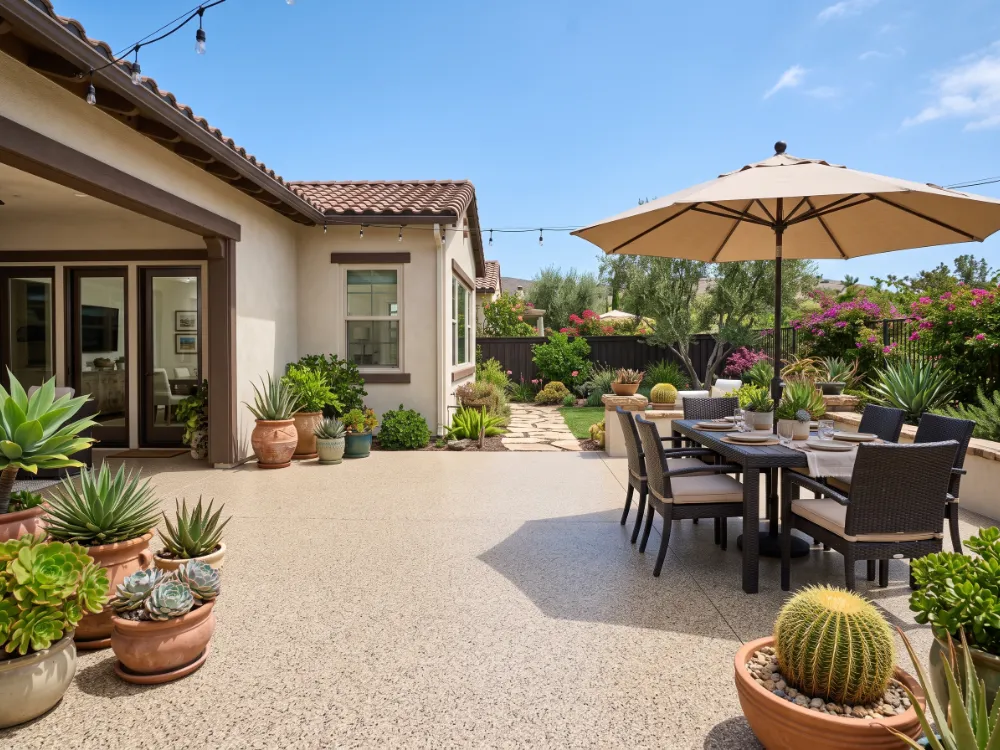
Outside, flake becomes the visible face of our exterior stack: a moisture vapor barrier against ground moisture, a pigmented polyaspartic basecoat, the flake broadcast, a polyaspartic topcoat and a final urethane topcoat loaded with slip-resistant additive. Five layers, every one of them chosen because patios, pool decks and driveways live in sun, sprinklers and hundred-degree summers.
The payoff is an outdoor surface that keeps its color in full UV, grips wet bare feet, and rinses clean instead of growing the chalky stains bare concrete collects.
Frequently Asked Questions
What does full-rejection broadcast actually mean?
It means flakes are thrown into the wet basecoat until the surface literally cannot accept another one — every square inch rejects further flake. The result is complete, uniform coverage with maximum thickness. A partial or light broadcast scatters flakes decoratively over exposed basecoat, which is thinner, shows roller marks and wears unevenly.
Why do you apply two topcoats instead of one?
On our residential flake garage floors the broadcast is locked down with a first polyaspartic clear coat, then sealed under a second one carrying a slip-resistant additive. Two coats double the sacrificial wear layer over the flakes, bury their edges deeper for a smoother feel, and let us build traction into the final surface rather than sanding it on.
Can a flake floor really be installed in one day?
Yes — it is our standard flake timeline. Diamond grinding and repairs come first, the basecoat and full-rejection broadcast go down by midday, the excess is scraped and vacuumed once the coat sets, and the topcoats follow the same afternoon. Foot traffic that evening, vehicles after about a day.
Do flake floors hide cracks and stains?
Better than any other coating finish. The full broadcast is visually busy in the best way — repaired cracks, old stain shadows and slab imperfections disappear under the texture, which is why flake is our default recommendation for garages with a working past. Repairs still happen first; the flakes hide the history, not the problems.
What colors and blends are available?
Dozens of standard blends — grays, tans, earth tones, blue-grays, bold black-and-color mixes — shown on our color chart, and because we manufacture our own materials we can also match custom blends for larger projects. Flake size can shift the look from fine speckle to bold terrazzo-style texture.
Are flake floors slippery?
Flake floors are among the most slip-resistant coatings we install. The broadcast itself leaves a gentle orange-peel texture, and the second topcoat carries a slip-resistant additive as standard on residential garage work. For wet areas like patios and pool decks the additive is non-negotiable and included in the system.
How durable is a flake floor with hot tires?
The failure people fear — hot-tire pickup — is a bonding failure, not a flake failure. Because the slab is diamond-ground and the basecoat penetrates the open profile, there is no weak film edge for heated tires to lift. Combined with the double wear coats, our residential flake floors carry a limited lifetime warranty.
Can flake systems be used outside?
Yes — flake is the finish layer of our five-layer exterior system for patios, pool decks, driveways and balconies: moisture vapor barrier, pigmented polyaspartic basecoat, flake broadcast, polyaspartic topcoat and a final urethane topcoat with slip additive. Everything above the barrier is UV-stable, so the blend never fades or ambers.
How do I clean and maintain a flake floor?
A dust mop or soft broom for grit and a pH-neutral cleaner with water for washing — no wax, no harsh degreasers needed. Spills including oil and brake fluid sit on the non-porous topcoat until wiped. Most owners deep-clean a garage flake floor a few times a year and do nothing else to it.
Flake, solid color or metallic — how do I choose?
Flake is the practical all-rounder: maximum texture, best at hiding wear and imperfections, ideal for working garages. Solid color reads cleaner and more architectural, and metallic is the designer statement for showrooms and interiors. The systems underneath are equally durable — the choice is appearance and how the space is used.
Explore the Flake Family
Flake is one finish in a full system lineup — compare it to its siblings or see it applied to your specific project.
Garage floor coating · Polyaspartic floor coating · Solid color epoxy floors · Metallic epoxy floors · Patio coating · Pool deck coating · Concrete grinding & surface prep · Color chart
FREE onsite Estimate
5 stars rated company
Get it done right the first time...


