
Apparatus Bay Epoxy Floor Systems
Fire Station Flooring
Rated for the rig, phased for the response — one bay at a time, back in service in hours
Request a Free Estimate
Fire Station Epoxy Flooring
No floor in public service works harder than an apparatus bay. A loaded engine puts twenty tons on the slab, parks with hot tires, drips diesel and foam concentrate, and gets hosed down over the same concrete every shift — while the bay doors stand open to the public eye. Behind it, modern station design adds a second demand the industry now takes as seriously as the first: contamination control, keeping post-fire carcinogens in the hot zone and out of the living quarters.
Seamless floor systems answer both. In the bays, urethane cement and sand-reinforced high-build epoxy carry apparatus weight, shrug off hot tires and diesel, and cove up the wall so hose water runs to the trench drain instead of into a joint. In decon and turnout areas, the seamless non-porous surface gives soot and contaminants nowhere to lodge — the flooring half of the clean-cab, clean-station culture. Living quarters, kitchen and gym get the commercial systems those rooms deserve, and fast-curing polyaspartic topcoats mean a coated bay returns to service in hours, not days — which matters in a building where the schedule is set by the tones.
Top Epoxy Flooring manufactures its own VOC-free materials and installs with in-house crews across Southern California under a three-year commercial warranty. See the wider commercial and industrial flooring range or request a free on-site estimate below.
Systems Built for the Firehouse

Urethane Cement Bay Systems
Urethane cement in the bays takes hot tires, diesel and daily wash-downs — the same chemistry we install in industrial wash zones, rated for apparatus weight.

Sand-Reinforced High-Build
Sand-reinforced high-build layers raise compressive strength where forty thousand pounds parks twice a shift.

Fast-Cure Polyaspartic Return
Fast-cure polyaspartic topcoats return a bay to service in hours — the schedule respects the response map, not the paint.

Quartz Wet-Bay Traction
Quartz broadcast keeps wash bays and aprons slip-safe under hose water, foam and whatever the weather adds.

Seamless Contamination Control
Seamless, non-porous surfaces support contamination control — soot and carcinogens wipe out of the hot zone instead of settling into it.

Coved Hose-Down Detailing
Integral cove bases carry the floor up the wall, so hose-downs push everything to the trench drain instead of into a wall joint.
Apparatus Bays
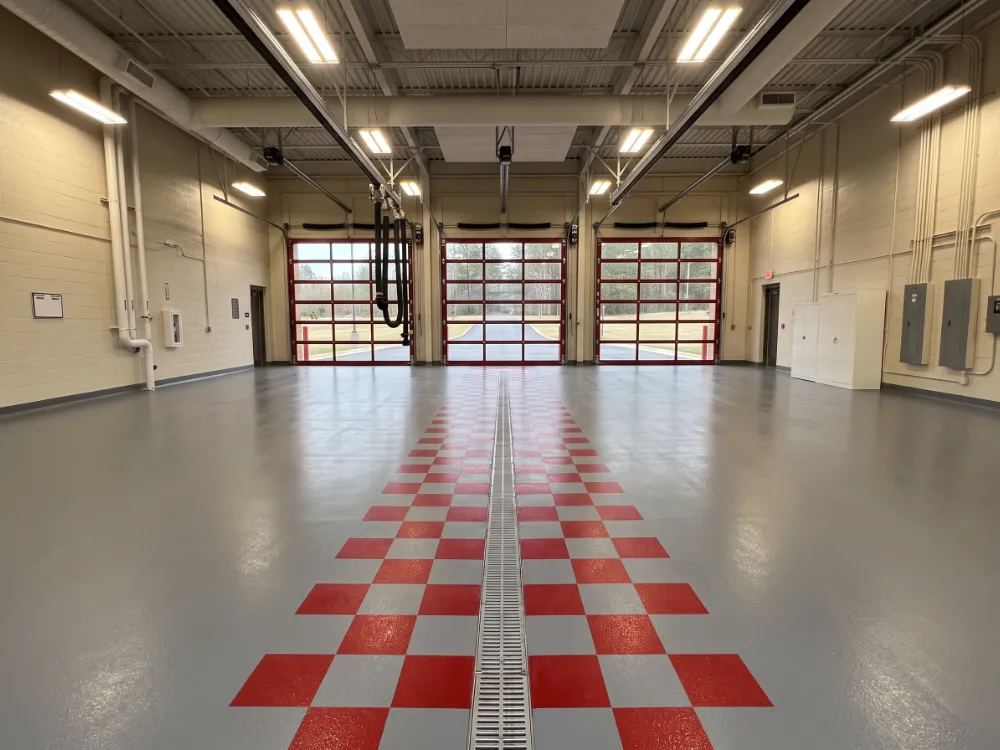
The bay floor is specified from the axle down: compressive strength for a loaded engine’s point loads, a bond that laughs at hot tires, chemistry that treats diesel and foam concentrate as routine, and texture balanced so the floor grips wet boots without becoming impossible to squeegee clean. Zone banding and the classic red-and-gray bay schemes coat in permanently, and the finished surface throws bay lighting back up at the rigs — a working floor the public sees every time the doors are up.
Decon & Turnout Gear Zones
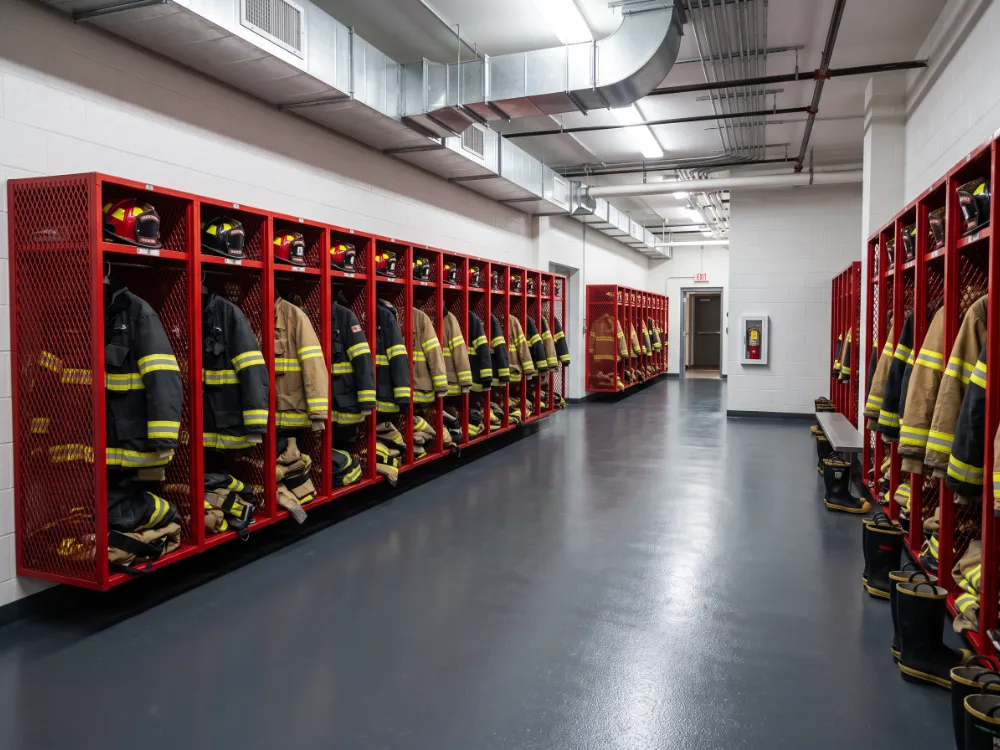
Modern stations fight two fires — the one on the call, and the carcinogens that come home with the gear. The flooring contribution is a seamless, non-porous surface from the bay through the decon corridor to the gear room: nothing for contaminated particulate to lodge in, no grout lines to hold what a wipe-down should remove, and coved transitions that let these rooms be washed like equipment. It is the floor-level half of the clean-station standard departments are building toward.
Wash Bays & Hose Areas
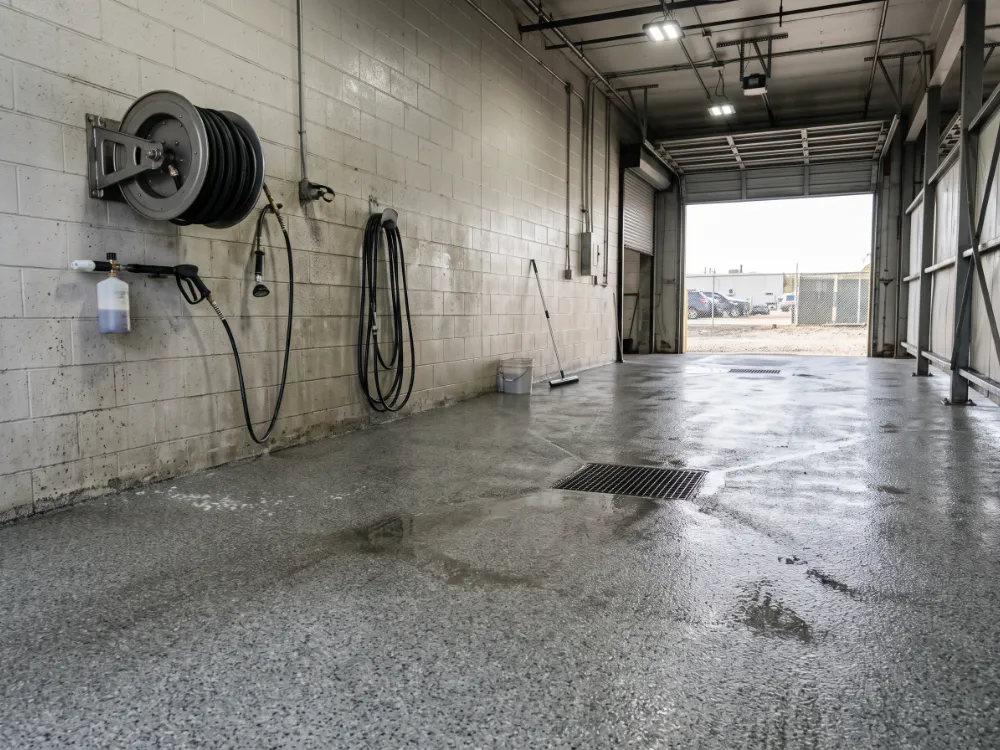
Where the water works every day:
- Quartz broadcast traction that holds grip under running water and foam
- Slope-to-drain detailing so wash water leaves instead of ponding
- Cove bases carrying the system up the wall at every wet edge
- Chemistry rated for degreasers, disinfectants and diesel wash-off
Advantages Where Response Comes First
A firehouse floor project is judged on one metric before any other: the station never drops below response capacity. Everything else — durability, contamination control, the look of the bays with the doors up — is engineered around that constraint.
Rated for a Loaded Engine
Bays rotate one at a time on a schedule agreed with the battalion — apparatus always has a covered, ready position.
One Bay Down, Never Two
Fast-cure systems hand each bay back in hours — measured against the shift calendar, not the weather.
Back in Service in Hours
Rated for the real rig list — engines, trucks, tenders — not a passenger-car brochure number.
Living Quarters, Kitchen & Day Room
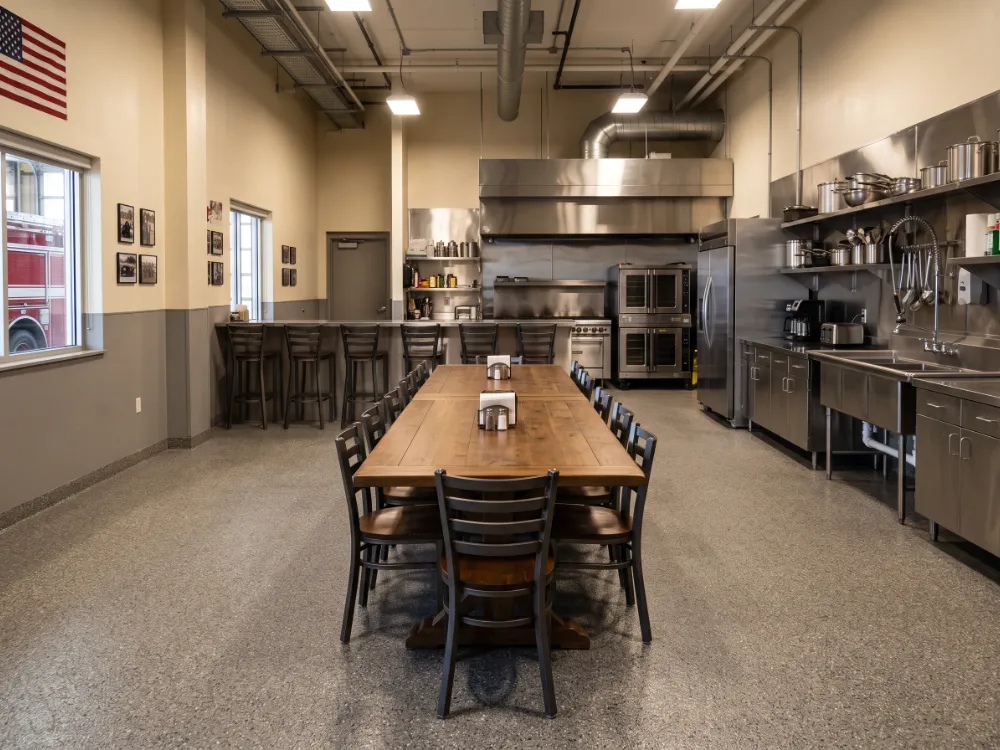
The cold zone deserves floors that feel like the home it is for a third of every crew member’s life. Flake systems in the kitchen and day room take communal cooking, chair drag and the traffic of a house that never empties, clean with a mop instead of a project, and hold no allergens or odors because nothing about them is porous. The visual break from the bay floor also does quiet work — crossing it means the hot zone is behind you.
Fitness & Training Rooms
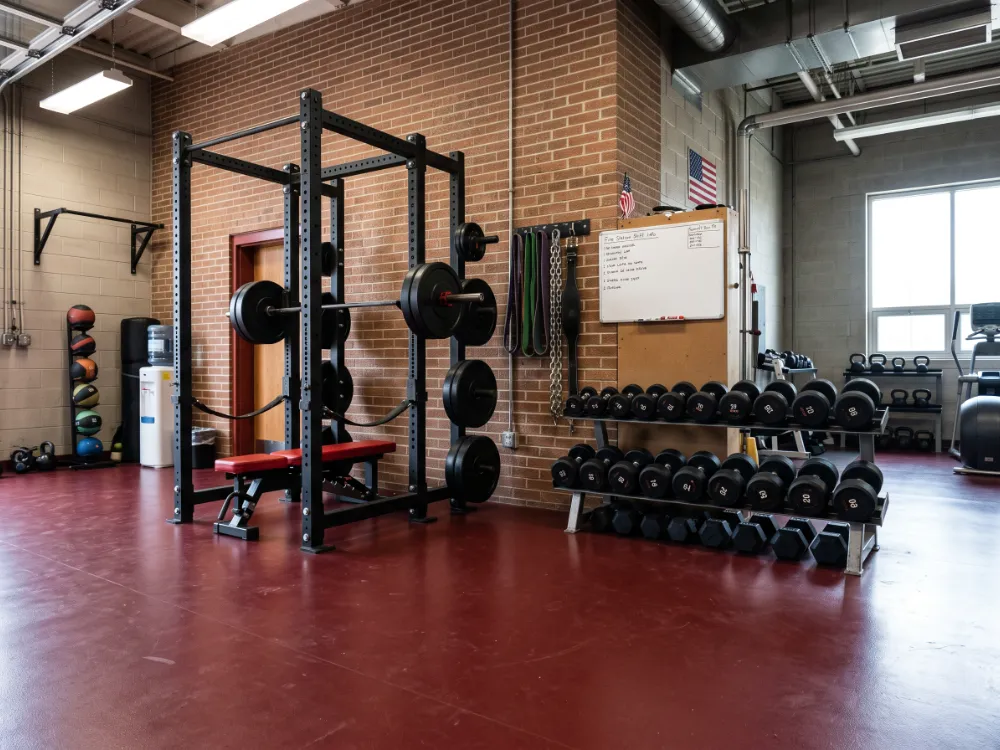
Station gyms get used like the job depends on them, because it does. An impact-tolerant solid epoxy system takes dropped plates, rolling racks and turnout-boot traffic, marks out lifting zones if the layout wants them, and cleans of chalk and sweat with a pass of the mop. Department colors coat in where the house wants identity on the floor — the red gym floor is a firehouse classic for a reason.
Installed Response-Ready
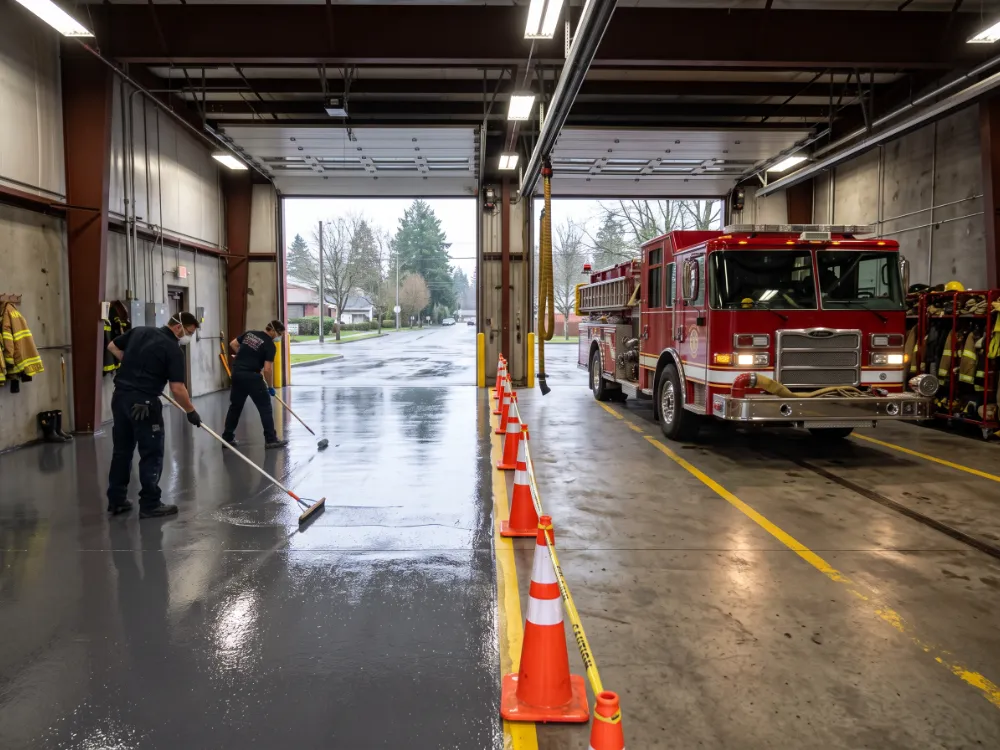
The install plan starts from one rule: the station answers every call. Bays rotate one at a time — apparatus shuffles to the open positions, the working bay is ground, repaired, coated and cured on a posted clock, and the rotation continues. Living quarters and support rooms phase around shift change. Fast-cure, VOC-free chemistry keeps the house breathable and the timeline honest: hours per zone, never a day the district would notice.
Frequently Asked Questions
Can the station stay in service during the project?
That is the only way we plan it. Bays rotate one at a time with apparatus shuffled to ready positions, each bay returns to service within hours of coating, and the phasing calendar is agreed with command before work begins. Response capacity never drops.
Can the floor really take a loaded fire engine?
Yes — apparatus weight is a design input, not a hope. Sand-reinforced high-build and urethane cement systems are specified for the point loads of a loaded rig, and the slab itself is evaluated during the walk-through so any concrete issues are handled before coating.
What about hot tires after a run?
Hot-tire pickup is a bargain-coating failure we specifically engineer against: the system bonds into diamond-ground concrete and cures into a surface hot rubber cannot soften. Rigs park hot after every run for years without a mark.
How does the floor help with carcinogen and contamination control?
By being seamless and non-porous everywhere the hot zone touches: bay, decon corridor, gear room. Contaminated particulate has nowhere to lodge — no grout, no seams, no porous concrete — so wipe-downs and wash-downs actually remove what they are supposed to remove.
Do bay floors handle daily hose-downs and foam?
They are detailed for it — slope to the trench drain, integral cove bases at the walls, and chemistry rated for foam concentrate, degreasers and diesel wash-off. Water leaves the bay the way the drawing intended instead of finding a joint to live in.
How fast is a coated bay back in service?
Hours — fast-cure polyaspartic topcoats take foot traffic almost immediately and apparatus weight on a posted same-day-to-overnight schedule depending on the system. The return-to-service time is committed in writing per bay before we start.
Can we get department colors and zone striping in the floor?
Yes — red border stripes, bay numbering zones, walkway banding and the classic red-and-gray schemes all coat in beneath the wear layer, permanent and forklift‑proof. The house identity goes in the floor, not on it.
What goes in the kitchen and living quarters?
Commercial flake and solid systems — seamless, non-porous, comfortable underfoot and cleanable with a mop. The kitchen gets the food-service treatment at residential warmth, and the visual change from the bay floor marks the clean-zone boundary the station culture is built on.
How does a public agency procure this?
We provide bid-ready documentation: written specifications, slip ratings by zone, material data sheets and warranty terms. Because we manufacture the materials, pricing is distributor-direct and holds between quote and award.
What does station flooring cost?
Bay count, slab condition and the zone mix set the number — an apparatus bay system and a day-room floor are different specifications. The free on-site walk-through produces a per-zone figure, and the phasing plan comes with it so the district sees cost and continuity together.
Hot Zone to Home Zone
Apparatus bays, decon corridors, gear rooms, kitchen and gym — one specification set, phased one bay at a time, under one three-year commercial warranty, across Los Angeles, Orange, Ventura and the surrounding counties.
Related: police station flooring, mechanic shop flooring, and the commercial and industrial overview.
FREE onsite Estimate
5 stars rated company
Get it done right the first time...


