
High-Build Seamless Floor Specialists
Solid Color Epoxy Flooring
One uninterrupted color, poured thick and sealed for decades — the cleanest floor a room can wear
Request a Free Estimate
Solid Color Epoxy Flooring
A solid color epoxy floor is the most architectural thing you can do to concrete: one continuous, seamless plane of color with no grout lines, no seams and no pattern — just a calm, uniform surface that makes a garage read like a showroom and a kitchen read like a design magazine. It is also, done properly, a genuinely industrial-grade build: layer upon layer of pigmented 100%-solids epoxy adding up to a film many times thicker than any paint.
Top Epoxy Flooring manufactures the pigmented epoxy it installs, which changes what is possible: any color rather than a distributor's chart, distributor-level pricing rather than retail markup, VOC-free chemistry safe for occupied homes, and a limited lifetime residential warranty signed by the company that made the material. We install across Los Angeles, Orange, Ventura, San Bernardino, Riverside and San Diego counties — garages, kitchens, living areas, showrooms, commercial and industrial floors.
Most of what ranks for this search is franchise color charts and product listings. What is missing — and what this page provides — is an explanation of the actual build: what the layers are, how thick a real system is, and how to tell a high-build floor from a coat of colored paint before you pay for one.
What Goes Into Every Solid Color Floor

Diamond Grinding Preparation
Diamond grinding opens the slab into a bonding profile, and cracks and spalls are repaired flush — a seamless floor telegraphs everything, so the canvas comes first.

Pigmented 100%-Solids Epoxy
The color rides in pre-pigmented 100%-solids epoxy — no solvents evaporating out, so every gallon applied stays on the floor as film build.

High-Build Film Thickness
Body coats stack to a high-build film measured in real mils — the thickness that separates a structural floor system from a painted surface.

UV-Stable Polyaspartic Topcoat
A UV-stable polyaspartic topcoat seals the color against sunlight, tires and chemistry — whites stay white, and gloss stays glossy.

Optional Slip-Resistant Texture
Where floors get wet, a fine slip-resistant additive blends into the topcoat — near-invisible texture, substantial wet grip.

Seamless, Easy-Clean Surface
The finished surface is one non-porous plane: spills bead, dust mops off, and cleaning is water and a pH-neutral soap, nothing more.
The High-Build Difference
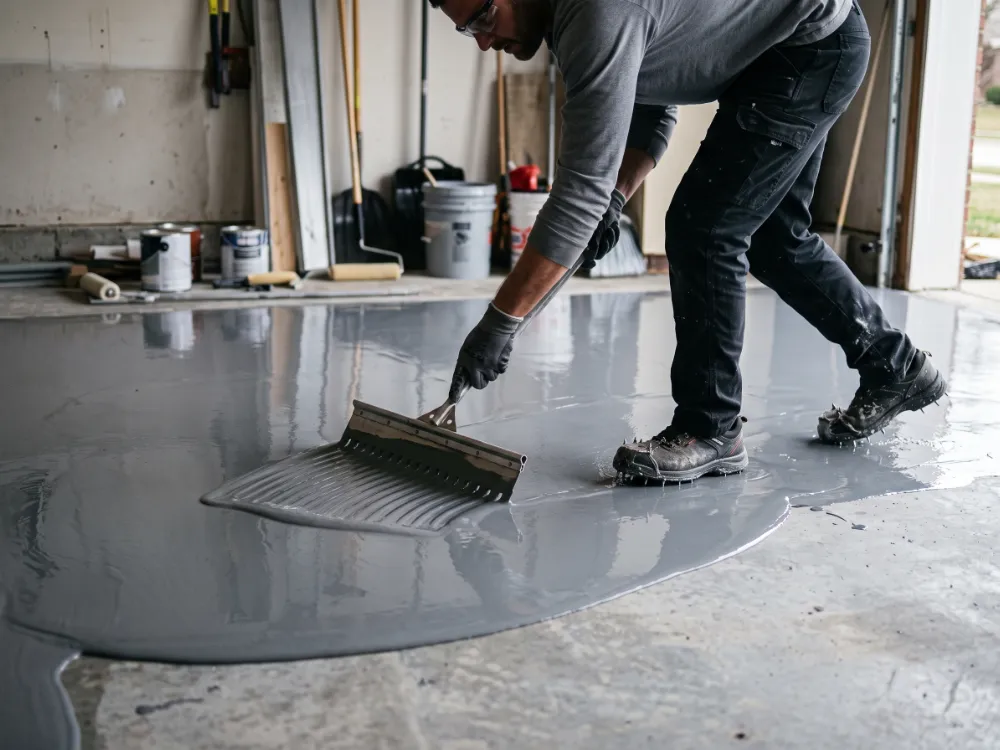
Every failed "epoxy" floor you have seen — peeling gray paint, tire tracks down to concrete — was a thin film pretending to be a system. Real solid color floors are built, not painted: ground concrete, a penetrating base, then pigmented 100%-solids epoxy applied by squeegee and back-rolled, coat over coat, until the floor carries a wear body of its own.
That build is what absorbs impact, bridges hairline imperfections and gives the floor decades of sacrificial thickness. When you compare quotes, ask one question: how many mils, and of what? The answers separate systems from paint jobs instantly.
The Layer Stack, In Order
A solid color system is a sequence, and every layer has one job:
- Preparation — diamond grinding to a bonding profile, repairs ground flush, moisture testing.
- Basecoat — a penetrating primer, or a moisture-vapor-barrier epoxy where the slab tests damp.
- Body coats — pre-pigmented 100%-solids epoxy carrying the color and building the thickness.
- Line striping — on commercial work, zones and walkways striped so they are sealed under the wear layer.
- Topcoat — UV-stable polyaspartic, gloss or satin, with slip-resistant additive where the room needs it.
Skip a layer and the floor tells on you within a year or two. Build them all and the system quietly outlasts everything around it.
Commercial Floors That Organize Themselves
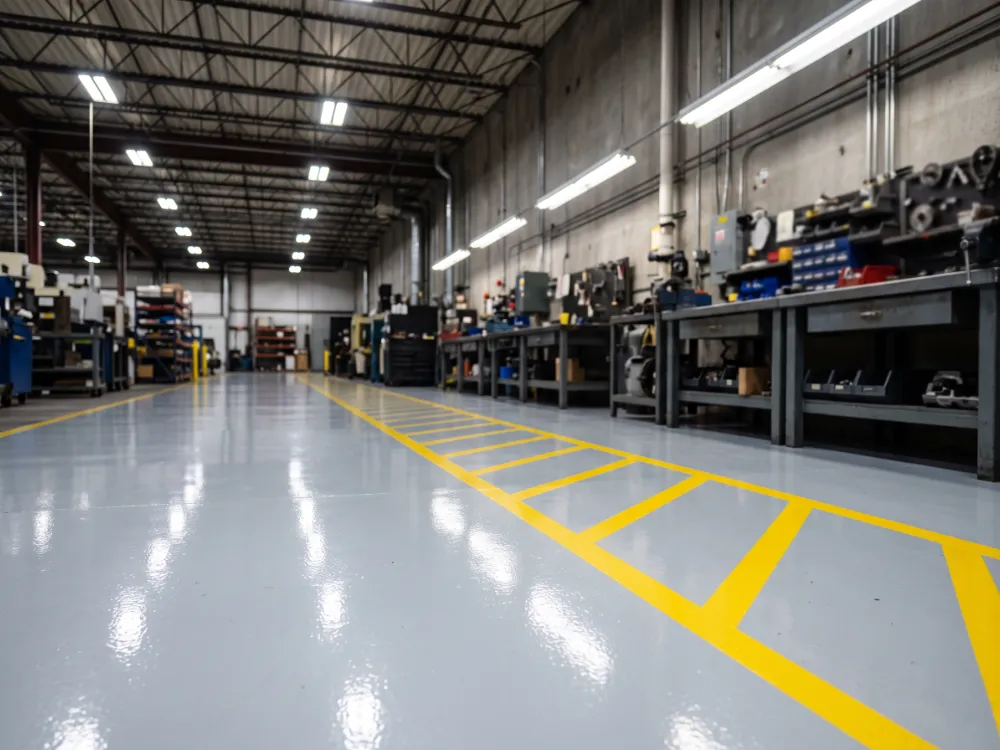
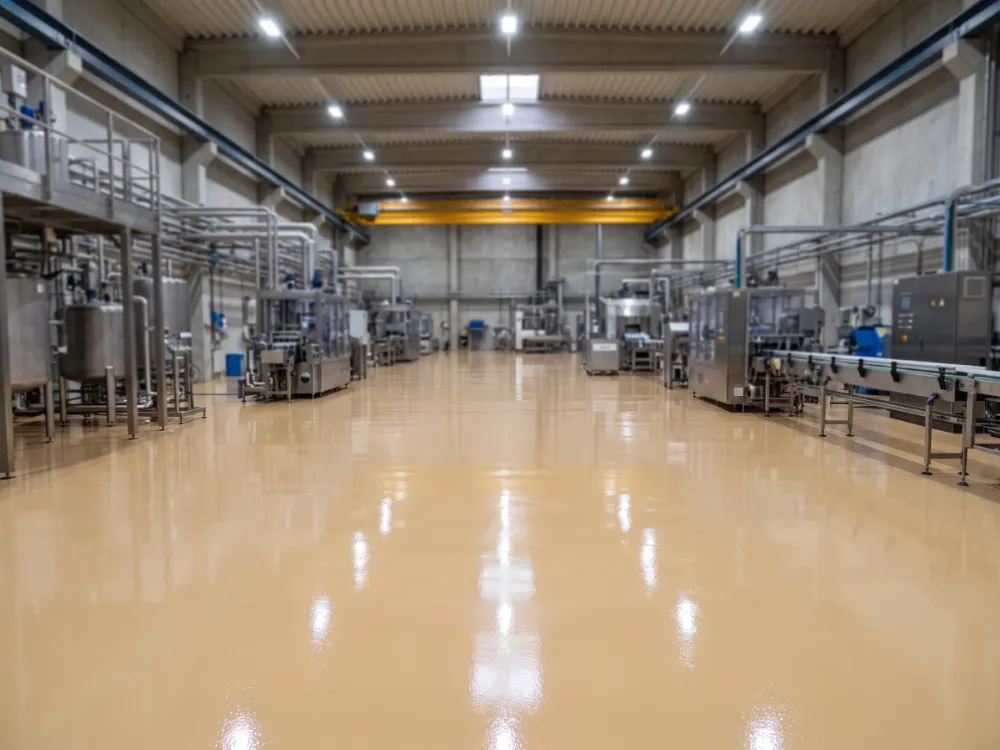
Solid color is the working uniform of commercial flooring: a bright, uniform surface that bounces light into work areas, wipes clean between shifts, and takes floor marking the way no bare slab can. Walkways, forklift lanes and staging zones are striped in contrasting epoxy and then sealed beneath the topcoat, so the layout survives traffic instead of wearing off with it.
Installations schedule around your operating hours, and commercial work carries a three-year warranty from the same company that manufactured the material — no product rep and installer pointing at each other.
Advantages of Solid Color Systems
The cleanest finish in our lineup and one of the toughest: any color, poured thick from our own production line, sealed under a UV-stable topcoat, and backed by a limited lifetime residential warranty — for the price a middleman would add to someone else's product.
Any Color, From the Source
We pigment the epoxy ourselves — any color you can specify, at distributor pricing, without a chart to limit you.
A True High-Build Floor
100%-solids body coats build a floor measured in real mils — a wearing surface, not a painted film.
Warranted by the Manufacturer
Manufacturer and installer are one company: VOC-free materials, lifetime residential warranty, three years commercial.
Solid Color Inside the Home
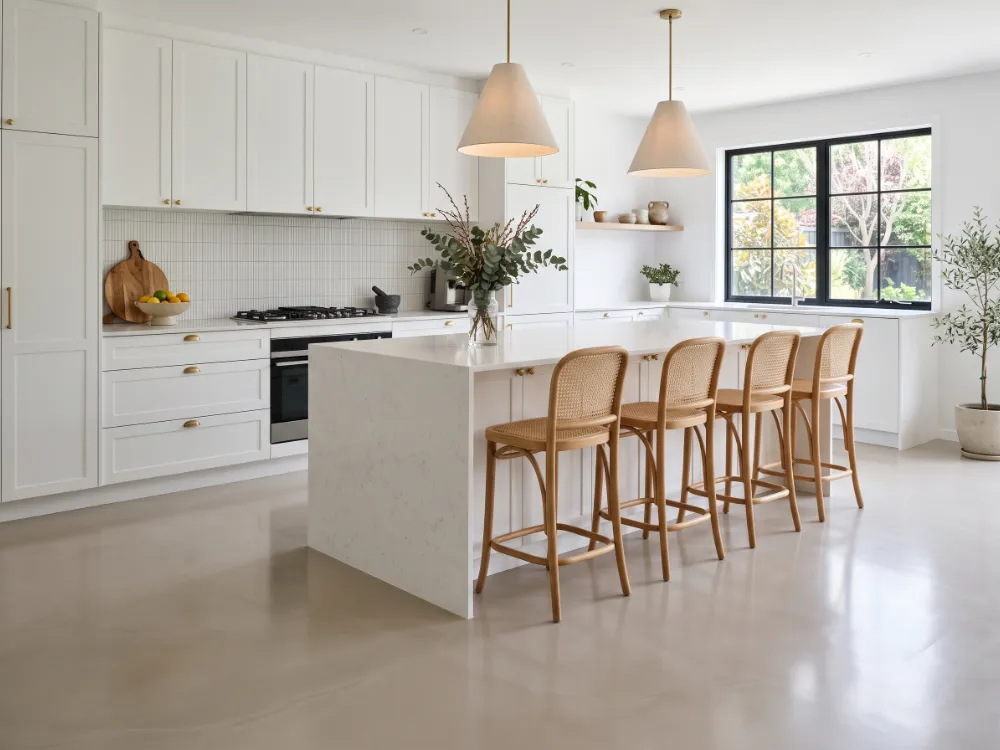
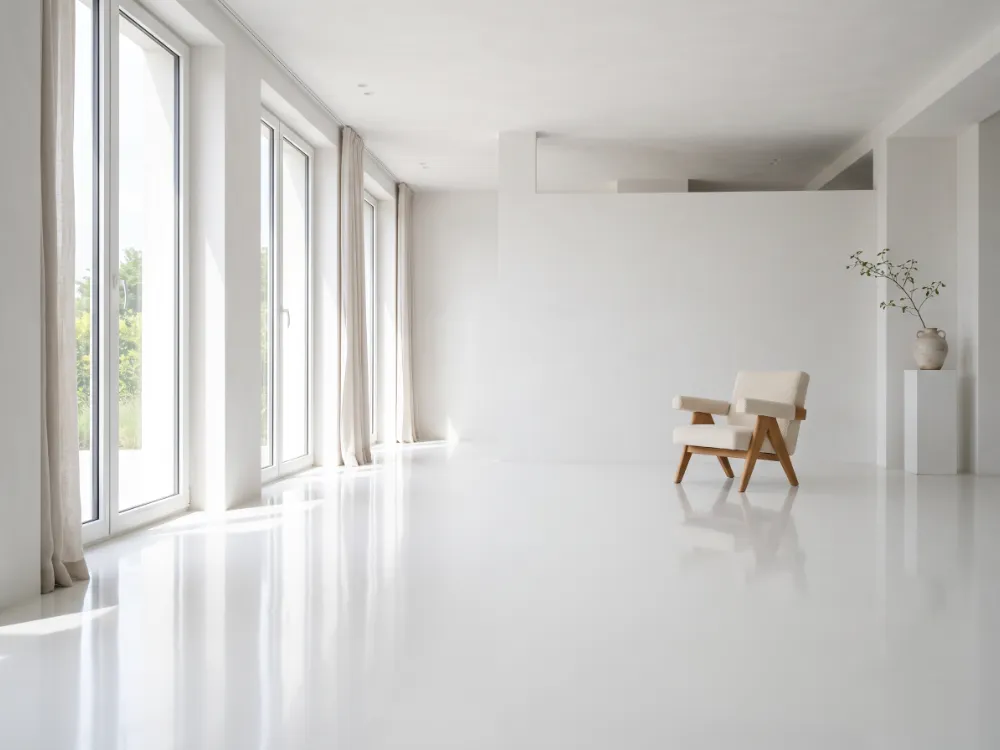
The same system that outfits workshops has quietly become a designer choice: kitchens and living areas in modern and mid-century homes use solid color epoxy as a seamless alternative to tile and polished stone — one uninterrupted surface flowing from wall to wall, warm-toned or gallery white, satin or gloss. On Southern California's slab-on-grade homes it installs directly over the concrete already under your feet.
Indoors matters for chemistry, too: our materials are VOC-free, so an occupied home gets a new floor without the solvent fog that gave resin floors a bad reputation.
Industrial Duty
At industrial thickness, solid color systems shrug off pallet jacks, tool drops and wheel traffic while giving plant managers what they actually ask for: a floor that shows spills immediately, marks out safe traffic lanes, and reflects enough light to brighten the whole space measurably. High-build variants add extra body for the hardest service.
For chemical exposure beyond the everyday — battery rooms, process areas — the same build accepts a Novolac topcoat, upgrading the chemistry without changing the system underneath.
Solid, Flake or Metallic?
Choosing between our three finishes is mostly about honesty regarding how the space lives. Solid color is the architectural choice — calm, uniform, modern — and the one that shows life's scuffs soonest, which a satin topcoat softens. Flake is the forgiving workhorse that hides everything a working garage throws at it. Metallic is the statement piece for showrooms and interiors.
The systems beneath all three are equally serious, so nothing about durability should drive the decision — pick the look you want to live with, and we will build the same warranty under it.
Frequently Asked Questions
What is a solid color epoxy floor?
A seamless, single-color floor built from layers of pigmented 100%-solids epoxy over prepared concrete, finished with a protective clear topcoat. Unlike floor paint, which is a thin film of pigment in a carrier, a solid color system is a thick structural build measured in real millage that becomes the new wearing surface of the slab.
How is this different from garage floor paint?
Thickness and chemistry. Paint deposits a fraction of the material and bonds only to the surface; our system starts with diamond grinding, then builds pigmented 100%-solids epoxy — nothing evaporating away — to many times the film build, sealed under a polyaspartic topcoat. Paint peels in months where a high-build system works for decades.
What does the layer stack look like?
Ground and repaired concrete first, then a penetrating basecoat or moisture barrier where testing calls for it, then one or more pre-pigmented 100%-solids epoxy body coats that carry the color, then a UV-stable polyaspartic topcoat in gloss or satin. Each layer has one job; together they build a floor over twelve mils thick.
What colors can I choose?
Effectively any. Standard grays, tans, whites and popular architectural tones are always available, and because we pigment our own epoxy rather than ordering from a distributor's chart, custom colors — a brand color, a designer's swatch — are a matter of formulation, not availability. The topcoat keeps whites and light tones from ambering.
Will a solid color floor show dirt and tire marks?
Lighter floors show dust sooner and darker floors hide it — the same as any smooth surface — but nothing embeds: the topcoat is non-porous, so tire scuff, dirt and dropped oil sit on the film and wipe off. Many owners choose a satin topcoat to soften the mirror effect and make daily dust less visible.
Is a smooth solid floor slippery?
Dry, no — it grips like any hard finish. Wet, a full-gloss smooth floor can be slick, so where water is part of life — laundry areas, shop wet zones, entries — we blend a fine slip-resistant additive into the topcoat. It changes the feel underfoot barely and the wet grip substantially.
How long does installation take?
Our solid color timeline is two to three days: grinding, repairs and basecoat on day one, pigmented body coats next, topcoat last, with proper cure between layers. Light foot traffic follows a day after the topcoat, vehicles and heavy furniture a little later depending on temperature.
Can you stripe zones and walkways on it?
Yes — solid color is the standard canvas for commercial floor marking. Walkways, forklift lanes, hazard zones and parking bays are striped in contrasting epoxy between body coat and topcoat, so the lines are sealed under the wear layer instead of painted on top where traffic erases them.
Where do solid color floors work best?
Anywhere a clean, uniform, architectural surface is the goal: garages that read as finished rooms, kitchens and living areas in modern homes, showrooms, back-of-house retail, workshops and industrial spaces that need marked traffic zones. If hiding heavy wear matters more than a uniform look, flake is the sibling to consider.
What warranty applies?
Residential solid color floors carry our limited lifetime warranty; commercial and outdoor installations carry three years. We can offer that because the pigmented epoxy is our own manufactured product installed by our own crews — one company is responsible for the material, the install and the promise.
Compare the Finishes
Solid color is one of three finish families we manufacture — see the alternatives and the rooms they serve.
Garage floor coating · Epoxy flake flooring · Metallic epoxy floors · Kitchen epoxy flooring · Living room epoxy flooring · Commercial & industrial flooring · Novolac coating · Color chart
FREE onsite Estimate
5 stars rated company
Get it done right the first time...


