
Flexible High-Strength Garage Coating Experts
Polyurea Garage Floor Coating
A floor that stretches with your slab instead of cracking against it — built in one day by the company that makes the material
Request a Free Estimate
Polyurea Garage Floor Coating
Every concrete slab moves. It expands through summer afternoons, contracts on cool nights, and develops hairline cracks as it settles — and a rigid coating fights that movement until something gives. Polyurea takes the opposite approach: born from the reaction of an isocyanate with an amine-terminated resin, it cures into a film with remarkable tensile strength and real elongation, so the floor stretches with the slab and returns, year after year, without cracking.
Top Epoxy Flooring manufactures its own polyurea-family coatings and installs them across Los Angeles, Orange, Ventura, San Bernardino, Riverside and San Diego counties. That matters here more than anywhere, because "polyurea" has become a franchise buzzword sold at a premium by companies buying the same buckets as everyone else. We are not reselling a label — the resin, the flake and the topcoat come out of our own production, at distributor-level pricing, VOC-free, with a limited lifetime residential warranty signed by the people who made the material.
This page explains what polyurea actually is, how it relates to polyaspartic, where it genuinely beats epoxy — and where it doesn't — so you can judge any coating pitch, including ours, on chemistry instead of marketing.
What Goes Into Every Polyurea Floor

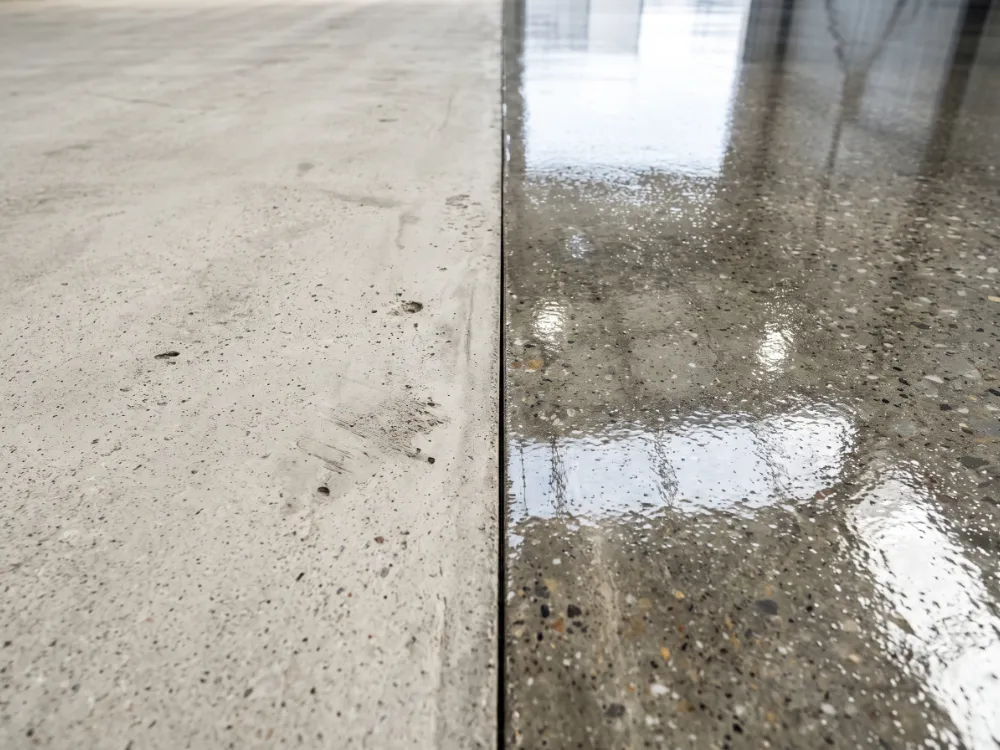
Diamond Grinding Bonding Profile
Diamond grinding cuts the slab open into a bonding profile — the mechanical grip that lets the basecoat anchor into the concrete rather than sit on top of it.

Deep-Penetrating Basecoat
The polyurea basecoat wets deep into that ground-open surface and cures into the slab itself, which is why hot tires and moisture have no film edge to attack.

Elongation That Moves With Concrete
Real elongation: the cured film stretches over slab movement and hairline cracking that would fracture a rigid coating, then returns without a mark.

Fast Cure in Any Season
Polyurea's cure chemistry tolerates a wide temperature window — we install in coastal winter mornings and inland summer heat on the same one-day schedule.

Full-Rejection Flake Broadcast
Vinyl flakes are broadcast into the wet basecoat until the floor accepts no more, building thickness, texture and a finish that hides the slab's history.

UV-Stable Polyaspartic Topcoat
The wear surface is a UV-stable polyaspartic topcoat — the aliphatic member of the polyurea family — so the finish never yellows, indoors or in sun.
What Polyurea Actually Is
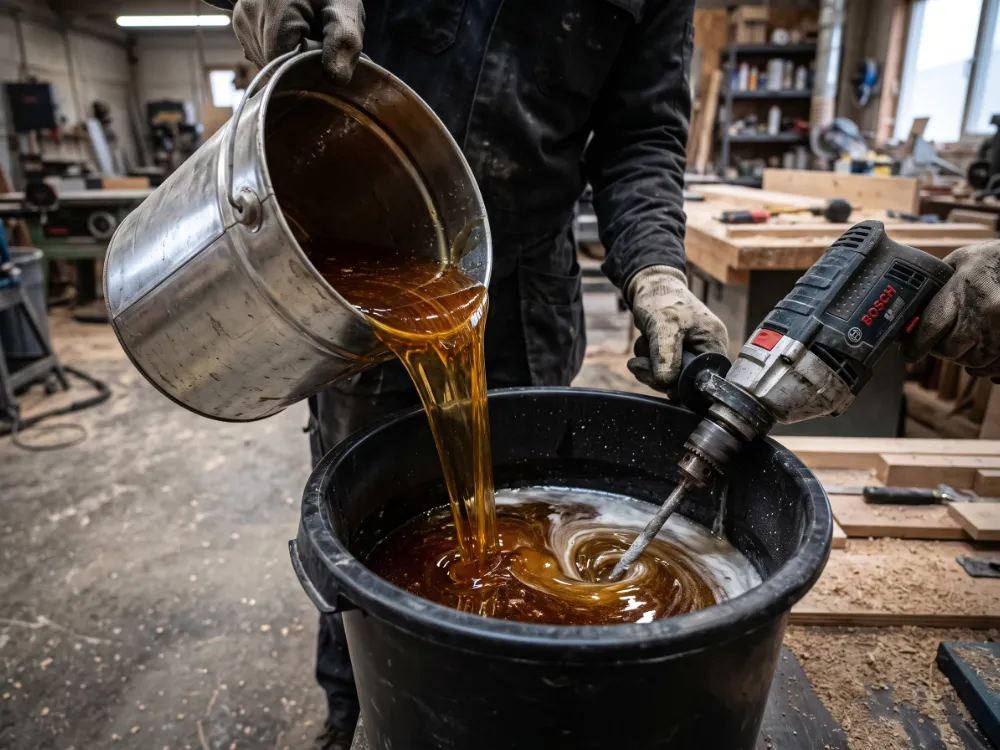
Strip away the franchise marketing and polyurea is a chemistry, not a brand: an isocyanate component meets an amine-terminated resin and reacts into an elastomeric film prized for tensile strength, abrasion resistance and speed of cure. It arrived in flooring from far harsher duty — truck bed liners, pipeline linings, containment membranes — and brought that toughness with it.
One family detail worth knowing, because it clears up most sales confusion: polyaspartic, the UV-stable resin we use as a topcoat, is itself an aliphatic polyurea that has been slowed down enough to apply by roller. When a competitor pitches "polyurea versus polyaspartic" as rival products, they are comparing a family to one of its members.
Flexibility Is the Point
Tensile strength gets the headlines, but elongation is what saves garage floors. A cured polyurea film can stretch measurably beyond its resting size and recover — while standard epoxy is a rigid glass-like sheet. Over living, moving concrete, that difference decides who wins the decade.
When a slab hairline-cracks under a rigid coating, the crack telegraphs straight through the film. When it happens under polyurea, the film bridges and flexes over the movement, keeps its bond on both sides, and the floor above stays whole. In a region where slabs ride out heat swings, this is not a luxury spec — it is the difference between recoating in year three and forgetting the floor exists.
The Basecoat's Job
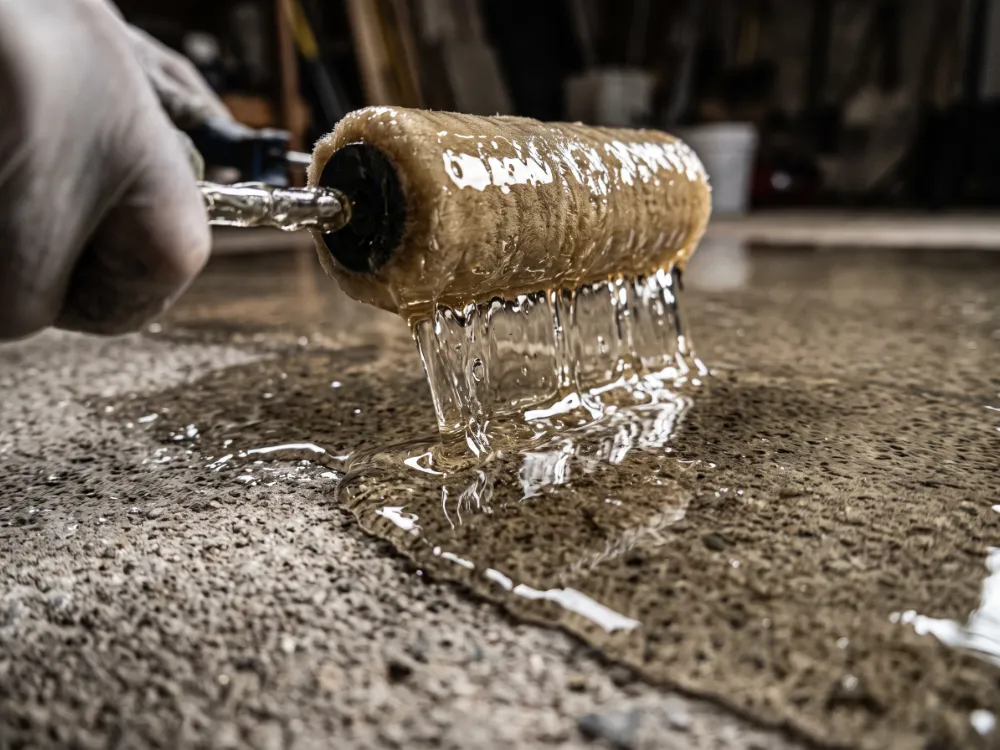
In our layered garage system, polyurea earns its keep at the bottom. Rolled into concrete that diamond grinding has just cut open, the low-viscosity basecoat penetrates the exposed pore structure and cures inside it — less like a layer of paint, more like a root system. Everything above — flake broadcast, topcoats — is only ever as strong as this anchor.
This is also the honest answer to hot-tire pickup: peeling starts where a coating merely rests on the surface. A basecoat that has keyed into the profile has no loose edge to lift, which is exactly why our residential warranty can cover that failure for life.
Advantages of Polyurea Coatings
Strength you can measure, flexibility your slab will use, and a one-day install window — from a company that manufactures the resin rather than marking up someone else's bucket, and backs residential floors with a limited lifetime warranty.
Tougher and More Flexible Than Epoxy
Higher tensile strength and real elongation — the film flexes over slab movement and hairline cracks that fracture rigid coatings.
Installed Year-Round
A wide cure-temperature window keeps installs on schedule all year, coastal mornings to inland summers, without compromising the bond.
Manufactured by the Installer
We make the polyurea we install — distributor pricing, VOC-free chemistry, and a limited lifetime residential warranty from the source.
One Day to a Finished Garage
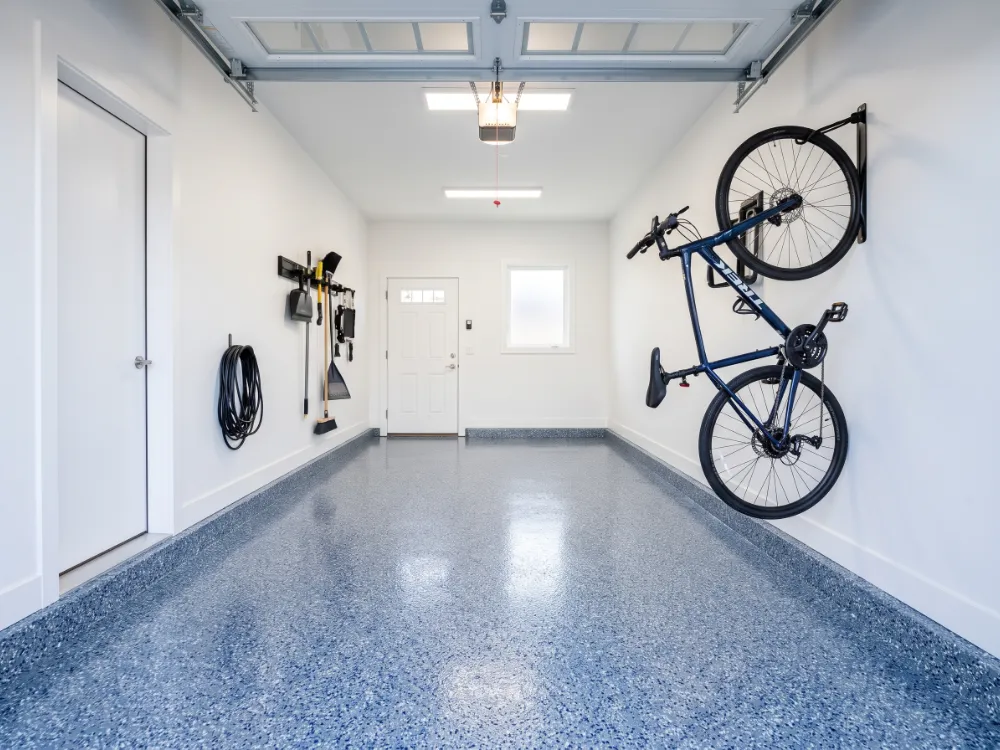
Polyurea's fast cure keeps the whole system inside a single working day: grind and repair in the morning, basecoat before lunch, flakes broadcast into the wet coat, scrape and vacuum, topcoat by late afternoon. You walk on it that evening and park on it the next day.
The finish options are the same as any flake floor we build — dozens of blends on the color chart, subtle or bold — because the polyurea story is underneath, where you will never see it and always depend on it.
Where Polyurea Wins
A short, honest scorecard from a company that manufactures both chemistries:
- Choose polyurea-based systems for garages and slabs with movement or hairline cracking, schedules that need one-day turnaround, cold- or hot-weather installs, and floors that take impact and abrasion.
- Choose epoxy-based systems for moisture-prone slabs that need a vapor-barrier basecoat, high-build solid-color floors, and industrial specifications built around chemical immersion.
- Most of our residential floors use both — an epoxy moisture barrier or polyurea anchor below, flake in the middle, polyaspartic wear coat on top. The system, not the buzzword, is what you drive on.
Commercial Muscle, Outdoor Manners
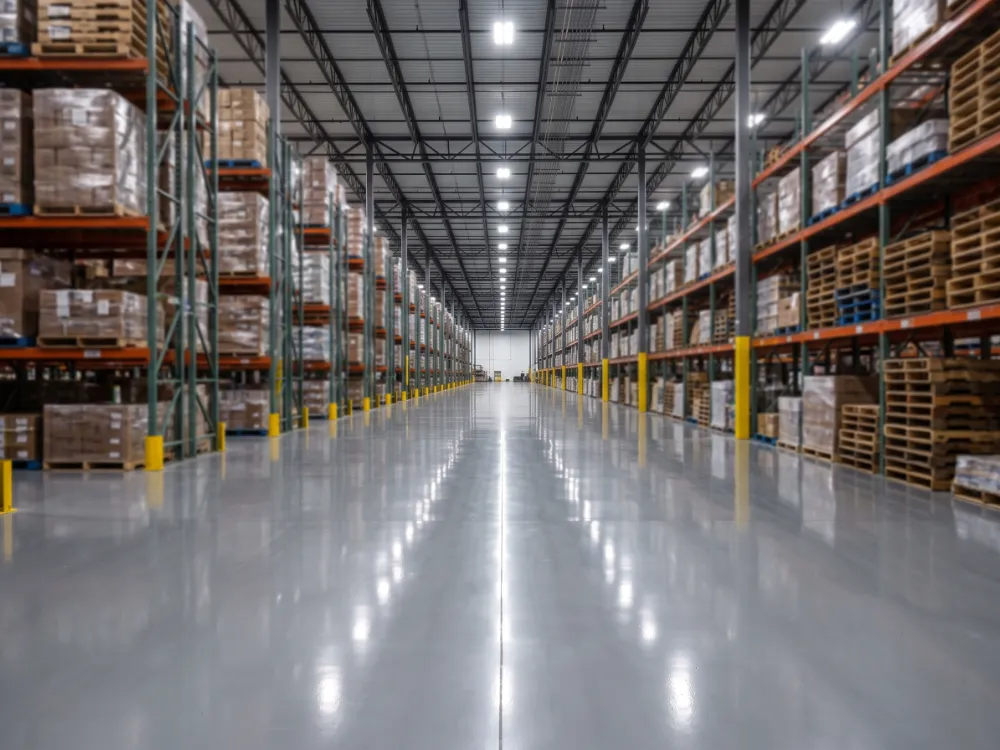
The same properties scale up: shops, warehouses and service bays use polyurea systems where forklifts, dropped tools and dragged pallets would chew through lighter films, and where a weekend shutdown is all the calendar allows. Three-year commercial warranty, installed around your operating hours.
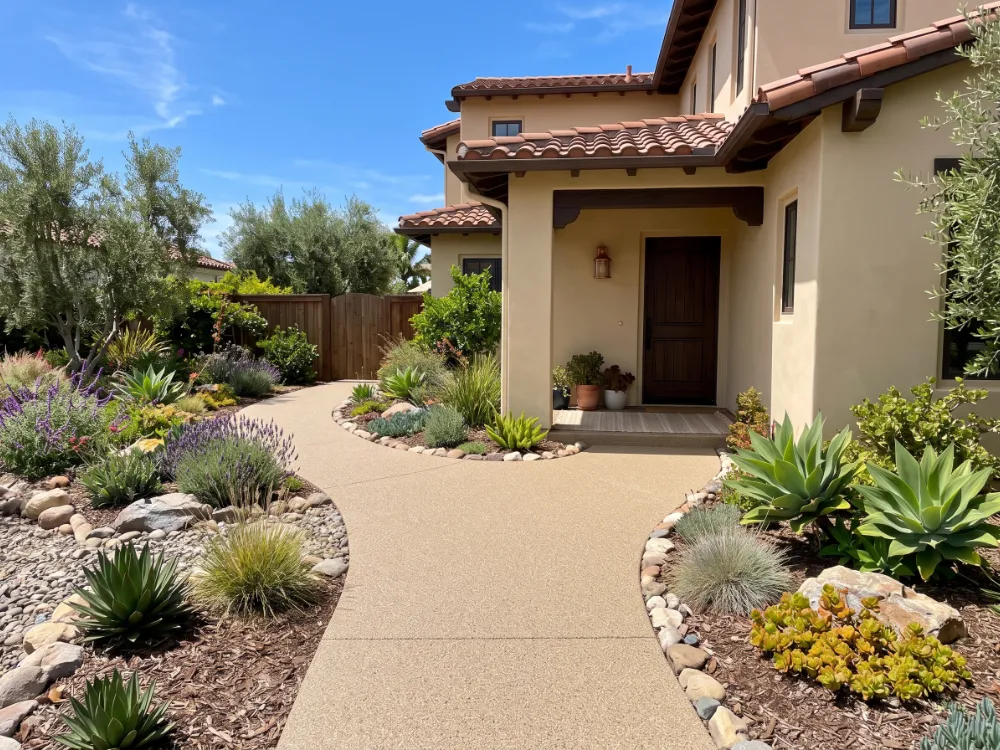
Outdoors, the family's UV-stable branch takes over — our five-layer exterior flake system finishes in polyaspartic and urethane topcoats with slip-resistant additive, engineered for driveways, patios and pool decks that live in full Southern California sun.
Frequently Asked Questions
What exactly is polyurea?
Polyurea is a coating chemistry created when an isocyanate reacts with an amine-terminated resin. The reaction produces a film with unusual tensile strength and elasticity — it stretches and returns instead of cracking. In flooring it serves as a high-performance basecoat and wear system that bonds deeply into prepared concrete.
Is polyaspartic the same thing as polyurea?
Polyaspartic is a member of the polyurea family — specifically an aliphatic polyurea modified to react more slowly, which makes it workable with a roller and UV-stable. So every polyaspartic is a polyurea, but not every polyurea is polyaspartic. Our garage systems typically pair a polyurea-class basecoat with a polyaspartic topcoat.
Is polyurea better than epoxy for a garage floor?
They are different tools. Polyurea is stronger in tension, far more flexible and cures much faster; epoxy builds thicker per coat, tolerates slab moisture better and costs less. Concrete moves — it expands, contracts and hairline-cracks — and polyurea's elongation absorbs that movement where a rigid film can stress-crack. The best systems use each where it wins.
Why does flexibility matter in a floor coating?
Because concrete is never still. Slabs expand in summer heat, shrink on cool nights and develop hairline cracks as they age. A coating with real elongation stretches over that movement and keeps its bond; a brittle film transmits the stress and eventually cracks or chips along with the slab beneath it.
How fast can a polyurea floor be installed?
A residential garage is typically a one-day project: diamond grinding and repairs in the morning, the polyurea basecoat and full flake broadcast by midday, and the polyaspartic topcoat in the afternoon. Foot traffic is fine that evening and vehicles can return in about 24 hours.
Is polyurea a single coat or a system?
Always a system. A basecoat that penetrates the ground-open concrete, a full-rejection flake broadcast for texture and thickness, and a UV-stable wear topcoat. Companies advertising one thick miracle coat are skipping the layers that make the floor last — every layer has a distinct job.
Does polyurea handle hot-tire pickup and chemicals?
Yes. The basecoat anchors into the bonding profile that diamond grinding opens, so heat from tires has no weak film edge to peel. The cured system also resists gasoline, oil, brake fluid and household chemicals — spills wipe off the non-porous surface rather than soaking in and staining.
Can polyurea be installed in winter or hot summers?
Yes — its cure chemistry tolerates a wide temperature window, so we install through Southern California's full calendar, from cool coastal mornings to inland summer heat. Cure times shift slightly with temperature but the schedule remains a one-day install for a standard garage.
How long does a polyurea garage floor last?
Decades. High tensile strength, elongation and abrasion resistance mean the system outlives rigid budget coatings, and because we manufacture the material ourselves, residential installations carry a limited lifetime warranty — the maker and the installer are the same company standing behind the same floor.
Do you use polyurea outdoors?
The aliphatic, UV-stable side of the family — polyaspartic — is what we run outdoors, where it anchors our five-layer exterior flake system for driveways, patios and pool decks. Sun-exposed concrete needs that UV immunity; standard aromatic polyurea would amber like epoxy does.
Build the Right System for Your Floor
Polyurea is one chemistry in a larger toolbox — see how the systems compare and where each belongs.
Garage floor coating · Polyaspartic floor coating · Epoxy flake flooring · Epoxy floor repair · Driveway coating · Commercial & industrial flooring · Concrete grinding & surface prep · Color chart
FREE onsite Estimate
5 stars rated company
Get it done right the first time...


