
High-Performance Chemical Resistant Coating
Novolac Coating
The epoxy chemistry built for acids, solvents and corrosion — where standard coatings surrender
Request a Free Estimate
Novolac Epoxy Coating
Novolac is what epoxy becomes when the job is chemistry, not just traffic. A standard epoxy resin cures into a hard, durable floor — but concentrated acids, aggressive solvents and caustic cleaners will etch, soften and stain it over time. Novolac resin carries additional reactive sites in its molecular structure, so it cures into a far more tightly cross-linked material: a dense, extremely hard surface that resists acids, bases, solvents and corrosion at levels standard epoxy cannot approach — including sustained immersion, which is why it is the specification for secondary containment.
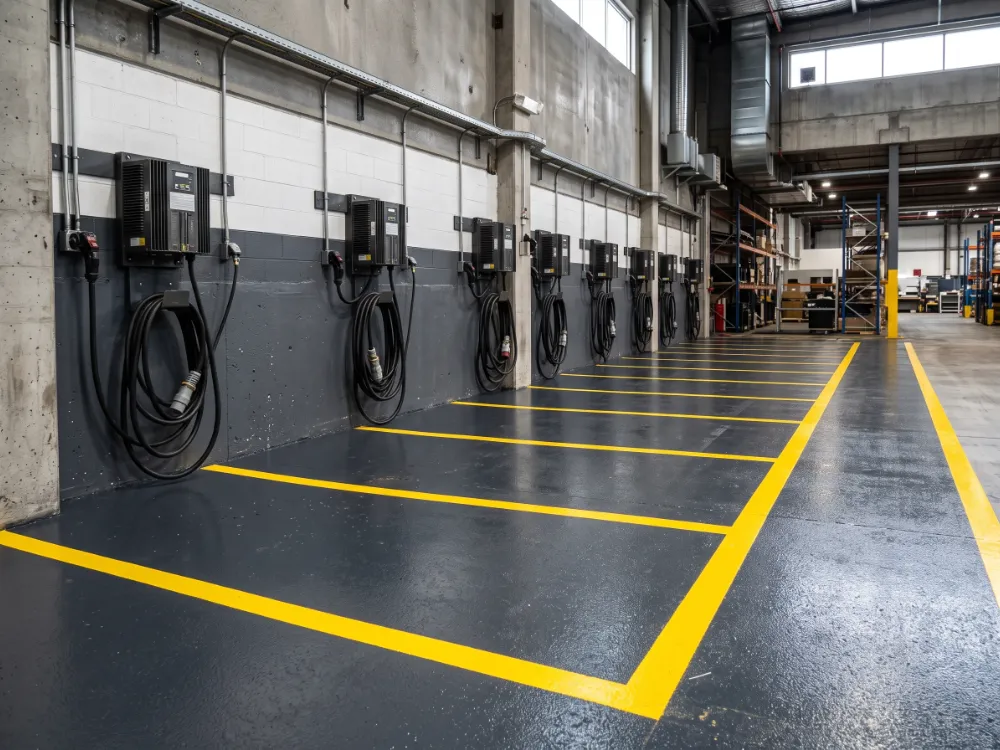
In practice, Novolac is the floor we install wherever the environment attacks: chemical processing and storage, battery charging areas where sulfuric acid mist settles, laboratory wet chemistry, plating and wash-down zones, extraction facilities running ethanol and hydrocarbons, and the containment berms that hold a spill until it is pumped out. The system installs like our other coatings — diamond grinding to a bonding profile, repairs, high-build application with integral coves — and because we manufacture our own materials and install with our own crews, the chemical-resistance specification and the workmanship carry one three-year commercial warranty from one company.
Novolac is one system in our full range — see commercial and industrial flooring for the complete lineup, or request a free on-site estimate below and we will match the chemistry to your exposure list.
What Novolac Delivers

Heavy-Duty Chemical Resistance
Heavy-duty chemical resistance — the tightly cross-linked cure withstands exposure that etches and softens standard epoxy.

Corrosion & Acid Protection
Corrosion and acid protection — concentrated acids, including sustained contact and immersion, are the design condition.

Abrasion Resistance
Abrasion resistance — the dense matrix carries forklifts, drums and wheeled equipment over the same chemistry-proof surface.
Extremely Hard & Tough
Extremely hard and tough — impact and point loads that crater ordinary floors leave Novolac unmarked.

Fumes & CO2 Resistant
Resistant to fumes and carbon dioxide environments — vapor exposure around process equipment does not degrade the film.

Detergent & Alkali Proof
Detergents and alkalis resistance — caustic wash-downs and sanitizing chemistry clean the surface without consuming it.
What Is Novolac, Exactly?
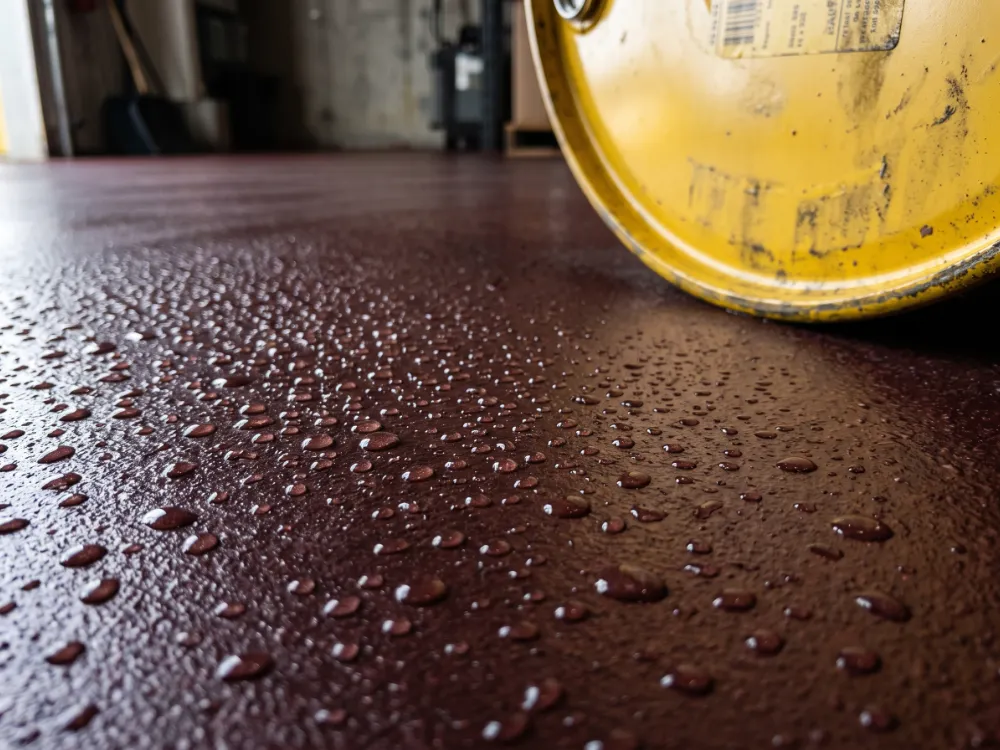
Chemically, Novolac is an epoxy resin built on a phenolic backbone that carries more reactive sites per molecule than standard bisphenol epoxy. When it cures, those extra sites form additional cross-links — imagine a net woven twice as tight — and that density is the whole story: less space for aggressive molecules to penetrate, more bonds for them to break, and a surface that stays intact under chemistry that dissolves lesser floors. It is the difference between a floor that resists a spill and a floor rated to hold one.
Chemical Resistance in Practice
What the specification means on a working floor:
- Sulfuric, hydrochloric and other concentrated acids — splash, spill and immersion exposure
- Solvents including ethanol, acetone and hydrocarbons that soften standard coatings
- Caustics, degreasers and sanitizing chemistry from daily wash-down cycles
- Process fumes and CO2-rich environments around tanks and equipment
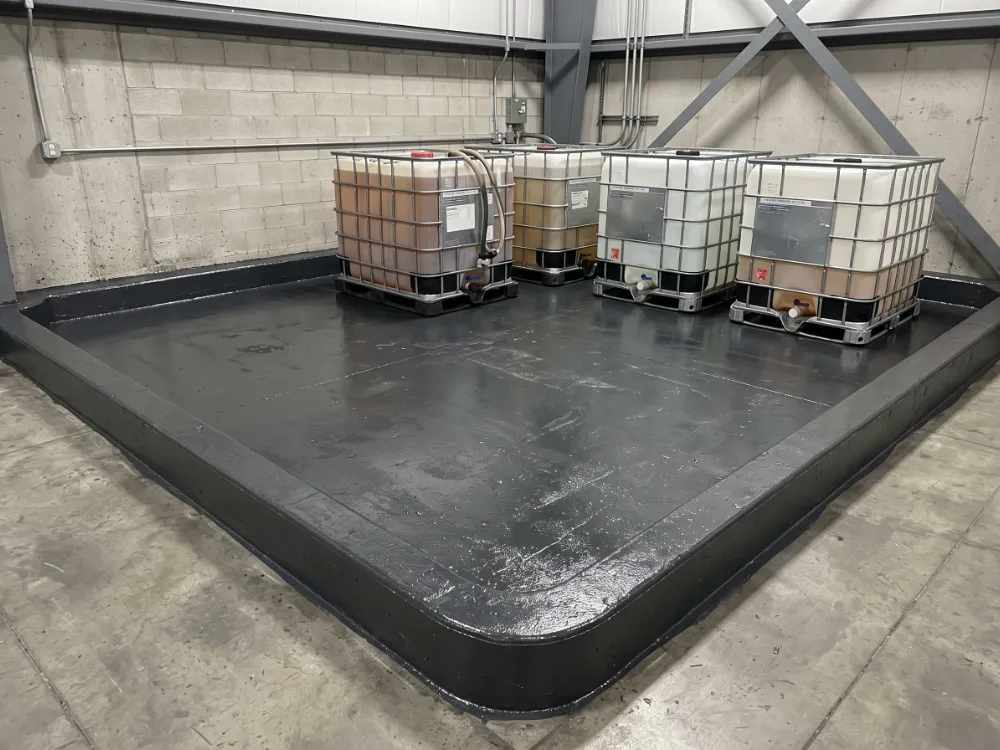
Secondary Containment
Containment is where Novolac earns its rating in writing. Around chemical storage, totes and process tanks, the coating covers the floor and rises over engineered berms and curbs as one continuous membrane — built to hold a full spill in sustained contact until cleanup, not merely to survive a splash. Coved corners, sealed penetrations and immersion-grade chemistry make the floor itself the last line of environmental protection, which is exactly how regulators and insurers read it.
Advantages of Novolac Systems
Novolac costs more per gallon than standard epoxy and repays it wherever chemistry is the enemy: floors that stay intact under exposure, containment that holds when it must, and a specification your compliance file can lean on — installed and warrantied by the company that manufactured it.
Immersion-Grade Protection
Immersion-grade protection — rated for sustained chemical contact, not just the quick wipe-up.
Coved Containment Detailing
Coved, sealed containment detailing — berms, curbs and penetrations coated as one continuous membrane.
One Manufacturer, One Installer
Manufactured and installed by one company — the chemistry claim and the workmanship share one warranty.
Where Novolac Gets Installed
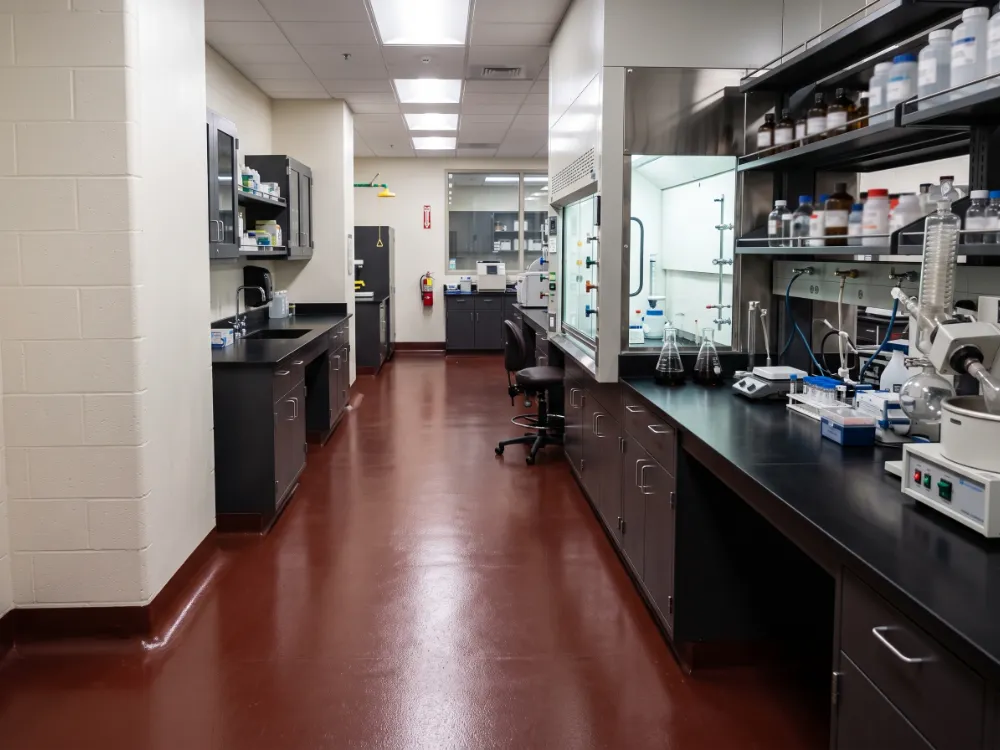
The system’s natural habitats: chemical processing and storage floors, battery charging areas where acid mist settles on everything, plating and anodizing lines, laboratory wet chemistry, extraction facilities running ethanol and hydrocarbons, wastewater and pump rooms, and food plants whose nightly caustic wash-downs consume ordinary coatings. If your floor’s exposure list reads like a chemistry test, it reads like a Novolac specification.
Novolac vs Standard Epoxy
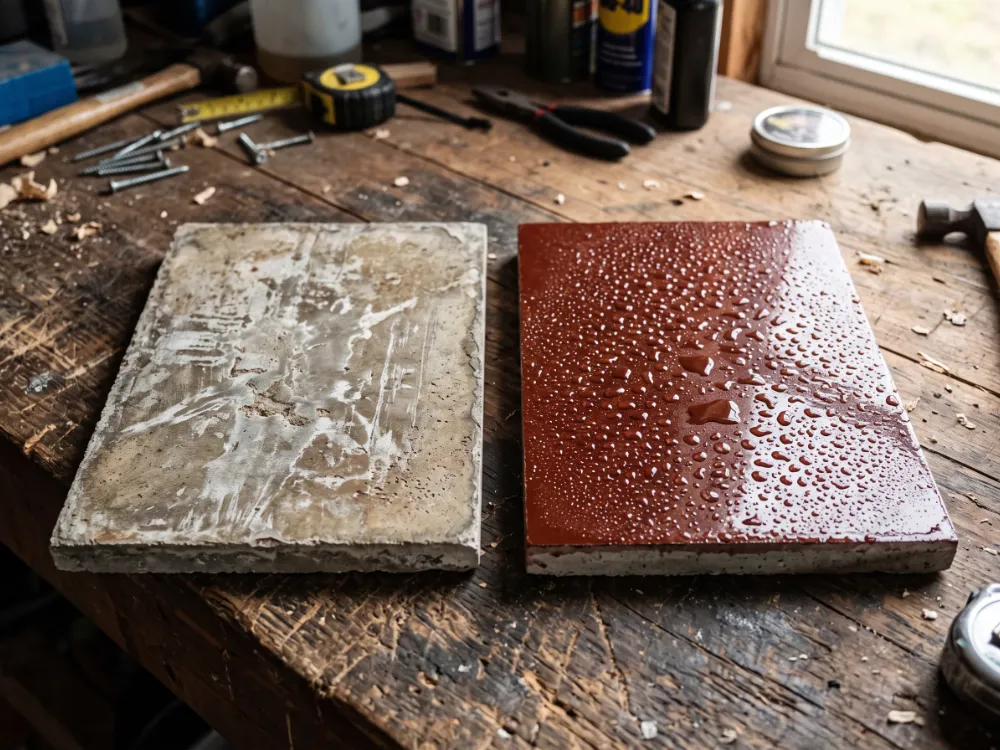
Standard epoxy is the right floor for most spaces — garages, retail, warehouses — and we install thousands of square feet of it. The line is drawn by exposure: where chemistry is occasional and mild, standard systems serve for years; where acids, solvents or caustics are part of the daily process, standard epoxy etches, clouds and softens while Novolac stays intact. During the estimate we map your actual exposure zone by zone — most facilities need Novolac only where the chemistry lives, standard systems elsewhere, and the two install as one seamless floor.
Installed Like Every Floor We Build
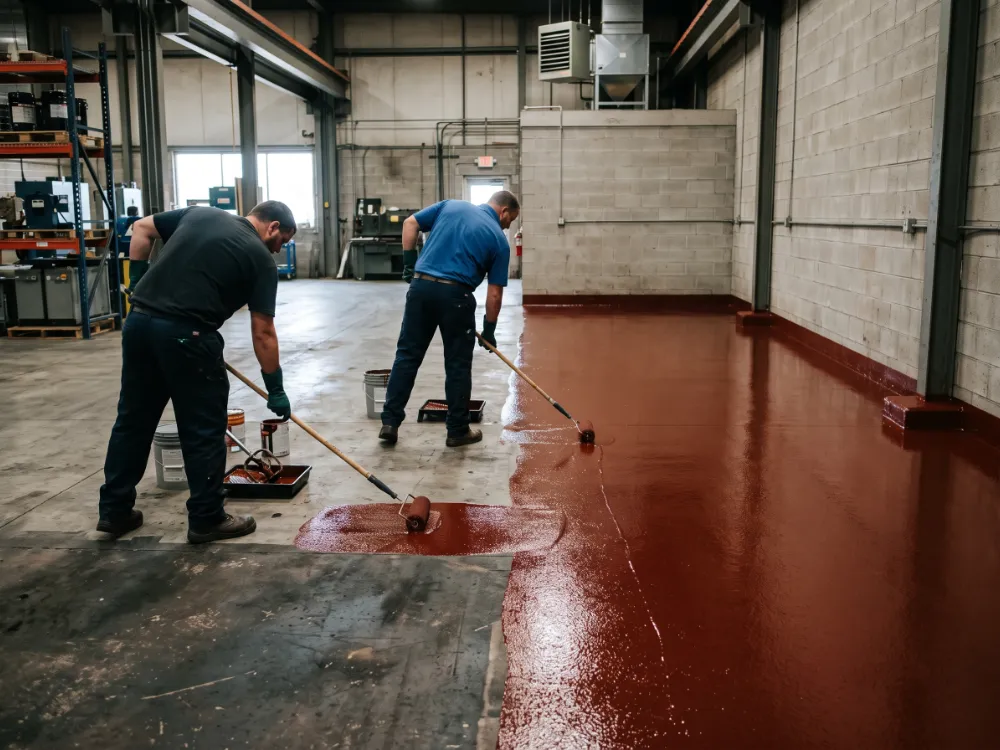
Novolac follows our standard installation discipline: diamond grinding to a clean bonding profile, crack and joint repair, moisture testing where slabs are on grade, then the high-build Novolac system with integral coves and containment detailing where the plan calls for it. Work phases around your operation — zones, nights or shutdown windows — and the VOC-free chemistry keeps adjacent spaces working throughout. Cure schedules are posted per zone, and chemical service resumes on a written timeline.
Frequently Asked Questions
What makes Novolac different from regular epoxy?
Molecular density. Novolac resin carries more reactive sites, so it cures into a much more tightly cross-linked film — dramatically more resistant to acids, solvents and caustics, including sustained immersion. Standard epoxy is a durable floor; Novolac is chemical protection that happens to be a floor.
What chemicals can it actually handle?
Concentrated acids such as sulfuric and hydrochloric, solvents including ethanol, acetone and hydrocarbons, caustics, degreasers and sanitizing chemistry — in splash, spill and, for containment builds, sustained immersion. Your specific exposure list is mapped during the estimate and matched to the formulation in writing.
Is Novolac required for secondary containment?
It is the accepted specification — containment must hold a spill in sustained contact, which is immersion service, and that is precisely where standard epoxy fails. Berms, curbs and coved corners are coated as one continuous Novolac membrane.
Where is it most commonly installed?
Chemical processing and storage, battery charging areas, plating lines, laboratories, extraction facilities, wastewater rooms and wash-down-intensive food plants — anywhere the floor’s daily exposure reads like a chemistry list.
Do we need Novolac for the whole facility?
Rarely — and we will not sell it that way. Most facilities need Novolac only in the exposure zones, with standard high-build systems everywhere else, installed as one seamless floor. The zone mapping during the estimate keeps the budget honest.
How tough is it mechanically — forklifts, drums, impacts?
Extremely — the same dense cross-linking that resists chemistry makes the film exceptionally hard and abrasion-resistant. Forklift traffic, drum handling and dropped tools are within the rating alongside the chemical exposure.
What colors and finishes does it come in?
Solid colors — the classic deep red-brown, grays and safety tones — with coated-in striping and zone marking, in satin to gloss. It can also serve as the chemical-resistant topcoat over broadcast systems where texture is needed.
Can it be installed without shutting down our process?
Usually — zones phase around your operation the way all our industrial work does: nights, weekends and scheduled windows, with cure times posted per zone and chemical service resuming on a written timeline.
How long does a Novolac floor last?
In chemical service it routinely outlasts several generations of the standard coatings it replaces — typically a decade and more even under exposure. Material and workmanship carry our three-year commercial warranty as one obligation.
What does Novolac coating cost?
More per square foot than standard epoxy — the resin itself is a premium material — which is why zone mapping matters: you buy it only where the chemistry demands it. We manufacture our own systems, so pricing is distributor-direct, and the free on-site estimate prices each exposure zone exactly.
The System Behind Our Hardest Floors
Novolac is the chemical-resistance backbone across our industrial work — one specification, coved and containment-detailed, under one three-year commercial warranty, across Los Angeles, Orange, Ventura and the surrounding counties.
See it in context: laboratory flooring, manufacturing flooring, cannabis farm flooring, mechanical room flooring and the commercial and industrial overview.
FREE onsite Estimate
5 stars rated company
Get it done right the first time...


