
Mechanically Refined Concrete Specialists
Concrete Polishing
No coating, no film, nothing to peel — the slab itself, refined until it shines
Request a Free Estimate
Concrete Polishing
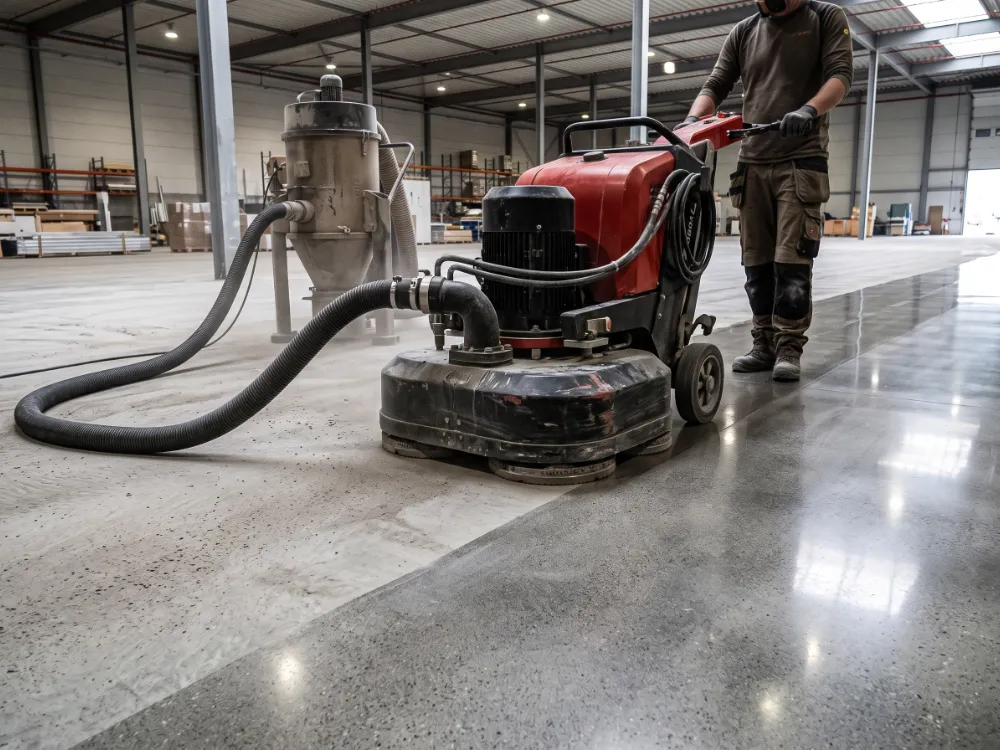
Polished concrete is the one floor on this site with no coating in it at all. The slab is ground with coarse diamond tooling, chemically densified until its surface is harder than the day it was poured, then honed and polished through finer and finer grits — the same logic that turns rough granite into a countertop. The shine you see in a polished showroom floor is the concrete itself, which is why it cannot peel, delaminate or wear through: there is nothing on it to fail.
Top Epoxy Flooring polishes commercial and industrial floors across Los Angeles, Orange, Ventura, San Bernardino, Riverside and San Diego counties — retail spaces, showrooms, restaurants, offices and warehouses — with dust-controlled HEPA equipment and a finish specification you choose rather than inherit. And because we install coatings, grind-and-seal and overlays as well, our polish recommendation comes without a thumb on the scale: when polish is wrong for a slab, we are the rare polishing contractor who will say so.
Below: how the process actually works, the four sheen levels and how to pick one, where polish belongs in a facility, and the honest comparison with its coated cousins.
What Goes Into Every Polished Floor

Progressive Diamond Grits
Coarse diamond grinding opens and flattens the slab — the shaping stage where old coatings, laitance and high spots disappear.

Lithium-Silicate Densifier
A lithium-silicate densifier reacts into the surface, hardening it measurably and making both the polish and the durability possible.

Honing for Optical Clarity
Honing passes at middle grits build the optical clarity — each pass erasing the scratch pattern of the one before.

High-Grit Polish & Burnish
High-grit polishing and burnishing bring the floor to its specified sheen, from soft satin to full mirror.

Optional Stain-Guard Treatment
An optional stain-guard treatment adds penetrating protection against spills in dining, retail and entry zones.

Dust-Controlled HEPA Grinding
Every pass runs under HEPA dust extraction — an occupied building stays clean and open while its floor transforms.
Grind, Hone, Polish — in That Order
Polishing is a disciplined grit progression. Grinding at coarse diamonds does the structural work: flattening, exposing the chosen level of aggregate, erasing history. Honing through the middle grits refines the scratch pattern until the surface reads smooth to light. Polishing at fine grits — into the thousands — is where the shine arrives, developed from the stone rather than applied to it.
Skipping grits to save passes leaves swirl haze that no final polish can hide; running the full progression is the entire difference between a floor that gleams and one that almost does. It is slow, methodical, machine-driven craft — and it is permanent.
Densification: the Invisible Upgrade
Midway through the process the floor drinks a lithium-silicate densifier — a reactive liquid that penetrates the open surface and grows new crystalline hardness inside the concrete's pores. The slab's wear surface becomes denser and harder than it has ever been, which is what lets fine diamonds raise a shine and what stops the endless dusting that plagues bare industrial slabs.
Densification is also the honest answer to "how does it last with no coating?": the protection is not on the floor, it is in it — permanently, with nothing to reapply.
Pick Your Sheen: Four Levels
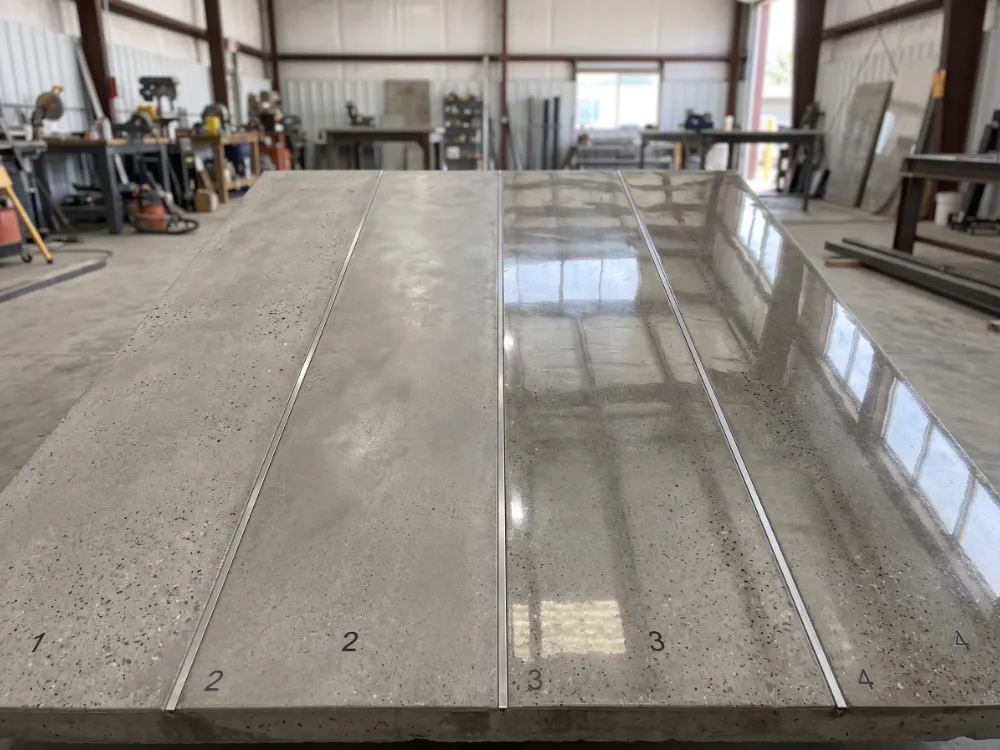
The finish is a specification, not an accident — defined by where the grit progression stops:
- Level 1 — Flat: ground and densified, minimal sheen; utility spaces and floors awaiting future finish.
- Level 2 — Satin: honed soft glow; warehouses, back-of-house, industrial aisles.
- Level 3 — Semi-polished: clear reflections; restaurants, offices, retail.
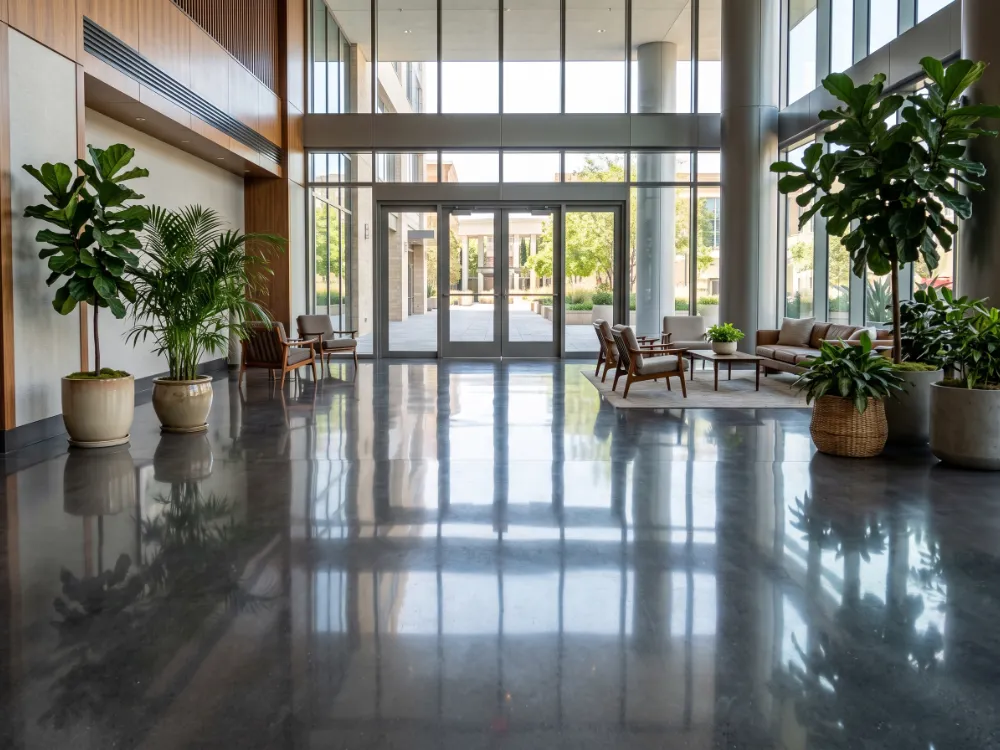
- Level 4 — Mirror: full-gloss showpiece; showrooms, lobbies, galleries.
We sample levels on your actual slab so the decision is made looking down, not at a brochure.
Advantages of Polished Concrete
The lowest-maintenance commercial floor there is: no coating to peel or recoat, hardness added into the slab itself, light reflection that brightens whole facilities — installed dust-controlled around your operations by a contractor with no bias toward the polish.
The Shine Is the Stone Itself
Nothing to peel, ever: the finish is the densified slab itself, refined — not a film riding on top of it.
Lowest Maintenance in Flooring
Maintenance is a dust mop and occasional burnish — no waxing, no resealing, no recoat cycle on the calendar.
A Sheen You Choose, Not Guess
Measurably brighter facilities: the reflective surface returns overhead light and cuts fixture demand in big rooms.

Retail, Restaurants and Showrooms
Customer-facing spaces are polish's home turf: a semi-polished or mirror floor reads premium without competing against the merchandise, survives decades of foot traffic, and shrugs off the scuffing that dulls coated and waxed floors. Restaurants add a stain-guard treatment for the dining room; showrooms go to full mirror and let the floor double the lighting.
The install itself is business-friendly — low odor, dust-controlled, sectioned overnight — so the store keeps trading while the floor upgrades underneath it.
Warehouses and Industrial Floors
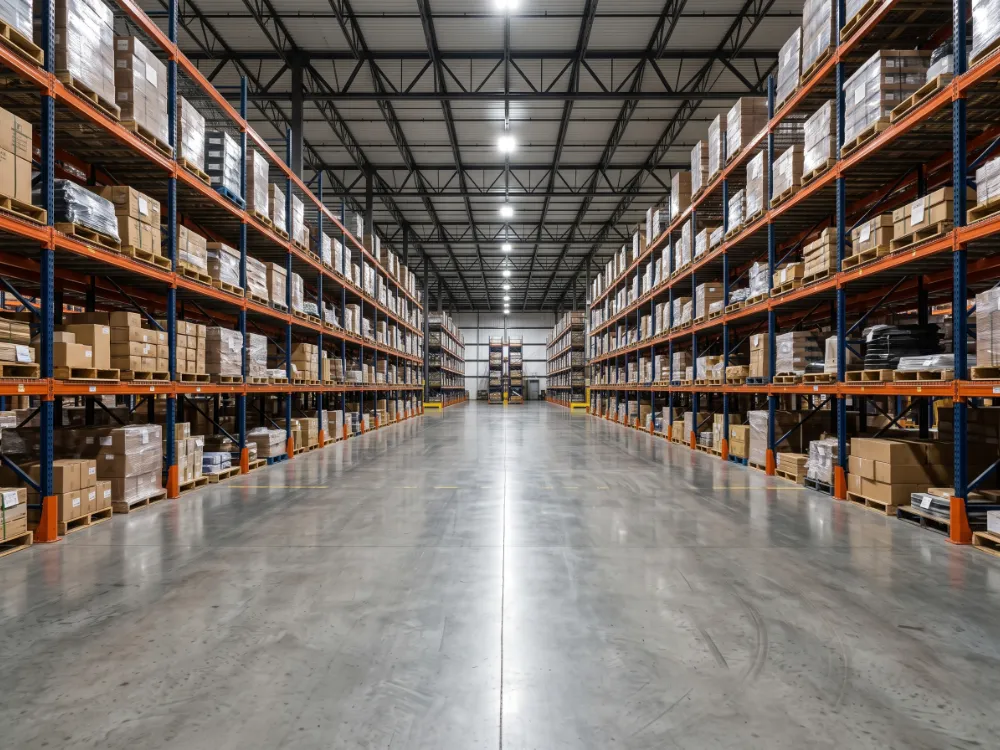
Distribution and production floors choose polish for unromantic reasons: densified concrete stops dusting onto product and equipment, satin-honed lanes stay flat and fast under forklifts, and there is no coating for steel wheels to plow through. Travel aisles actually improve with traffic, burnishing brighter along the routes the fleet runs.
Add line striping over the polish and safety zones survive as long as the shine — which is to say, indefinitely, with a periodic burnish as the entire maintenance program.
Polish, Grind & Seal, or a Coating?
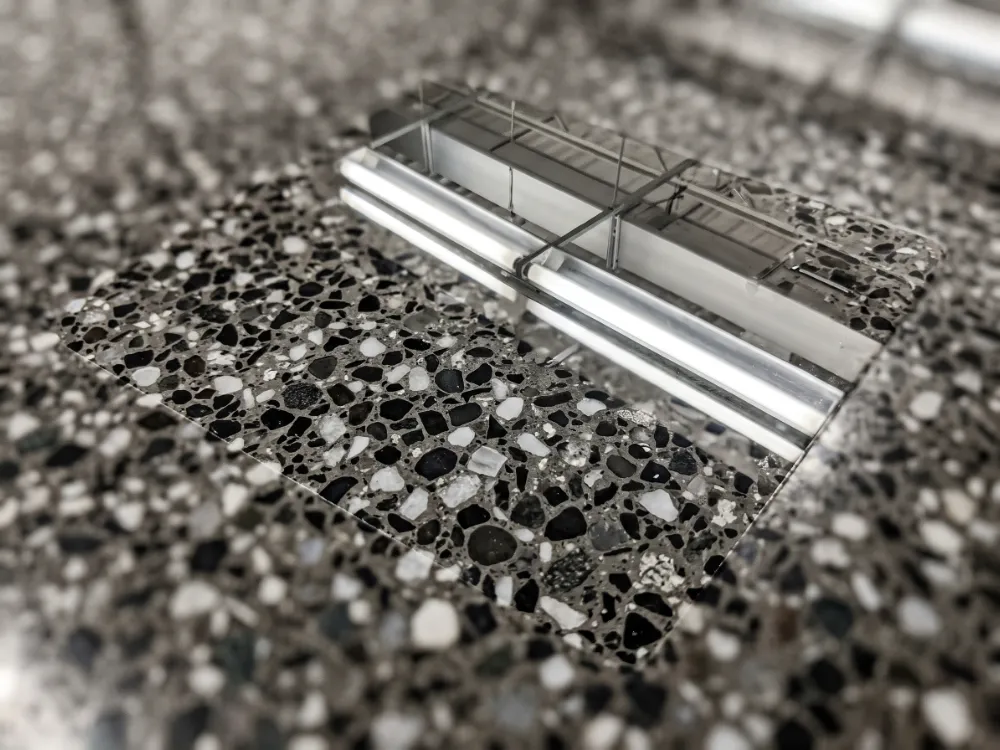
The three get confused constantly, and the differences are simple. Polish refines the stone itself — permanent, lowest maintenance, but honest about slab history and vulnerable to harsh chemistry. Grind and seal stops the refinement early and protects with a clear sealer — the industrial look, faster and more affordable, with a renewable film. Coatings build a new engineered surface — maximum protection and color, the answer for chemistry, moisture and damaged slabs.
We install all three, so the comparison on your estimate is an engineering judgment, not a sales script. The slab, the traffic and the chemistry pick the winner.
Frequently Asked Questions
What is polished concrete, mechanically speaking?
It is your slab refined the way granite countertops are: ground with coarse diamonds, hardened with a chemical densifier, then honed and polished through progressively finer grits until the concrete itself reflects light. There is no coating anywhere in the system — the finish is the stone, which is why it cannot peel, yellow or wear through.
What does the densifier actually do?
It is a liquid silicate that soaks into the ground surface and reacts with the concrete's free lime, growing additional crystalline structure inside the pores. The slab's surface becomes measurably harder and denser — able to take a polish, resist abrasion and stop dusting permanently. It is the chemistry that makes the mechanics possible.
What sheen levels can I choose?
Four standard stops, defined by where the grit progression ends: a flat, low-sheen ground finish; a satin hone with soft light return; a semi-polished floor with clear reflection; and a high-gloss mirror polish. Each level has its place — warehouses usually stop at satin, showrooms often go to mirror — and we sample levels on your slab before committing.
Can my existing slab be polished?
Most sound slabs, yes. Polishing rewards structurally healthy concrete; it will honestly expose patches, plumbing trenches and bad repairs, since there is no coating to hide them. Where a slab's history would show badly, we say so and point to grind-and-seal or an overlay instead — we install those too, so the advice is unbiased.
Is polished concrete slippery?
Less than it looks. Dry polished concrete typically meets slip-resistance standards comparable to other hard commercial floors, and a stain-guard with grip additives can be specified for entries and wet zones. The mirror effect is optical, not a wax layer — there is no slick film on the surface.
How does it hold up under forklifts and carts?
Exceptionally — a densified, polished slab is harder at the surface than the concrete it started as, and there is no coating for wheels to wear through. Distribution centers choose polish precisely because steel-wheeled traffic that destroys coatings simply burnishes it shinier along the travel lanes.
What is the maintenance program?
Dust-mop routinely, damp-mop with a neutral cleaner as needed, and have high-traffic areas burnished occasionally to refresh the gloss. There is no sealer to reapply on a standard polish and nothing to recoat — which is why polish wins every lifetime-maintenance comparison in commercial flooring.
How disruptive is the installation for a business?
It is a dust-controlled, low-odor, mechanical process — HEPA-shrouded machines, no solvent smell, and section-by-section scheduling that can run nights and weekends. Areas return to service quickly after each pass, making polish one of the most operations-friendly floors to install in an occupied building.
How are cracks and joints handled?
Filled and refined into the finish: cracks are repaired with polishable fillers, control joints are filled flush so wheels cross silently, and both are honed with the floor. They remain quietly visible — polished concrete is honest — but they become smooth, maintainable details rather than debris traps.
Polished concrete or an epoxy coating — which should my facility choose?
Polish wins on lifetime maintenance, light reflection and never-peels permanence; coatings win on chemical resistance, color choice, and hiding slab history — and spaces with heavy chemistry or staining risk genuinely need the coating. We install both, so the recommendation follows your operations rather than our inventory.
Explore the Alternatives
Polish is one of three ways we finish bare concrete — and one of many systems in the catalog.
Concrete grind & seal · Concrete grinding & surface prep · Decorative concrete · Stained concrete flooring · Retail space flooring · Showroom flooring · Warehouse flooring · Commercial & industrial flooring
FREE onsite Estimate
5 stars rated company
Get it done right the first time...


