
Outdoor Concrete Coating Specialists
Pool Deck Coating
Cool underfoot, sure-footed when soaked, and immune to chlorine — the deck your pool deserves
Request a Free Estimate
Pool Deck Coating
A pool deck lives the hardest outdoor life on the property: barefoot traffic on a surface that is always wet somewhere, chlorinated splash-out working into the concrete, and full Southern California sun from March to November. Bare concrete answers with hot feet, spalling and gray staining; a proper coating system answers with a surface built for exactly this duty.
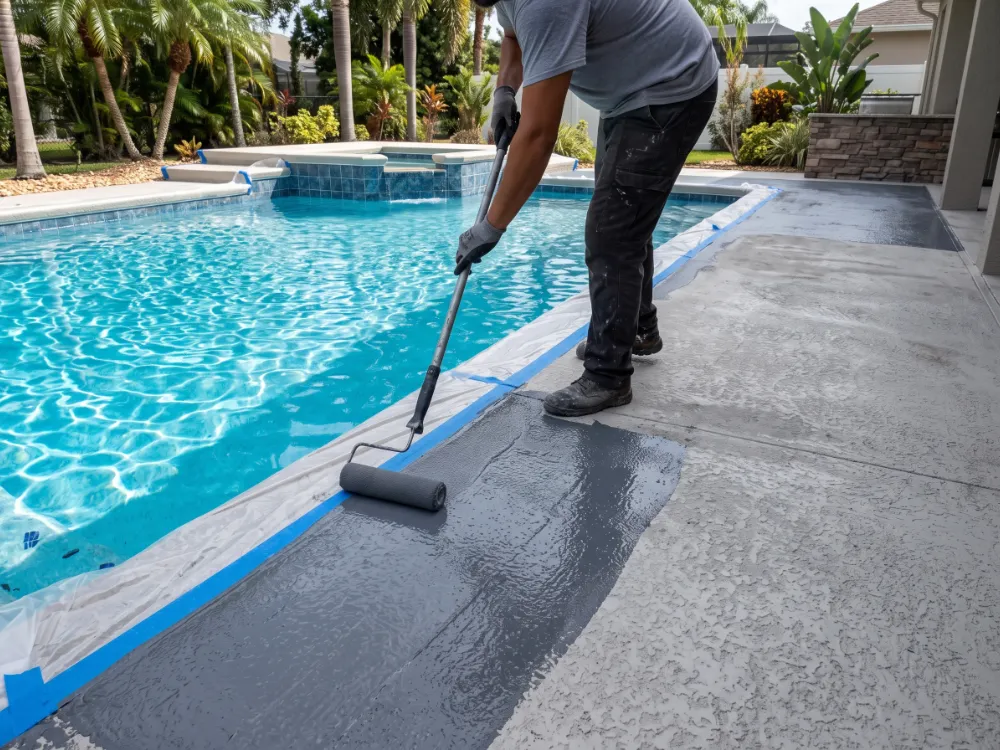
Top Epoxy Flooring resurfaces and coats pool decks across Los Angeles, Orange, Ventura, San Bernardino, Riverside and San Diego counties with our five-layer outdoor system — moisture vapor barrier, pigmented polyaspartic basecoat, full flake broadcast, polyaspartic topcoat and a urethane wear coat with slip-resistant additive. We manufacture every layer ourselves, the materials are VOC-free, and outdoor work carries a three-year warranty from the maker.
The pages that rank for pool deck coating mostly skip the questions that matter poolside — how hot, how slippery, what chlorine does, what the layers actually are. This page answers all four, plainly, before you ever request the estimate.
What Goes Into Every Pool Deck

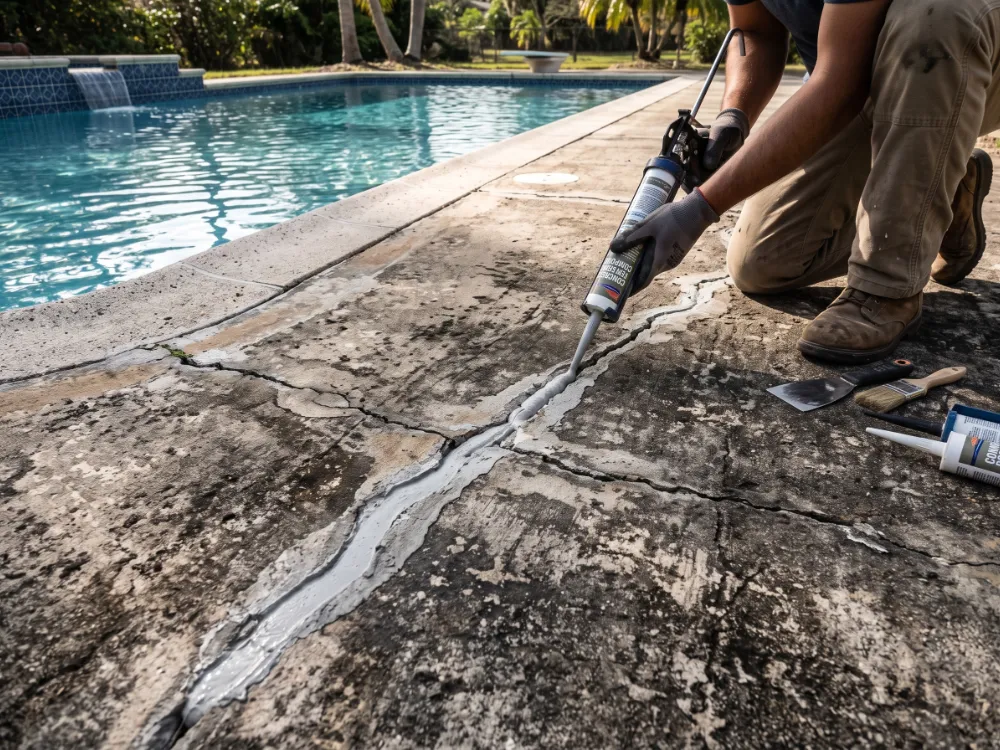
Crack Repair Before Coating
Cracks, spalls and pits are repaired flush and the deck diamond-ground clean — the coating inherits a sound surface, never a failing one.

Moisture Vapor Barrier
A moisture vapor barrier seals the slab first, so ground moisture and constant pool splash can never push the system off from below.

Pigmented Polyaspartic Basecoat
The pigmented polyaspartic basecoat bonds the color layer into the prepared concrete, flexible through summer-winter swings.

Full-Rejection Flake Broadcast
A full flake broadcast builds thickness, hides the slab's history and starts the surface's built-in wet-grip texture.

Polyaspartic + Urethane Topcoats
Two wear coats seal the deck — UV-stable polyaspartic, then a urethane finish coat that takes sun, feet and furniture.

Slip-Resistant Additive
Slip-resistant additive in the final coat is standard on every pool deck — wet-area traction is the system's whole point.
Five Layers Around the Water
Our pool decks use the same five-layer outdoor stack that protects our driveways and balconies, tuned for the wettest job in the yard. The vapor barrier handles what rises from the ground; the pigmented polyaspartic basecoat bonds and flexes; the flake broadcast delivers looks and texture; and two dissimilar topcoats — polyaspartic, then urethane with slip additive — split the wear and weather duty between them.
Single-coat deck paints ask one film to survive all of it, which is why they blister and peel around every pool that tried them. Layers last; that is the whole philosophy.
Traction Where It Counts Most
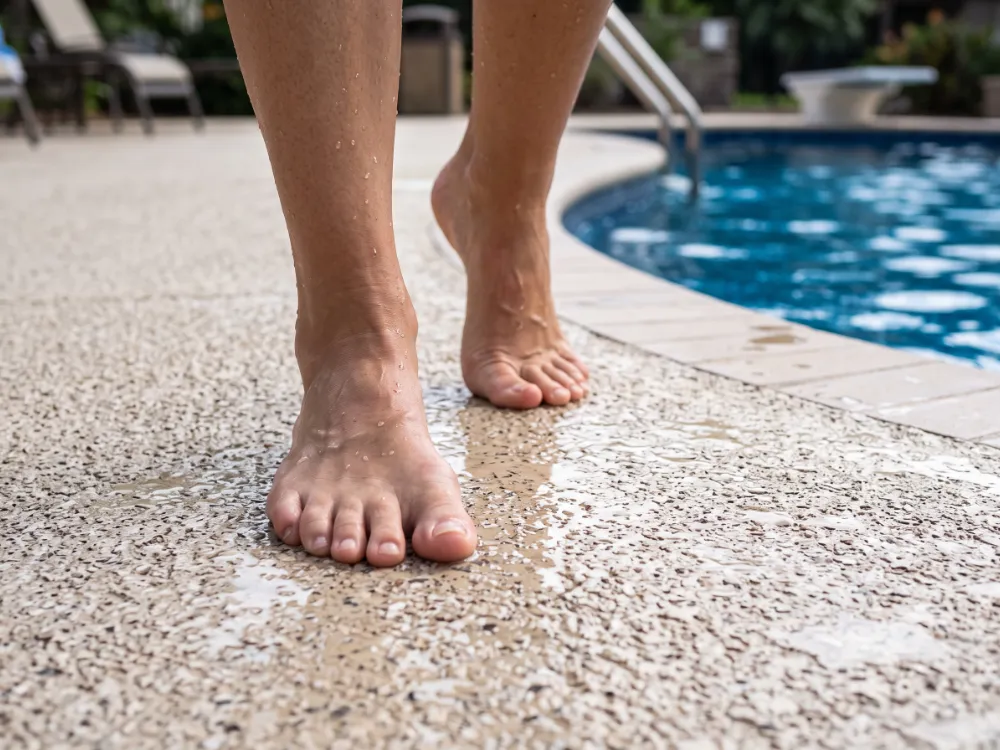
Nowhere is slip resistance less optional than the strip of concrete between a swimmer and the water. Our decks earn their grip twice — the flake broadcast's natural orange-peel texture, then a slip-resistant additive locked into the urethane wear coat — producing a surface that holds wet bare feet at a run without shredding knees on the inevitable sit-down.
It is a texture calibrated for skin: confident underfoot, comfortable to lie on, kind to toddlers and towels alike.
Cool Underfoot, By Design
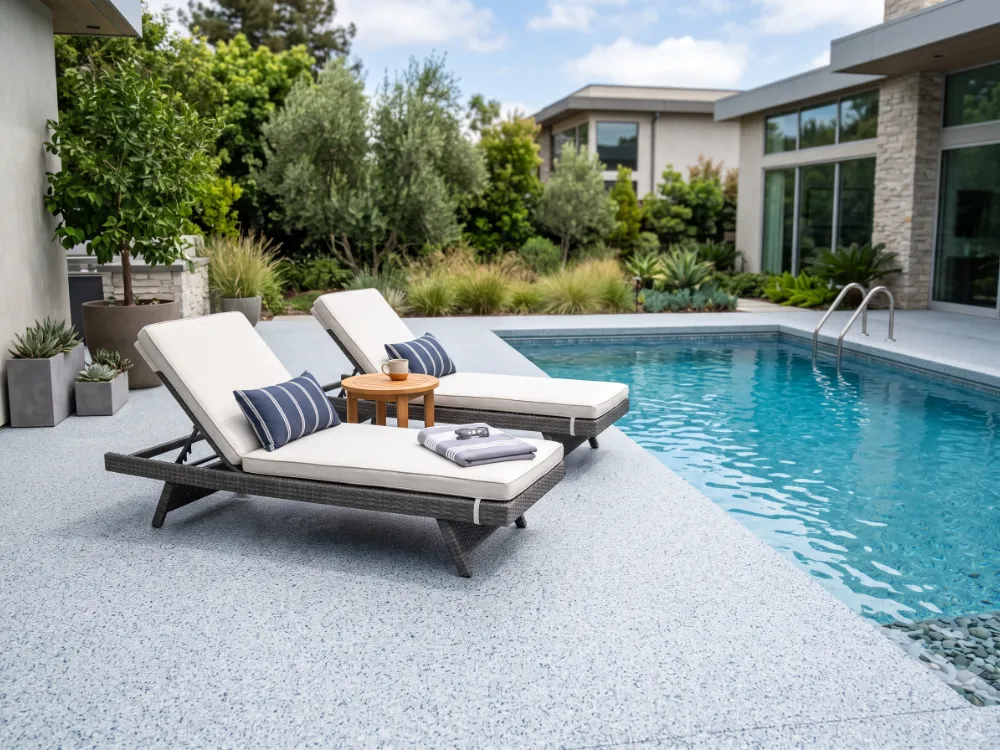
Every Southern California pool owner knows the August hop-dance across scorching concrete. Surface temperature is mostly a color decision, so we steer pool decks toward light, reflective blends — creams, sands, soft grays — that give back the sun instead of banking it. The difference between a light coated deck and dark bare concrete at 3 p.m. is the difference between walking and hopping.
The satin-textured finish also scatters glare that a smooth troweled deck would bounce straight into your eyes off the waterline.
Advantages of Our Pool Deck System
A deck engineered for swimmers: slip-resistant when soaked, cool in full sun, indifferent to chlorine and salt — five manufactured-in-house layers over a properly repaired slab, with a three-year outdoor warranty signed by the company that made every coat.
Barefoot-Safe When Soaked
Slip-resistant urethane wear coat plus flake texture — barefoot-safe traction that is standard, never an upsell.
Cooler Than Bare Concrete
Light reflective blends keep the deck walkable through peak summer — measurably cooler than bare or dark-finished concrete.
Chlorine and Salt Can't Touch It
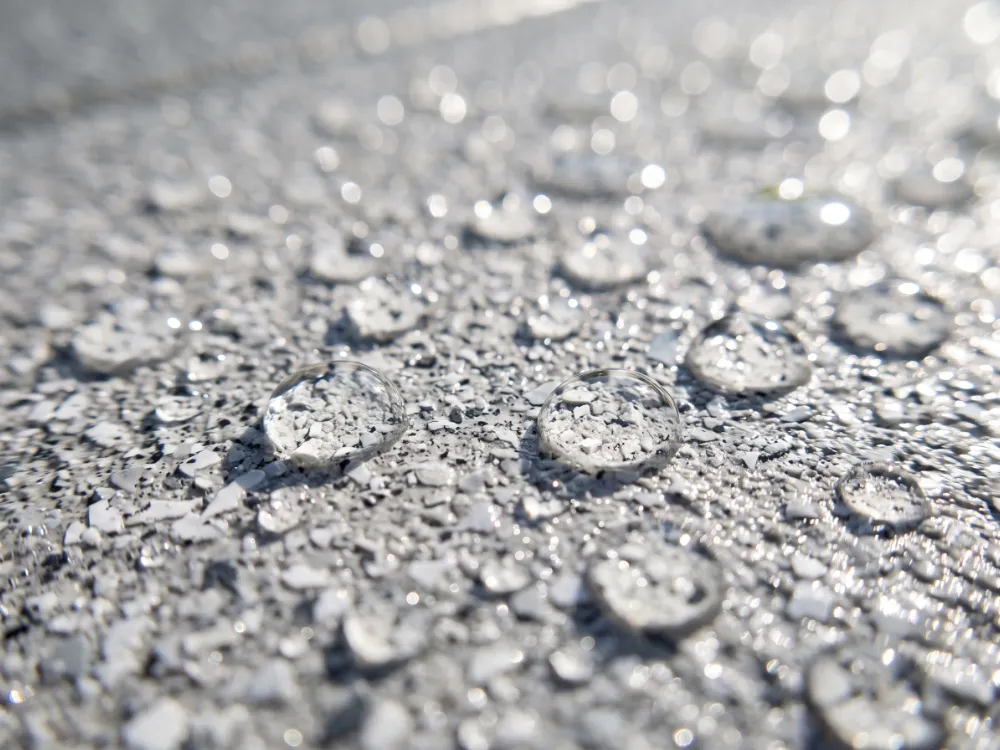
Non-porous chemistry shrugs off chlorine, salt-system water and sunscreen — the deck rinses clean instead of absorbing the pool.
What Pool Chemistry Does to Bare Concrete
The water that makes a pool safe quietly destroys the concrete around it:
- Chlorinated splash-out soaks into porous concrete and breaks down the cement paste, turning the surface dusty and pitted.
- Saltwater systems are harder still — salt crystallizes in the pores and pops the surface apart, one freeze-free SoCal winter at a time.
- Sunscreen, body oils and minerals build the gray-brown patina every old deck wears.
A sealed five-layer deck removes the pores from the equation: chemistry stays on the surface, and the hose is the whole maintenance plan.
Tired Decks, Repaired First
Most pool decks come to us mid-decline — hairline cracks webbing out of corners, spalled patches, an old acrylic coating flaking off in sheets. All of it is addressed before color: failed coatings ground off completely, cracks routed and filled, spalls patched flush, the whole surface diamond-ground to one sound plane.
The flake broadcast then does what it does best — hides every repair line under uniform texture, so the finished deck shows none of its history.
Built for the Long Season
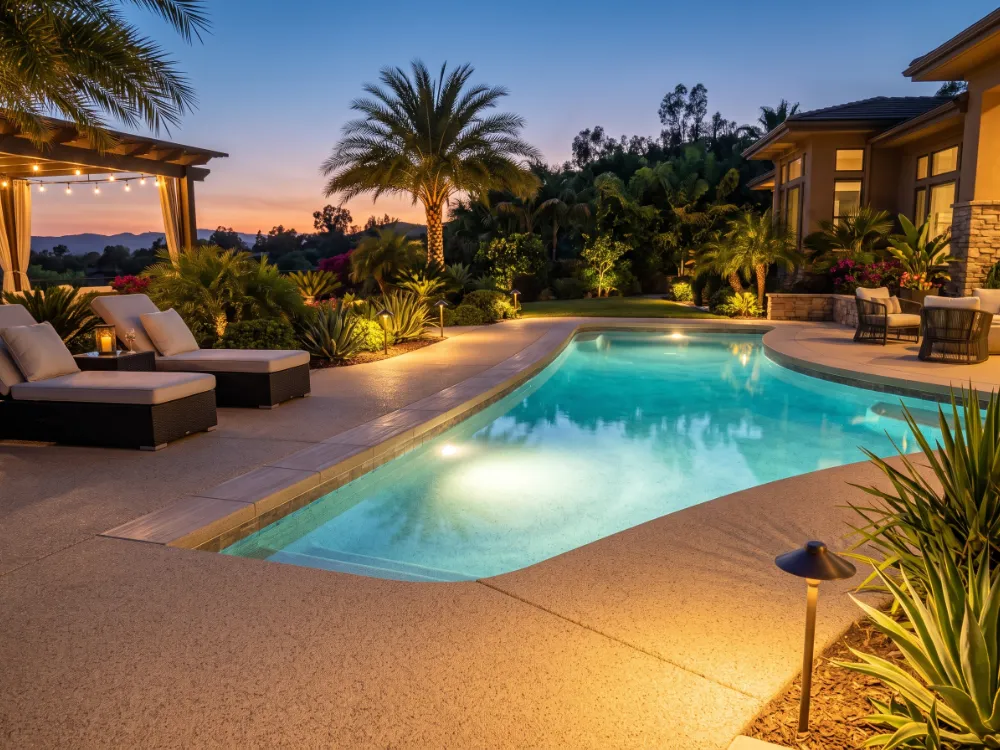
A Southern California pool deck works eight months a year in direct UV — the exposure that yellows standard epoxy and chalks cheap acrylics into dust. Our exposed layers are aliphatic polyaspartic and urethane, chemistries that simply do not react to sunlight: the blend you approve on install day is the blend you close the pool on, year after year.
Evenings included — a satin deck under landscape lighting turns the pool area into the resort corner of the yard, which is usually the moment owners wish they had done it sooner.
Frequently Asked Questions
Should I coat, resurface or replace my pool deck?
If the slab is structurally sound — settled, stable, cracks that are cosmetic rather than moving — coating wins on every axis: we repair the surface, then build the five-layer system over it for a fraction of replacement cost and disruption. Replacement is for decks with structural failure; anything less is a candidate for repair and coating.
Is a coated pool deck slippery for wet, bare feet?
It is engineered for exactly that scenario. The flake broadcast leaves a fine built-in texture, and the final urethane topcoat carries a slip-resistant additive as standard on every pool deck — no upgrade required. Wet bare feet, kids at a run and dripping swimmers are the design case, not the exception.
How hot does the deck get in summer sun?
Cooler than bare concrete and far cooler than dark stone or pavers. We steer pool decks toward light flake blends — whites, creams, soft grays — that reflect rather than absorb summer sun, so the walk from the water to the lounge chair is comfortable through a Southern California August.
Will chlorine or a saltwater system damage the coating?
No. The cured polyaspartic and urethane wear layers are non-porous and chemically resistant — splash-out, chlorinated drips, salt-cell water and pool chemicals sit on the film and rinse away. Compare that with bare concrete, which absorbs pool water and slowly spalls as the chemistry works on it.
Can you fix cracks and spalling before coating?
It is the first step of every deck job. Cracks are routed and filled, spalled and pitted areas are patched flush, and the whole deck is diamond-ground clean so the repairs and the slab present one uniform surface. The flake broadcast then hides the repair history completely.
How long is the pool area out of service?
Typically two to three days: repair and grind, build the base layers, broadcast, then the two topcoats with their cure windows. Light foot traffic returns about a day after the final coat, furniture a day or so later. We schedule around pool season so the downtime lands when you would not be swimming anyway.
Will the color fade in constant sun?
The exposed layers are UV-stable polyaspartic and urethane — chemistries that do not amber, chalk or fade. A deck that bakes in direct sun all day holds its blend year after year; this is precisely why standard epoxy appears nowhere above the moisture barrier in our outdoor systems.
Can you coat over old cool-deck, paint or previous coatings?
Old coatings come off first — diamond grinding strips failed paint, tired cool-deck texture and anything else that would compromise the bond, down to sound concrete. Coating over a failing layer just inherits its failure; grinding first is why ours doesn't.
What finish colors work best around pools?
Light, cool blends are the pool-deck sweet spot: they stay coolest underfoot, hide splash minerals and sunscreen drips, and read clean against blue water. From there it is aesthetics — sandy tones for a resort feel, gray-whites for modern hardscape — with the full color chart available.
What warranty covers a pool deck?
Three years on all outdoor work, covering the system we built — and because we manufacture the coatings, that warranty has no gap between product and workmanship. One company made it, installed it and stands behind it.
Complete the Outdoors
The pool deck system shares its five-layer engineering with every exterior surface we coat.
Patio coating · Driveway coating · Balcony & deck waterproofing · Epoxy flake flooring · Polyaspartic floor coating · Concrete resurfacing · Epoxy floor repair · Color chart
FREE onsite Estimate
5 stars rated company
Get it done right the first time...


