
Coating Failure Diagnosis & Repair
Epoxy Floor Repair
First we find out why it failed — then we fix it so it can't do it again
Request a Free Estimate
Epoxy Floor Repair
A failed epoxy floor is a message, and the message is never "epoxy doesn't work." It is peeling in tire-shaped patches because a thin coating met hot rubber; lifting in sheets because moisture was never tested; chipping at cracks because repairs were skipped. Repairing the symptom without reading the message is how the same floor fails twice — so our repair service starts as a diagnosis, every time.
Top Epoxy Flooring repairs, recoats and reinstalls coated floors across Los Angeles, Orange, Ventura, San Bernardino, Riverside and San Diego counties — including, very often, floors we didn't install: DIY kits that lost to the first summer, low-bid coatings that peeled in year two, commercial floors worn gray by traffic. As the manufacturer of our own systems, we rebuild them with materials the original floor never had, and put a warranty behind the redo — limited lifetime on residential reinstalls.
Below: the failure modes and what each one means, the honest decision path between spot repair, recoat and full reinstall, and what commercial facilities can expect in downtime — which is usually less than they fear.
What Goes Into Every Repair

On-Site Failure Diagnosis
Diagnosis first: we read the failure pattern — where, how and in what shape the coating let go — before proposing anything.

Moisture Vapor Testing
Moisture vapor testing on every job; it is the most common hidden cause and the one recoating can never outrun.

Failed Coating Removal
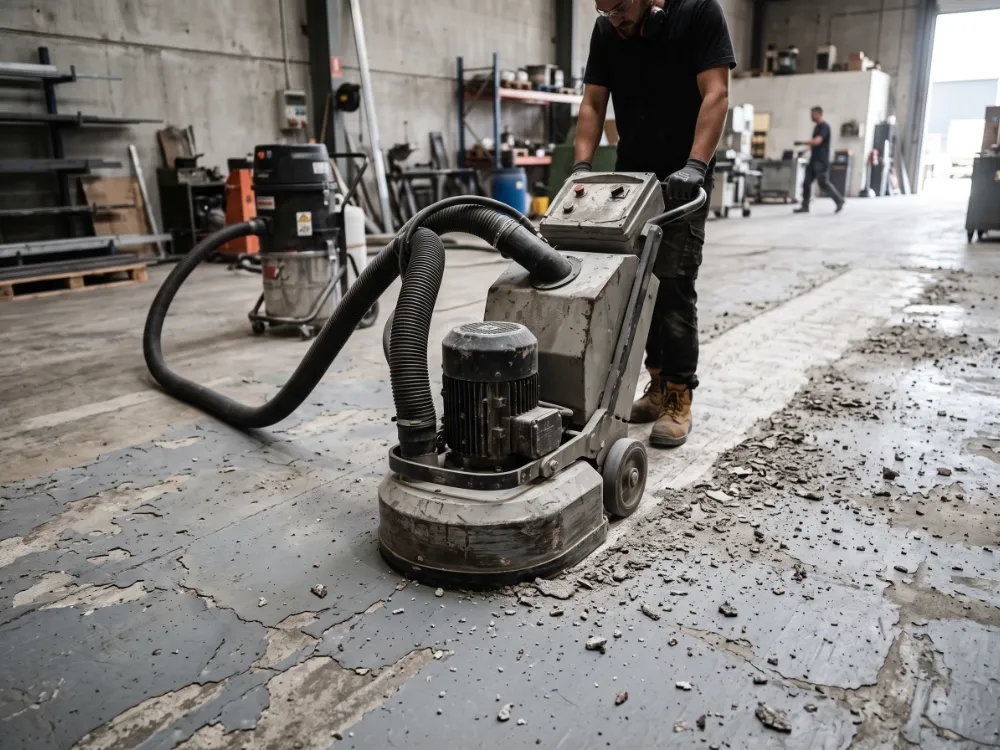
Everything loose comes off: failed coating is diamond-ground to sound concrete, never buried under a fresh coat.

Crack & Spall Repair
Cracks, spalls and gouges are structurally filled and ground flush, so the new surface stands on repaired ground.

Moisture-Barrier Basecoat
Damp slabs get a moisture-vapor-barrier basecoat matched to the reading — the fix for the failure you couldn't see.

UV-Stable Polyaspartic Topcoat
The new wear surface is UV-stable polyaspartic — the topcoat that resists the hot tires and sunlight that killed its predecessor.
Reading the Failure: Hot-Tire Pickup
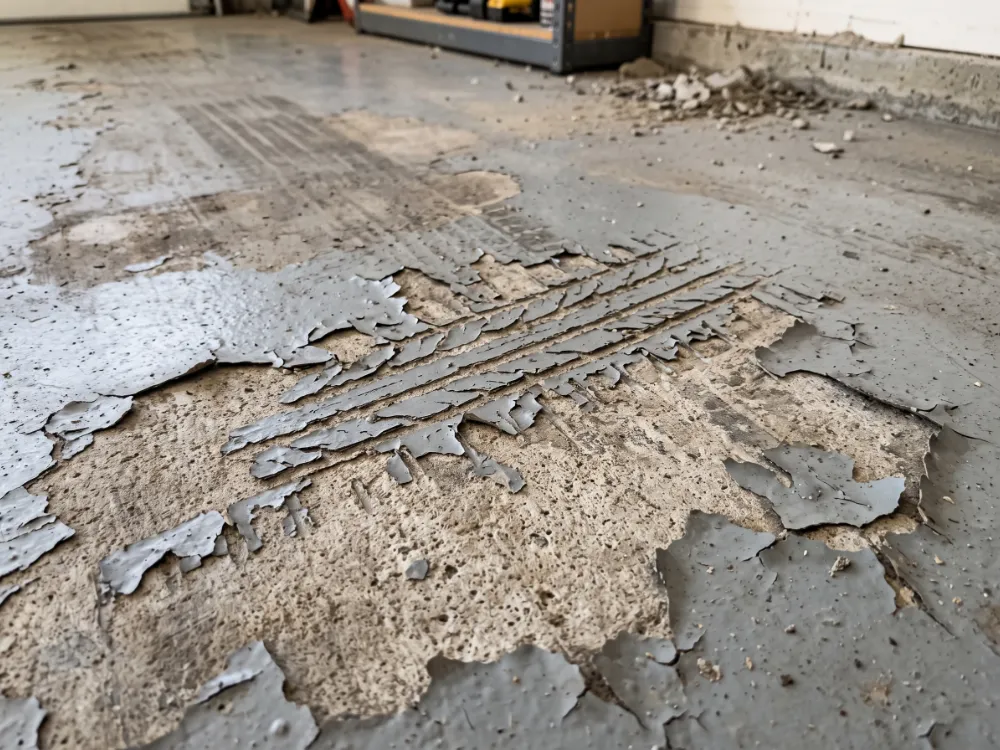
Tread-shaped bald patches exactly where the car parks — the most common photo we receive. Freeway tires arrive well over a hundred degrees, soften a thin or poorly bonded coating, and peel it as they cool and contract. It is not bad luck; it is a materials-and-prep verdict, delivered by physics.
The repair is a proper system in that zone or across the floor: ground-open profile, penetrating basecoat with no film edge to grab, heat-tolerant wear coats. Done that way, the same physics has nothing to hold — which is why hot-tire pickup is a covered failure under our residential warranty, not a disclaimer.
Reading the Failure: Moisture Delamination
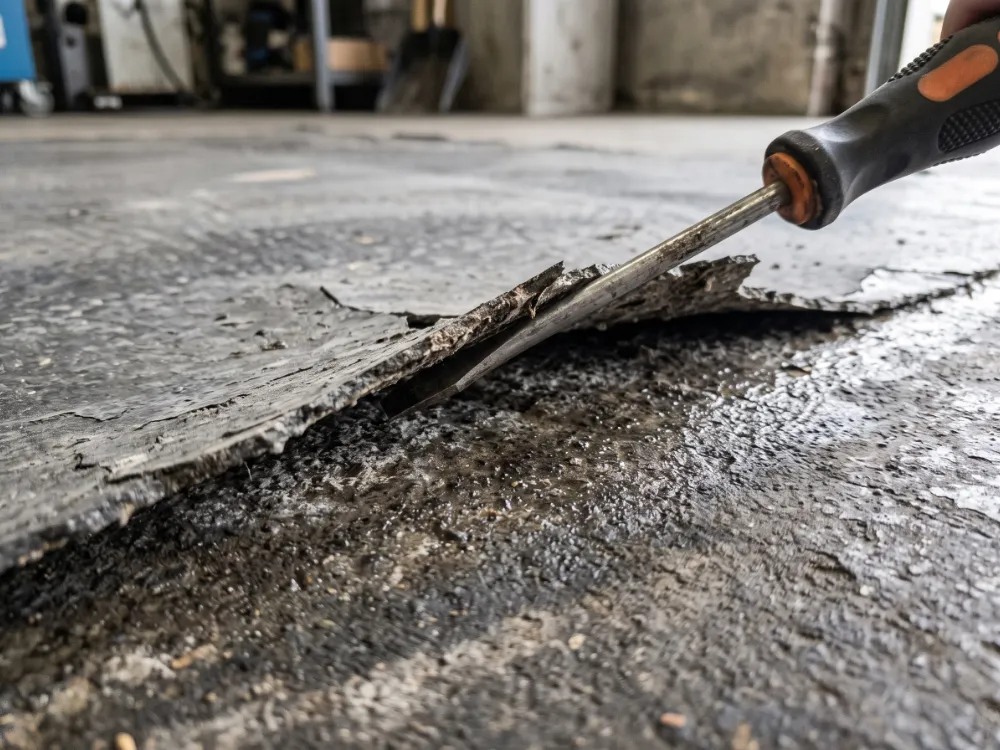
Coating lifting in broad sheets or blisters, often with damp or powdery concrete underneath, is ground moisture talking. Vapor rises through every slab; sealed under a coating with no barrier, it accumulates pressure until the bond gives way — dramatically, and usually within a couple of years of installation.
No recoat survives an unsolved moisture problem, so this repair starts with measurement and ends with a vapor-barrier basecoat engineered for the number. It is the difference between fixing the floor and re-staging the failure.
Repair, Recoat or Reinstall?
The decision path we walk on every estimate, in plain numbers:
- Spot repair — damage under roughly 20% of the floor, surroundings well bonded: fix the zones, unify with a topcoat.
- Recoat — coating intact but dull or lightly scratched: abrade and apply a fresh wear coat; the economy option nobody tells owners about.
- Reinstall — failure past roughly 30–40%, or a cause (moisture, no prep) that undermines the whole film: remove, fix the cause, rebuild under warranty.
The honest answer is occasionally the cheapest row of that list — and we quote it that way.
Advantages of Diagnosis-First Repair
A repair that outlives the original floor: the cause found and fixed, failed material fully removed, manufacturer-grade systems rebuilt over tested concrete — with a warranty on the redo, because this time the physics is on the floor's side.
We Find Why It Failed
Failure diagnosis before proposals — because recoating over an unsolved cause just schedules the sequel.
We Fix Other People's Floors
We rebuild other installers' floors daily: DIY kits, low-bid peels and worn commercial surfaces, made right.
Warrantied This Time
Manufacturer-grade materials and a warranty on the repair — limited lifetime on residential reinstalls.
Cracks, Spalls and Battle Damage
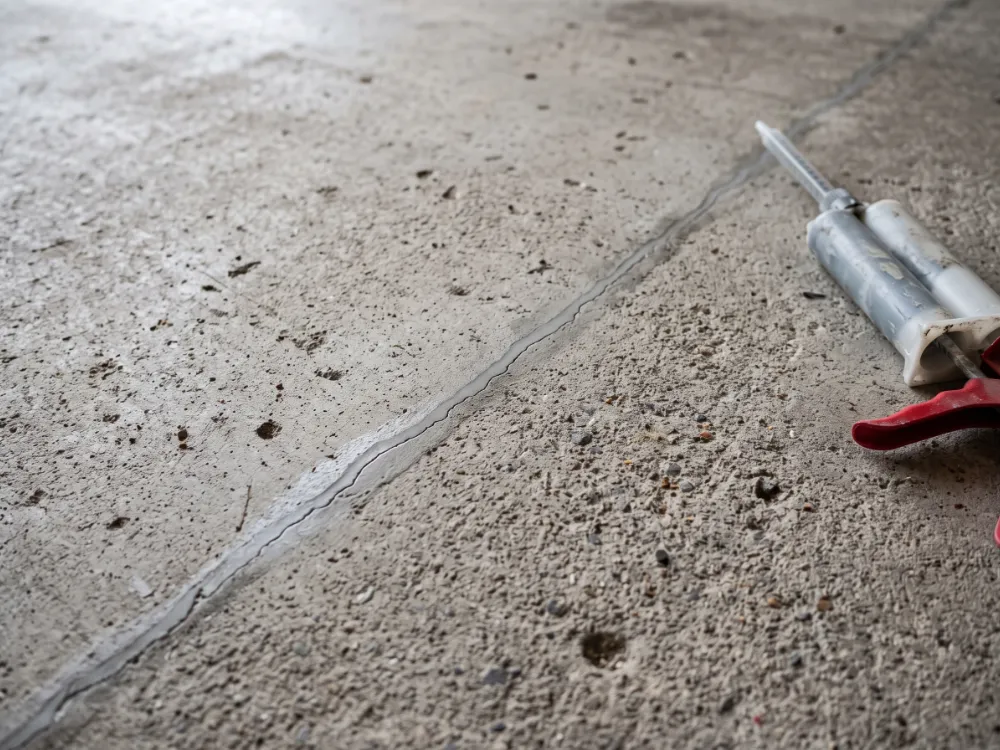
Not every repair is a coating failure — floors also take structural hits: cracks wandering out of corners, spalls where something heavy landed, pitting from years of bare service. Each gets a structural fix — routed and filled cracks, patched and ground spalls — before any coating work, so the finish lands on repaired concrete instead of bridging over damage.
Under a flake broadcast the repairs vanish entirely; under solid color they disappear into the refinished surface. Either way the floor's history stays in the estimate notes, not in the floor.
The Recoat: Ten More Years in a Day
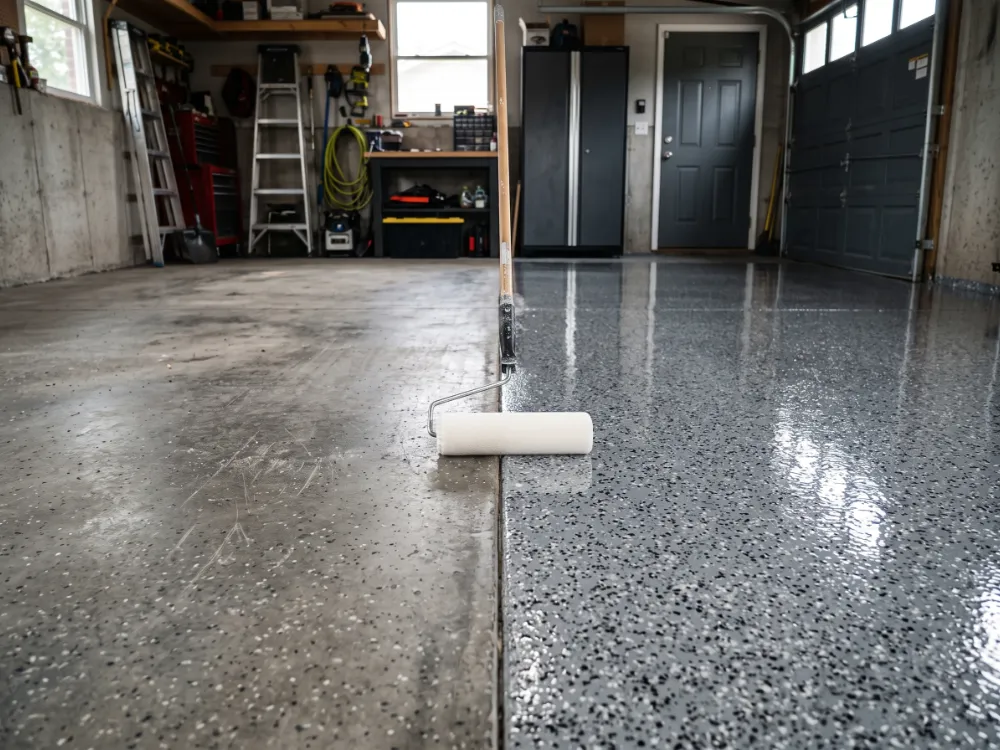
The best-kept secret in coated floors: a sound system that has merely lost its gloss does not need replacing. Deep-clean, light abrasion, and a fresh UV-stable polyaspartic wear coat — one day of work — restores the shine and resets the sacrificial layer that protects everything beneath it.
Garages, shops and showrooms on a recoat rhythm effectively never wear out; the topcoat takes the decade, and the topcoat is renewable. Ask for the recoat assessment before assuming the worst about a tired floor.
Commercial Repair Without the Shutdown
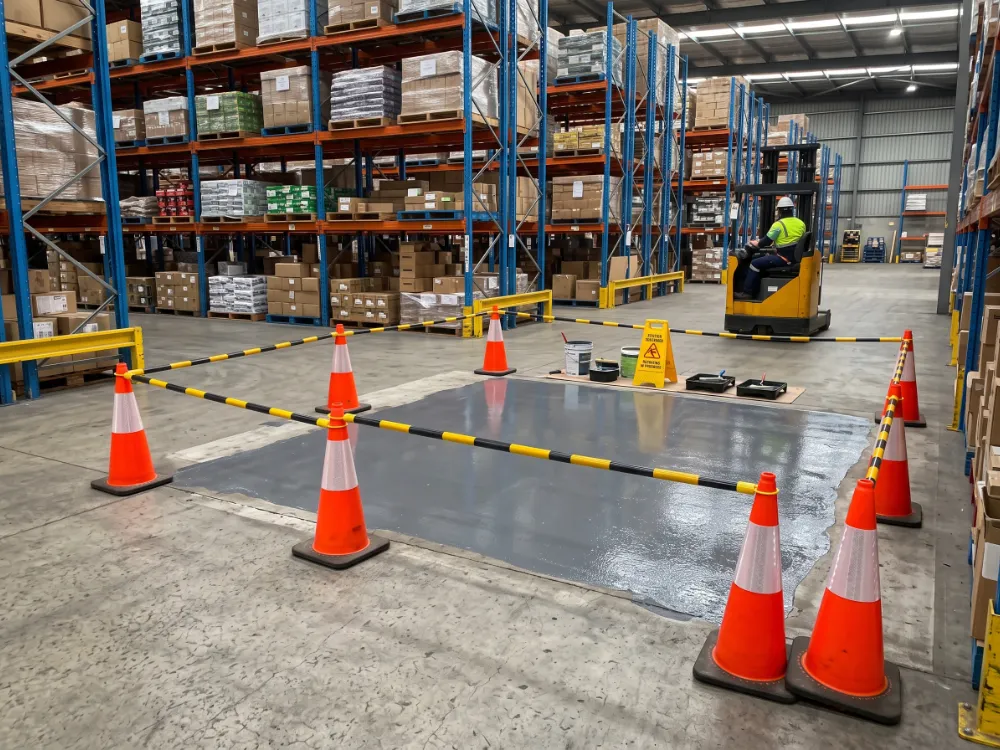
Damaged commercial floors rarely get fixed because everyone assumes the fix means closing. It doesn't: repair work phases by section — cones up, failed area ground and rebuilt, aisle back in service — nights and weekends included. Fast-curing systems return each zone to traffic in hours, not weeks.
Forklift-worn lanes, spalled dock aprons, chemical-etched process zones: each is a scoped, phased line item with a three-year commercial warranty on the rebuilt work, and operations that never stopped.
Frequently Asked Questions
Why is my epoxy floor peeling?
Peeling is always a bond story, and it has three usual authors: preparation (coating applied over sealed, smooth or dirty concrete — no bonding profile), moisture (vapor pressure from below pushing the film off), or product (a thin, cheap coating that never stood a chance). Diagnosis matters because each cause demands a different fix — recoating over an unsolved cause just schedules the next failure.
What exactly is hot-tire pickup?
Tires come off the road hot enough to soften low-grade coatings; as the rubber cools it contracts, grips the softened film and peels it up in tread-shaped patches. It is the signature failure of DIY kits and low-bid installs. The fix is a proper system: diamond-ground profile, penetrating basecoat, and wear coats with real heat tolerance — which is why our reinstalls warranty against exactly this.
Can you just coat over my old epoxy?
Only over coating that is genuinely bonded. We test the existing floor; well-adhered areas can be abraded and recoated, but every loose, blistered or peeling section must come off down to concrete — new coating over failing coating simply inherits the failure. That judgment call is most of the service.
When is spot repair enough, and when does the whole floor come off?
Rough thresholds from the trade: damage under about 20% of the area with well-bonded surroundings usually spot-repairs invisibly; past roughly 30–40%, patching costs approach a proper tear-off and reinstall — and the reinstall resets the clock on the entire floor with a warranty. Between those marks, the moisture reading and the floor's age make the call.
My DIY-kit floor failed — is it salvageable?
This is one of our most common calls, and yes. The kit coating comes off by diamond grinding (it is usually thin enough to remove quickly), the slab finally gets the preparation the kit skipped, and a manufacturer-grade system goes on with a limited lifetime residential warranty. The weekend was lost; the floor is not.
Can cracks be fixed before recoating, or will they come back?
Dormant cracks — the vast majority — are routed, filled with structural epoxy compound and ground flush; under a flake or solid system they disappear for good. Cracks that are still moving with the slab get flagged honestly, because no coating stops a slab that is going somewhere. Diagnosis again: we tell you which kind you have.
My floor is intact but dull — do I need a repair at all?
You need the cheapest service on this page: a recoat. The floor is deep-cleaned, lightly abraded and given a fresh UV-stable polyaspartic topcoat — gloss, protection and another decade of service for a fraction of reinstall cost. Owners rarely know this option exists; coating companies rarely volunteer it.
How does moisture cause a coating to fail, and how do you fix it?
Ground moisture migrates up through slabs as vapor; trapped under a non-breathing coating it builds pressure until the film blisters and sheets off — the failure that looks most dramatic and is most misdiagnosed. The fix is measurement first, then a moisture-vapor-barrier epoxy basecoat engineered for the reading, then the finish system. Skipping the test is how it happens twice.
How fast can a repair or reinstall happen?
Spot repairs and recoats typically run a day; a full residential tear-off and reinstall usually two, since removal adds a step ahead of our standard one-day system. Commercial work phases by section — cones up, coating down, aisle back in service — so operations continue around the repair.
Will the repaired area match the rest of the floor?
On flake systems, effectively yes — matched blend broadcast into the repair reads seamlessly, especially after a unifying topcoat over the whole floor. Solid colors match best when the full floor takes a fresh finish coat, which is standard in our quotes. Aged, sun-faded coatings are discussed honestly: sometimes the right answer is refreshing the whole surface.
After the Repair
A repaired floor deserves the systems and care that keep it repaired — start here.
Garage floor coating · Epoxy floor maintenance · Concrete grinding & surface prep · Concrete resurfacing · Self-leveling concrete · Epoxy flake flooring · Driveway coating · Commercial & industrial flooring
FREE onsite Estimate
5 stars rated company
Get it done right the first time...


