
Aviation Epoxy Floor Systems
Airport Hangar Flooring
Fuel-proof, FOD-free, mirror-gloss — coated between aircraft moves
Request a Free Estimate
Aircraft Hangar Epoxy Flooring
Hangar floors serve two masters: the airframe and its owner. The airframe needs a floor that controls FOD — the dust and debris bare concrete sheds endlessly — resists Skydrol, jet fuel and de-icing chemistry that destroy ordinary coatings, and reflects light up into wheel wells and belly panels where inspections actually happen. The owner wants the floor every pilot secretly wants: a mirror-gloss surface that makes the aircraft look like it is floating in its own showroom.
Aviation-grade epoxy delivers both without compromise. High-build systems — forty-five mils and up — carry aircraft weight, tug traffic and dropped tooling over rebuilt joints; the chemistry is rated for hydraulic fluid, fuels and solvents that etch lesser floors; and UV-stable polyaspartic topcoats hold gloss and color at the door line where sun pours in every time the hangar opens. Southern California’s general aviation community — from Van Nuys to Camarillo to Torrance — is exactly the environment these systems were made for, and the install fits between aircraft moves: fly out in the morning, roll back onto a finished floor.
Top Epoxy Flooring manufactures its own VOC-free materials and installs with in-house crews under a three-year commercial warranty. See the wider commercial and industrial flooring range or request a free on-site estimate below.
Systems Built for Aviation

Aviation-Grade High-Build
High-build systems from forty-five mils up carry aircraft weight, tug traffic and dropped tooling without complaint.

Fuel & Hydraulic Fluid Chemistry
Chemistry rated for jet fuel, avgas, Skydrol and de-icing agents — the spills that permanently stain bare concrete wipe away.

Gloss That Lights the Belly
Gloss white and light-gray surfaces throw hangar lighting up into wheel wells and belly panels — free inspection light.

FOD Control by Dust-Proofing
Sealed slabs stop shedding the dust that becomes FOD — the floor leaves the foreign-object conversation entirely.

UV-Stable at the Door Line
UV-stable polyaspartic topcoats hold gloss and color at the door line, where sun works on the floor every open hour.

Joint & Apron-Edge Rebuild
Control joints and apron transitions rebuilt flush — towbars and tugs roll quiet, and nothing chips at the threshold.
Corporate & Private Hangars
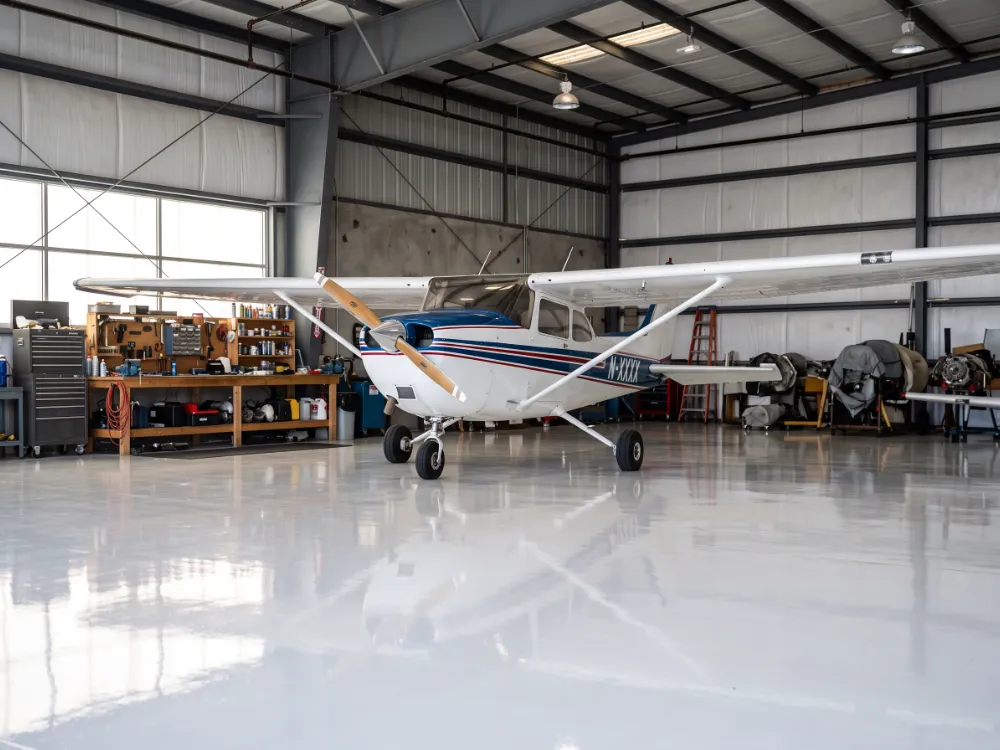
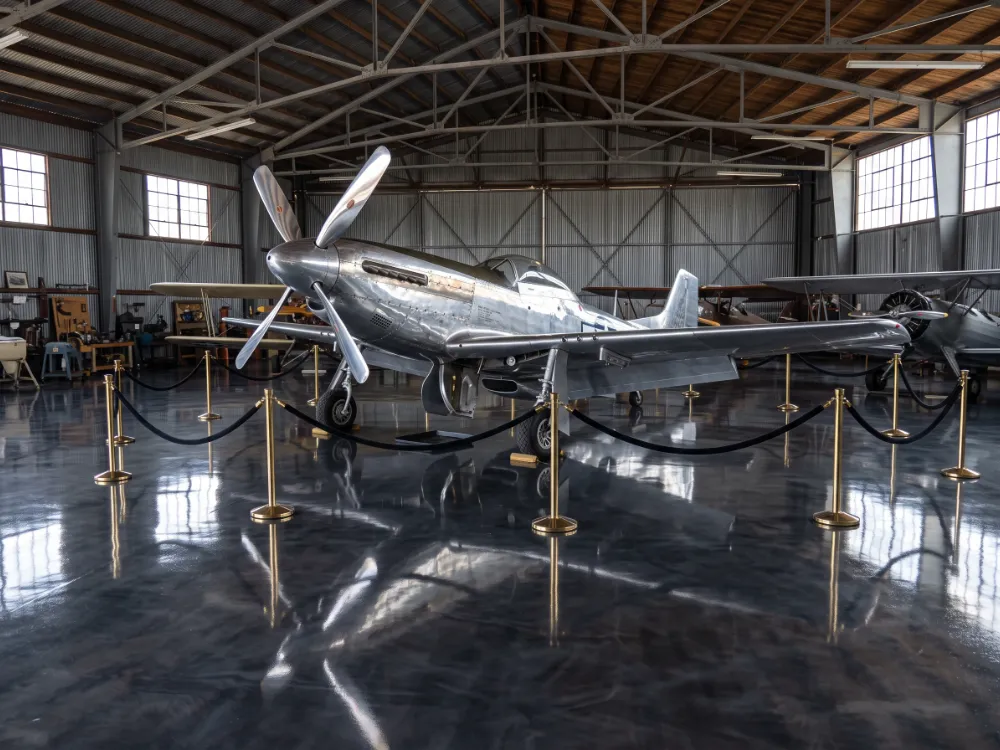
A private hangar is equal parts garage and gallery, and the floor decides which one it reads as. A mirror-gloss system in pearl white or light gray doubles the aircraft in reflection, keeps every drip of preservative oil or fuel sitting on the surface for a shop towel, and turns the weekly sweep into the entire maintenance program. For owners who fly from Southern California’s GA fields, it is the single upgrade that changes how the hangar feels every time the door opens.
MRO & Maintenance Hangars
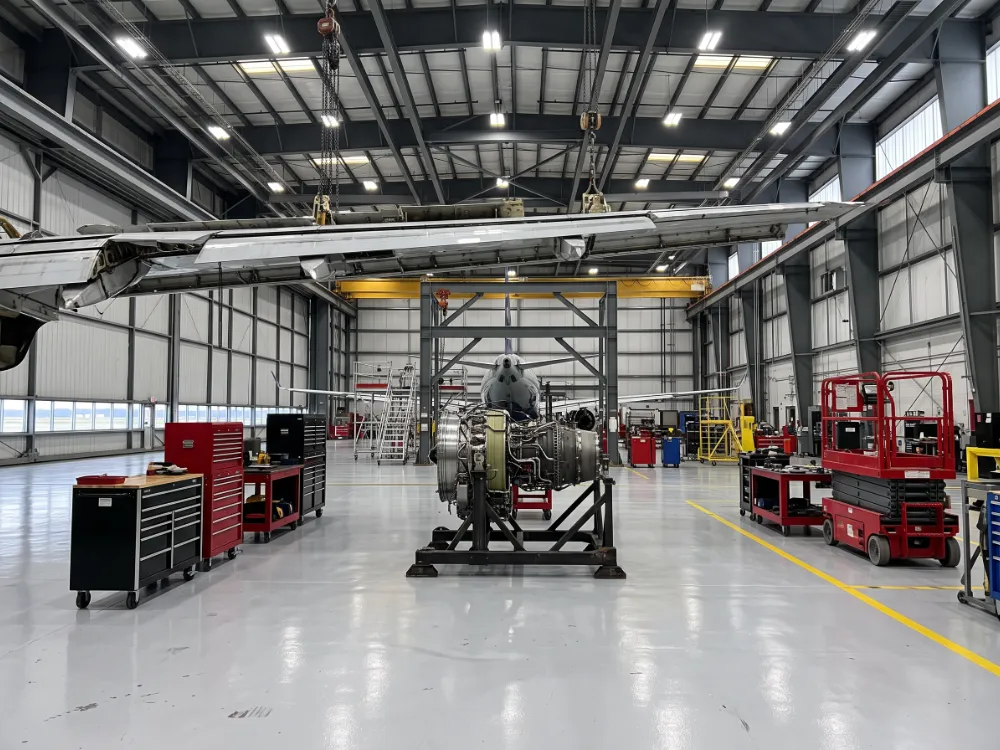
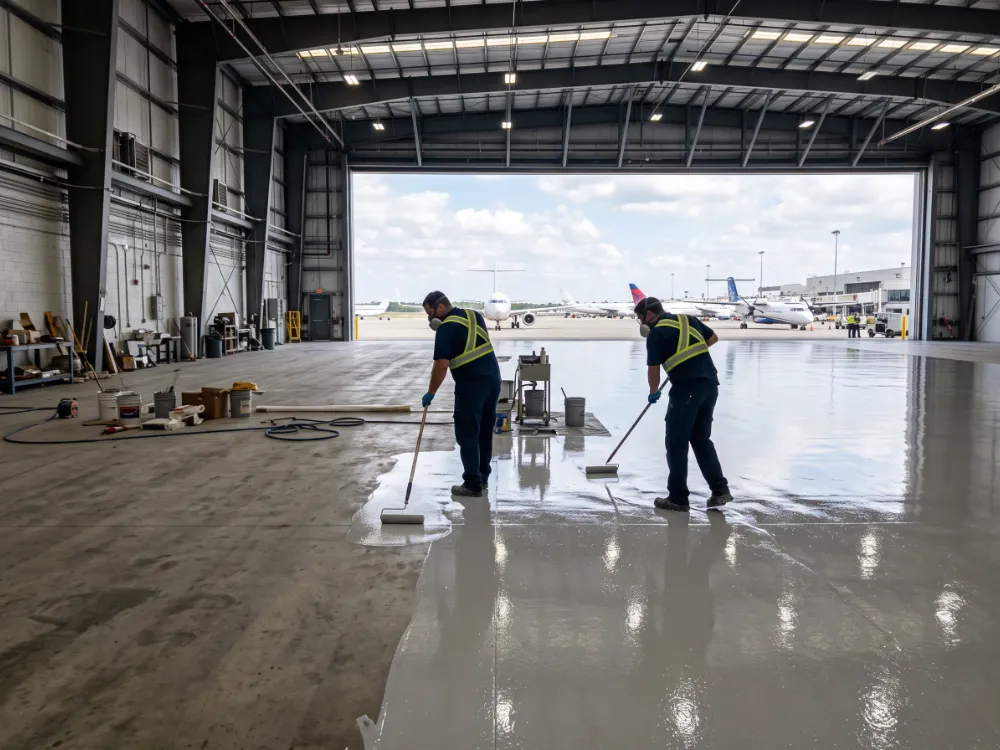
Working hangars need the industrial version: high-build systems that take engine stands, jacks and rolling toolboxes; chemistry that treats Skydrol and solvent drips as routine; and a bright, sealed surface where a dropped washer is found in seconds — the FOD discipline aviation maintenance runs on, supported from the floor up. Equipment zones and safety clearances coat in permanently, and the finish stands up to the wash-downs that follow every heavy check.
FBO & Charter Facilities
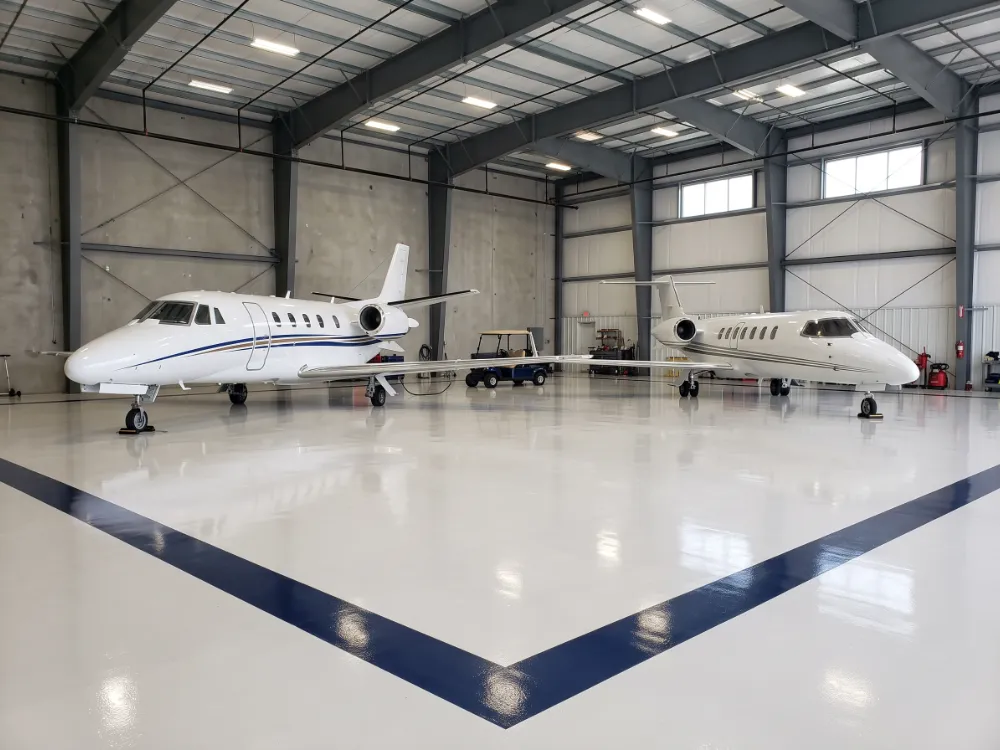
The FBO hangar is a customer-facing space that works for a living:
- Gloss finishes with coated-in border stripes that present like the brand
- Wear builds rated for constant tug, cart and fuel-truck-adjacent traffic
- Fuel and fluid chemistry for the drips a busy ramp operation guarantees
- Overnight and between-moves installation around the flight schedule
Advantages Under the Airframe
Hangar flooring is judged the way aircraft are: by what it prevents. FOD prevented, stains prevented, joint damage prevented, downtime prevented — and one upgrade that makes every preflight walk-around feel like it is happening somewhere serious.
Skydrol-Rated Surfaces
Installed between aircraft moves — out to the apron in the morning, back on a finished floor on schedule.
Coated Between Aircraft Moves
Fuel, hydraulic fluid and de-icing chemistry rated — the ramp’s reality is the specification’s starting point.
Showplane Finishes Available
Dust-proofed, sealed, FOD-free — the floor stops contributing to the checklist.
Helicopter Operations
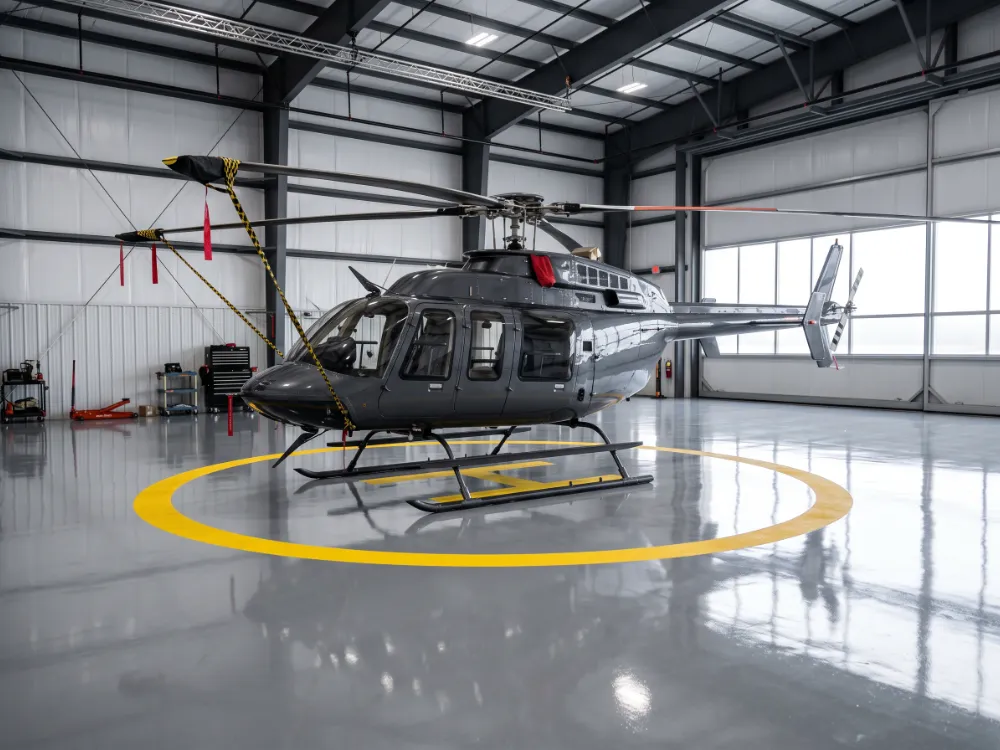
Rotorcraft floors add their own demands: skid drag and ground-handling wheels, landing-zone and clearance markings that must stay crisp, and rotor wash that finds every particle a bare slab sheds. A high-build system with coated-in zone circles and clearance lines keeps the deck legible and FOD-free, and the same fluid chemistry covers hydraulic and fuel drips from machines that leak as a personality trait.
Showplane & Display Hangars
For collections and museum-grade aircraft, the floor becomes staging. Charcoal metallics and deep gloss finishes present polished aluminum and warbird paint the way gallery lighting presents art — reflections doubling every line of the airframe — while remaining a working aviation floor underneath: fuel-safe, tug-rated and cleanable after every event. It is the hangar floor as part of the collection.
Installed Between Moves
A hangar install is planned around one event: the aircraft leaving and coming back. The airframe moves to the apron or a neighbor’s hangar in the morning; the slab is diamond-ground, repaired at every joint and coated through the day; fast-cure topcoats take weight again on a posted schedule — typically the next day. Multi-bay facilities rotate bay by bay so operations never pause, and VOC-free chemistry keeps adjacent offices and shops working through it all.
Frequently Asked Questions
How long is the aircraft out of the hangar?
Typically one to two days: out in the morning, slab ground and coated the same day, and back on the floor once the system reaches rated strength on a posted schedule. Multi-bay operations rotate so no aircraft is ever without covered parking.
Will jet fuel, avgas or Skydrol damage the floor?
No — aviation fluids are the specification’s starting point. Fuel, hydraulic fluid and de-icing chemistry bead on the sealed surface and wipe away; the staining and etching they inflict on bare concrete simply stops happening.
Can the floor take the aircraft’s weight and point loads?
Yes — high-build systems are specified to the aircraft and equipment list, including jack points, tug traffic and single-wheel loads. The slab itself is evaluated during the walk-through, and joints are rebuilt as part of the work.
How does the floor help with FOD control?
Bare concrete sheds dust and grit continuously — a permanent FOD source inside your own hangar. A sealed epoxy system ends the shedding entirely, and the gloss surface makes any dropped hardware visible from across the bay.
Will sunlight at the hangar door yellow or dull the floor?
Not with a UV-stable polyaspartic topcoat — it is engineered for exactly the door-line exposure hangars get. Gloss and color hold at the threshold where ordinary epoxy ambers first.
Can we get markings — landing zones, clearances, borders — in the floor?
Yes — landing-zone circles, clearance lines, border stripes and logos coat in beneath the wear layer, applied from your layout. They stay crisp for the life of the floor instead of fading with paint.
What finish do owners choose for private hangars?
Gloss pearl white and light gray dominate — maximum reflection under the airframe — with metallic systems for showplane and collection hangars where the floor is part of the presentation. All of them are the same aviation-grade build underneath.
Does the floor make the hangar brighter?
Noticeably — a light gloss floor reflects hangar lighting up into wheel wells, belly panels and under-wing work areas. Owners describe it as adding a light fixture they never have to power.
How do we maintain it?
A dust mop or blower for the daily pass, a damp mop for fluid spots — no sealers, no wax, no dust suppression routines. The maintenance program is genuinely shorter than the preflight.
What does hangar flooring cost?
Square footage, slab condition and finish level set it — a T-hangar and an MRO bay are different projects. Materials are our own manufacture, so pricing is distributor-direct, and the free on-site estimate returns a figure with the between-moves schedule attached.
From T-Hangar to MRO Bay
Private hangars, FBOs, maintenance operations and display collections — one aviation-grade specification set, installed between moves, under one three-year commercial warranty, across Southern California’s general aviation fields.
Related: military spaces flooring, showroom flooring, and the commercial and industrial overview.
FREE onsite Estimate
5 stars rated company
Get it done right the first time...


