
Commercial Kitchen & Dining Floor Specialists
Restaurant Flooring
Health-code-ready floors for kitchens, bars and dining rooms — coated overnight, open for service
Request a Free Estimate
Restaurant Epoxy Flooring
No commercial floor lives harder than a restaurant floor. The kitchen line takes 300°F fryer oil, dropped pans, and a scalding wash-down every single night; the dining room takes chair drag, spilled wine and a thousand covers a week; the walk-in never gets above forty degrees. One flooring material cannot do all of those jobs — which is why a proper restaurant floor is a set of systems: urethane cement where there is heat and grease, quartz broadcast where wet slip control matters, and flake or metallic epoxy where guests are looking at the floor.
Top Epoxy Flooring manufactures its own VOC-free coating systems and installs them with in-house crews. In food service that matters more than anywhere: low-odor chemistry means the kitchen can be coated tonight and pass a smell test at tomorrow’s lunch service, and one company answering for both material and workmanship means the three-year commercial warranty is not a finger-pointing exercise. Every floor starts the same way — diamond grinding to a clean bonding profile, repairs at the worn traffic paths, then the system the space actually needs, finished with a seamless cove base where walls meet floor.
We install for restaurants across Southern California — see the broader commercial and industrial flooring overview, or request a free on-site estimate below and we will walk the space with you.
Floor Systems Built for Food Service

Urethane Cement for the Line
Urethane cement is the kitchen-line standard for a reason: it absorbs thermal shock from fryer oil and steam cleaning that would delaminate ordinary epoxy overnight.

Quartz Broadcast Texture
Double-broadcast quartz gives a sand-finish texture you can specify by grit — aggressive on the wet line, smoother where servers move at speed.

Seamless Cove Base
The floor turns up the wall as a seamless cove — no grout joint for water or bacteria, and the first detail a health inspector checks.

Flake With Double Topcoats
Dining-room flake systems get two wear topcoats instead of one, so chair drag and cart traffic polish the floor instead of cutting through it.

Novolac Chemical Resistance
Novolac coatings bring heavy-duty resistance to acids, detergents and alkalis where nightly scrub cycles and degreasers do their worst.

VOC-Free Overnight Chemistry
VOC-free, low-odor chemistry we manufacture ourselves — it cures while you are closed and leaves nothing in the air your guests would notice.
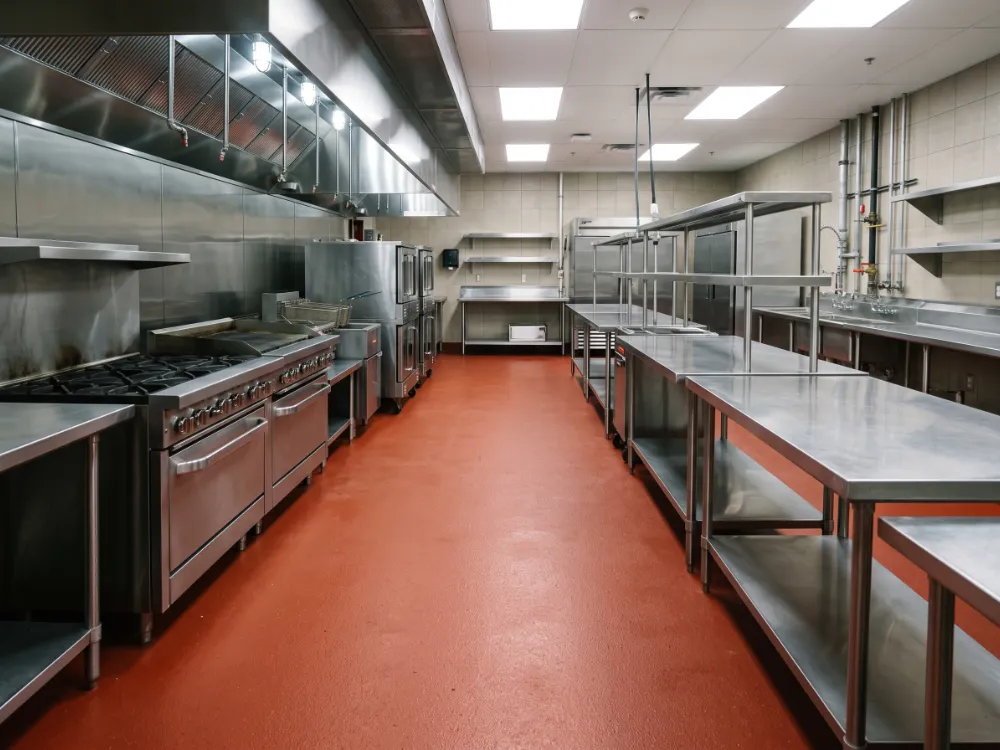
The Kitchen Line Comes First
Everything behind the pass gets the industrial treatment: a urethane cement or high-build epoxy system laid over diamond-ground concrete, finished with quartz texture and a seamless cove base at every wall. This is the floor that health inspectors and equipment installers both want to see — non-porous under the fryers, slip-rated where the dish pit stays wet, and tough enough that a dropped stockpot leaves a mark on the pot. Hot oil, steam and nightly degreasing are exactly the conditions these systems are formulated for.
Bars That Pour All Night
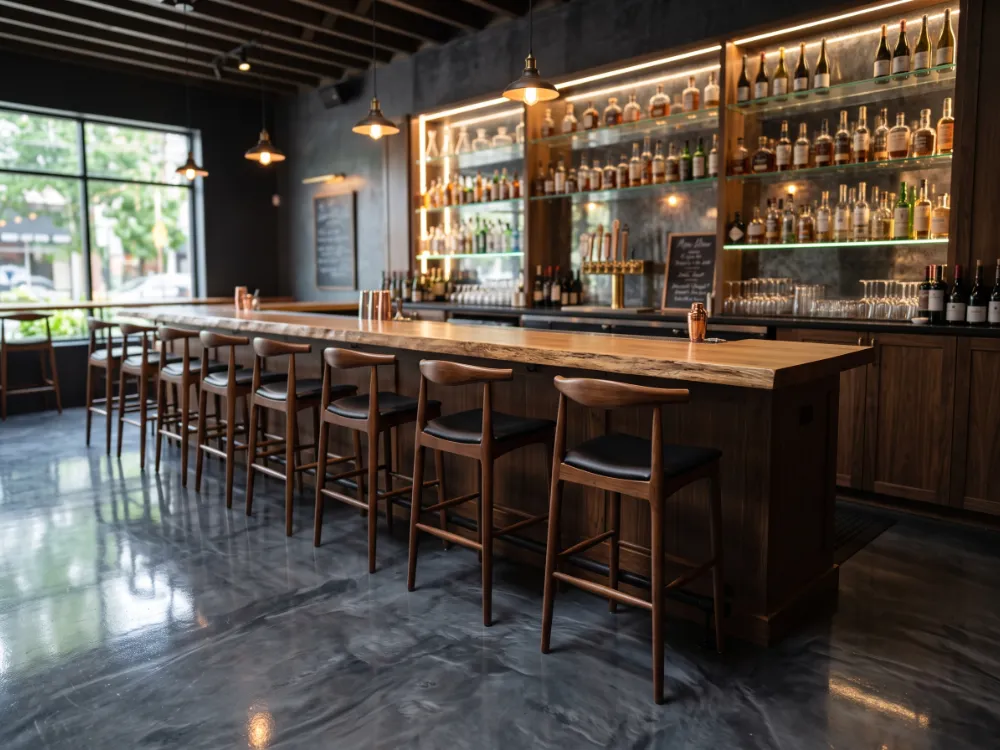
Bar floors live somewhere between the kitchen and the dining room: constant spills, dropped glassware, ice melt behind the rail — and guests looking straight at the floor under pendant lighting. A metallic or solid-color epoxy system with a urethane wear coat handles both jobs, wiping clean of wine and sticky syrups while giving the front of the bar a finish that looks intentional rather than industrial. Behind the rail we spec texture; in front of it, gloss.
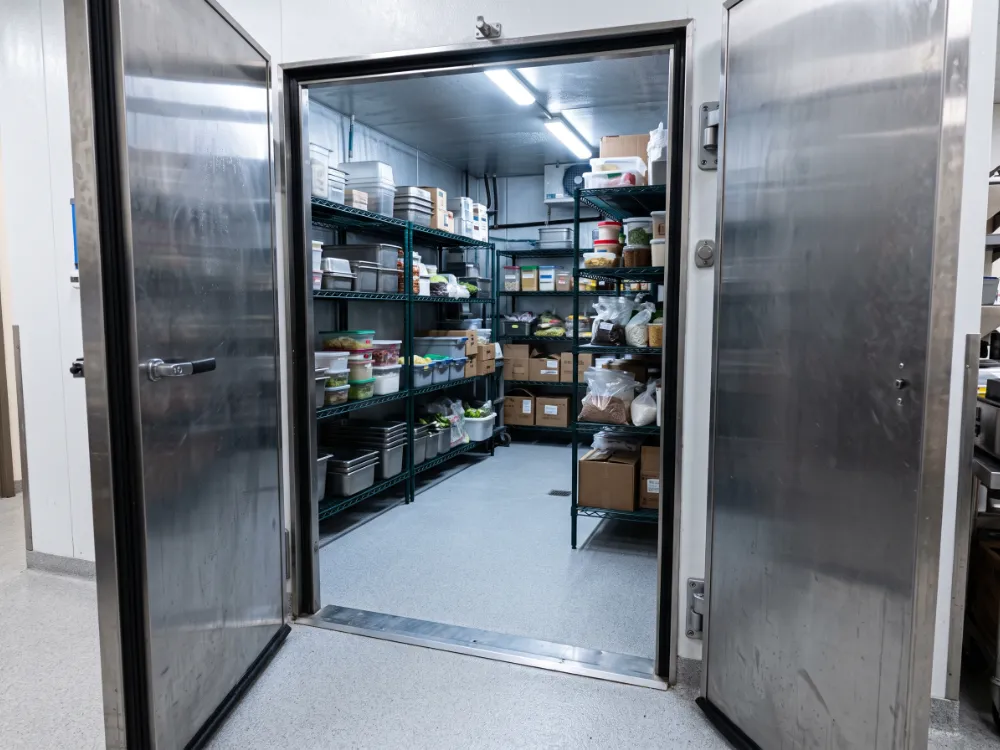
Walk-Ins & Cold Storage
Cold rooms punish ordinary coatings — our low-temperature systems are built for them:
- Cure chemistry rated for cold-room application — no shutdown-and-defrost needed
- Textured surface that stays slip-safe under condensation and frost melt
- Seamless, non-porous finish that keeps brines and spills out of the slab
- Coved corners so wash-downs push everything to the drain, not into a joint
Advantages of a Food-Service Grade Floor
Restaurant floors fail at the extremes — the hottest, wettest, greasiest square footage in the building. The systems we install are chosen zone by zone for exactly those extremes, from the fryer line to the walk-in, and finished so the whole footprint reads as one clean, continuous floor.
Thermal Shock Rated
Urethane cement takes 300°F fryer spills followed by cold wash-downs without blistering or letting go of the slab.
Wet-Grease Slip Control
Slip resistance is specified by zone — aggressive quartz grit on the wet line, a smoother finish where servers carry trays.
Health-Code Ready
Seamless, non-porous and coved at every wall — the finish schedule plan reviewers and health inspectors expect to see.
Dining Rooms Guests Remember
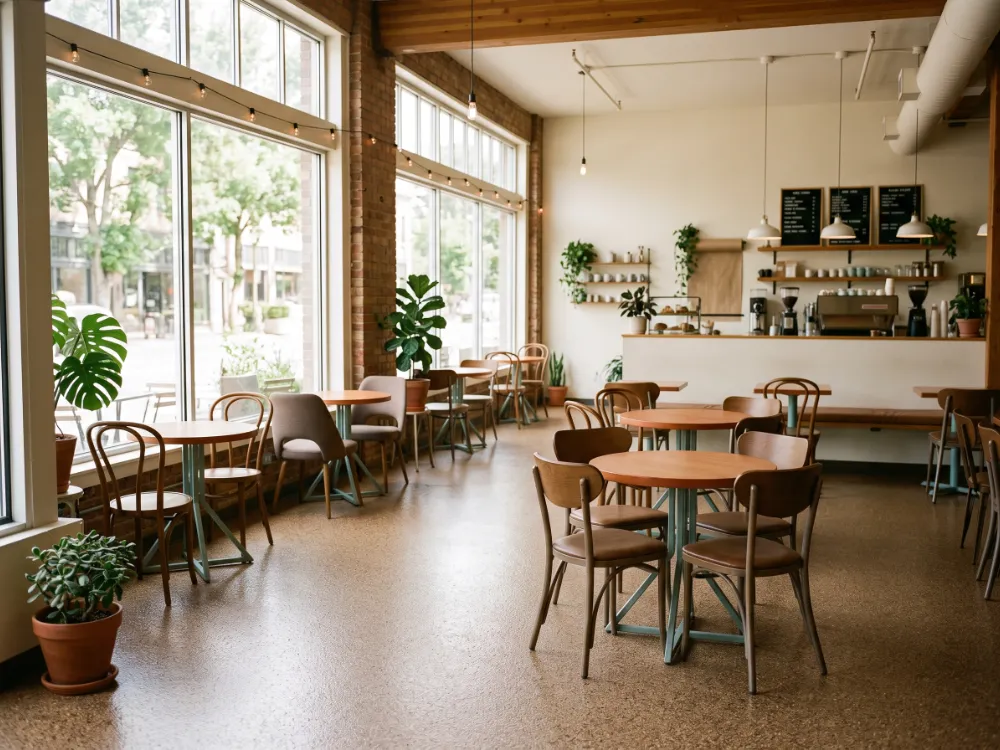
Front of house is where the floor becomes part of the brand. Flake blends matched to your palette, solid colors with a satin sheen that hides daily scuffs, or a marbleized metallic pour that makes the floor the room’s best feature — all of them seamless, quiet underfoot compared to tile, and free of the grout lines that collect a dining room’s worst stains. When the concept rebrands, the floor recoats in a night instead of being torn out.
Corridors, Restrooms & Prep Areas
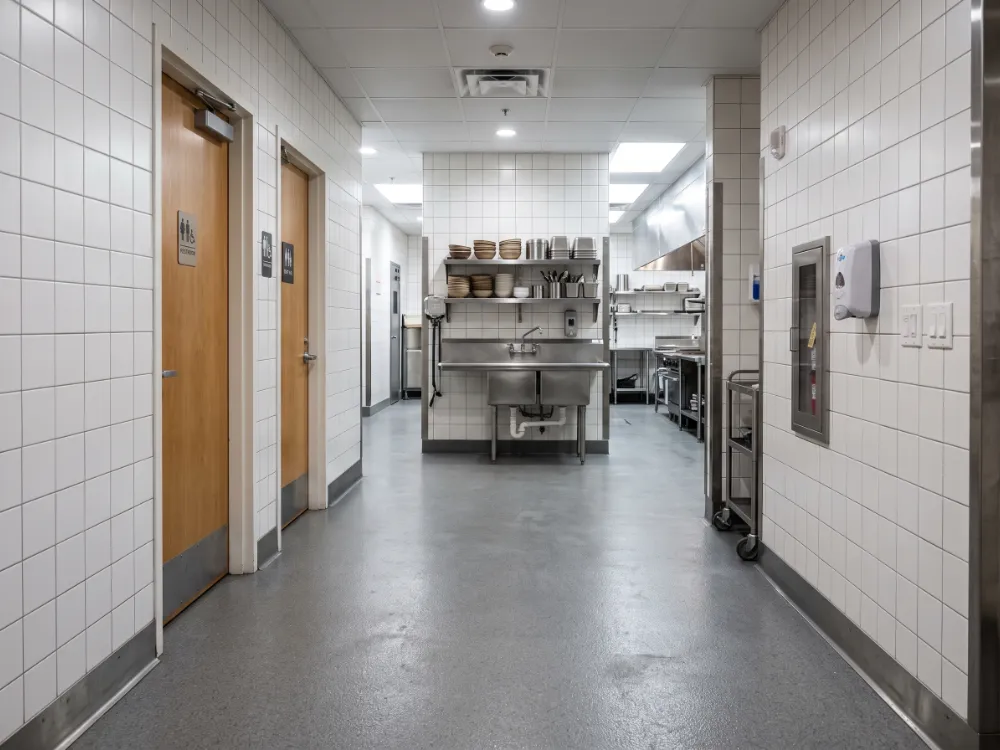
The unglamorous square footage decides how clean a restaurant actually stays. Service corridors, prep rooms, restrooms and mop-sink alcoves get the same seamless treatment as the kitchen — one continuous, non-porous surface from the back door to the pass, with nowhere for grease tracking or mop water to hide. Novolac-grade chemistry stands up to the degreasers and sanitizers these areas see nightly.
Installed While You’re Closed
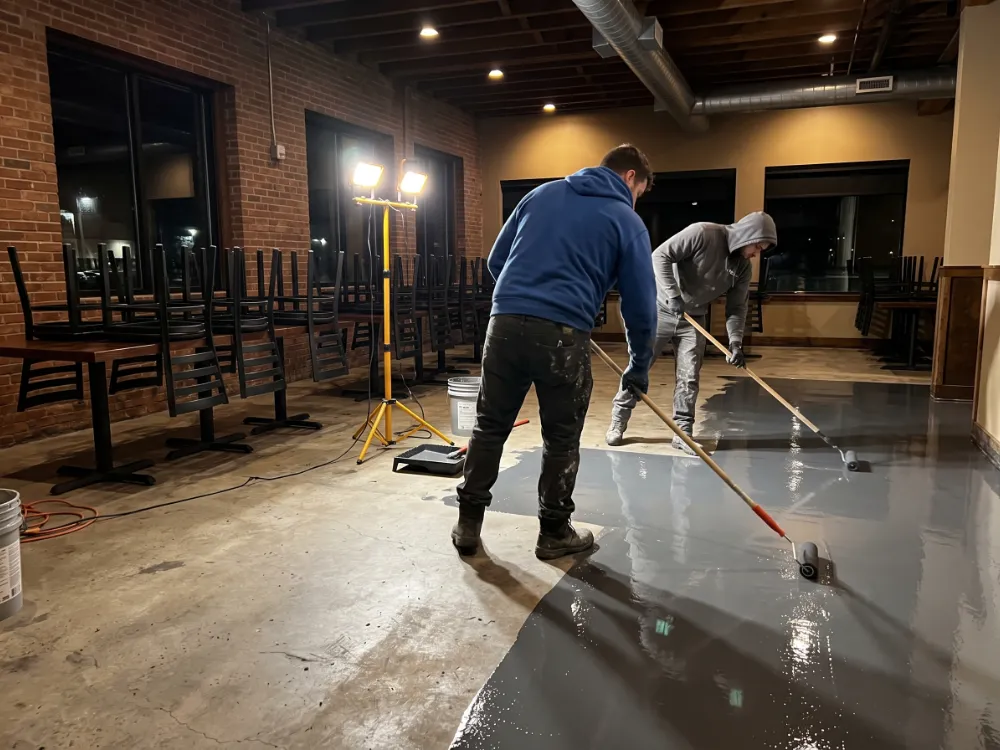
A restaurant cannot hand its floor a week of downtime, so we do not ask for one. Crews grind, repair and coat in phased sections after the kitchen closes; fast-cure topcoats take foot traffic by morning prep; and larger dining rooms run section by section across two or three nights so service never stops. The VOC-free chemistry is the quiet hero here — no solvent smell at brunch the morning after the line was coated.
Frequently Asked Questions
Will the floor pass a health inspection?
The systems are built around what inspectors look for: a seamless, non-porous surface with no grout joints, coved corners where floor meets wall, and chemistry that stands up to commercial sanitizers. We install the finish; your documentation and process do the rest — but the floor will not be the thing an inspector writes up.
What floor goes in a commercial kitchen — epoxy or urethane cement?
Usually both, by zone. Urethane cement goes where there is heat and thermal shock — the cook line, dish pit and anywhere a fryer or steam kettle lives — because it tolerates hot oil followed by cold wash-downs. Epoxy and quartz systems cover prep areas, corridors and storage where chemical resistance and slip texture matter more than heat.
Can you install without closing the restaurant?
That is the standard plan, not the exception. Work happens after close in phased sections: the line one night, prep and corridors the next, dining room over a weekend. Fast-curing topcoats take foot traffic by morning, and VOC-free materials mean no solvent smell at the next service.
How slippery is the floor when it’s wet or greasy?
As slip-resistant as you specify. Texture is built into the topcoat with quartz or aluminum-oxide grit, chosen zone by zone — aggressive where the floor stays wet and greasy, smoother where staff move fast with trays. It is a specification, not an accident of the material.
What is a cove base and do we need one?
A cove base carries the floor coating a few inches up the wall in one seamless curve, eliminating the 90-degree joint where water, grease and bacteria collect. In food-prep areas it is effectively expected by health authorities, and we form it as part of the floor system rather than gluing on a vinyl strip that peels.
How do we clean it day to day?
Nightly scrub or mop with your standard degreaser — no wax, no stripping, no special products. Because the surface is non-porous, cleaners work on top of it instead of soaking in, which is why coated floors stay presentable on half the cleaning effort a tiled floor demands.
What happens when hot oil or a fryer spill hits the floor?
On urethane cement, nothing worth writing down: wipe it up and keep cooking. The system is formulated for exactly that thermal shock. Ordinary paint or bargain epoxy blisters and peels under the same spill — which is how most kitchen floor failures start.
Can the dining room floor match our brand?
Yes — solid colors are matched to your palette, flake blends are built to complement it, and metallic pours can pick up your accent tones. The dining room floor can carry the concept while the kitchen floor carries the workload, and both read as one continuous installation.
How much does restaurant flooring cost?
It depends on the square footage, the condition of the slab and the mix of systems — a urethane cement line plus a flake dining room prices differently than a single-system cafe. We manufacture our own materials, so pricing is distributor-direct; the free on-site estimate turns your floor plan into an exact number.
How soon can equipment go back on the floor?
Foot traffic the next morning, rolling carts and most equipment within 24 to 72 hours depending on the system. We build the reset schedule into the phasing plan so the line, the bar and the dining room each come back online on a date you can put on the calendar.
One Coating Partner, Front and Back of House
From a single-room cafe to a full-service kitchen with cold storage, we install every zone’s system under one schedule and one three-year commercial warranty — across Los Angeles, Orange, Ventura and the surrounding counties.
See how the same systems perform in retail spaces, browse the commercial and industrial flooring overview, or pick finishes on the color chart before your free estimate.
FREE onsite Estimate
5 stars rated company
Get it done right the first time...


