
Hospitality Epoxy Floor Systems
Hotel Flooring
From the lobby to the pool deck — coated in overnight phases, never a closed wing longer than it has to be
Request a Free Estimate
Hotel Epoxy Flooring
A hotel floor works two jobs at once. Guests judge it by eye — the lobby, the corridor to their room, the pool deck at ten in the morning — while operations judges it by everything underneath: wet-area slip ratings, housekeeping hours, banquet-kitchen wash-downs and the brutal math of taking any square footage out of service. Hospitality flooring is therefore a portfolio of systems, not one product: marbleized metallic where first impressions are made, textured quartz broadcast where water and bare feet meet, urethane cement where the kitchen runs hot, and abrasion-rated flake or solid systems everywhere luggage carts roll.
Top Epoxy Flooring manufactures its own VOC-free coatings and installs them with in-house crews, which solves the two problems hotels actually have with renovation: odor and downtime. Low-odor chemistry means a corridor coated at midnight takes check-ins by noon with nothing in the air, and phased scheduling — wing by wing, zone by zone — means occupancy never stops. Every system starts with diamond grinding to a clean bonding profile and ends with a wear coat rated for the traffic that zone really sees, under a plain three-year commercial warranty.
We install for hospitality properties across Southern California — see the wider commercial and industrial flooring range, or request a free on-site estimate below.
Floor Systems Behind a Working Hotel

Metallic Lobby Systems
Metallic epoxy pours give lobbies a one-of-a-kind marbled floor with the durability of an industrial system underneath the glamour.

Quartz Pool-Deck Broadcast
Double-broadcast quartz builds a sand-finish texture rated for wet, barefoot pool-deck traffic — slip control you specify, not hope for.

Urethane Cement Kitchens
Urethane cement handles the banquet kitchen’s thermal shock — fryer heat, steam kettles and scalding wash-downs — without letting go of the slab.

Flake With Double Topcoats
Corridor and service-area flake systems carry two wear topcoats, so cart traffic polishes the floor instead of wearing lanes into it.

ADA Slip Resistance By Zone
Slip resistance is tuned zone by zone to ADA recommendations — aggressive where floors stay wet, smooth where housekeeping needs speed.

VOC-Free, Guest-Safe Chemistry
VOC-free, low-odor chemistry we manufacture ourselves — the reason an occupied property can be coated overnight without a single guest complaint.
Lobbies That Earn the Review
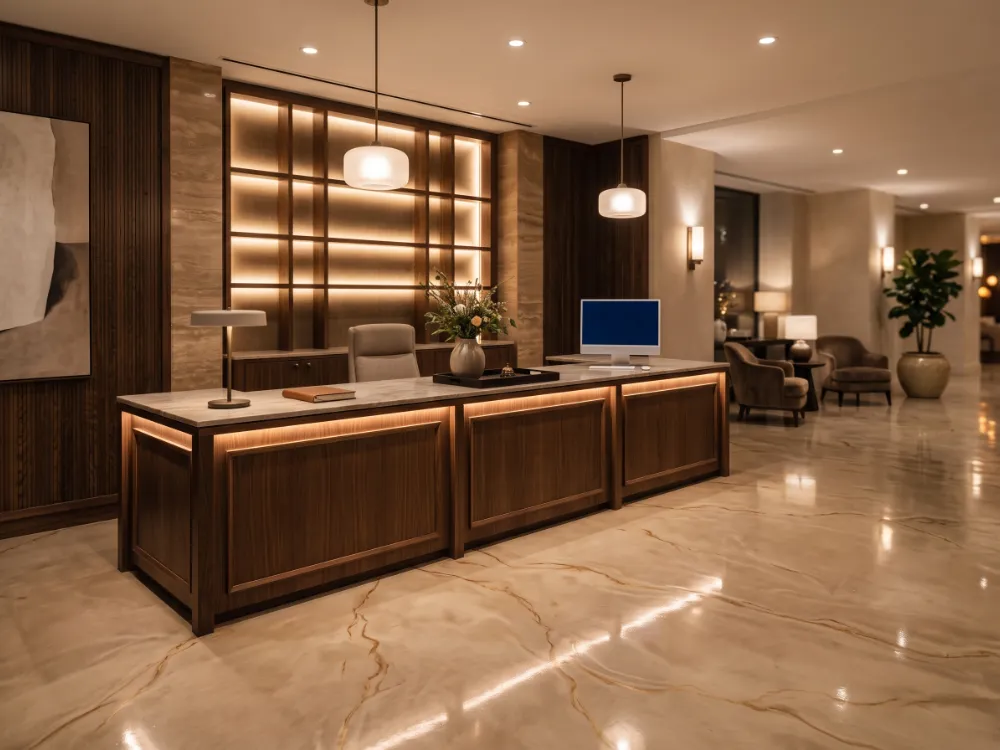
The lobby floor sets the property’s tone before the front desk says a word. A marbleized metallic pour in your brand’s palette gives the space depth that photographs beautifully — no two installations are alike — while the gloss bounces light through the room. Underneath the looks it is an industrial system: rolling luggage, wet umbrellas and twenty-four-hour traffic leave nothing on it, and the nightly maintenance is a dust mop, not a buffer.
Pool Decks & Spa Areas
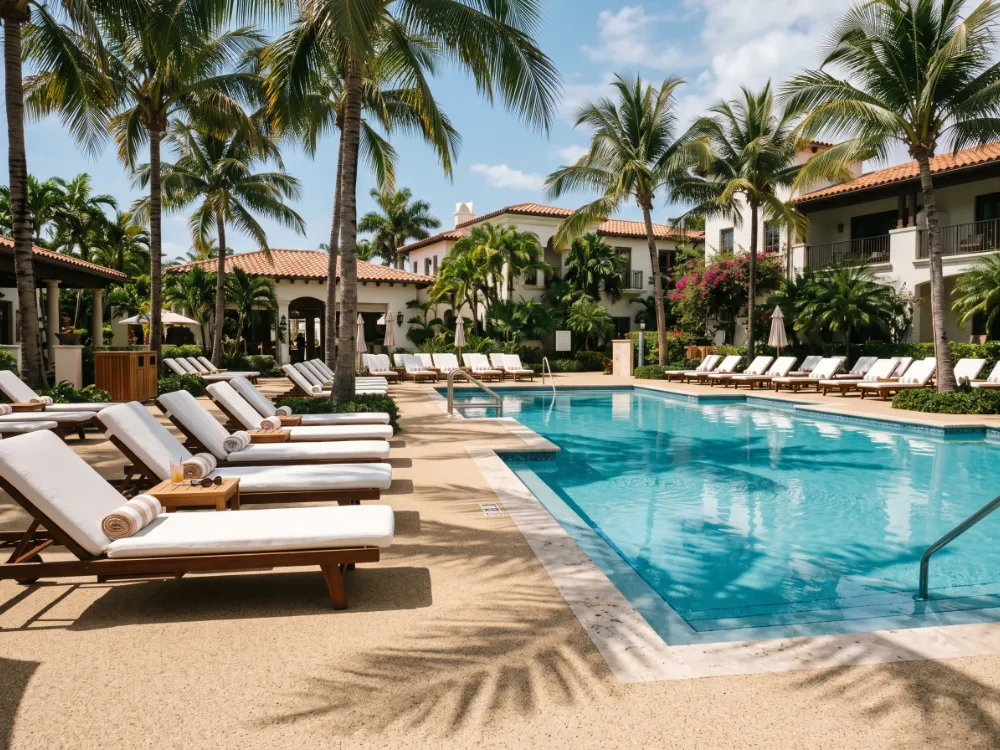
Wet, barefoot and sun-baked is the hardest brief in hospitality flooring:
- Quartz broadcast texture rated for wet barefoot traffic — grip without shredding feet
- UV-stable topcoats that hold color through years of direct sun
- Cool-tone finishes that stay comfortable underfoot in summer
- Seamless, non-porous surface that shrugs off chlorine, sunscreen and pool chemistry
Kitchens, Bars & Banquet Service
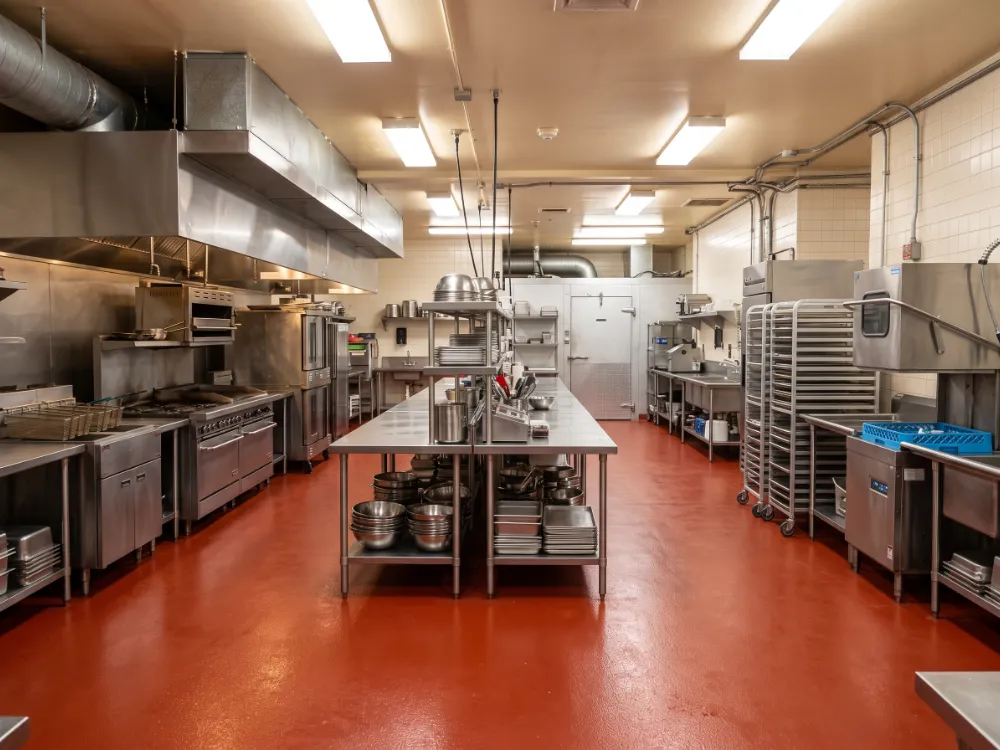
Behind the ballroom, the floor works like a factory. Urethane cement on the cook line absorbs thermal shock from fryers and steam kettles; quartz texture keeps the dish pit safe underfoot; Novolac-grade chemistry stands up to nightly degreasers; and a seamless cove base at every wall gives health inspectors exactly what they expect to see. Banquet corridors take the same treatment, because a loaded queen-mary cart is a freight problem, not a food-service one.
Advantages Across the Property
Hotels do not renovate floors — they renovate zones, on a calendar, around occupancy. Our systems are built for exactly that: each zone gets the chemistry its job demands, installed in overnight phases, and the whole property ends up with one coherent finish standard instead of a patchwork of flooring eras.
Wing-By-Wing Phasing
Wing-by-wing, zone-by-zone scheduling around your occupancy calendar — revenue floors never go dark.
Wet-Area Slip Ratings
Wet areas carry specified slip ratings — pool deck, spa, kitchens — documented for your risk and insurance files.
One Finish Standard, Property-Wide
One installer, one warranty, one finish language from the lobby metallic to the loading dock — for three years, in writing.
Corridors & Elevator Lobbies
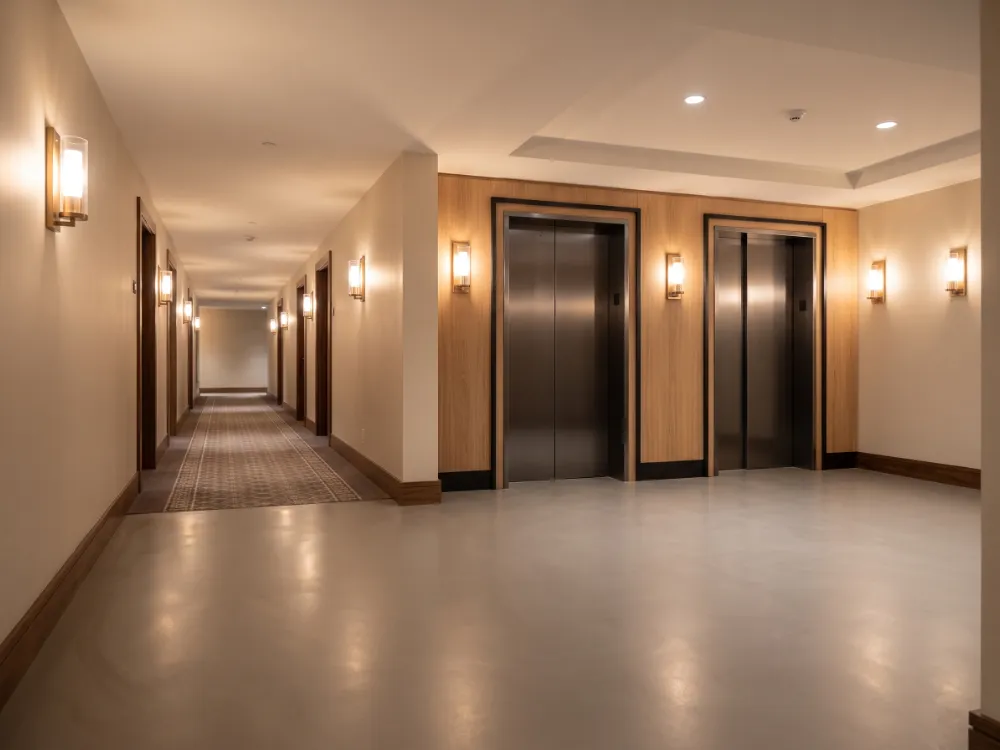
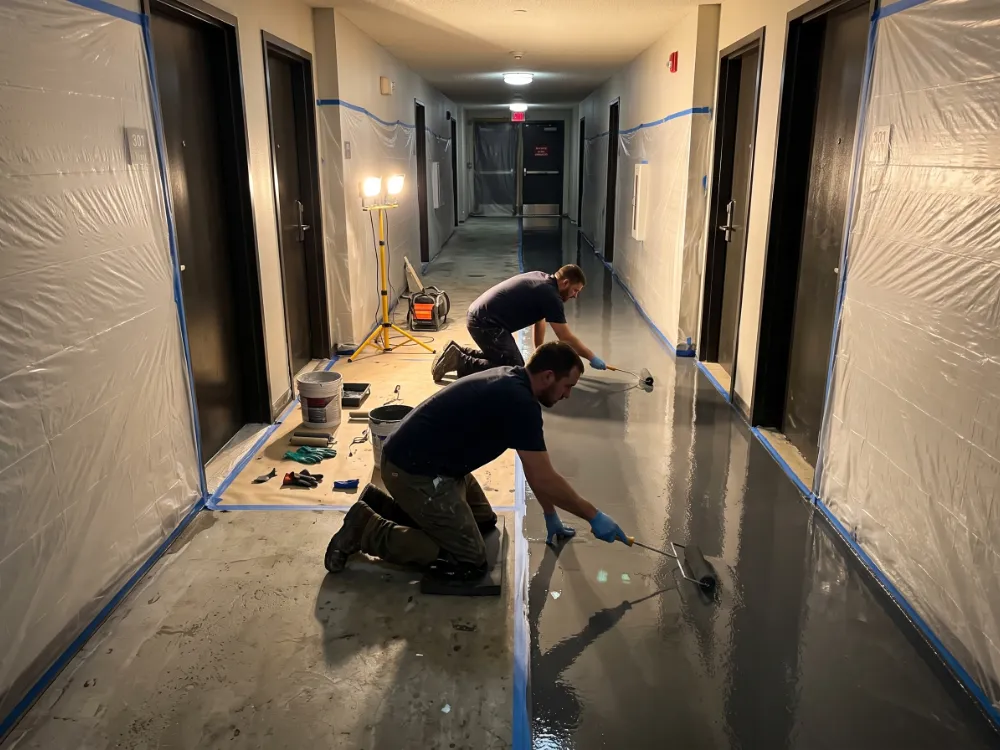
Corridor flooring decides how a floor of rooms feels the moment the elevator opens. A seamless greige or brand-toned system reads calm and freshly kept under sconce lighting, has no carpet seams to fray at the thresholds, and takes luggage wheels and room-service carts without recording them. Elevator lobbies — the highest-traffic square meters in the building — get the same system with a heavier wear coat, invisible to guests and obvious to housekeeping budgets.
Fitness Rooms & Back of House
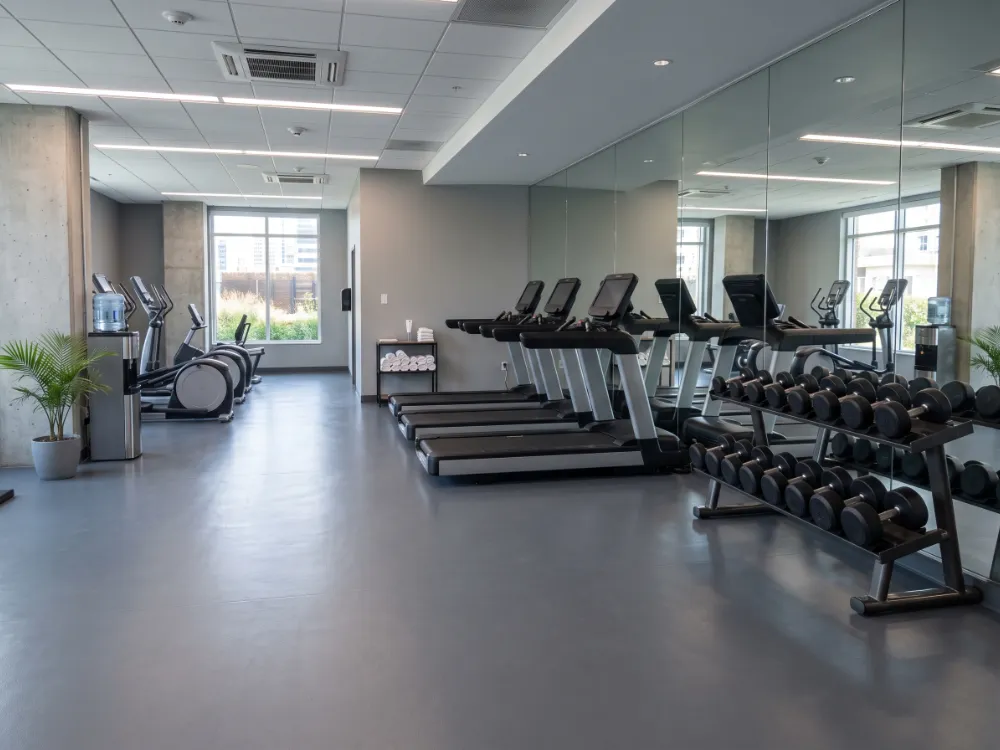
Gyms take dropped dumbbells and rolling racks; laundry and service corridors take carts, moisture and detergent chemistry around the clock. High-build solid epoxy handles both — impact-tolerant, seamless against wash-down water, and bright enough to make back-of-house spaces feel managed rather than forgotten. It is the same standard we put front of house, priced for the spaces guests never see.
Installed Around Your Occupancy
The renovation plan that matters in hospitality is the one that never appears on a guest folio. Crews stage after evening service, coat overnight in contained phases, and hand each zone back before the morning rush — lobby quadrant by quadrant, corridors wing by wing, pool deck in the shoulder season. Fast-cure, VOC-free chemistry is what makes the schedule honest: cured by morning, nothing in the air, and the next phase already booked.
Frequently Asked Questions
Can you install without closing the hotel?
That is the only way we plan hotel work. Zones are coated overnight in contained phases — a lobby in quadrants, corridors wing by wing — and each section takes foot traffic by morning. Occupancy continues throughout; the work simply moves around it.
Will guests smell the installation?
No — and this is the deciding factor for occupied properties. The chemistry is VOC-free and low-odor, manufactured in our own plant. A corridor coated at midnight has nothing detectable in the air at check-in, which is not true of solvent-based products.
What flooring works on a pool deck?
A quartz broadcast system: color quartz sealed under UV-stable topcoats, with texture rated for wet barefoot traffic. It grips when soaked, holds its color in direct sun, and cleans of sunscreen and chlorine residue with a hose-down — the combination bare concrete and tile both fail at.
What goes in the hotel kitchen?
Urethane cement on the cook line — the system built for thermal shock from fryers and scalding wash-downs — with quartz slip texture in wet zones and a seamless cove base at the walls. It is the finish health inspectors expect in commercial food service.
Can the lobby floor match our brand?
Completely. Metallic pours are custom-blended — champagne and cream for a classic property, smoke and silver for a modern one — and solid systems color-match exactly. The floor becomes part of the identity rather than a neutral background.
How do the floors handle luggage carts and room service?
That rolling traffic is what the wear coats are rated for. There are no carpet seams to catch wheels, no tile joints to chip, and no lanes worn into the finish after a year of the same route — the recurring failure pattern of soft flooring in corridors.
What does housekeeping maintenance look like?
Dust mop daily, neutral-cleaner damp mop or auto-scrubber on schedule. No wax, no stripping, no extraction cleaning. Most properties find corridor housekeeping time drops noticeably once carpet is out of the equation.
How slip-safe are the floors for guests?
Slip resistance is specified per zone to ADA recommendations — aggressive texture on the pool deck and in spas, moderate in kitchens, smooth-but-rated in lobbies and corridors. You receive the specification in writing, which your insurance carrier will appreciate.
What does hotel flooring cost?
It depends on zones, square footage and slab condition — a pool deck and a lobby metallic are different projects that happen to share a property. We manufacture our own materials, so pricing is distributor-direct; the free on-site walk-through prices each zone exactly.
How long before a coated zone reopens?
Foot traffic the morning after coating; carts and heavy service traffic within 24 to 72 hours depending on the system. Every phase comes with a reopening time you can put on the housekeeping schedule — and we hit it, because the chemistry cures by clock, not by weather.
One Partner for the Whole Property
Lobby, pool deck, kitchen, corridors, gym and the service spaces between them — one installer, one overnight-phased schedule and one three-year commercial warranty, across Los Angeles, Orange, Ventura and the surrounding counties.
Related: restaurant flooring, retail space flooring, the commercial and industrial overview, and the color chart.
FREE onsite Estimate
5 stars rated company
Get it done right the first time...


