
Judicial Building Epoxy Floor Systems
Courthouse Flooring
Terrazzo dignity at coating cost — installed nights and weekends around the docket
Request a Free Estimate
Courthouse Epoxy Flooring
Courthouses invented the American civic floor. Terrazzo lobbies, brass rails, emblems set in stone — the architecture is meant to say that what happens here is permanent. The maintenance bill says the same thing: poured terrazzo costs more than nearly any floor a public agency can buy, takes months to install and needs a resealing program forever. A terrazzo-look epoxy system delivers the tradition at coating cost — seamless, flecked, bordered and inlaid — over the concrete the building already stands on, installed in nights and weekends around a court calendar that cannot move.
Beyond the lobby, a courthouse is really three buildings. Public zones — screening lobbies, corridors, clerk counters — get abrasion-rated systems that take queue traffic without recording it, with quartz traction at the security line where the building funnels every visitor. Courtrooms take a satin solid in a tone that behaves on camera and under counsel-table chair drag. And the secure side — holding, transfer corridors, sally ports — gets the detention-grade specification: monolithic, coved, with nothing to break loose and nothing to pick at. The seamless surface across all of it is also the accessible one: no joints, no thresholds, nothing to catch a wheelchair or a walker.
Top Epoxy Flooring manufactures its own VOC-free materials and installs with in-house crews across Southern California under a three-year commercial warranty, with bid-ready documentation for public procurement. See the wider commercial and industrial flooring range or request a free on-site estimate below.
Systems for Judicial Facilities

Terrazzo Tradition, Coating Cost
Terrazzo-look epoxy carries the courthouse tradition — flecked, seamless, bordered — at a fraction of poured-terrazzo cost and schedule.

Emblem & Border Inlays
Emblems, medallions and geometric borders coat in and seal beneath the wear layer — the courthouse floor’s signature, made permanent.

Detention-Safe Secure Zones
Holding and transfer zones get monolithic, coved, detention-safe surfaces — nothing removable, nothing to exploit.

Quartz Screening-Lobby Traction
Quartz traction covers the screening lobby, where every visitor funnels through one wet-shoe bottleneck.

Seamless ADA Mobility
Seamless floors are accessible floors — no joints, lips or thresholds to catch wheelchairs, walkers or evidence carts.

Documented Slip Specifications
Slip resistance documented zone by zone in writing — the paperwork a public facility’s risk office files next to the warranty.
Public Lobbies & Security Screening
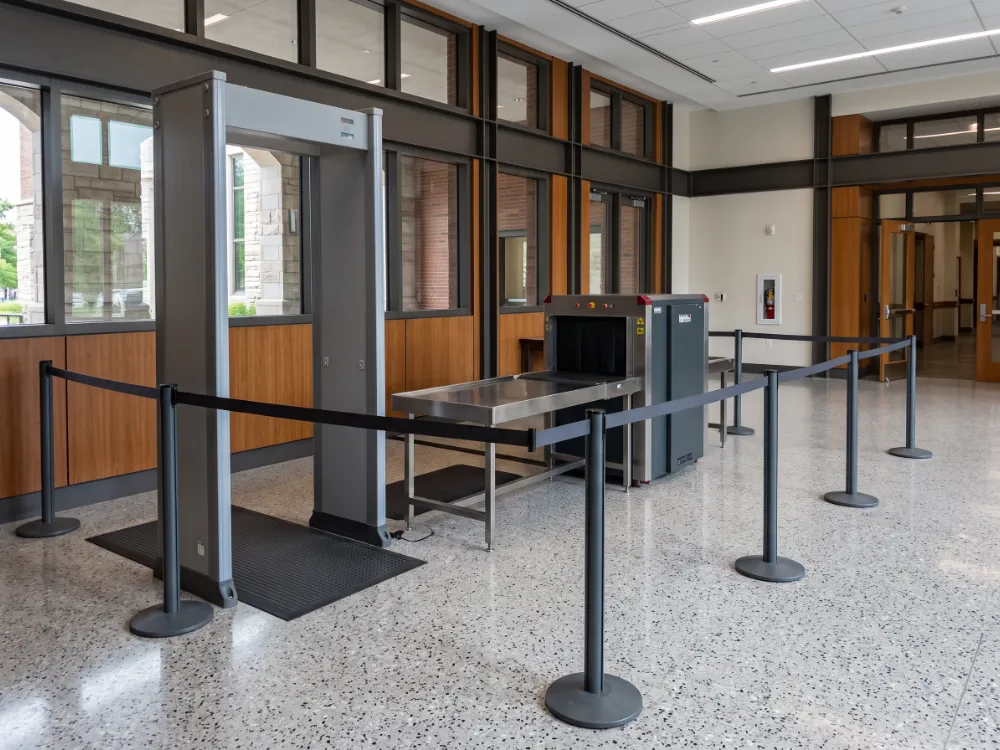
The lobby does the courthouse’s ceremonial work while the screening line does its hardest labor — every visitor, every day, through a few square meters of queue. A terrazzo-look system handles both faces: civic-grade finish with a coated border or emblem where the architecture wants gravity, and an abrasion-rated wear surface with quartz traction where the magnetometer line concentrates wet shoes and waiting feet. It cleans overnight and never needs a closure for resealing.
Courtrooms
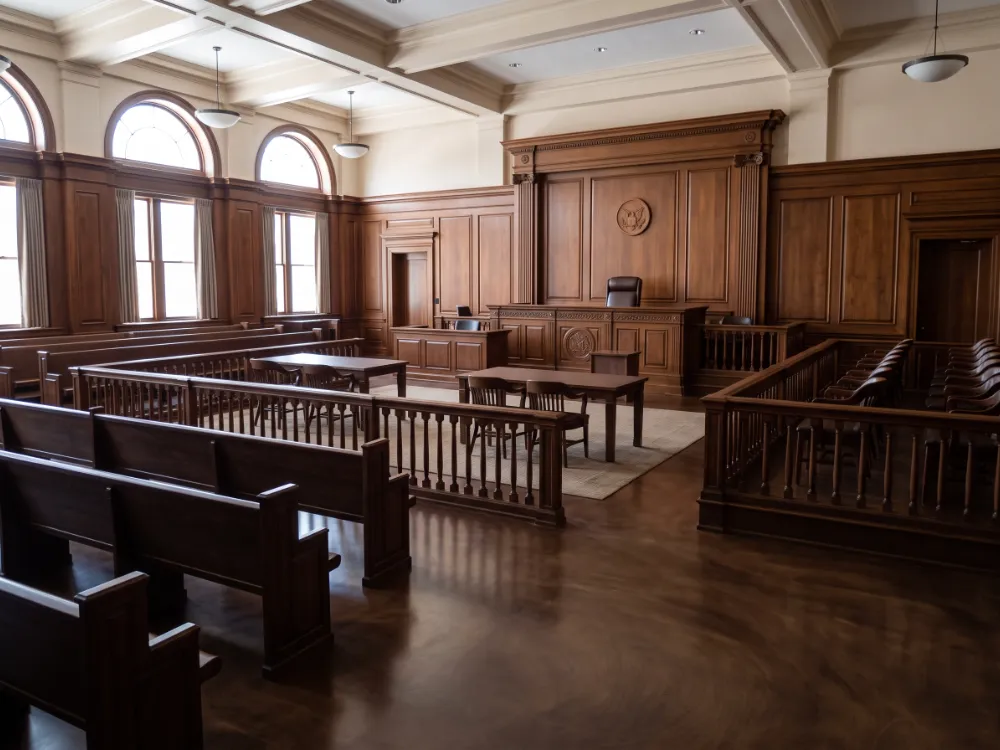
A courtroom floor should disappear into the proceedings. A satin solid-color system in a walnut, slate or courthouse-gray tone sits quietly under the millwork, reads without glare on the record camera, absorbs counsel-table and gallery chair drag without complaint, and — being VOC-free — goes in over a recess without leaving a trace in the air by Monday’s calendar call. Jury boxes and well areas take the same finish, continuous and seamless.
Corridors & Elevator Lobbies
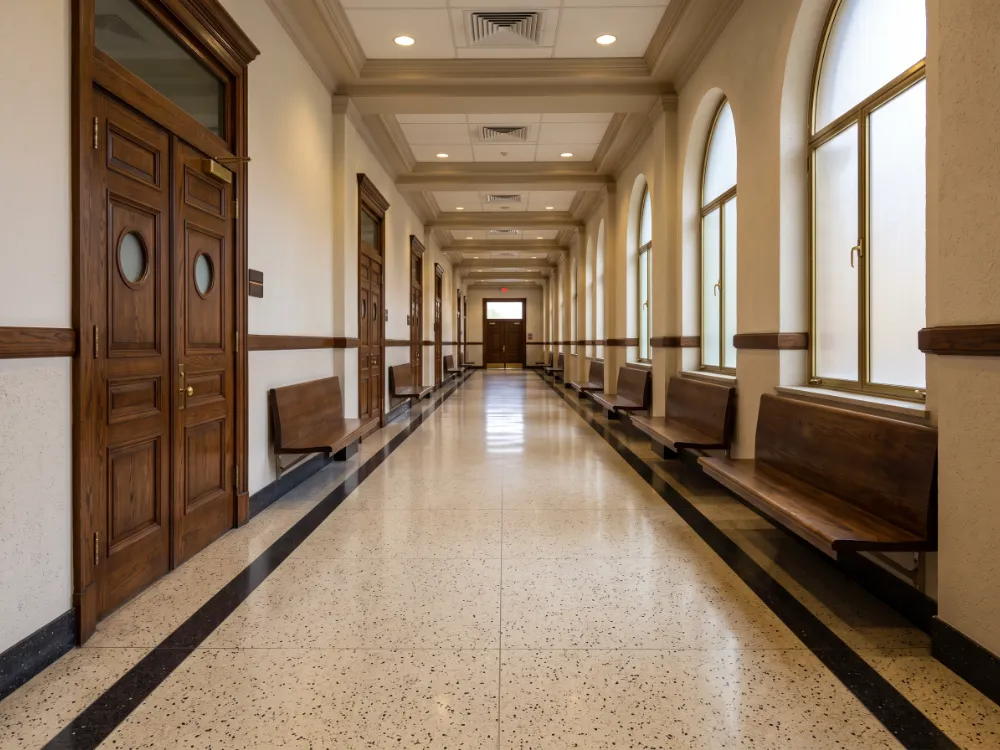
The circulation floors that connect every department:
- Terrazzo-look continuity with coated border stripes for wayfinding
- Elevator lobbies — the hardest-worked square meters — built with heavier wear coats
- No grout to gray and no tile lots to mismatch across floors and phases
- Bench and doorway zones detailed against decades of scuffing
Advantages for the Judicial Campus
Courthouse projects answer to the docket, the bid file and the building’s dignity all at once. These systems are engineered for that triangle: installed without moving a single hearing, documented for procurement, and finished to the standard the architecture set a century ago.
Scheduled Around the Docket
Nights, weekends and recess windows — phased so no courtroom, counter or corridor closes during session hours.
Camera-Quiet Courtroom Finishes
Public, secure and chambers zones each get their own specification — one installer accountable for all three.
Bid-Ready Paperwork
Specifications, slip documentation and warranty delivered bid-ready — the procurement file completes itself.
Holding, Transfer & Secure Corridors
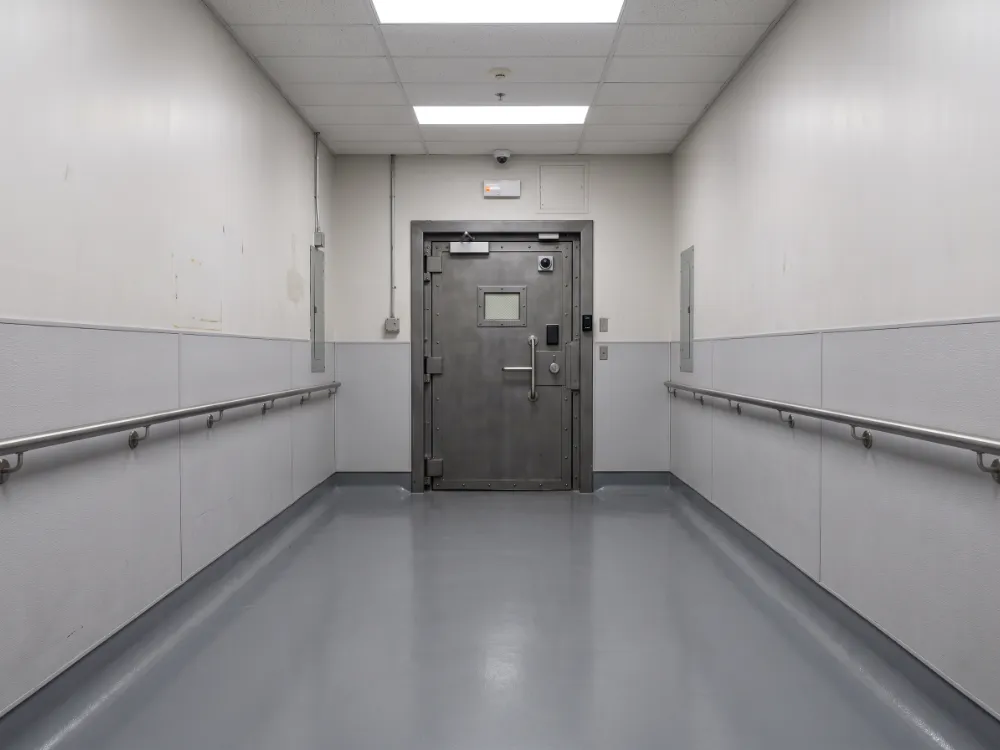
The secure side of a courthouse is specified like the detention facility it briefly is. Monolithic epoxy with integral cove bases offers no tile to break into edges, no grout to pick loose, no seam to lift — the same materials logic as every other tamper-resistant finish in the transfer path. The non-porous surface takes disinfection protocols without dulling, and the finish is chosen for camera coverage rather than gloss.
Jury Rooms, Clerks & Records
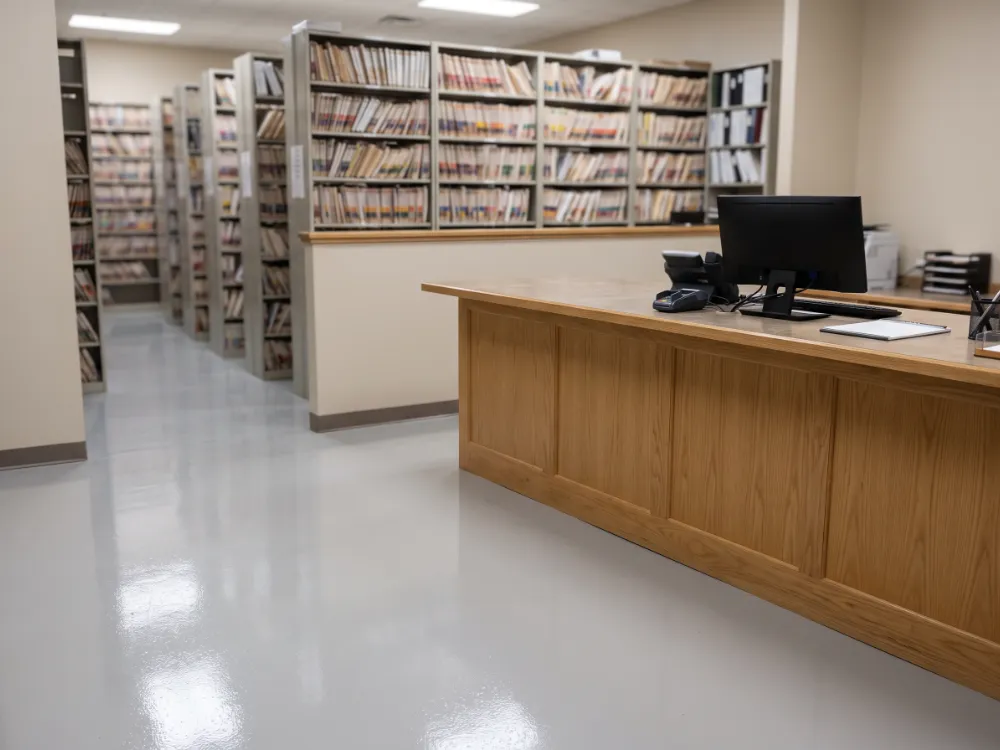
The working courthouse — jury assembly, clerk counters, records vaults — runs on floors that never make the architecture tour but carry its daily load. Sealed epoxy systems keep records rooms dust-free over the files they store, give clerk counters a queue-rated surface that outlasts every filing deadline rush, and make jury assembly rooms easy to reset between panels. One finish standard, public face to file room.
Installed Around the Court Calendar
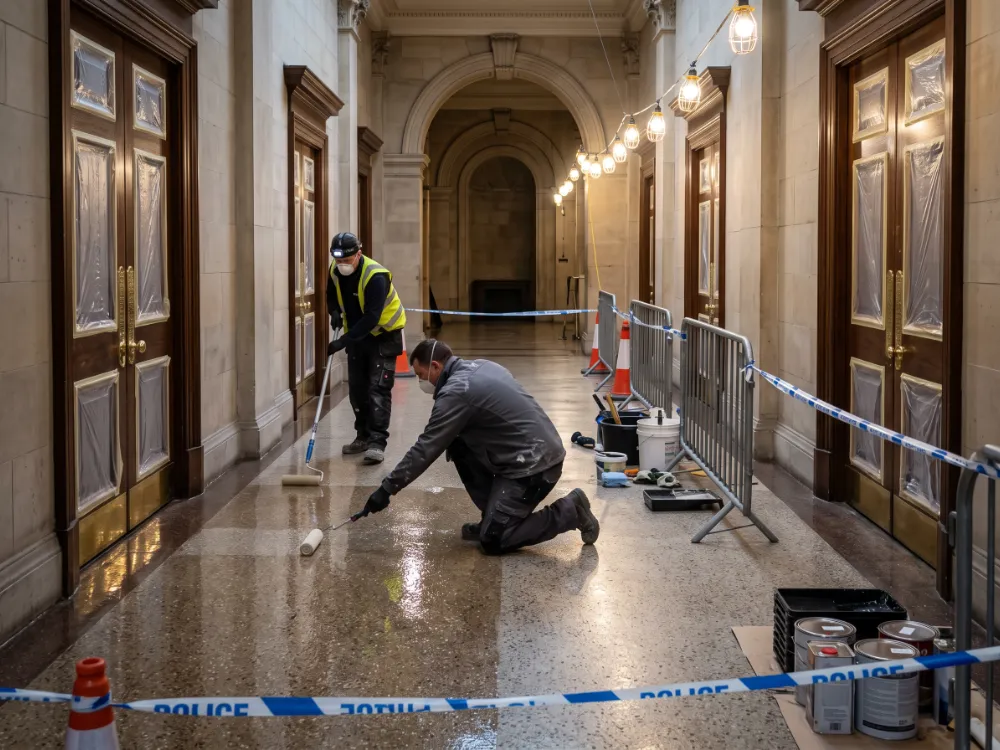
Court does not continue a hearing because of flooring, so the flooring works around court. Public zones coat overnight and reopen before the doors unlock; courtrooms are scheduled into recesses and dark weeks; secure corridors phase with the marshal’s office around transfer schedules. Fast-cure, VOC-free chemistry keeps every reopened space odor-free — and the phasing calendar is agreed with court administration before the first grinder starts.
Frequently Asked Questions
Can flooring work happen while court is in session?
Sessions are never disturbed — work is phased into nights, weekends and recess windows, agreed with court administration in advance. Public areas reopen before doors unlock each morning, and courtrooms are scheduled into their own dark periods.
How close does the look come to traditional terrazzo?
Close enough that visitors read it as terrazzo — the flecked, seamless, bordered civic floor is exactly what the system reproduces. The differences are practical: nights instead of months to install, coating-level cost, and no resealing program for facilities to budget forever.
Can a county seal or emblem be set into the floor?
Yes — seals, medallions and geometric borders coat into the system and seal beneath the clear wear layer, where traffic polishes rather than erases them. It is the coating-era answer to the brass-and-stone inlay tradition.
What is specified in holding and transfer areas?
Detention-grade seamless systems: monolithic surfaces, integral cove bases, nothing removable or breakable into an edge. It is the same security materials logic used in police holding facilities, applied to the courthouse transfer path.
How does the floor support ADA accessibility?
A seamless floor is the accessible baseline — no joints, thresholds or lips to catch wheels or walkers — and slip resistance is specified and documented by zone. Both the surface and its paperwork support the building’s accessibility file.
Can this be installed over our existing worn terrazzo?
Often, yes. Sound terrazzo can be diamond-ground and overlaid with the new system; failed or hollow sections are removed and leveled first. The evaluation happens during the site walk-through, and either path ends in a seamless new surface.
What about courtroom acoustics and cameras?
Courtrooms get satin, low-glare finishes chosen to behave under recording cameras and lighting, in tones that sit quietly beneath millwork. Acoustically the floor performs like the stone and terrazzo courtrooms have always had, managed as courtrooms always manage it.
How is a public bid handled?
We deliver complete bid-ready documentation — specifications, zone-by-zone slip ratings, material data and warranty terms — and because the materials come from our own production, quoted pricing holds through award. One vendor is accountable for material and workmanship together.
How long will the floor serve under daily public traffic?
Decades — with elevator lobbies and screening zones refreshed by overnight recoat rather than closure and replacement. Material and installation carry our three-year commercial warranty as one obligation from one company.
What does courthouse flooring cost?
The zone mix drives it: a terrazzo-look lobby, a courtroom satin and a secure corridor are different specifications sharing one building. Pricing is distributor-direct, and the free on-site walk-through returns a per-zone figure with the phasing plan attached.
From the Steps to the File Room
Lobby, courtrooms, corridors, secure zones and records — one specification set, phased around the docket, documented for procurement, under one three-year commercial warranty, across Los Angeles, Orange, Ventura and the surrounding counties.
Related: city hall flooring, police station flooring, and the commercial and industrial overview.
FREE onsite Estimate
5 stars rated company
Get it done right the first time...


