
Slab Restoration Specialists
Concrete Resurfacing
Pitted, spalled, stained concrete rebuilt into a brand-new surface — no jackhammers required
Request a Free Estimate
Concrete Resurfacing
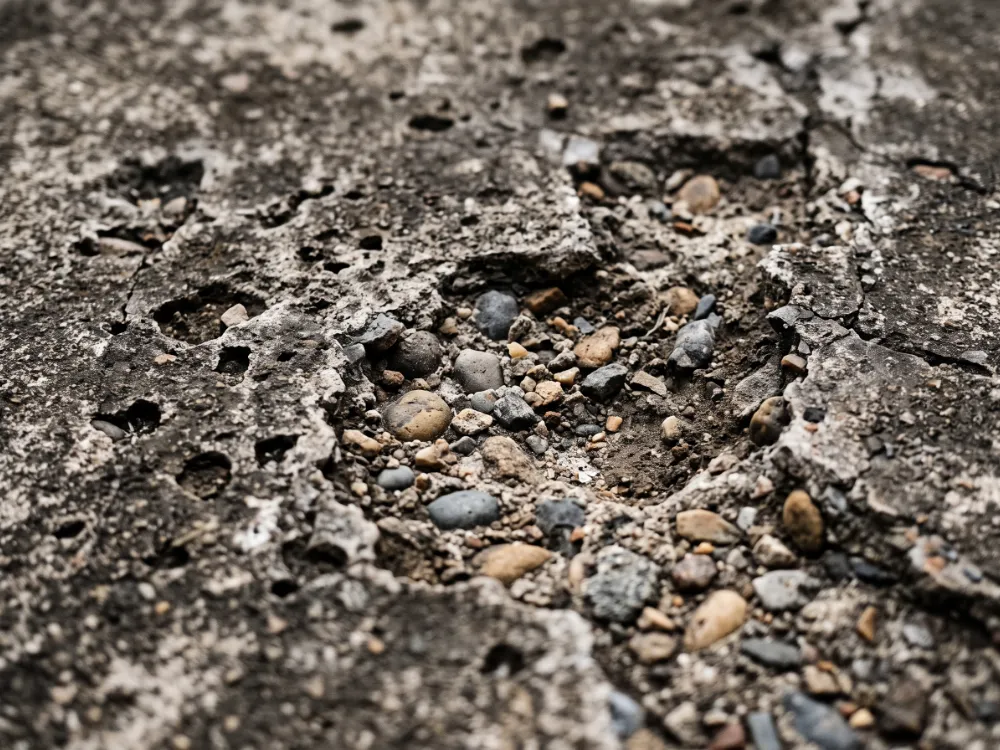
Concrete rarely fails all the way down — it fails at the top. The surface scales, pits and spalls; stains soak in; decades of weather chew the finish while the slab underneath stays structurally fine. Resurfacing exploits that fact: instead of demolishing a sound slab for its cosmetic sins, a new engineered wear surface is bonded over it — epoxy mortar where craters need filling, overlays where evenness needs restoring, and a decorative finish on top that makes the whole history disappear.
Top Epoxy Flooring resurfaces concrete across Los Angeles, Orange, Ventura, San Bernardino, Riverside and San Diego counties, indoors and out — garages, driveways, patios, pool surrounds, commercial and warehouse floors — using resin systems we manufacture ourselves, finished under UV-stable topcoats. The typical project runs about a third of replacement cost and days instead of weeks, and it starts with an honest structural assessment, because resurfacing a failing slab helps nobody.
The pages ranking for this term mostly sell stamped-cement makeovers. Ours is the resin end of the craft — the overlays and mortars that rebuild working surfaces — explained below with the decision framework we actually use on estimates.
What Goes Into Every Resurfacing Project

Slab Condition Assessment
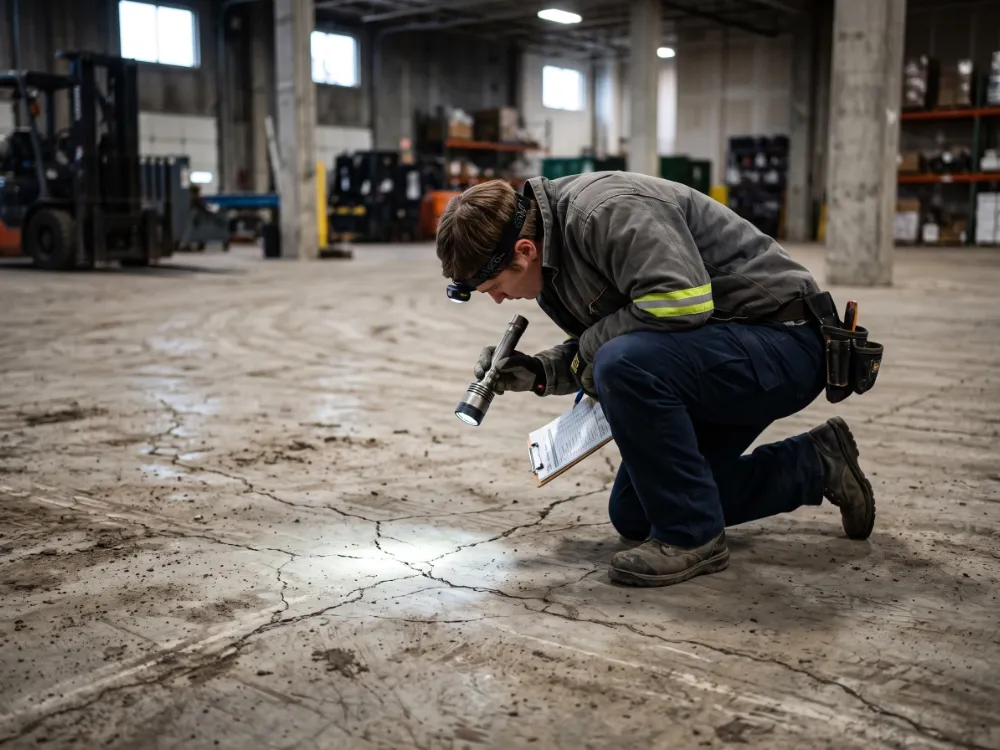
Assessment first: crack behavior, soundness, settlement and drainage decide whether resurfacing is the honest recommendation.

Diamond Grinding & Crack Repair
Diamond grinding opens the old surface into a bonding profile, and cracks are routed, filled and ground flush.

Moisture Testing First
Moisture testing precedes every overlay — large bonded pours are unforgiving of skipped vapor work.

Epoxy Mortar Build-Up
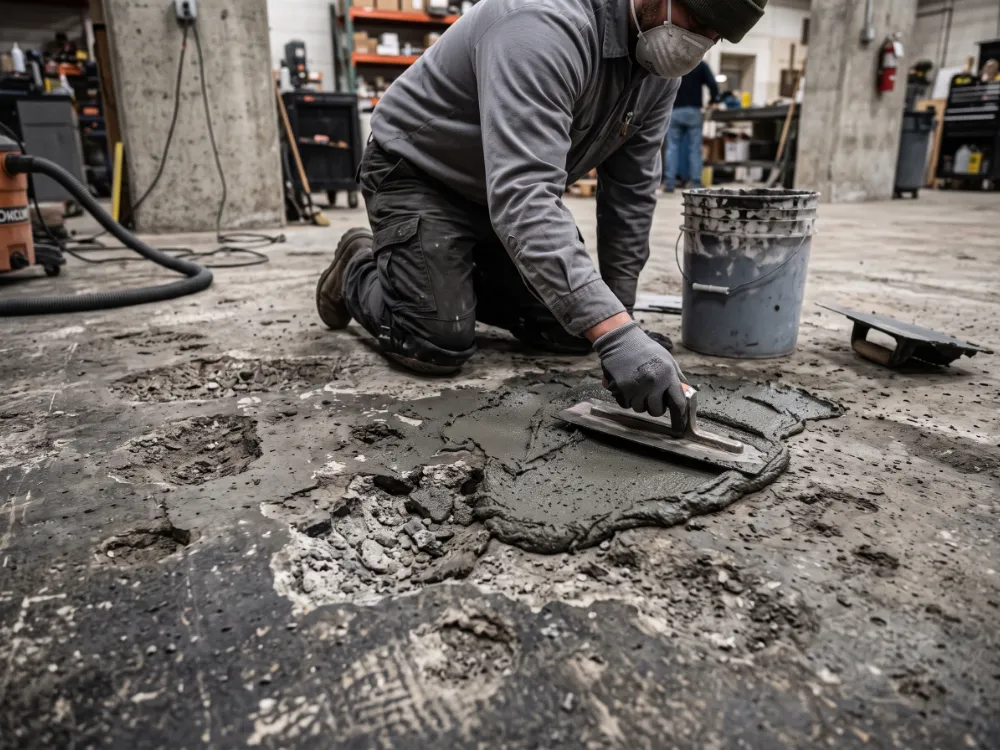
Epoxy mortar rebuilds pitted and spalled zones at up to a quarter inch — structural fill, harder than the original concrete.

Decorative Broadcast Options
The finish is a real decorative system — flake, quartz, solid color or the five-layer exterior stack — never bare patchwork.

UV-Stable Sealed Finish
A UV-stable sealed topcoat closes the system, indoors or in full Southern California sun.
What a Worn Slab Actually Needs
The classic candidates look terrible and test fine: driveways scaling from decades of sun, garage floors pitted by dropped tools and road salt tracked off winter trips, patios whose finish eroded into exposed aggregate, warehouse lanes chewed gray by wheels. In every case the damage lives in the top fraction of an inch — and the slab's structure, the expensive part, is intact.
Resurfacing treats exactly that layer: remove what failed, rebuild what is missing, and finish with a surface engineered to outlast the original. Demolition is reserved for slabs that earn it structurally, which is a small minority of the floors we assess.
Epoxy Mortar: the Rebuilding Material
The workhorse of heavy resurfacing is epoxy mortar — resin-bound aggregate troweled into craters, spalls and eroded zones at up to a quarter inch, curing harder than the concrete around it. It rebuilds broken slab edges, fills pitting that would swallow a roller coat, and levels damage that mere coatings can only shadow over.
Because we manufacture the resin, the mortar and the finish system come from one source and cure into one monolithic build — no product-compatibility roulette between a patch from one brand and a coating from another.
Resurface or Replace: the Assessment
The estimate visit is a structural interview with your slab:
- Crack behavior — dormant map cracking resurfaces beautifully; active, moving cracks are a structural flag.
- Soundness — hammer testing finds hollow, delaminating zones and how deep the damage runs.
- Settlement and drainage — a slab that has stopped moving is a candidate; one still sinking is not.
- Moisture — vapor readings decide the primer and barrier stack under any overlay.
We do not pour replacement slabs, so the verdict carries no sales agenda — when replacement is truly the answer, you hear it plainly.
Advantages of Resurfacing
The slab you own, rebuilt instead of demolished: structural-grade mortar under a genuine decorative finish, roughly a third of replacement cost, days of work instead of weeks — assessed honestly and warrantied by the company that manufactures every material in the build.
New Surface, Same Slab
No demolition: the dust, hauling and weeks of a tear-out simply never happen — the new floor builds on the old one.
A Third of Replacement Cost
Structural-grade repair: epoxy mortar rebuilds pits, spalls and edges harder than the original concrete.
Honest About the Exceptions
A real finish, not a patch job — flake, quartz, solid or exterior systems over the rebuilt surface, under warranty.
Garages: Resurfaced and Finished in One Job
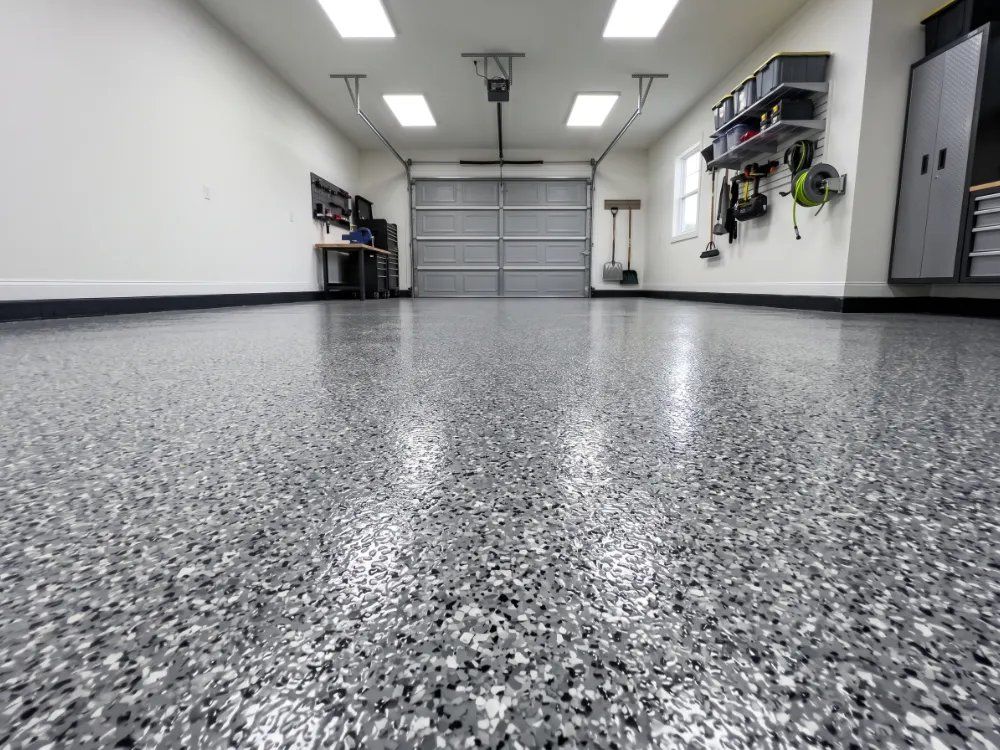
The pitted, oil-shadowed garage slab is resurfacing's home game: mortar fills the damage, grinding levels the history, and the same project ends in a full flake or solid color system — one crew, one schedule, one warranty from bare damage to finished floor. The before-and-after is usually the most dramatic in the house.
It is also the honest path for garages too far gone for coating alone — the floors where a straight coating quote would either bridge over damage or balloon with patch line items.
Driveways, Patios and Outdoor Concrete
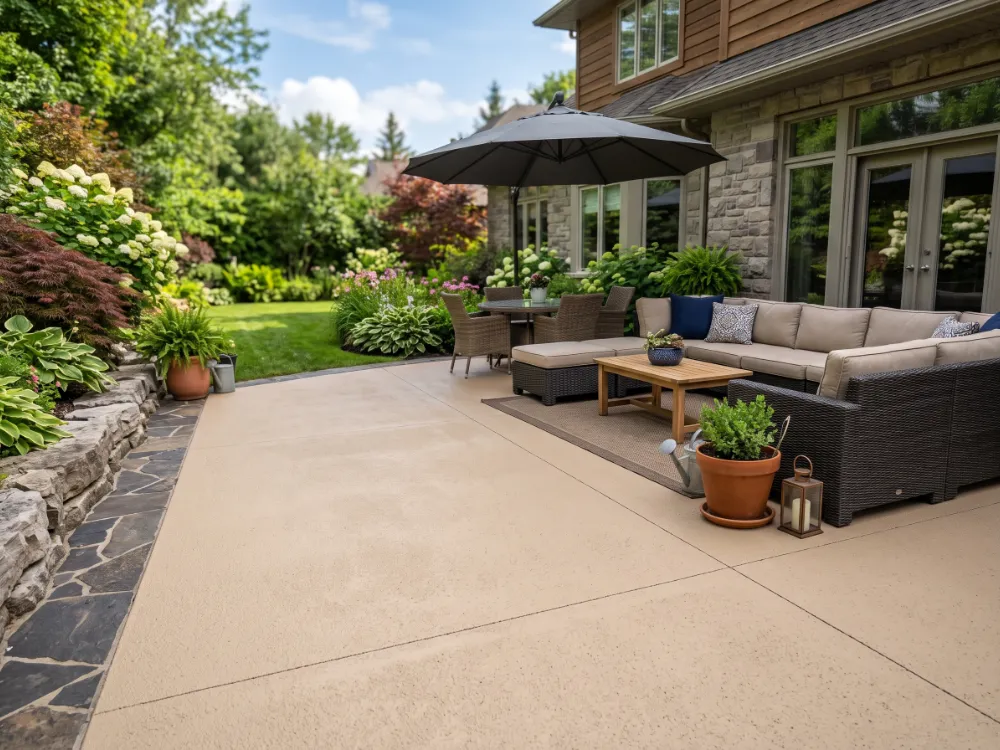
Outdoors, resurfacing rescues the concrete replacement quotes give up on: sun-scaled driveways, eroded patios, walkways pitted by decades of sprinklers. The rebuilt surface finishes under our five-layer exterior system — UV-stable, slip-textured, sealed against the moisture that caused the original decline — so the restored surface is genuinely better armed than the concrete ever was.
Curb appeal arrives as a side effect: the largest surfaces on the property stop testifying to their age.
Commercial and Warehouse Restoration
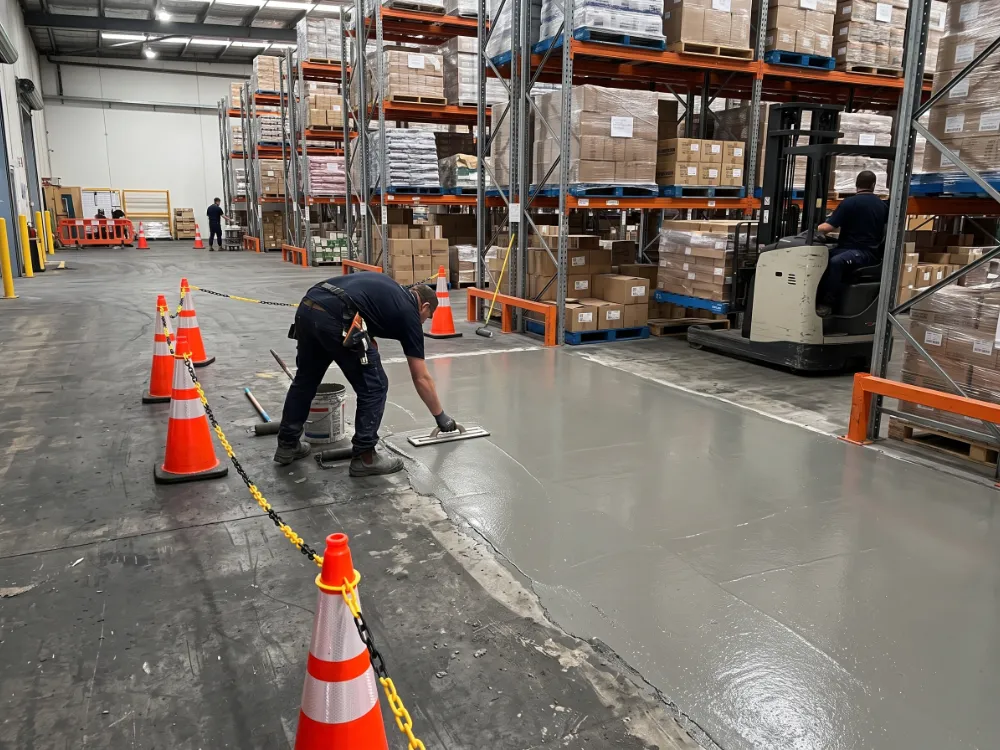
Working facilities resurface for uptime: wheel-worn aisles, spalled dock aprons and chemical-etched process zones are rebuilt section by section — coned off, ground, mortared, finished and returned to traffic — while the rest of the operation keeps moving. Fast-cure systems keep each zone's closure inside a shift where the schedule demands it.
The finished areas carry the same three-year commercial warranty as our new installations, because by the time we are done, that is effectively what they are.
Frequently Asked Questions
What can resurfacing fix — and what can't it?
Resurfacing rebuilds the surface: scaling, pitting, spalling, map cracking, stains, discoloration and general wear all disappear under a new bonded wear layer. What it cannot fix is structural failure — a slab that is heaving, actively settling or crumbling through its depth will move any topping along with it. The assessment sorts your slab honestly into one column or the other.
How does resurfacing compare to tearing out and repouring?
Where the slab qualifies, it is no contest: roughly a third of replacement cost, days instead of weeks, no demolition dust or hauling, and a finished surface that outperforms bare concrete anyway. Replacement makes sense only when the slab is structurally done — and if yours is, we will say so rather than sell you a topping.
What actually goes on the floor?
A system matched to the damage: epoxy mortar troweled up to a quarter inch rebuilds pitted and spalled zones; self-leveling overlays correct broader unevenness; and the finish is whatever the space calls for — flake or quartz broadcast, solid color, or our five-layer exterior stack outdoors. The result is not patched old concrete; it is a new engineered wear surface.
Will the cracks come back through the new surface?
Repaired dormant cracks stay gone — they are routed, structurally filled and ground flush before resurfacing, and the new surface bridges them permanently. Active cracks that move with the slab are the exception; those get flagged during assessment, because no overlay outmuscles a slab that is still going somewhere.
Can badly pitted, spalled concrete really be saved?
Usually, and dramatically. Epoxy mortar fills craters and rebuilds edges at genuine structural strength — harder than the original concrete — and the decorative broadcast on top erases the evidence. The floors that look most hopeless in photos are often the most satisfying before-and-afters in our folder.
How long does a resurfaced floor last?
Bonded correctly over a sound slab, decades — the wear surface is the same chemistry as our coating systems, with the same UV-stable topcoats. Residential work carries our limited lifetime coating warranty and outdoor and commercial work three years, from the company that manufactured the materials.
Does resurfacing work outdoors — sun, rain, pool water?
Yes; driveways, patios, walkways and pool decks are core resurfacing territory. Outdoor projects finish under our UV-stable exterior system with slip-resistant texture, so the rebuilt surface handles sun, sprinklers and pool chemistry that the original concrete visibly lost to.
What finishes and colors are available?
The full catalog, because resurfacing ends in the same finishes our coating pages describe: flake blends, quartz broadcasts, solid colors, even metallic interiors — plus sealed natural looks. The overlay is the canvas; the finish is your choice, from our own manufactured materials.
How soon can we walk and drive on it?
Foot traffic typically returns around 24 hours after the final coat, vehicles at 48 to 72 depending on system and temperature. Most residential resurfacing projects run one to three days of work — the demolition phase that makes replacement miserable simply doesn't exist.
How do you decide resurface versus replace on the estimate visit?
We read the slab: crack patterns (dormant versus active), soundness under hammer testing, settlement and drainage, moisture readings, and edge condition. The verdict comes with reasons you can see — and because we do not pour new slabs, we have no incentive to condemn one that a topping would save.
The Restoration Toolkit
Resurfacing works alongside the rest of our slab services — often in the same project.
Self-leveling concrete · Concrete grinding & surface prep · Epoxy floor repair · Garage floor coating · Driveway coating · Patio coating · Warehouse flooring · Commercial & industrial flooring
FREE onsite Estimate
5 stars rated company
Get it done right the first time...


