
Gallery & Exhibition Epoxy Floor Systems
Museum Flooring
Floors the art never has to compete with — installed between exhibitions, safe beside the collection
Request a Free Estimate
Museum Epoxy Flooring
Museum floors carry a paradox: they take more sustained foot traffic than almost any commercial surface, while remaining visually silent so the work on the walls stays the point. It is why the great museums standardized on seamless terrazzo generations ago — Frank Lloyd Wright called it the ideal floor when he specified it for the Guggenheim’s ramps — and why modern resinous systems now deliver the same logic at coating cost: seamless, neutral, decades-durable, and quiet under gallery light.
The specification is curated room by room. Galleries take matte, low-glare finishes in neutral tones that disappear beneath the lighting design. Lobbies and atriums take terrazzo-look systems with civic presence. Collections storage gets sealed, coved, dust-free floors that protect what they hold — and every material we use is VOC-free, the conservation-relevant detail for work performed anywhere near a collection. Installation follows exhibition changeover schedules with containment discipline: low-dust preparation, sealed work zones, and galleries returned on the calendar the registrar already keeps.
Top Epoxy Flooring manufactures its own materials and installs with in-house crews across Southern California — one of the densest museum landscapes in the country — under a three-year commercial warranty. See the wider commercial and industrial flooring range or request a free on-site estimate below.
Systems for Cultural Institutions

Gallery-Neutral Matte Finishes
Matte, low-glare gallery finishes in curated neutrals — the floor recedes and the collection holds the room.

Terrazzo-Look Public Spaces
Terrazzo-look systems give lobbies and atriums the traditional museum floor at a fraction of poured-terrazzo cost.

Conservation-Safe VOC-Free
VOC-free chemistry throughout — the conservation-safe answer for work performed near collections.

Contained, Low-Dust Installs
Containment-disciplined installation: low-dust grinding, sealed zones, protocols your registrar can sign off.

Crate & Lift Load Ratings
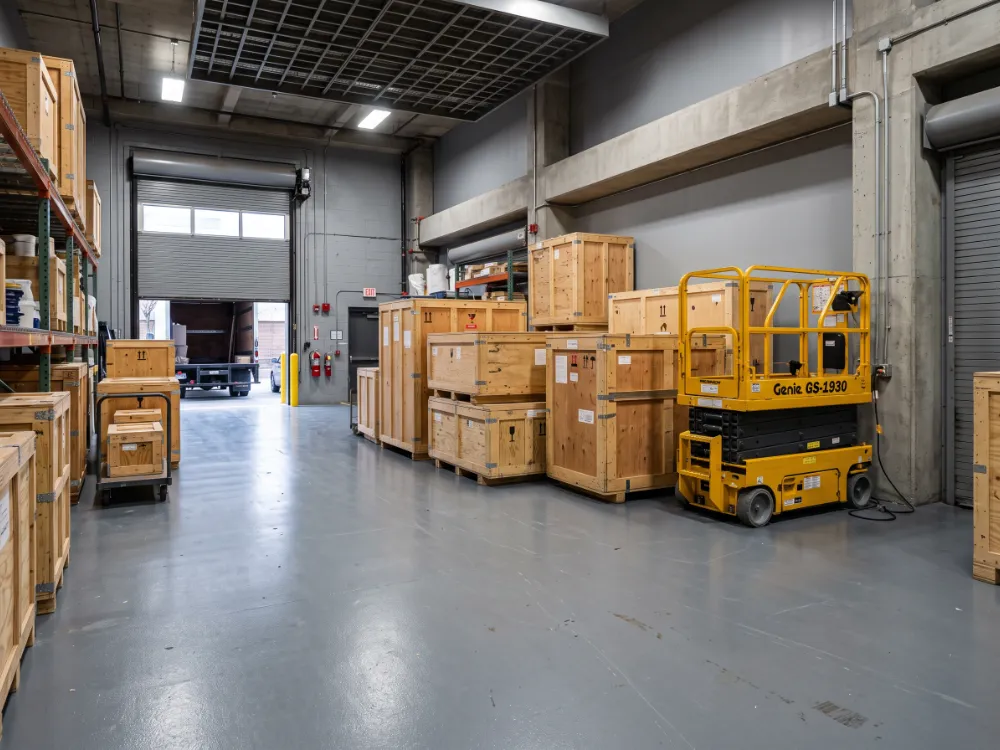
Wear builds rated for art crates, scissor lifts and pallet jacks — the loads exhibitions actually roll.

Coved Collections Rooms
Collections rooms get sealed, coved, dust-free floors — the slab stops shedding onto stored works.
Galleries & Exhibit Halls
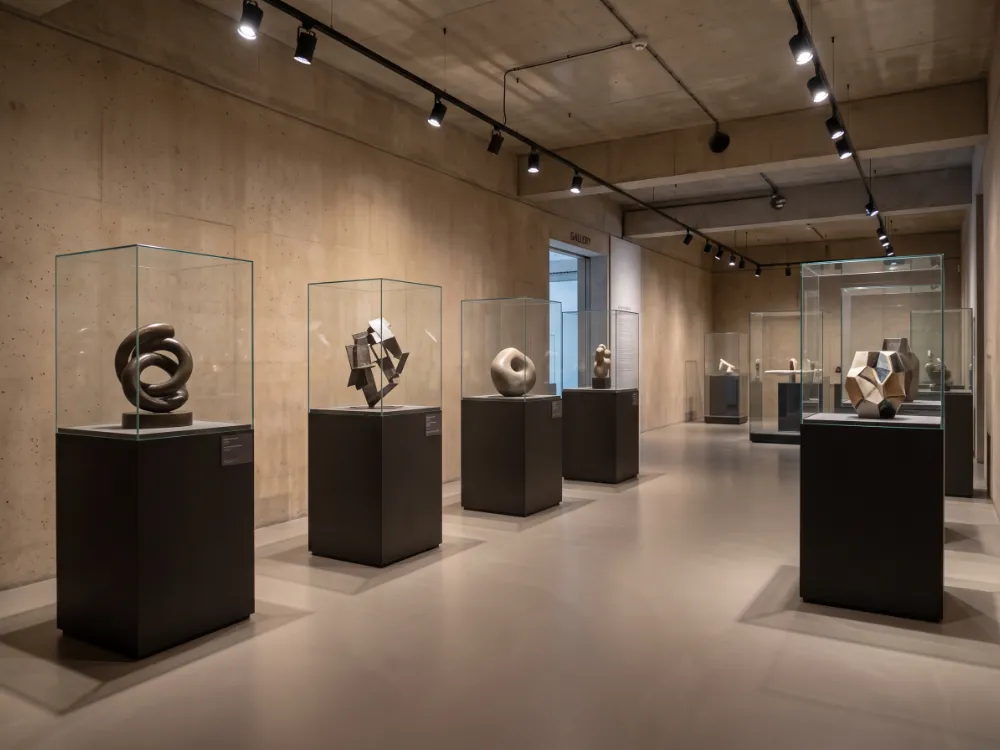
A gallery floor succeeds by disappearing. Matte and low-sheen finishes eliminate the glare spots that fight track lighting, neutral tones defer to whatever the curators hang, and the seamless surface gives visitors’ eyes nothing to snag on between works. Underneath the restraint is an industrial system: tens of thousands of visitors a season, exhibition build-outs and strike-downs, and pedestal moves leave no record in the finish.
Lobbies & Atriums
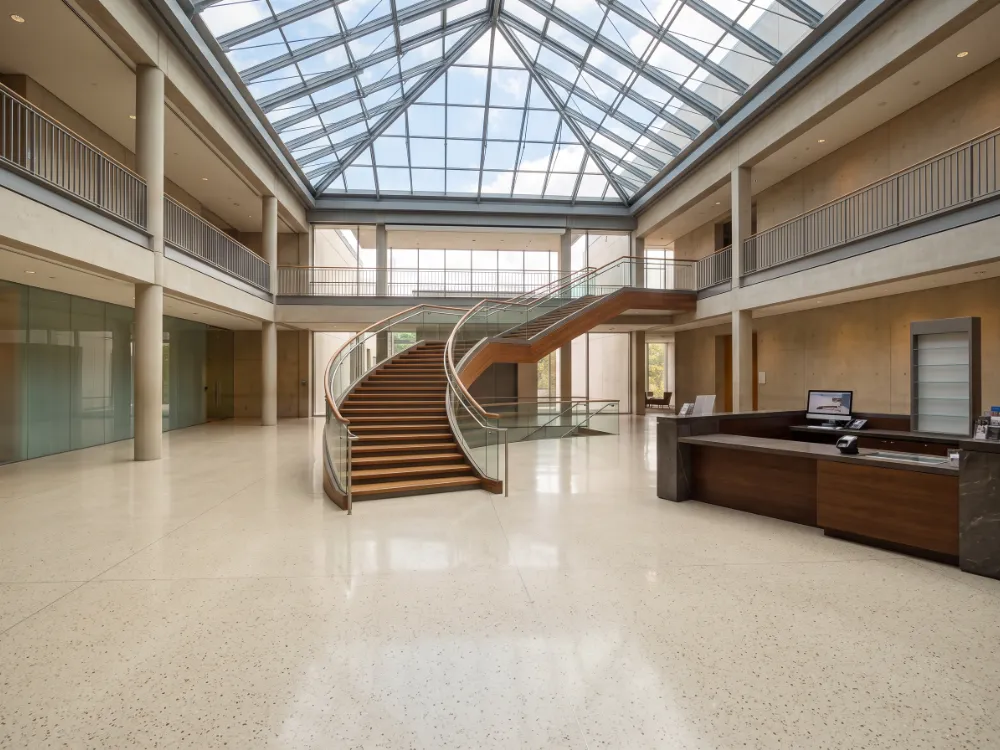
The entrance sequence is where the museum speaks in its own voice, and terrazzo is its traditional accent. A terrazzo-look epoxy system delivers that vocabulary — seamless, flecked, luminous under skylights — over a wear build made for the school groups, galas and daily queues an atrium absorbs. Donor recognition zones and design borders coat in permanently, and the floor never closes for the resealing cycles real terrazzo demands.
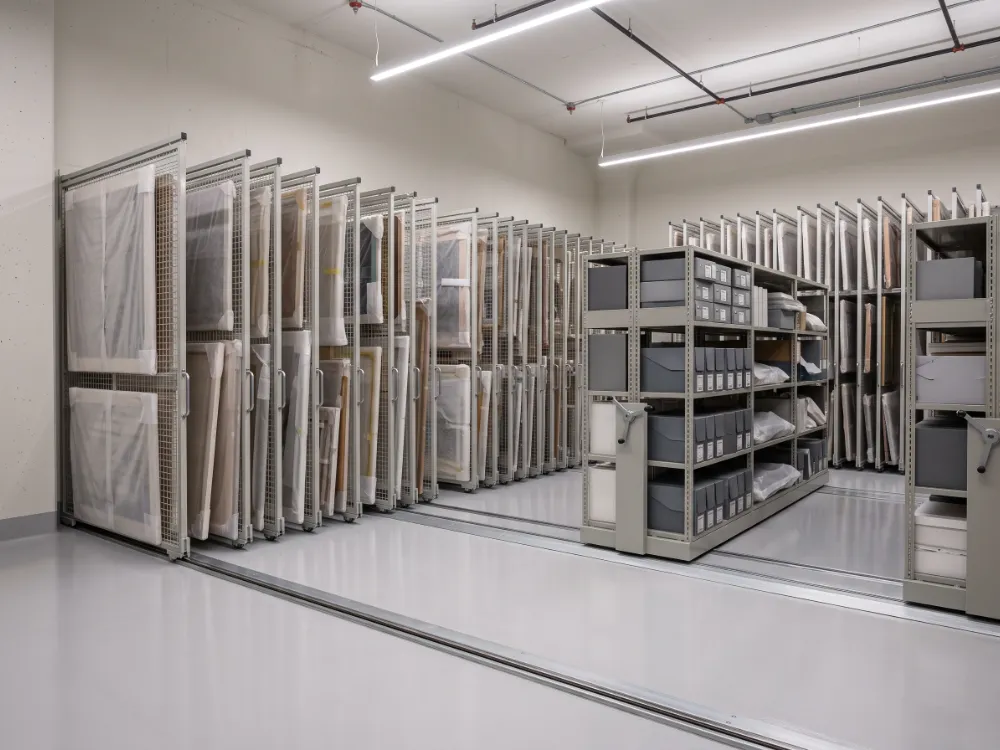
Collections Storage & Conservation
Where the collection lives, the floor protects it:
- Sealed slabs that shed no dust onto stored works, frames and archival housing
- Coved, seamless surfaces that support integrated pest management
- Smooth, flat tracks for rolling art racks and compact storage
- VOC-free installation with containment protocols agreed with conservation staff
Advantages for Museums
Museum projects answer to three calendars — exhibitions, conservation and the board — and a flooring partner has to respect all of them. The systems install between shows, behind containment, documented for facilities, and then spend decades declining to be noticed.
The Art Stays the Point
Scheduled into exhibition changeovers — galleries return on the registrar’s calendar, never against it.
Scheduled Between Exhibitions
Containment and VOC-free chemistry — protocols conservation staff can review and sign before work begins.
Guggenheim Logic, Coating Budget
One finish language from atrium to archive — and one three-year warranty behind all of it.
Event Spaces, Cafes & Shops
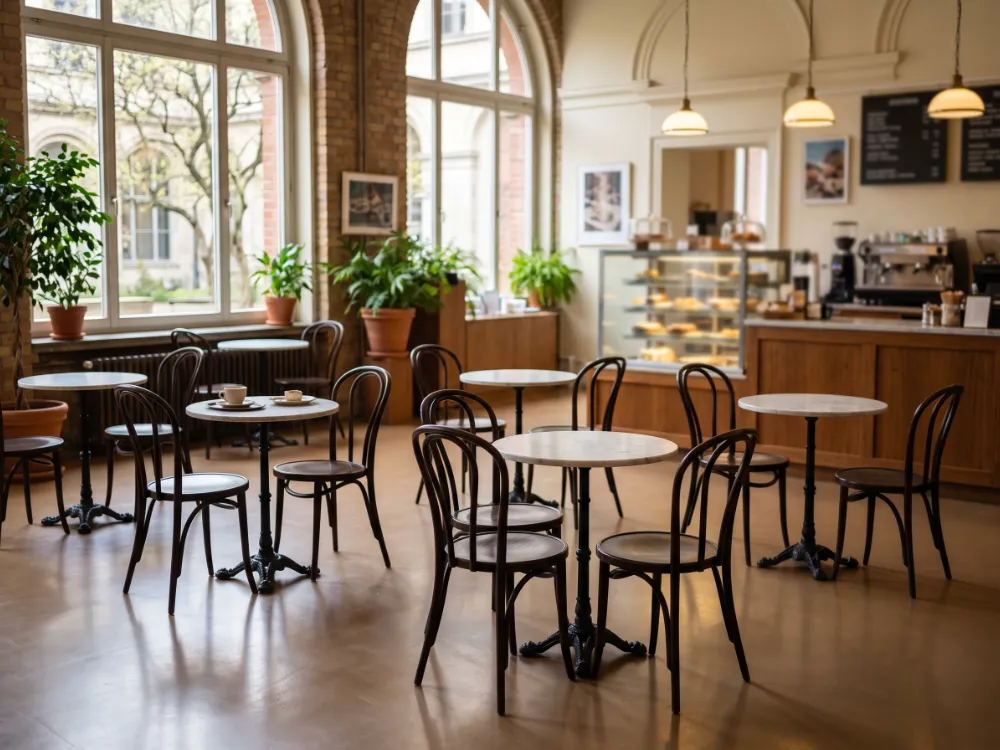
The revenue floors of a museum work retail hours at museum standards. Cafe floors take the food-service specification in tones that continue the gallery palette; museum shops get retail-rated seamless surfaces that handle daily restocking; and event halls absorb gala turnover — catering carts, staging, dance floors — then read pristine again for Tuesday’s school tours. One cleaning protocol covers all of it.
Loading, Crate Rooms & Back of House
Behind the galleries, museums run freight operations with irreplaceable cargo. High-build systems in loading docks and crate rooms take pallet jacks, scissor lifts and the corner of every crate that ever swung wide; rebuilt joints keep rolling loads smooth for the art’s sake as much as the floor’s; and the sealed, bright surface supports the housekeeping standard collections movement demands.
Installed Between Exhibitions
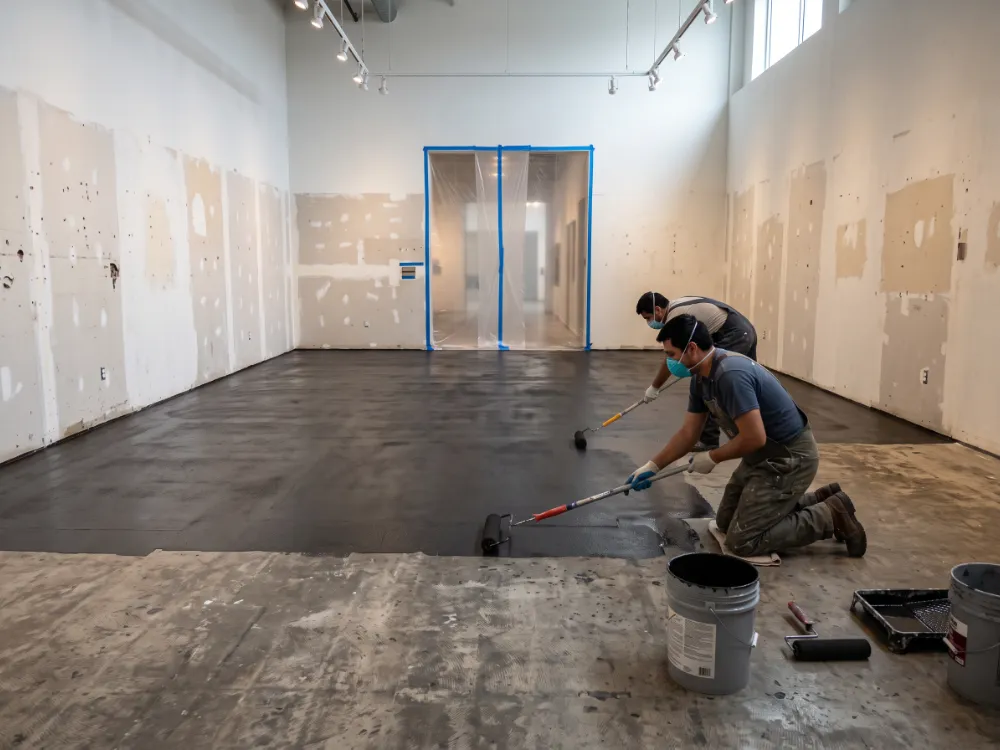
Museums renovate in the gaps between shows, and the floor fits those gaps precisely. Galleries are coated during changeover windows — stripped, contained, ground under vacuum shrouds, coated and cured before the next build-out begins. Public spaces phase overnight; storage rooms are scheduled with collections staff around art movement. VOC-free chemistry and sealed work zones keep every hour of the project conservation-defensible, and the timeline is agreed with facilities and the registrar before a single crate moves.
Frequently Asked Questions
Is installation safe to perform near our collection?
Yes, with the disciplines museums expect: VOC-free materials, sealed containment around work zones, vacuum-shrouded low-dust preparation, and scheduling coordinated with collections staff. The protocol package is provided in advance for conservation review.
Can galleries be recoated between exhibitions?
That is the standard schedule — changeover windows are precisely long enough. The gallery is contained, ground, coated and cured inside the strike-to-build gap, and hands back to the exhibition team on the registrar’s calendar.
What finish works under gallery lighting?
Matte and low-sheen surfaces in curated neutrals — they eliminate glare hot-spots under track lighting and let the lighting designer work without fighting reflections. Sheen level is sampled on site under your actual fixtures before the pour.
How does the terrazzo-look compare to our existing terrazzo?
Visually it continues the same vocabulary — seamless, flecked, luminous — and it can be matched to sit alongside existing terrazzo in adjoining spaces. Practically it installs in nights, costs a fraction, and never needs the resealing program.
Can the floor handle art crates and lifts?
Yes — back-of-house systems are specified for crate dollies, pallet jacks and scissor lifts, with joints rebuilt flush so rolling loads move smoothly. That smoothness is an art-handling benefit as much as a flooring one.
What goes in collections storage?
Sealed, coved, dust-free systems: the slab stops shedding particulates onto stored works, the coved perimeter supports pest-management protocols, and rolling rack systems get a flat, stable track. It is the room where the floor most directly protects the mission.
Will visitors notice the new floor?
Ideally never — gallery floors are designed to recede. What staff notice is operational: no wax cycles, no grout darkening, scuffs that wipe away, and a surface that still reads neutral a decade of exhibitions later.
How is a museum project scheduled?
Around your calendars: galleries in changeover windows, public spaces overnight, storage with collections staff around art movement. The phasing plan is developed with facilities and the registrar before work begins — exhibitions never wait on the floor.
How long will the floors last?
Decades — the seamless-museum-floor logic that has kept terrazzo in service for a century applies here at coating scale, with high-traffic paths refreshed by overnight recoat. Material and workmanship carry our three-year commercial warranty together.
What does museum flooring cost?
Room mix and containment scope set it — a matte gallery, a terrazzo-look atrium and a storage room are different specifications. Materials are our own manufacture, so pricing is distributor-direct, and the walk-through returns a per-space figure with the changeover schedule attached.
From the Atrium to the Archive
Galleries, lobbies, storage, cafes and crate rooms — one curated specification set, installed between exhibitions, under one three-year commercial warranty, across Los Angeles, Orange, Ventura and the surrounding counties.
Related: city hall flooring, retail space flooring (for the museum shop), and the commercial and industrial overview.
FREE onsite Estimate
5 stars rated company
Get it done right the first time...


