
Thermal-Shock Flooring Specialists
Urethane Cement Flooring
The floor that takes a 180-degree washdown every night and shows up flat the next morning
Request a Free Estimate
Urethane Cement Flooring
Some floors fail from traffic; food-plant floors fail from physics. Every hot washdown slams the surface with a temperature swing that makes coatings expand against the slab they are bonded to — and any material that does not move like concrete eventually shears away from it. Urethane cement is the flooring industry's answer: a cementitious mortar bound in urethane resin whose thermal expansion nearly matches concrete's, applied at a quarter-inch of genuine wear body, indifferent to steam, hot oil, food acids and the slab moisture that undermines everything else.
Top Epoxy Flooring installs urethane cement systems across Los Angeles, Orange, Ventura, San Bernardino, Riverside and San Diego counties — food and beverage processing, commercial kitchens, breweries, dairies and wet-processing rooms — with the integral cove bases, drain tie-ins and slip-textured finishes those facilities are audited on. Commercial installations carry a three-year warranty on the system we build, details included.
Most of what ranks for this term is either residential-skewed or a chemistry blog. This page is the industrial version: what the material actually does, where it beats epoxy and where epoxy still wins, and how the system is detailed for rooms that get hosed down every night.
What Goes Into Every Urethane Cement Floor

Thermal Shock to ~250°F
Service range from roughly -40°F to 250°F: hot washdowns, steam and thermal cycling are the design condition, not the failure mode.

Bonds to Damp, High-Moisture Slabs
Bonds to damp and high-moisture slabs — and to green concrete weeks before epoxy could — without extra barrier systems.

Food-Acid & Chemical Resistance
Shrugs off lactic and food-grade acids, hot oils, caustics and sanitizing chemistry that etch and stain lesser floors.

Integral Cove Base Detailing
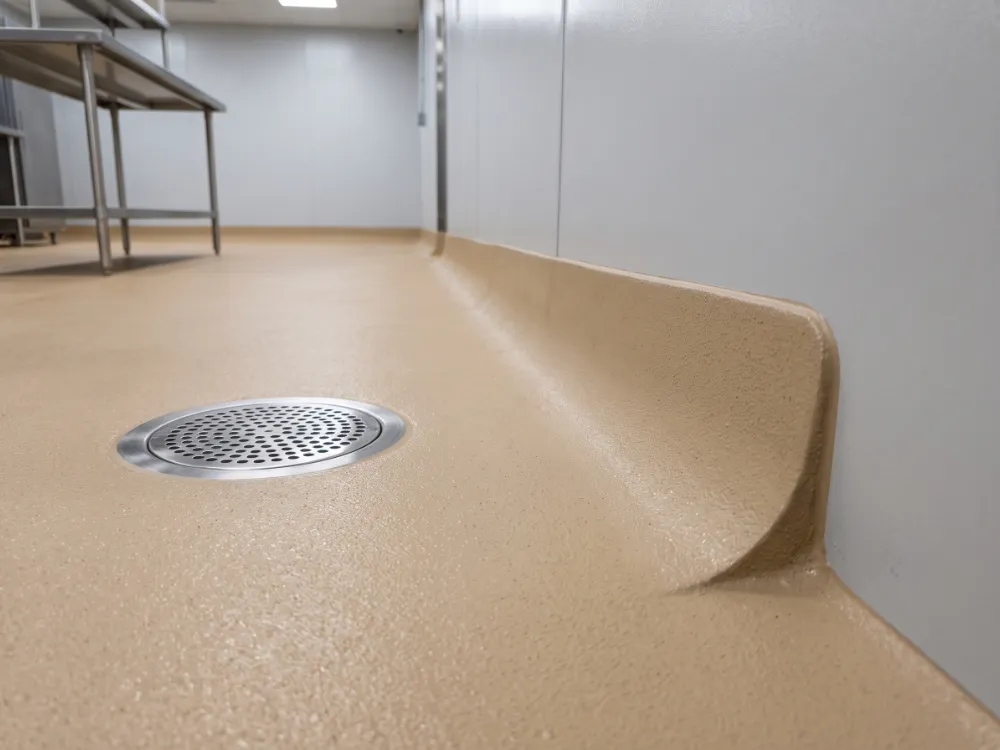
Integral cove bases carry the floor seamlessly up the wall — no joints, corners or grout lines for water or bacteria to hold.

Slip-Textured Broadcast Finish
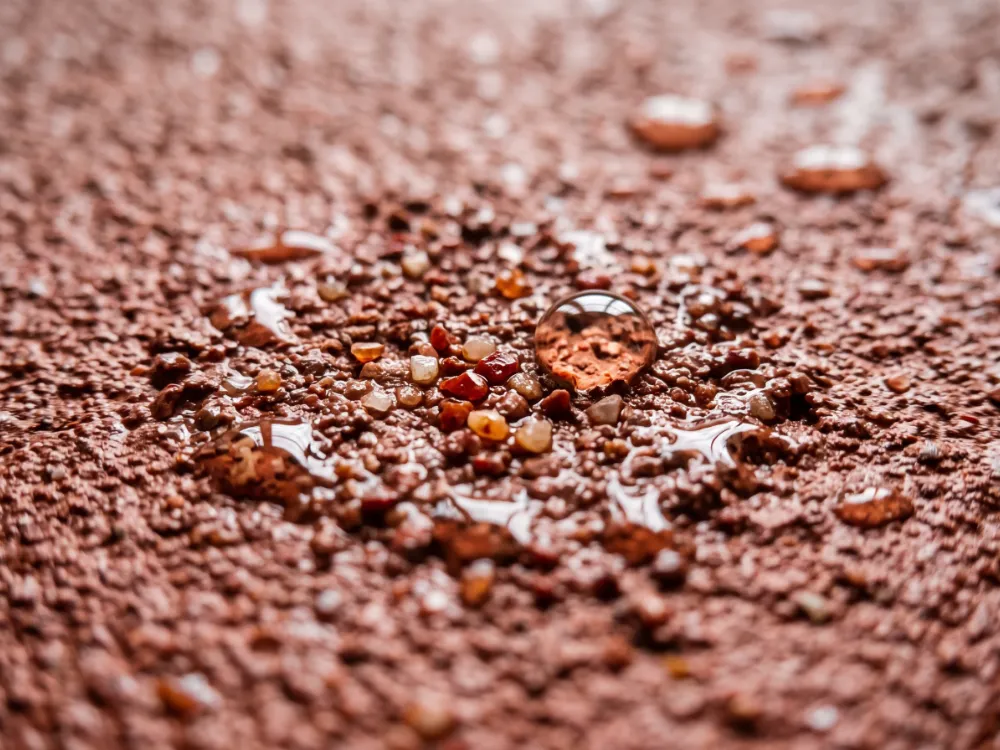
A quartz broadcast texture is graded to your operation — real grip under grease and soap, cleanability where it can afford to be smoother.

Diamond Grinding & CSP Prep
Diamond grinding to the specified CSP profile anchors the quarter-inch body into the slab before a single bucket is mixed.
Built for the Washdown
The nightly hot washdown is the hardest thing most floors will ever experience — a near-boiling thermal slam followed by caustic cleaners and a pressure rinse, repeated hundreds of times a year. Standard epoxy survives the chemistry but not the cycling: its expansion rate differs from concrete's, and every heat swing works the bond line until the floor lets go in sheets.
Urethane cement was engineered for exactly this. Expanding and contracting almost in step with the slab beneath it, it treats the washdown as weather — which is why food plants worldwide standardized on it decades ago, and why we specify it wherever steam and hot water own the schedule.
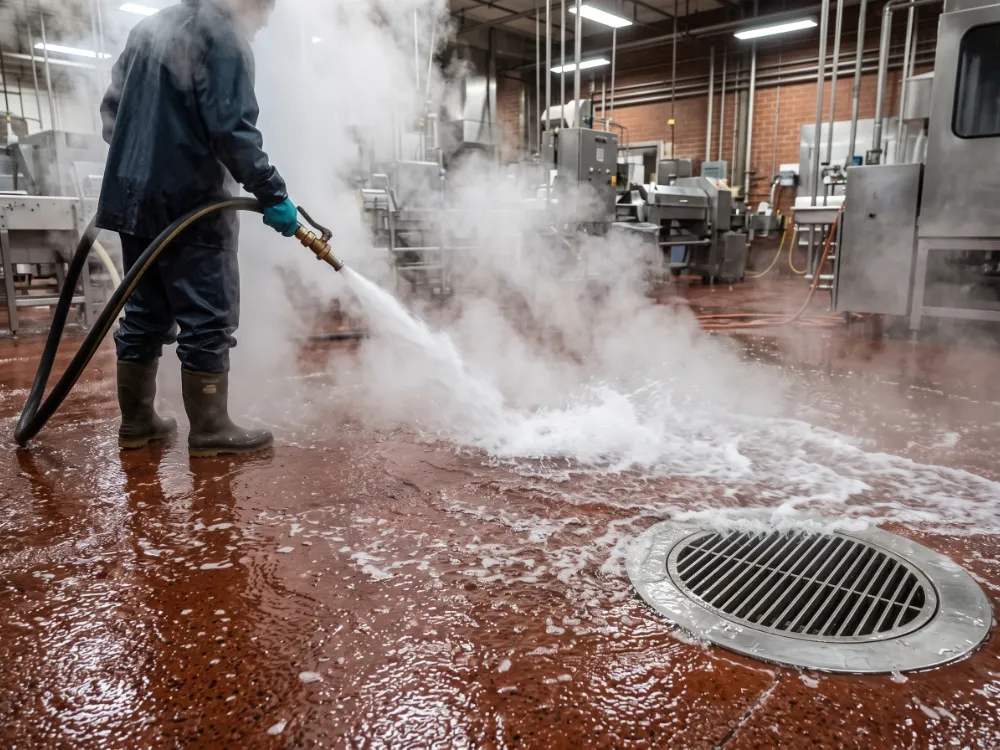
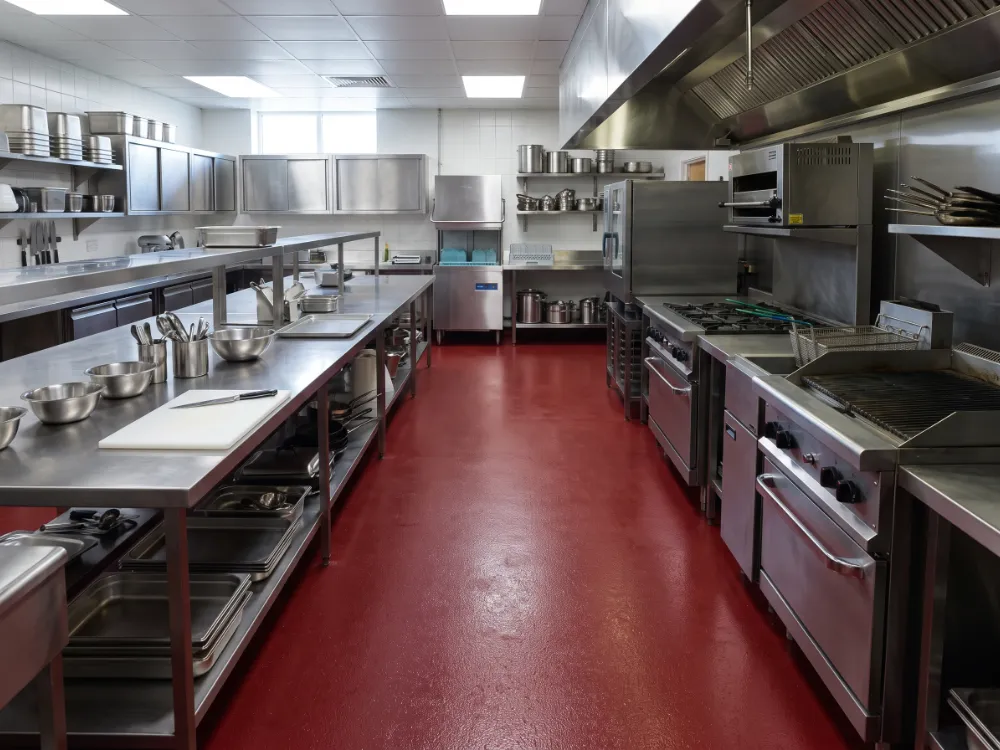
Kitchens, Breweries and Dairies
Commercial kitchens live at the small end of the same physics: fryer heat, spilled stock, nightly hose-downs and degreasers, all on a floor that must grip a line cook's shoes at rush hour. A urethane cement kitchen floor — coved at the walls, textured for grease, tied cleanly into drains — retires the cracked-quarry-tile-and-failing-grout cycle for good.
Breweries and dairies add their own chemistry: hot caustic clean-in-place cycles, lactic acid, sugar-laden spills. The same system absorbs all of it, which is why the brewhouse floor is urethane cement's most photographed habitat.
Urethane Cement vs. Epoxy — Honestly
We manufacture and install both, so here is the straight version. Epoxy wins most floors: lower cost, unlimited color and finish options, excellent chemical resistance, the right choice for warehouses, showrooms, garages and dry production. Urethane cement wins when any of three conditions appear: thermal shock from hot washdowns or steam, slab moisture that epoxy would need extra systems to survive, or sustained food-acid exposure.
A facility often needs both — urethane cement in the wet rooms, epoxy systems in dry production and corridors — and specifying that split correctly is precisely the judgment you hire an installer of both for.
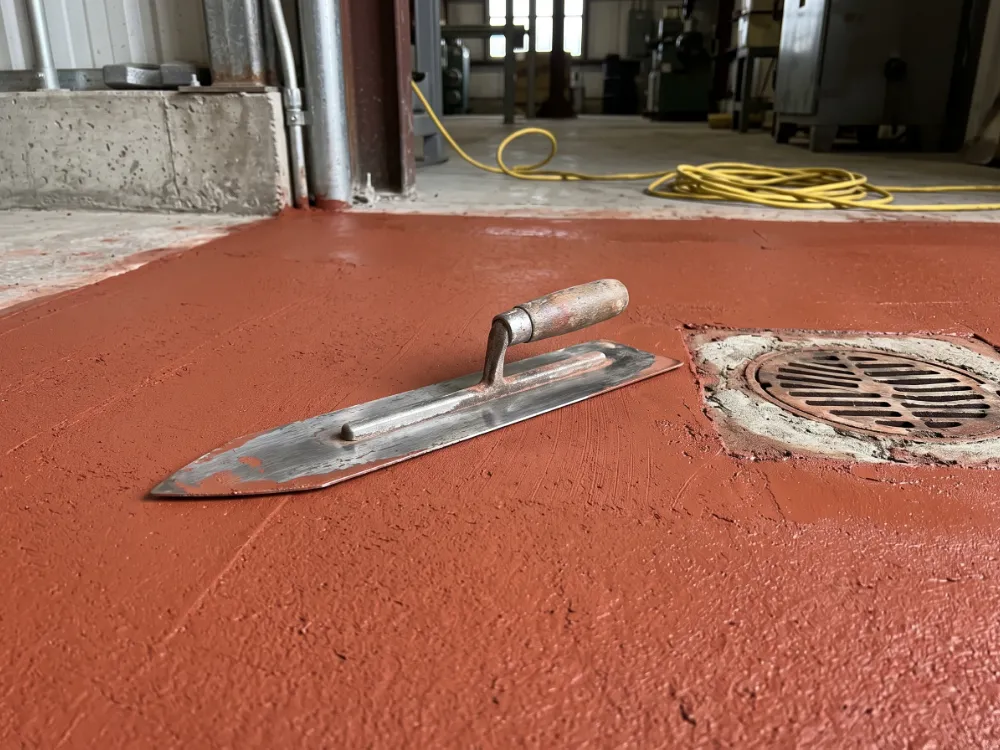
Advantages of Urethane Cement
The specialist system for the punishing rooms: thermal-shock immunity through 250-degree washdowns, tolerance for damp and green slabs no epoxy matches, and food-grade chemical resistance — installed with coved, drain-tied, audit-ready detailing under a three-year commercial warranty.
Survives the Hot Washdown
Thermal expansion matched to concrete: hot washdowns and steam cycling cannot shear the bond that defeats rigid coatings.
Moves With the Concrete
Installs over damp, high-moisture and even green concrete — the honest answer for wet slabs and tight construction schedules.
Built for Sanitary Audits
Lactic and food-acid resistance with hot-oil and caustic tolerance — the exact chemistry of food and beverage duty.
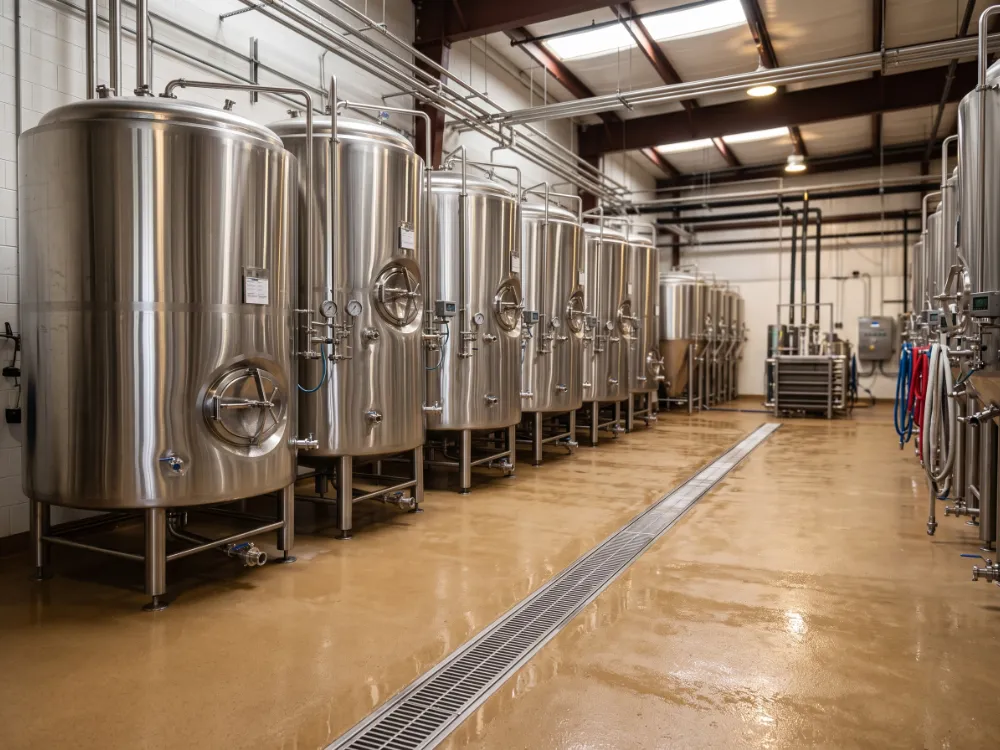
Wet Processing and Hard-Duty Rooms
Beyond food service, the same system owns every room where water is a constant:
- Wet-processing and bottling floors — permanent moisture, chemical dosing, wheeled traffic.
- Mechanical and pump rooms — equipment leaks, glycol and boiler chemistry, containment detailing.
- Wash bays and kettle rooms — direct hot-water assault, drainage slopes built into the topping.
- Cold storage and freezer transitions — the minus end of the thermal range matters too.
Quarter-inch build, coved edges, textured surface: the specification barely changes because the abuse barely does.
Coves, Drains and Audit-Ready Detailing
In sanitary facilities the floor field is the easy part — inspections are won and lost at the edges. Our urethane cement installations carry the material up the wall as an integral cove base, wrap cleanly into floor drains and trench drains, and slope where water must travel, leaving no seam, corner or grout joint anywhere in the wet zone.
The result is a floor that pressure-washes as one surface and gives a sanitary auditor nothing to write about — which, for a working plant, is the whole definition of a good floor.
Topcoats: Tuning the Armor
The urethane cement body solves heat and moisture; the topcoat, when specified, tunes the chemistry. A pigmented epoxy topcoat smooths cleaning and brightens the room; Novolac adds immersion-grade resistance for concentrated acids and solvents in dosing and battery areas; polyaspartic handles the UV that reaches floors through dock doors and windows.
Same base system, different armor — chosen room by room, which is how a single facility gets one coherent floor instead of five vendors' patchwork.
Frequently Asked Questions
What is urethane cement, and how is it different from epoxy?
Urethane cement is a cementitious mortar bound in a urethane resin matrix, troweled or flowed at roughly three-sixteenths to a quarter inch — several times thicker than typical epoxy systems. Its defining trait is a thermal expansion coefficient close to concrete's, so it expands and contracts with the slab through heat cycling that cracks or delaminates rigid epoxy. Epoxy remains the right floor for most spaces; urethane cement is the specialist for heat, steam and moisture.
What does thermal shock actually do to a floor?
A 180-degree washdown hits a 65-degree floor and the surface tries to expand instantly while the slab beneath it doesn't. A coating with a different expansion rate than concrete gets sheared at the bond line, washdown after washdown, until it cracks or lets go. Urethane cement expands nearly in step with the slab — roughly minus 40 to 250 degrees Fahrenheit of service range — so the daily thermal slam is uneventful.
Which facilities genuinely need urethane cement?
Anywhere hot water, steam or aggressive cleaning meets the floor daily: food and beverage processing, commercial kitchens, breweries and dairies, meat and seafood rooms, bottling lines, wet-processing areas and hard-used mechanical rooms. If your floor gets hosed with hot water every night, this is its chemistry.
Can it be installed over damp or new concrete?
Yes — that is its second superpower. Urethane cement tolerates moisture vapor levels that force other systems into extra barrier coats, and it can go onto green concrete far earlier than epoxy. For facilities with wet slabs, sub-grade rooms or construction schedules that cannot wait for a slab to dry, it is often the only honest specification.
How does it resist food acids and cleaning chemicals?
The urethane matrix stands up to lactic and food-grade acids, hot oils and fats, caustic cleaners and sanitizing chemistry — the exact cocktail that stains, etches and softens lesser floors in food plants. For extreme exposure zones, a Novolac topcoat over the urethane cement body adds immersion-grade chemical armor.
What is an integral cove base and why do inspectors care?
The floor material itself is troweled up the wall in a smooth curve, so wall and floor meet with no seam, corner or grout line — nowhere for water, product or bacteria to collect, and nothing to fail under a pressure washer. Sanitary-minded facilities and their auditors treat coved, seamless floors as baseline expectations.
Is the surface slip-resistant when greasy and wet?
That is the design condition. A quartz or aggregate broadcast is worked into the surface for a texture graded to your operation — kitchens and wet rooms take a firmer grip, dry aisles a smoother clean-friendly finish. Wet, soapy, greasy floors are exactly what this system is textured for.
How thick is the system and how long does it last?
Standard builds run three-sixteenths to a quarter inch — a genuine wear body, not a film — and service lives of ten to twenty years under punishing duty are normal. Our commercial installations carry a three-year warranty, and because we install the system ourselves the coved details and drain tie-ins are covered work, not exclusions.
How disruptive is installation to a working facility?
We build around production: section-by-section phasing, night and weekend pours, and urethane cement's fast cure — foot traffic in about a day, with heavy equipment returning after the full cure window. Kitchens and plants rarely close entirely; they rotate.
What topcoats can go over urethane cement?
The body coat can serve as the finished floor, or take a topcoat matched to the exposure: epoxy for general chemical duty and easier cleaning, Novolac for concentrated acids and solvents, or polyaspartic where UV from doorways and windows reaches the floor. The base system stays the same; the armor on top is tuned to the room.
The Industrial System Family
Urethane cement is one specialist in the industrial lineup — the neighbors handle the rooms it doesn't.
Restaurant flooring · Manufacturing flooring · Mechanical room flooring · Novolac coating · Self-leveling concrete · Concrete grinding & surface prep · Epoxy floor maintenance · Commercial & industrial flooring
FREE onsite Estimate
5 stars rated company
Get it done right the first time...


