
Auto Repair Epoxy Floor Systems
Mechanic Shop Flooring
Lift-rated, fluid-proof, coated bay by bay — the shop keeps working the whole time
Request a Free Estimate
Mechanic Shop Epoxy Flooring
Bare concrete is the worst employee in an auto shop. It drinks every drop of oil, brake fluid and coolant into a permanent stain, sheds dust into fresh brake jobs, chips under dropped tools and jack wheels, and gets darker and grimmer every year until the whole shop reads like it needs a wash it can never have. Customers see it through the service window and quietly grade the workmanship by it.
A coated shop floor flips every one of those defects. High-build epoxy over diamond-ground concrete gives the bays a sealed, non-porous surface where fluids bead and wipe instead of soaking in. Novolac chemistry in the lube and fluid zones stands up to brake cleaner and solvents that etch ordinary coatings. Quartz texture keeps wash and detail bays grippy when they run wet, guide lines for lifts and alignment racks coat permanently into the floor, and the light-reflective finish brightens the underside of every car on the lift — a diagnostic upgrade nobody prices but every tech notices. It all installs bay by bay, so the shop never stops billing hours.
Top Epoxy Flooring manufactures its own VOC-free materials and installs with in-house crews across Southern California, under a three-year commercial warranty. See the wider commercial and industrial flooring range or request a free on-site estimate below.
Systems Specified for Shop Duty

High-Build Under the Lifts
High-build epoxy under the lifts — rated for two-post point loads, jack wheels and the daily percussion of dropped steel.

Novolac Fluid Chemistry
Novolac formulations in fluid zones resist brake cleaner, solvents, gear oil and coolant — chemistry ordinary epoxy surrenders to.

Quartz Wet-Bay Traction
Quartz broadcast keeps wash and detail bays slip-safe under running water, soap and dressing overspray.

Joint & Spall Rebuild
Joints and spalls rebuilt with rigid polymer — transmission jacks roll smooth instead of slamming every crack.

Hot-Tire Proof Topcoats
Hot-tire-proof topcoats — cars park hot off the freeway all day without the pickup that peels bargain coatings.

Light-Reflective Work Surface
A bright, light-reflective surface bounces shop lighting up into wheel wells and undercarriages — free candlepower where the work happens.
Service Bays & Lift Areas
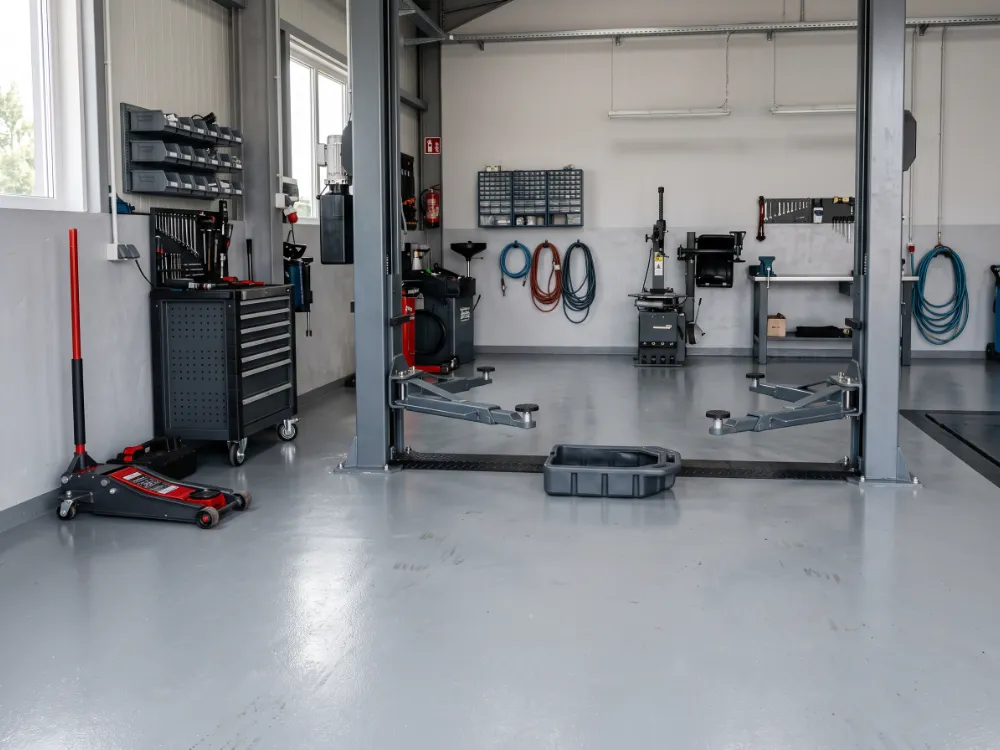
The bay floor carries the whole trade: two-post lifts concentrating a car’s weight onto four steel feet, transmission jacks rolling under load, tools and hardware raining down across a shift. A high-build system over rebuilt joints takes all of it — rated for the point loads, tolerant of the impacts — while the sealed surface keeps thread-locker, oil and coolant sitting on top where a rag ends the incident. Lift positions and bay outlines coat in permanently, so the shop’s layout survives every repaint cycle it no longer needs.
Lube, Fluid & Chemical Zones
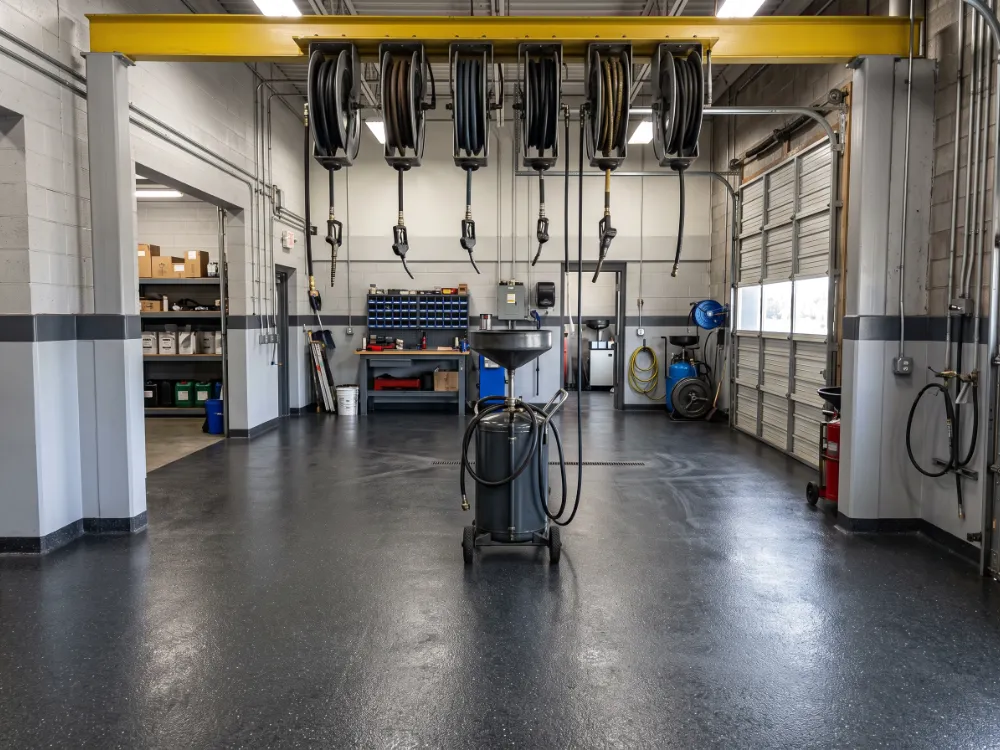
Around the oil drains and fluid reels, the floor fights chemistry, not weight. Novolac-grade epoxy — the formulation built for acids, solvents and petroleum — takes daily contact with brake cleaner, ATF and waste oil without softening or staining, and coved edges carry the protection up the wall where overspray lands. It is the difference between a lube bay that wipes clean at close and one that develops a permanent shadow under every drain point.
Tire & Alignment Bays
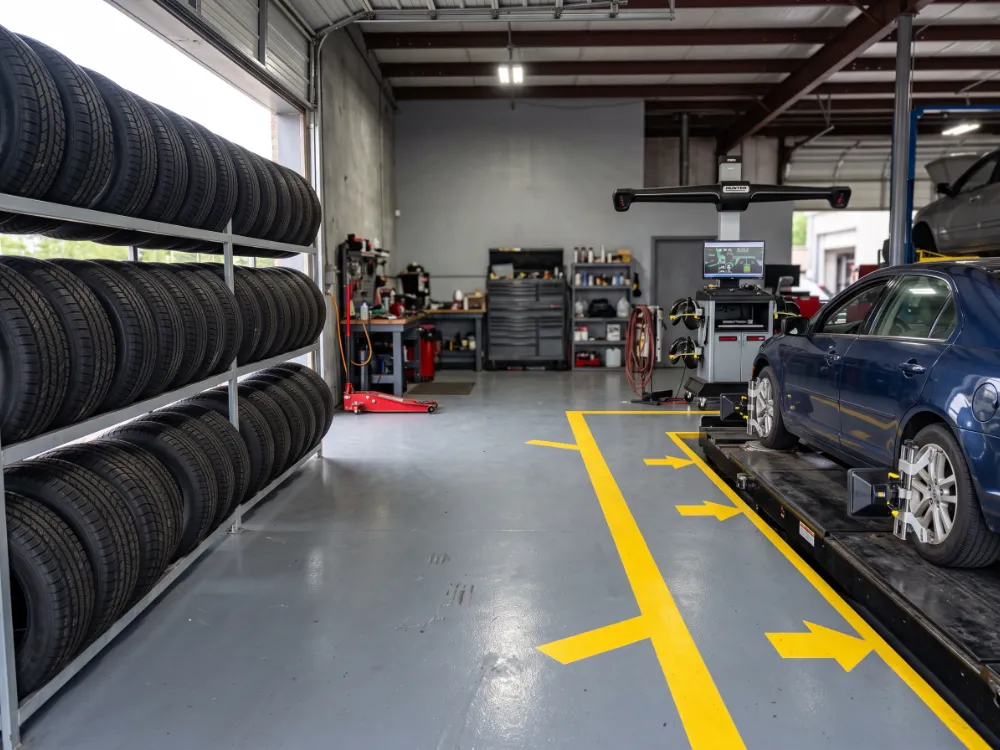
Precision work deserves a floor that participates:
- Alignment rack guide lines and drive-on paths coated into the floor, dead straight for the life of the system
- Flat, rebuilt surface under the rack — no spalled concrete introducing error at the turn plates
- Tire-machine zones sealed against bead lube and balancing clay
- Hot-tire-proof surface where cars queue straight off the road
Advantages on the Shop Floor
A shop floor pays for itself in the small frictions it removes: fluids that wipe instead of stain, joints that stop eating jack wheels, lighting the floor now doubles, and a workspace that tells every customer at the counter the same story the invoices do — this shop is run properly.
Point-Load Rated
Rated for lift point loads and rolling jacks — specified to shop equipment, not showroom traffic.
Bay-by-Bay Scheduling
Bay-by-bay installation — two bays coat while four keep billing, and the rotation finishes without a closed day.
Wipe-Clean Fluids
Every fluid the trade uses wipes off the sealed surface — the floor stops keeping a record of the work.
Wash Bays & Detail Areas
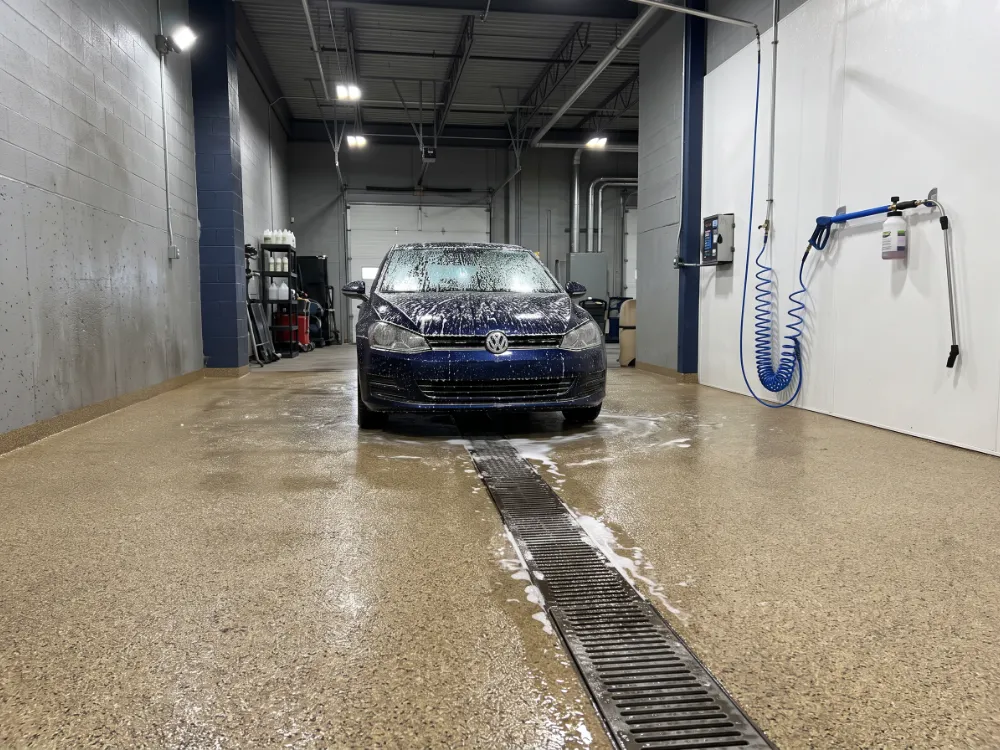
Wash bays live wet, soapy and fast-moving — the exact recipe for slip incidents on smooth concrete. A quartz broadcast system puts specified traction underfoot while staying seamless to the drain, tolerates the daily chemistry of soaps, wheel acids and dressings, and slopes properly so water goes where the trench is instead of where the customer walks. Detail areas get the same system in a finer grit, easy on knees and towels.
Customer Areas & the Front Counter
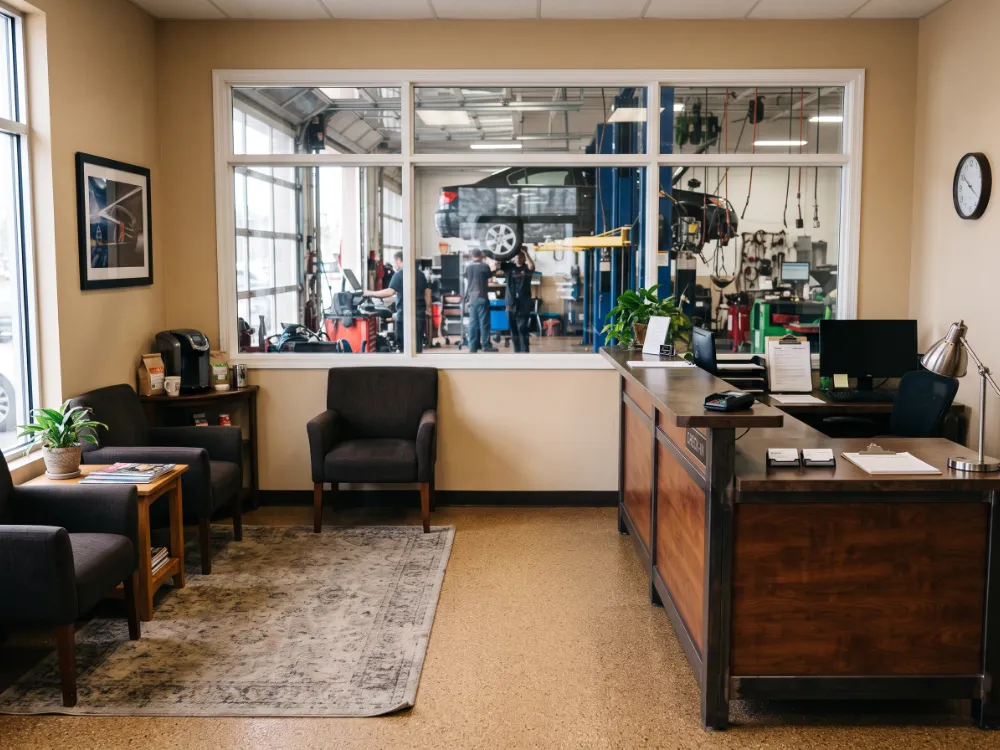
The waiting room floor is marketing. A warm flake system — the same family we install in retail spaces — gives customers a clean, finished space that visibly belongs to the same operation as the spotless bays behind the glass. Seamless and coffee-proof, it takes the daily traffic of drop-offs and deliveries, and it draws the line every good shop wants drawn: the work is industrial, the experience is not.
Installed Bay by Bay
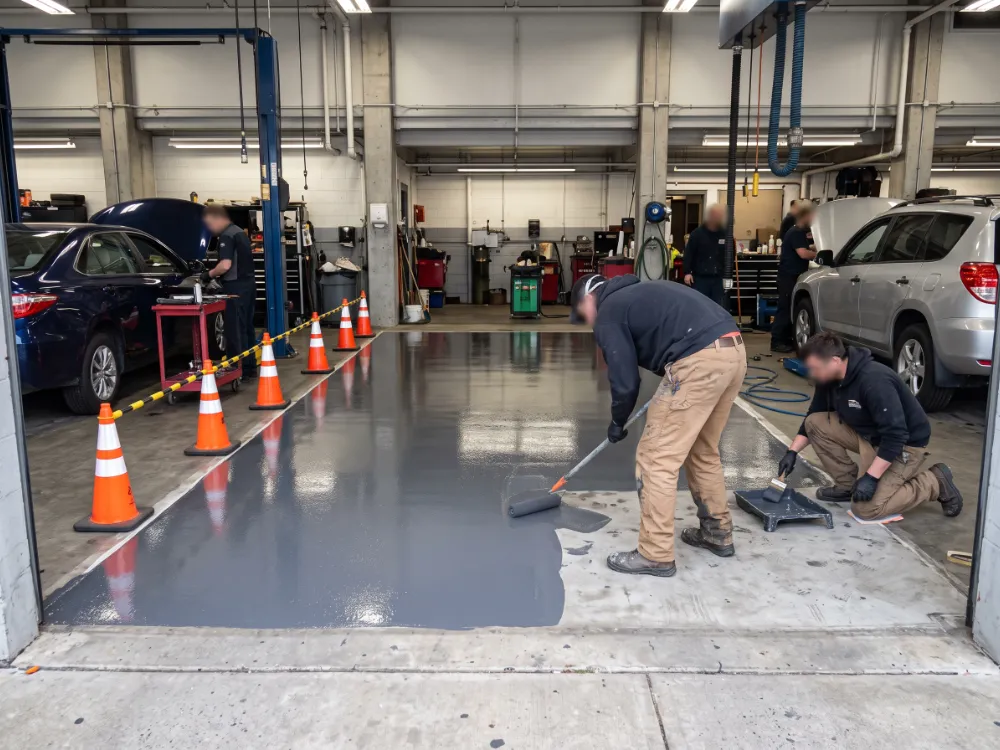
A shop that stops turning wrenches stops earning, so the install never asks it to. Bays rotate through in pairs — cleared, ground, repaired, coated and cured on a posted schedule — while the rest of the floor keeps working. Fast-cure chemistry brings each bay back in hours, evenings and weekends absorb the tight spots, and the whole shop is finished in a rotation the service writer can schedule around like any other booking.
Frequently Asked Questions
Can we keep the shop open during installation?
Yes — bay-by-bay rotation is the standard plan. A pair of bays gets cleared and coated while the others keep working; fast-cure systems bring each bay back within hours to a day. The rotation completes without the shop losing a single scheduled day.
Will oil and brake fluid stain the floor?
No — the surface is sealed and non-porous, so fluids bead on top and wipe away completely. In the lube and fluid zones we step up to Novolac chemistry, which resists brake cleaner and solvents that soften ordinary epoxy. The permanent oil shadow of bare concrete simply stops happening.
Can the floor take a two-post lift?
Yes — lift point loads are a specification input. The system build under lift positions is rated for the concentrated weight on the pads, and the slab itself is inspected during the estimate; if the concrete under a lift needs work, that gets addressed before coating, not discovered after.
What about dropped tools and rolling jacks — will it chip?
The wear surface is engineered for exactly that percussion. Dropped sockets and hardware bounce, jack wheels roll over rebuilt joints instead of slamming into cracks, and the occasional deep impact that would crater bare concrete leaves a mark you have to hunt for.
Cars come in hot off the road — does that cause tire pickup?
Not on this system. Hot-tire pickup is the classic failure of thin, poorly bonded coatings; ours keys into diamond-ground concrete with a full-strength bond and a topcoat hot rubber cannot soften. Cars queue, park and bake without consequence.
Is the floor slippery when it gets wet or oily?
Texture is specified by zone: quartz grit in wash and detail bays where water runs, moderate texture in work bays where spills happen, smoother finish in customer areas. Slip resistance is a design decision on this floor, not a hope.
Can you coat in our bay lines, lift positions and alignment guides?
Yes — layout marking is coated into the floor and sealed under the wear layer. Bay outlines, drive-on guides for the alignment rack, equipment zones and walkways all go in from your layout and stay crisp for the life of the floor.
How do we clean it at the end of the day?
Push broom or dust mop, and a degreaser mop where the day left evidence. No sealers to reapply, no concrete dust to chase, no stains to pretreat. Most shops cut their closing routine in half and stop budgeting for floor paint entirely.
What does a shop floor cost?
It depends on bay count, slab condition and the zone mix — a wash bay and a lube bay carry different systems. We manufacture our own materials, so pricing is distributor-direct, and the free on-site estimate walks the bays and prices each zone exactly.
Our slab is old, oil-soaked and cracked. Is it coatable?
Almost certainly — it is the standard starting condition for shop work. Diamond grinding cuts to clean concrete, oil-saturated spots are treated and tested for bond, and cracks and spalled joints are rebuilt with rigid polymer. The prep is most of the project, and it is why the finished floor stays down.
Every Bay, One Standard
Service bays, lube zones, wash bays, alignment racks and the waiting room out front — one system set, one bay-by-bay schedule, one three-year commercial warranty, across Los Angeles, Orange, Ventura and the surrounding counties.
Related: showroom flooring (for the dealership front), warehouse flooring, and the commercial and industrial overview.
FREE onsite Estimate
5 stars rated company
Get it done right the first time...


