
Transit & Cargo Facility Floor Systems
Terminals Flooring
Passenger halls, depots and cargo docks — coated in overnight phases while the schedule keeps running
Request a Free Estimate
Terminal Epoxy Flooring
A terminal floor never gets a day off. Passenger halls take foot traffic from the first departure to the last arrival, baggage corridors run carts and tugs around the clock, cargo docks absorb pallet jacks and forklift turns, and every entrance tracks in whatever the weather is doing. The flooring answer used in the world’s flagship airports — seamless resin systems — scales down perfectly to regional terminals, bus depots and freight facilities, at a fraction of poured-terrazzo cost.
The specification changes zone by zone. Public halls get a terrazzo-look epoxy finish that reads civic and cleans with an auto-scrubber pass. Baggage and service corridors get high-build systems rated for wheeled traffic that never stops. Cargo docks step up to urethane mortar where pallet jacks pivot under load, and fluid-exposed zones — fuel, hydraulics, de-icing chemistry — get Novolac formulations built for exactly those spills. Queue lines, lane markings and safety zones coat into the floor under the wear layer, where wheels polish them instead of erasing them.
Top Epoxy Flooring manufactures its own VOC-free materials and installs with in-house crews across Southern California under a three-year commercial warranty. See the wider commercial and industrial flooring range or request a free on-site estimate below.
Systems for Around-the-Clock Facilities

Quartz Broadcast Entries
Quartz broadcast texture holds traction at entrances and ramps where weather walks in on ten thousand shoes a day.

Urethane Mortar Freight Zones
Urethane mortar carries the freight zones — pallet jacks pivoting under load, dock plates, and the impacts cargo work guarantees.

Wheeled-Traffic High-Build
High-build epoxy rated for wheeled traffic keeps baggage routes and service corridors rolling quiet over rebuilt joints.

Fluid-Resistant Novolac
Novolac chemistry resists fuel, hydraulic fluid and de-icing chemistry in the zones where equipment lives.

Queue & Lane Striping, Coated In
Queue lines, lane markings and safety zones coat in beneath the wear layer — permanent, legible, never repainted.

Moisture-Vapor Barriers
Moisture-vapor barrier basecoats protect on-grade slabs — tested during the estimate, engineered in where readings demand.
Passenger Halls & Concourses
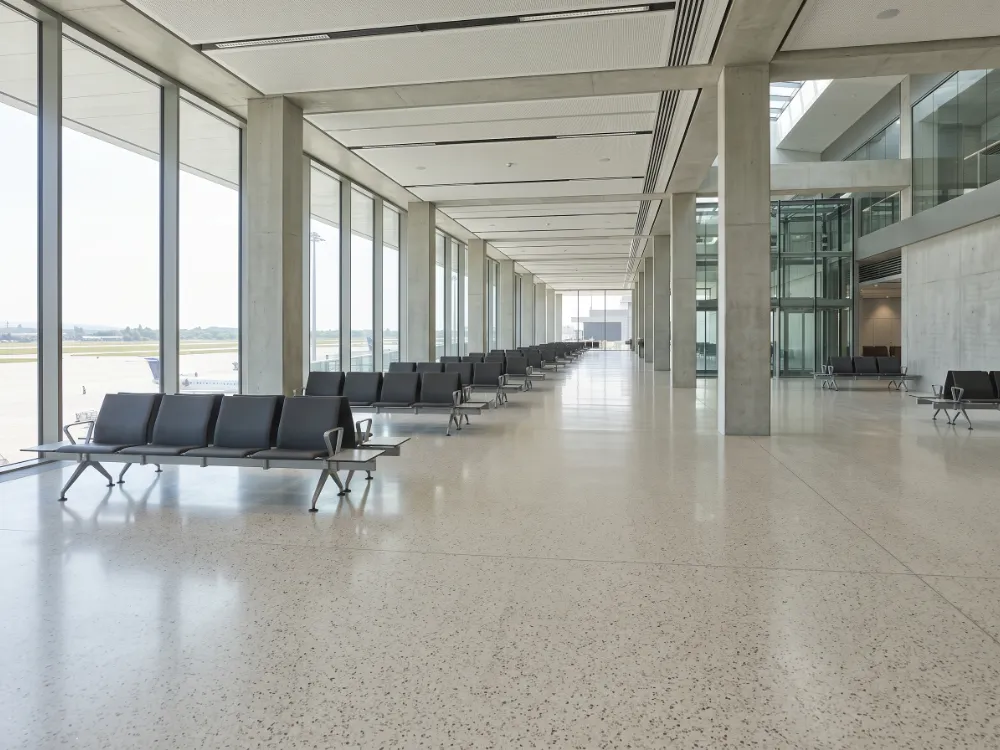
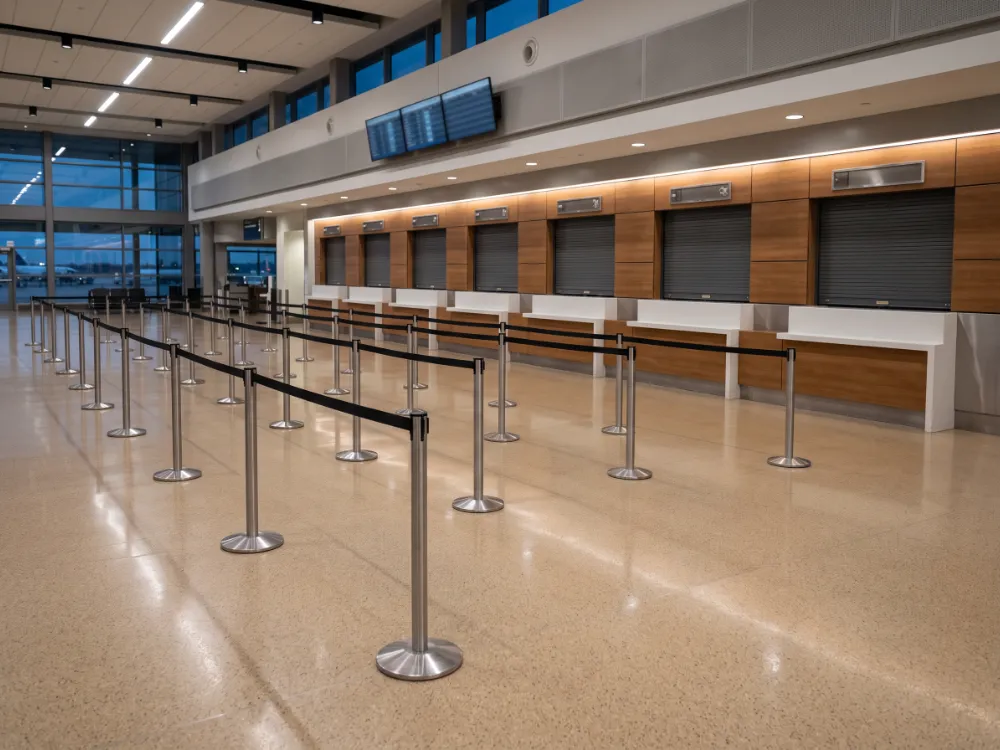
Public halls need a floor that looks civic, wears industrial and cleans on a night-shift schedule. A terrazzo-look epoxy system delivers the flagship-airport aesthetic — seamless, flecked, light-reflective under skylights — over a wear build rated for permanent foot traffic. There are no grout lines to gray out, no tiles to crack under a dropped suitcase, and the surface takes an auto-scrubber pass between the last arrival and the first departure.
Baggage Routes & Cart Corridors
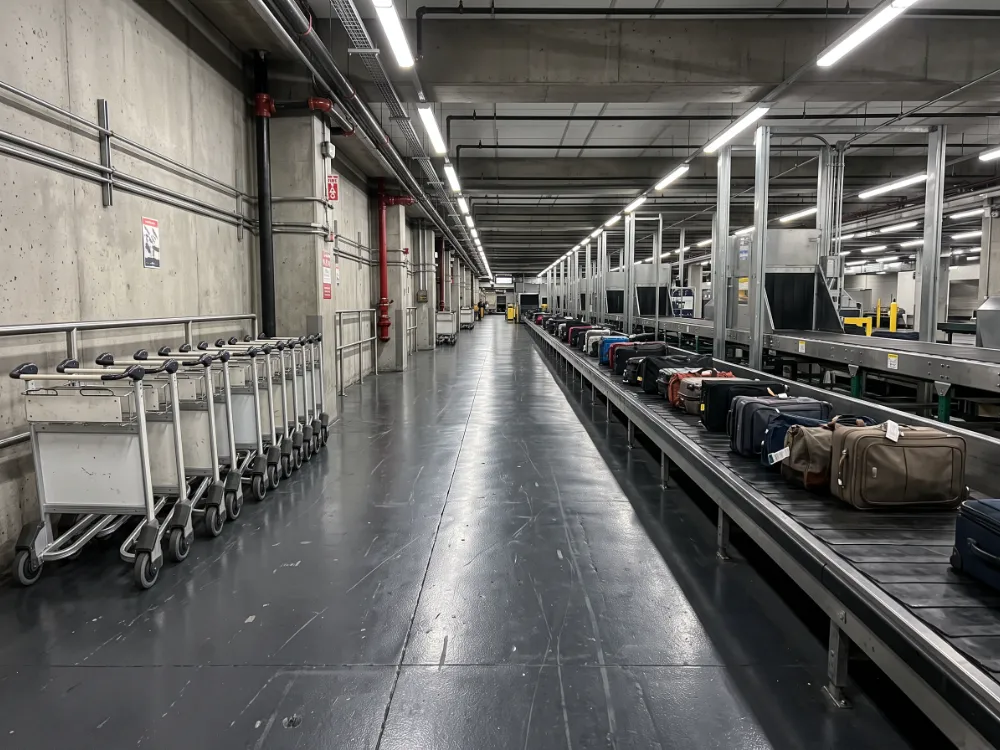
Behind the walls, the floor belongs to wheels: baggage carts, tugs, mail dollies, cleaning machines — all running the same corridors on repeat. High-build epoxy over rebuilt joints keeps that traffic rolling smooth and quiet, protects the slab from the grinding that kills bare concrete corridors, and marks travel lanes in coated color that survives every shift. Where corridors meet ramps, quartz texture takes over for braking grip.
Cargo Docks & Freight Floors
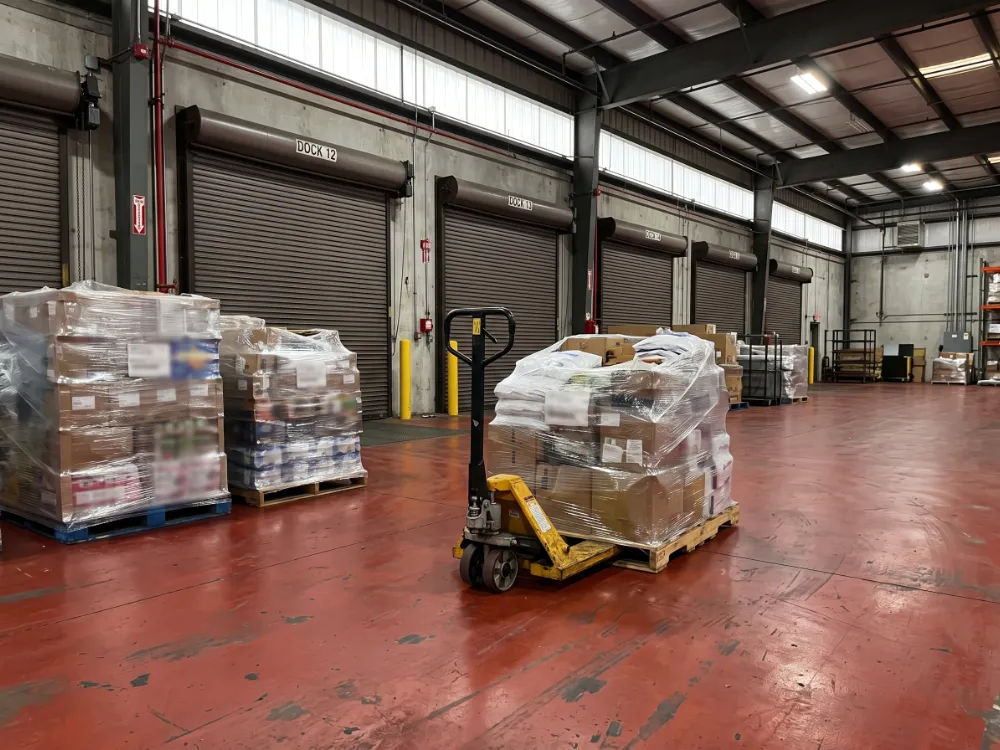
The heaviest duty in the building gets the heaviest system:
- Troweled urethane mortar where pallet jacks pivot and dock plates slam
- Fuel, oil and hydraulic fluid resistance across staging and equipment zones
- Impact detailing at dock edges and door thresholds
- Staging grids and lane markings coated permanently into the floor
Advantages in a Facility That Never Closes
Terminal floors are judged by two clocks: how they hold up around the schedule, and how they were installed around it. These systems answer both — engineered for continuous wheeled and foot traffic, and phased in overnight so the timetable never notices the renovation.
24/7 Operation Phasing
Phased overnight installation around live operations — gates, bays and corridors rotate; the schedule never stops.
Terrazzo Looks, Epoxy Budget
Rated for the traffic that never sleeps — carts, tugs, scrubbers and foot traffic measured in thousands per day.
Wheels Roll Quiet
Markings, queues and lanes sealed under the wear coat — wayfinding that outlives every repaint budget.
Bus & Fleet Depots
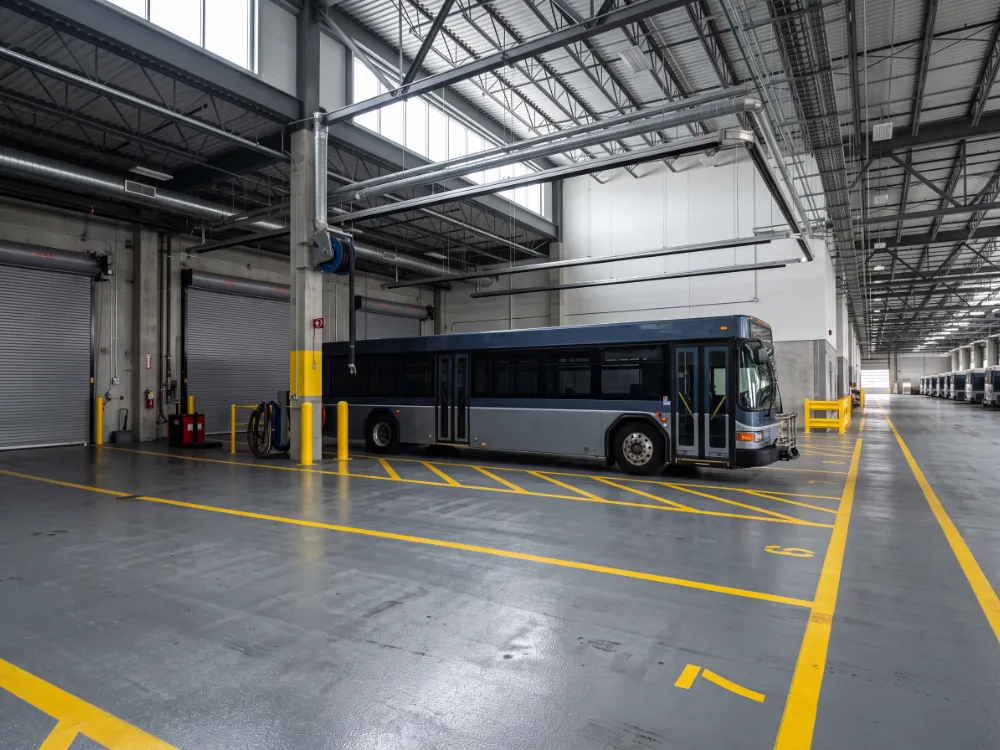
Depot floors combine vehicle weight, diesel drips and wash-down water — three different failure modes on one slab. A high-build system with Novolac chemistry in the fluid zones takes buses and service trucks without staining or softening, lane striping and bay numbers coat in permanently, and quartz texture covers wash positions where water runs. The bright, sealed surface also does what depot lighting alone cannot: makes undercarriage and pit work visible.
Ticketing, Restrooms & Concessions
Front-of-house zones carry their own demands — queue scuffing at ticketing, water at restroom thresholds, food traffic at concessions. Quartz and flake systems handle each with specified slip texture and a seamless surface that holds no odors and hides no grime, visually continuous with the concourse so the whole facility reads as one maintained public space rather than a patchwork of flooring eras.
Installed Around the Timetable
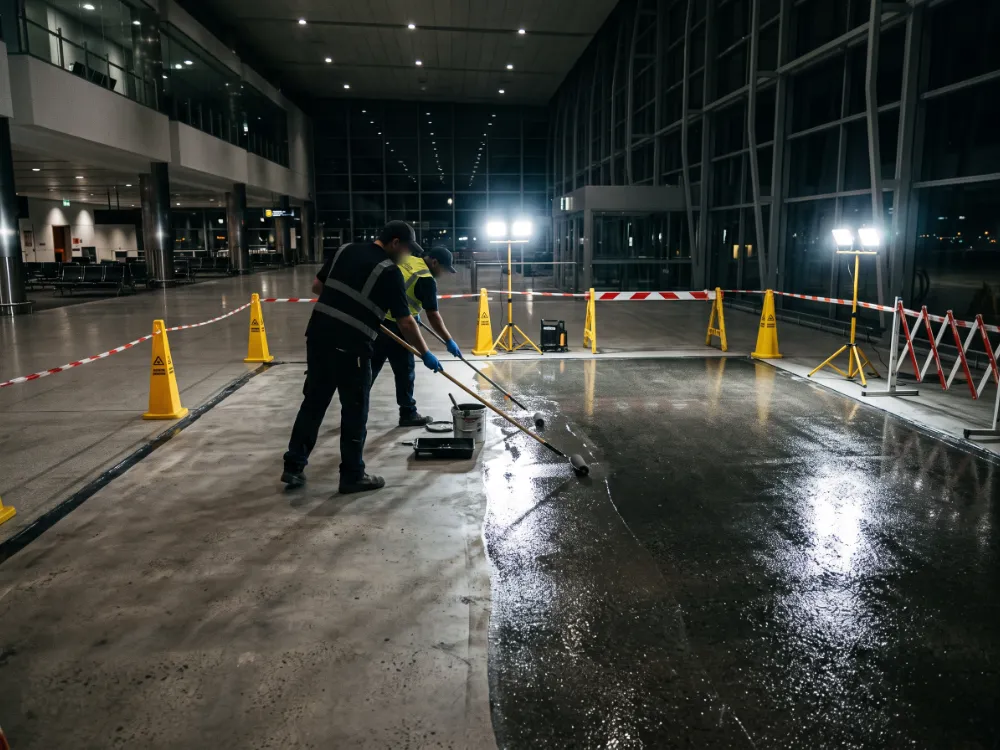
Terminals do not close, so the floor plan is a phasing plan. Sections coat overnight behind barriers — a gate area tonight, a corridor tomorrow, half a cargo dock at a time with freight rerouted around it — and fast-cure chemistry hands each zone back before the morning peak. VOC-free materials keep the air unremarkable in a building full of the public, and the phasing calendar is agreed with operations before the first grinder starts.
Frequently Asked Questions
Can you install in a facility that operates around the clock?
Yes — that is the assumed condition for terminal work. Zones are barriered and coated overnight in phases, each section cures and reopens before peak hours, and cargo or depot areas rotate so capacity never drops below what operations signs off in advance.
How does an epoxy terrazzo-look floor compare to real terrazzo?
Visually it delivers the same civic, flecked, seamless finish; practically it installs in nights instead of months and costs a fraction of poured terrazzo. The wear surface is engineered for the same permanent foot traffic — which is why resin systems have become the standard even in major airports.
What handles constant baggage cart and tug traffic?
High-build epoxy with a wear coat rated for wheeled duty, over joints rebuilt with rigid polymer. The rebuild matters as much as the coating: smooth joints are what stop the cart-hammering that destroys bare concrete corridors and the equipment running on them.
What about fuel, hydraulic fluid and de-icing chemicals?
Fluid-exposed zones get Novolac chemistry — the formulation developed for chemical plants — which resists petroleum products, glycols and cleaning agents without etching or staining. Spills become wipe-ups instead of permanent floor history.
Can queue lines and lane markings go into the floor?
Yes — all wayfinding, queue and safety marking coats into the system beneath the clear wear layer. Wheels and foot traffic polish the markings rather than wearing them off, so the layout stays crisp without a repainting cycle.
How slip-safe are the public areas?
Slip resistance is specified by zone — aggressive quartz at entrances and ramps that catch weather, moderate texture in halls, wet-rated surfaces at restroom thresholds — and documented in writing for the facility’s risk file.
How do maintenance crews clean these floors?
Auto-scrubber or dust mop with neutral cleaner — the seamless surface has no grout to trap grime and no wax cycle to maintain. Overnight cleaning windows get shorter, which in a 24/7 building is a real capacity gain.
Can the cargo dock be coated without stopping freight?
Yes — docks phase in halves or door groups, with freight routed through the open portion. Urethane mortar sections cure fast enough to rotate within the facility’s own slow windows, and the sequencing is planned with your dock supervisors before work starts.
How long will a terminal floor last?
Specified to the traffic, ten to fifteen-plus years, with high-wear lanes refreshed by overnight recoat rather than replacement. Material and installation are covered together under our three-year commercial warranty — one company answers for both.
What does terminal flooring cost?
Zone mix drives it — a concourse finish, a cargo mortar floor and a depot system price differently per square foot. We manufacture our own materials, so pricing is distributor-direct, and the free on-site walk-through produces a per-zone number your facilities office can budget.
Every Zone, One Timetable
Concourses, baggage routes, cargo docks, depots and the public spaces between — one system set, phased overnight, under one three-year commercial warranty, across Los Angeles, Orange, Ventura and the surrounding counties.
Related: warehouse flooring, manufacturing flooring, and the commercial and industrial overview.
FREE onsite Estimate
5 stars rated company
Get it done right the first time...


