
Public Safety Epoxy Floor Systems
Police Station Flooring
From the public lobby to the sally port — phased around a station that never closes
Request a Free Estimate
Police Station Epoxy Flooring
A police station is several buildings wearing one address: a civic lobby the public judges, a detention area where every material is a security decision, a fleet garage running hot tires around the clock, and locker rooms working three shifts a day. Each of those spaces fails differently — and a flooring specification that treats them identically fails in all of them.
Seamless epoxy systems cover the whole facility with the right chemistry per zone. Public areas get a terrazzo-look finish that reads civic and shrugs off permanent foot traffic. Holding and booking areas get a monolithic, coved surface with no tile to break loose and no joint to pick at — the security argument for seamless floors that facility designers already know. Sally ports and fleet bays get hot-tire-proof, fluid-resistant systems; locker rooms get textured, fast-drying surfaces; evidence and records rooms get dust-proofed slabs that stop shedding onto what they store. Slip resistance is documented in writing per zone — language procurement and risk officers can file.
Top Epoxy Flooring manufactures its own VOC-free materials and installs with in-house crews across Southern California under a three-year commercial warranty. See the wider commercial and industrial flooring range or request a free on-site estimate below.
Systems Specified for Public Safety

Terrazzo-Look Public Areas
Terrazzo-look epoxy gives lobbies and public corridors a civic-grade finish over an industrial wear build — flagship looks, station budget.

Detention-Safe Seamless Surfaces
Detention zones get monolithic, coved, seamless surfaces — no tile to weaponize, no grout to pick, nothing to pry loose.

Hot-Tire Fleet Bay Systems
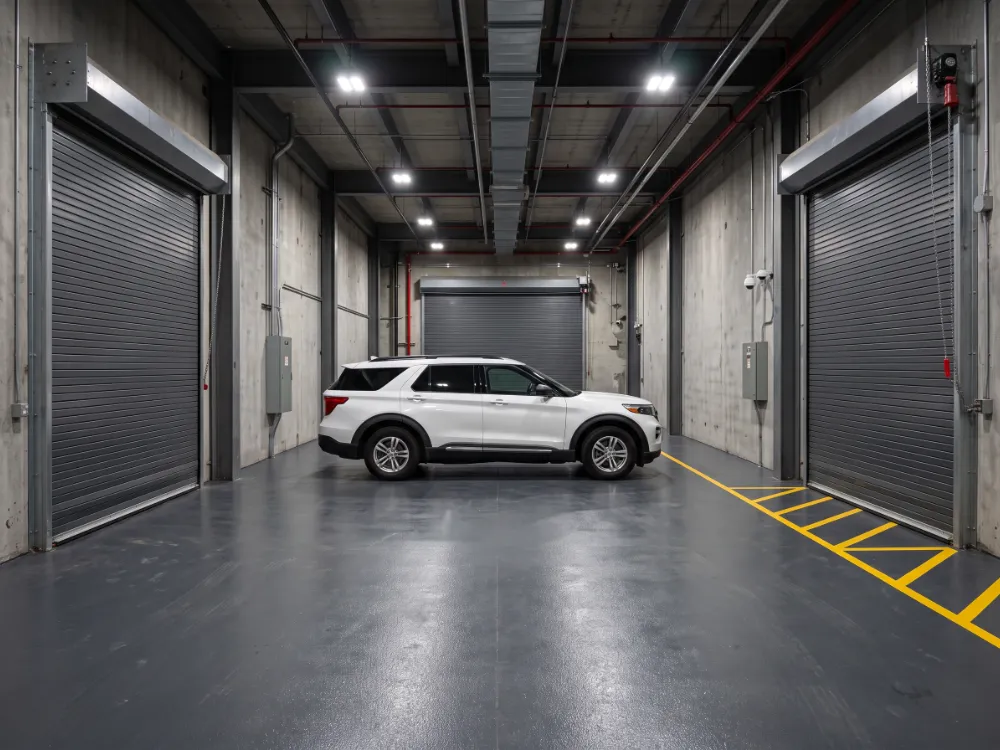
Sally ports and fleet bays run hot-tire-proof, high-build systems that take patrol vehicles parking hot every hour of a shift.

Quartz Wet-Zone Traction
Quartz broadcast texture covers showers, locker rooms and wash bays — wet-zone slip ratings, specified and documented.

Novolac Fluid Chemistry
Novolac chemistry handles fuel, fluids and cleaning agents in the garage and kennel zones without etching or staining.

Documented Slip Specifications
Slip resistance is delivered in writing, zone by zone — documentation that fits public-agency procurement and risk files.
Lobbies & Public Areas
The lobby is where the public meets the department, and a worn floor argues with every community-relations effort the building makes. A terrazzo-look epoxy system gives the entrance a courthouse-grade finish — seamless, flecked, light-reflective — over a wear surface rated for around-the-clock foot traffic. It cleans on a night-shift schedule, holds its finish through years of service, and reads exactly the way a civic building should.
Holding, Booking & Secure Corridors
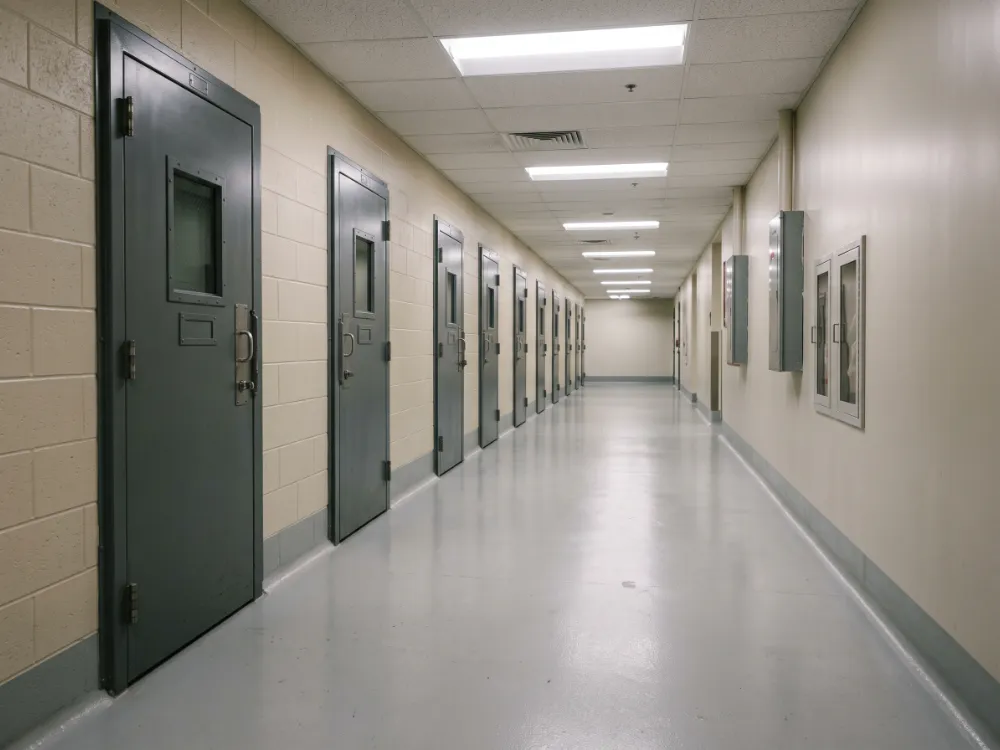
In detention areas, the floor is part of the security envelope. A monolithic epoxy system offers nothing to exploit: no tiles to break into edges, no grout lines to work loose, no seams to lift — and the integral cove base removes the wall joint entirely. The non-porous surface takes biohazard cleanup and disinfection protocols without wearing dull, and the finish specification balances durability against glare for camera coverage.
Sally Ports & Fleet Bays
The garage side of the station works like a fleet depot:
- Hot-tire-proof, high-build systems — patrol vehicles park hot every hour without coating pickup
- Novolac fluid resistance for fuel, oil and hydraulic drips
- Coated-in bay lines, walkways and equipment zones
- Quartz traction at wash positions and weather-exposed thresholds
Advantages for a Facility That Never Closes
Station floors have to be specified like the building operates: continuously, securely, and under public procurement. These systems install in phases around live operations, carry their slip and safety documentation in writing, and put one accountable installer behind every zone.
Phased Around a 24/7 House
Phased installation around a 24/7 operation — zone by zone, shift by shift, with detention moves coordinated in advance.
Nothing to Pry Loose
Security-conscious materials — monolithic, coved, nothing removable — in every detention-adjacent space.
Bid-Ready Documentation
Specification and slip documentation delivered in writing — ready for public bids, risk files and facility audits.
Locker Rooms, Showers & Fitness
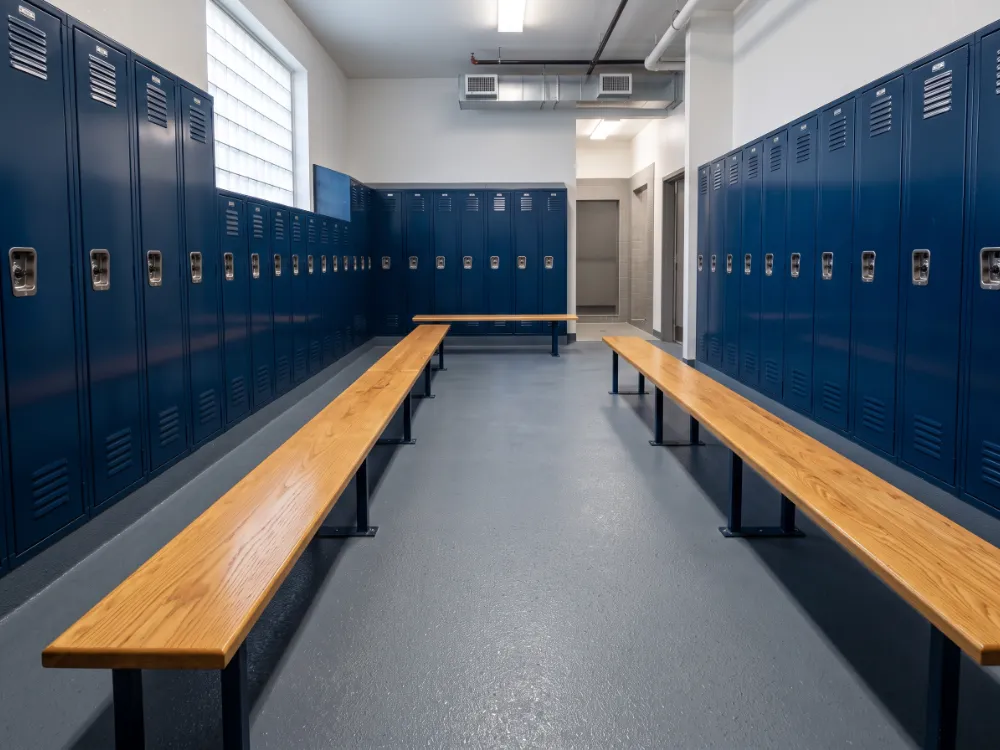
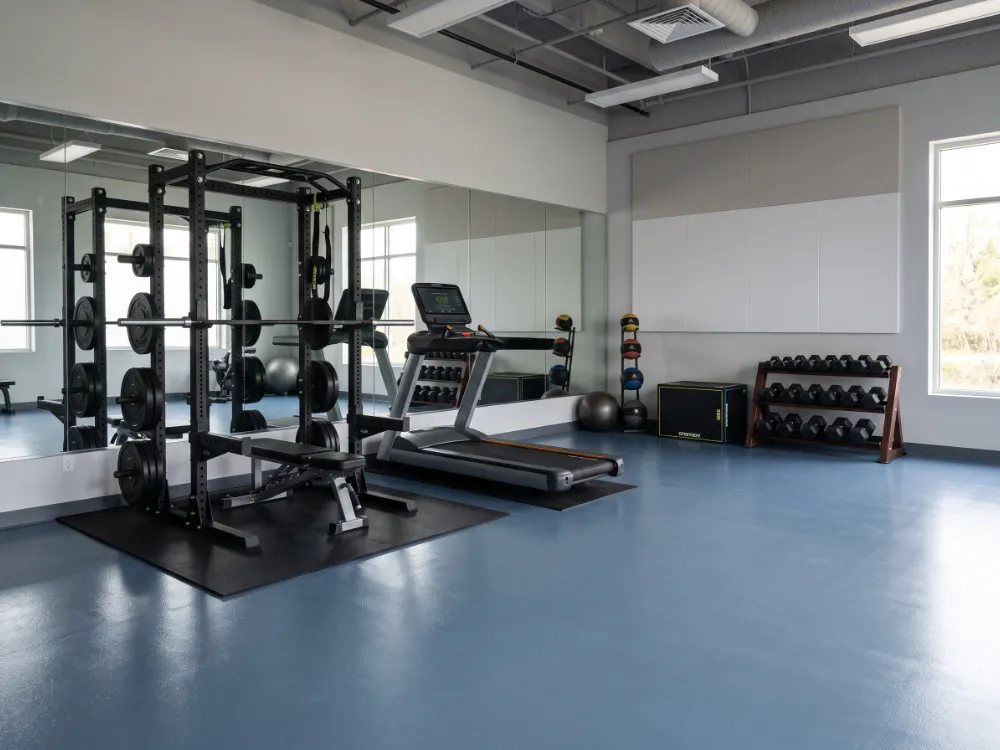
Three shifts a day put more traffic through a station locker room than most gyms see. Textured epoxy with a seamless cove base keeps showers and changing areas slip-safe and fast-drying, holds no odors because nothing is porous, and takes disinfectant rounds without dulling. Fitness rooms get an impact-tolerant solid system that handles dropped plates and rolling racks — the same specification we install in commercial gyms.
Evidence, Records & Armory
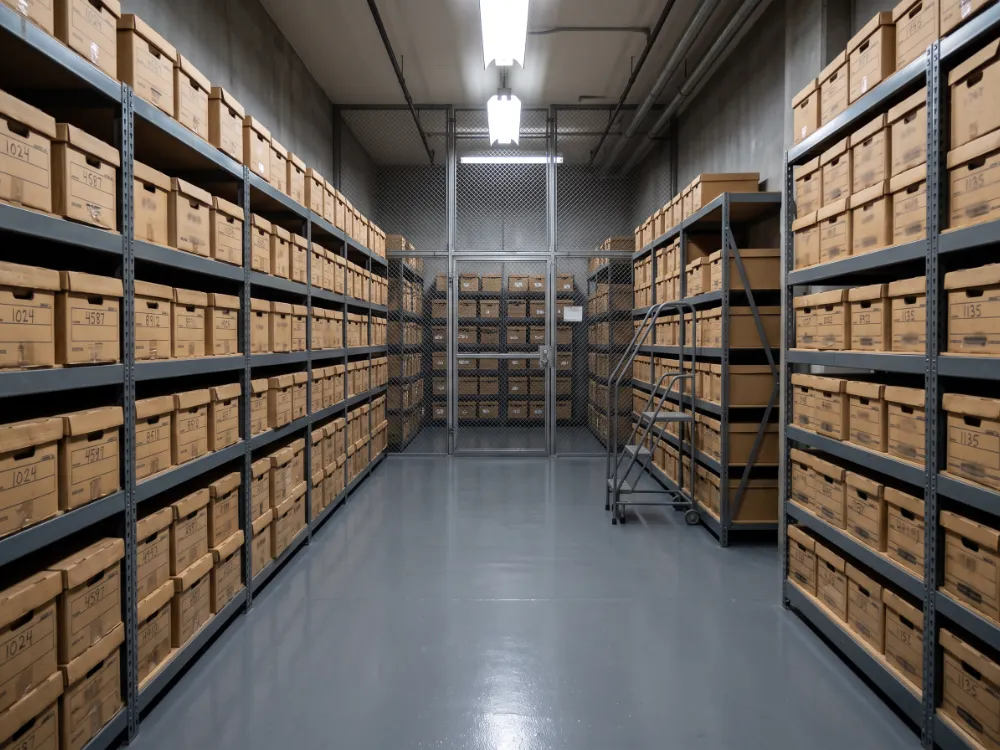
Storage rooms have one flooring job: protect what they hold. A sealed epoxy system stops the concrete dusting that settles on evidence boxes and into firearms racks, brightens windowless rooms with a light-reflective surface, and gives rolling shelving a flat, smooth track. Climate-sensitive storage benefits twice — a sealed slab is one less source of humidity and particulates in the room.
Installed Around the Watch Schedule
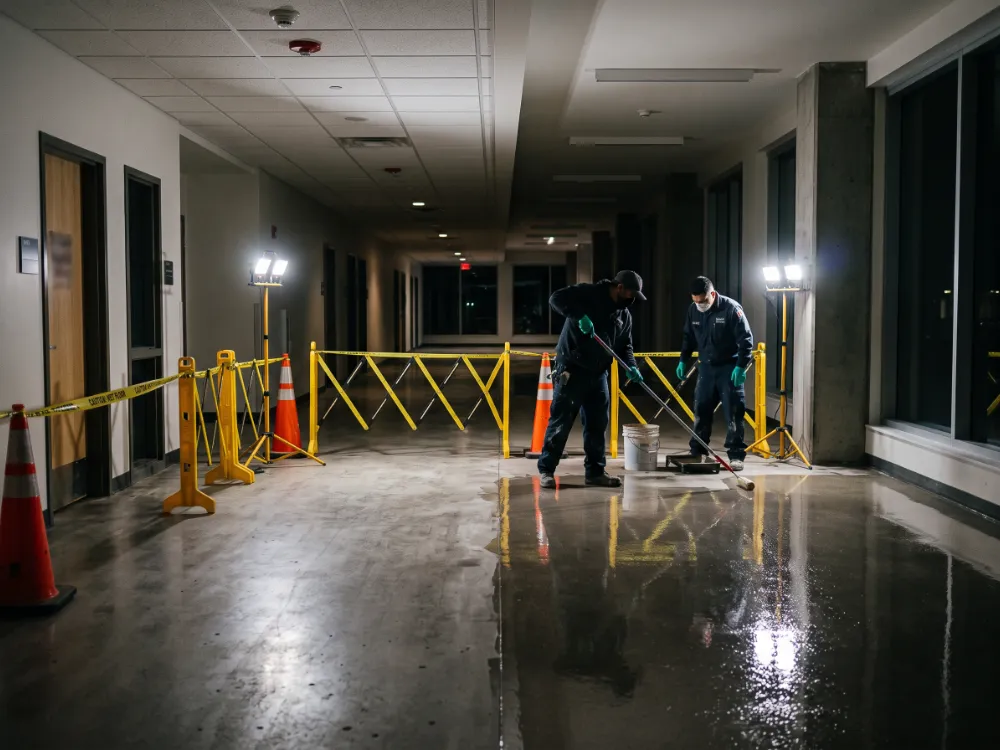
Stations run continuously, so the floor is installed the way the building works — in coordinated phases. Public areas coat overnight behind barriers; locker rooms rotate by shift; detention zones are scheduled with command staff around holding capacity; and the sally port phases half at a time so vehicle movement never stops. Fast-cure, VOC-free chemistry keeps every reopened zone odor-free, and the phasing calendar is agreed before the first grinder starts.
Frequently Asked Questions
Can the station stay operational during installation?
Yes — phased installation around live operations is the standard for public-safety work. Zones rotate on a calendar agreed with command staff: lobbies overnight, locker rooms by shift, detention areas coordinated with holding capacity, and the sally port in halves so vehicles always have a route.
Why are seamless floors specified in holding and booking areas?
Security. Tile can be broken into edged fragments, grout can be picked loose, and lifted seams become tools — a monolithic epoxy floor with an integral cove base offers none of that. It is the same logic behind every other tamper-resistant material choice in a detention space.
Will patrol vehicles cause hot-tire damage in the sally port?
Not on this system. Hot-tire pickup is a failure of thin, weakly bonded coatings; our fleet-bay systems key into diamond-ground concrete and cure into a surface hot rubber cannot soften — patrol units can park hot every hour of every shift.
Can the floor take biohazard and disinfection cleaning?
Yes — the surface is non-porous, so cleanup protocols work on top of it rather than soaking past it, and repeated disinfection does not dull or etch the finish. Coved bases mean wash-downs push everything to the drain instead of into a wall joint.
How is slip resistance handled for a public building?
It is specified, applied and documented zone by zone — aggressive texture in showers and wash bays, moderate in corridors, smooth-but-rated in the lobby. The written specification goes in your risk file, which is exactly where your city attorney wants it.
Can department colors or seals be incorporated?
Yes — lobby systems can carry department colors as accents or zone banding, and a seal or emblem area can be coated in and sealed under the wear layer. Detention areas stay deliberately neutral; public areas can carry the identity.
What goes on the K9 kennel floor?
A textured, coved, Novolac-grade system — non-porous against odors and urine, chemical-resistant against kennel disinfectants, and sloped to drain for hose-downs. It is the same specification family as veterinary facilities, and it makes kennel sanitation an actual rinse instead of a scrub.
How does procurement work — can you support a public bid?
Yes. We provide full written specifications, slip documentation, material data and warranty terms in bid-ready form, and because we manufacture the materials ourselves the pricing holds still between quote and award — no distributor in the middle repricing the job.
How long does the floor last in a 24/7 facility?
Specified to the zone, ten-plus years of continuous service, with high-wear paths refreshed by overnight recoat rather than replacement. Material and workmanship carry one three-year commercial warranty from one accountable company.
What does station flooring cost?
Zone mix drives the number — a lobby terrazzo-look, a sally port system and a locker room carry different specifications. Pricing is distributor-direct because the materials are ours, and the free on-site walk-through produces a per-zone figure your facilities office can budget against.
One Installer for the Whole Station
Lobby, detention, fleet bays, locker rooms and storage — one specification set, one phased schedule around your operations, one three-year commercial warranty, across Los Angeles, Orange, Ventura and the surrounding counties.
Related: fire station flooring, mechanic shop flooring (the fleet-bay standard), and the commercial and industrial overview.
FREE onsite Estimate
5 stars rated company
Get it done right the first time...


