
Chemical-Resistant Epoxy Floor Systems
Laboratory Flooring
Specified to your reagent list — Novolac chemistry, coved containment, cleanroom discipline
Request a Free Estimate
Laboratory Epoxy Flooring
A laboratory floor is chosen by chemistry, not by catalog. The solvents, acids, bases and cleaning agents that live on your benches decide what survives underneath them — and generic flooring loses that argument one etched spill at a time. Lab-grade epoxy systems are specified the other way around: we start from your reagent list and select the formulation to match, stepping up to Novolac chemistry — the high-crosslink epoxy family built for aggressive acids and solvents — wherever the bench work demands it.
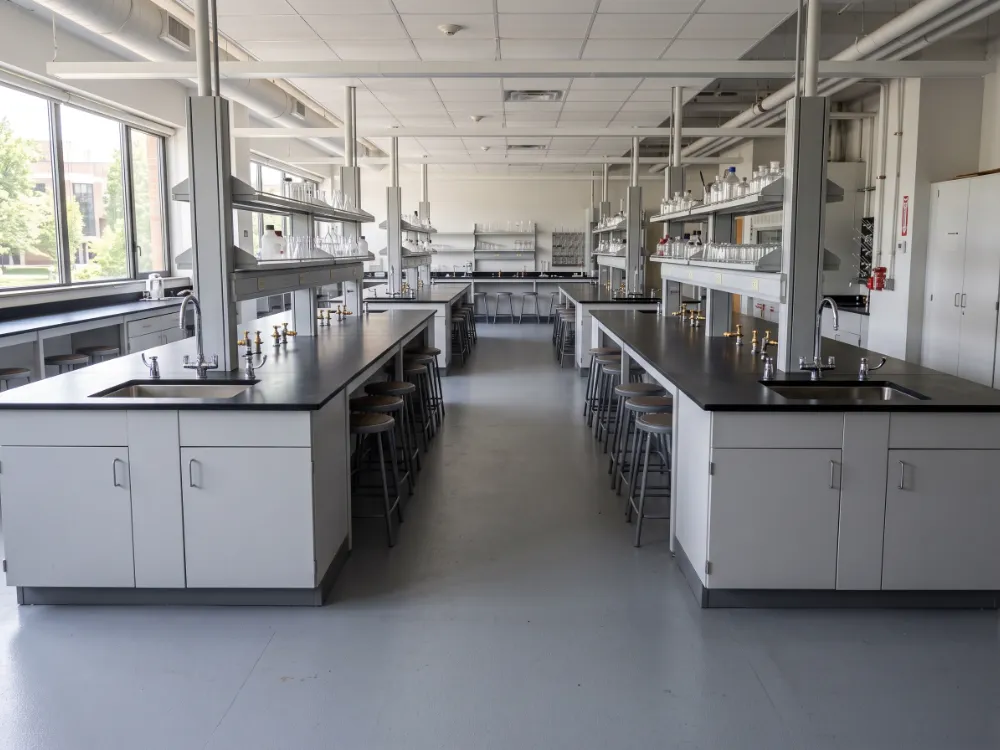
The rest of the specification follows the science. Seamless surfaces with integral cove bases turn spill response into containment and wipe-up rather than remediation. Sealed, low-particulate finishes stop the slab from shedding into sensitive work — the flooring contribution to cleanroom and controlled-environment discipline. Static-dissipative options cover electronics and instrumentation labs; temperature-tolerant systems handle autoclave adjacencies and cold rooms alike. And for Southern California’s biotech corridor, where lab space turns over on tenant-improvement schedules, the whole system installs in contained phases or over a weekend — benches in place, programs uninterrupted.
Top Epoxy Flooring manufactures its own materials and installs with in-house crews under a three-year commercial warranty, with chemical-resistance documentation delivered in writing. See the wider commercial and industrial flooring range or request a free on-site estimate below.
Systems Specified by Chemistry

Novolac Chemical Resistance
Novolac epoxy resists concentrated acids, solvents and oxidizers — the formulation chemical plants trust, scaled to the bench.

Coved Spill Containment
Integral cove bases turn the floor into secondary containment — spills stop at the wall line and wipe to the drain.

Low-Particulate Surfaces
Sealed, low-particulate surfaces shed nothing into sensitive work — the flooring half of contamination control.

Temperature-Range Tolerant
Formulations tolerate autoclave-adjacent heat and cold-room service without embrittling or releasing.

Static-Dissipative Options
Static-dissipative and ESD options protect instrumentation and electronics labs where a spark is data lost.

Resistance Data In Writing
Chemical-resistance data delivered in writing against your reagent list — the specification your EHS office can file.
Research & Biotech Labs
Biotech labs live in tenant-improvement time: programs move in, scale up and reconfigure on lease cycles, and the floor has to be ready before the equipment arrives. A seamless lab-grade system installs during the TI window or over a weekend in occupied suites, takes the daily reality of reagents, media spills and cart traffic, and leaves nothing porous for contamination audits to question. White and light-gray finishes keep bench light where the work is.
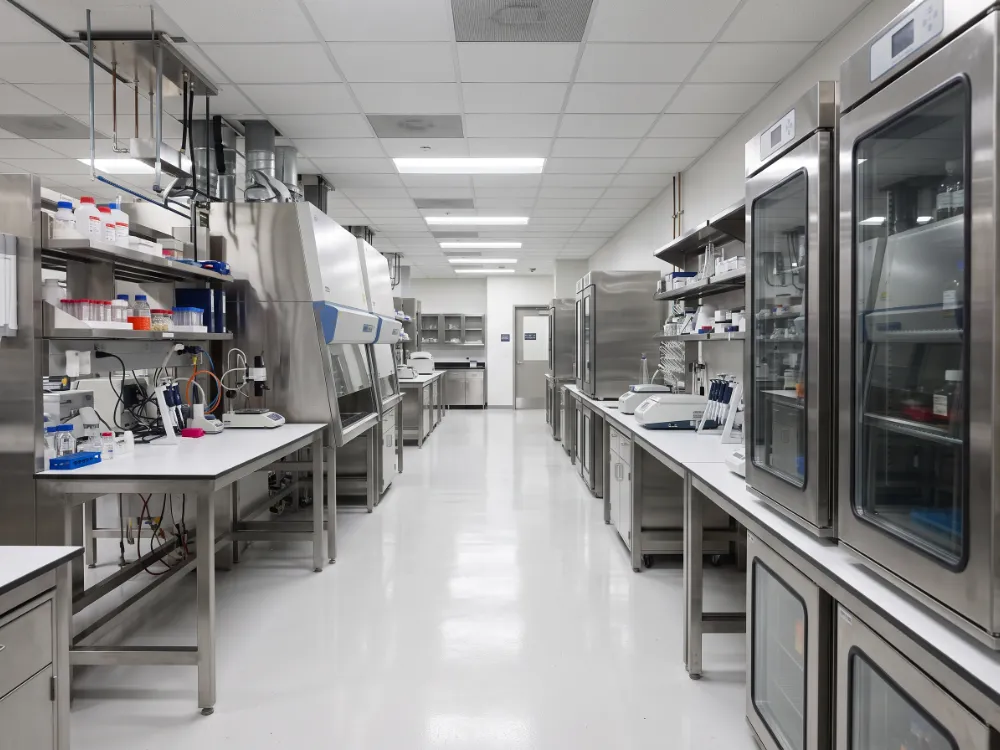
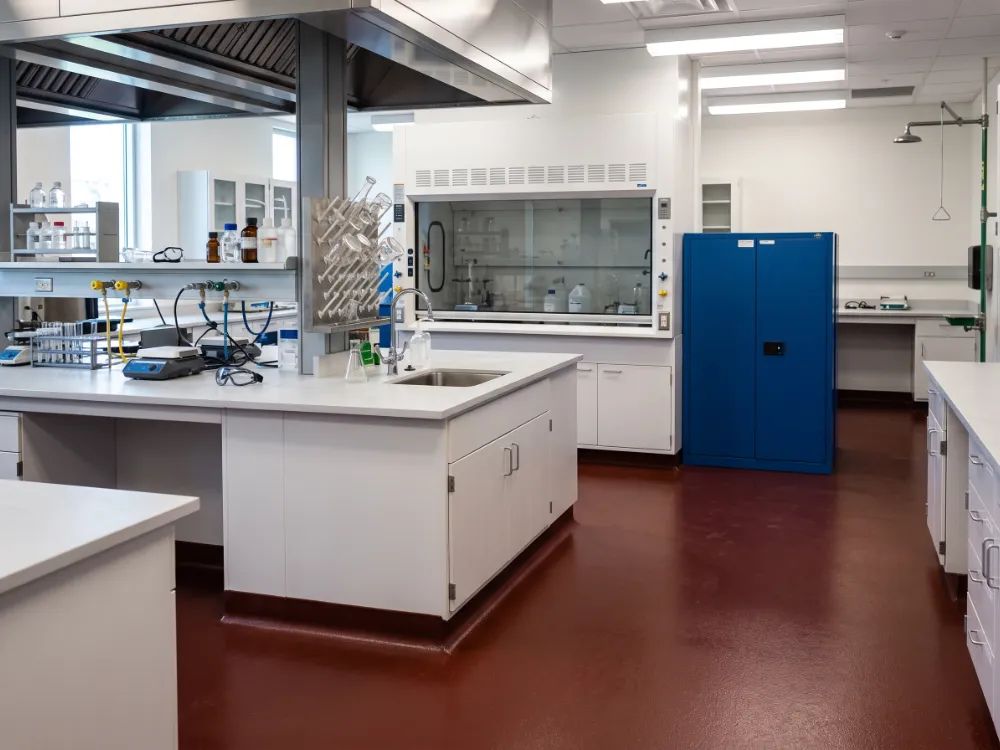
Chemical & Wet Labs
Where the fume hoods are, the floor earns its specification. Novolac systems take direct exposure to acids, bases and solvents that stain or etch conventional epoxy, and the coved perimeter carries that resistance up the wall where splashes land. Spill events become wipe-ups; acid storage and dispensing zones get the same chemistry underfoot as the shelving above them. The specification is mapped to your actual reagent list during the walk-through — not assumed from a brochure.
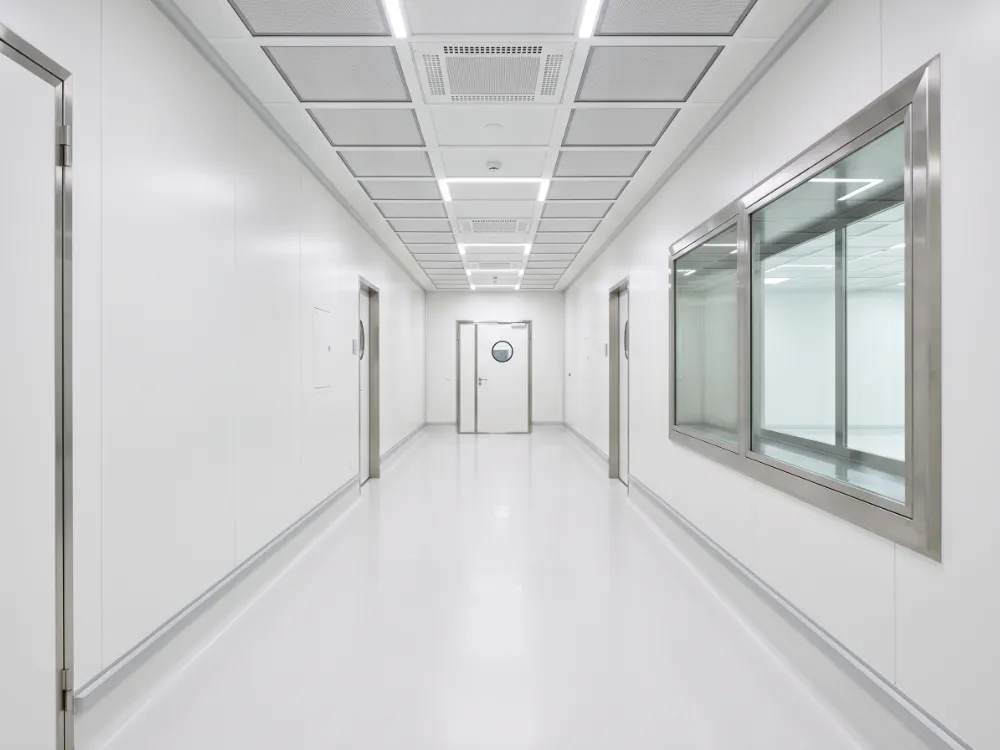
Cleanrooms & Controlled Environments
Controlled space demands a floor that participates in the protocol:
- Seamless, non-shedding surface with nothing to trap or release particulate
- Integral coving compatible with wall systems and gowning-room transitions
- Chemistry that stands up to repeated disinfection and fogging agents
- Installation executed to cleanroom discipline — containment, low-dust prep, controlled cure
Advantages Under the Bench
Lab flooring succeeds when nobody writes an incident report about it: spills contained, audits passed, instruments unbothered, programs never paused for the floor. That is a specification discipline — chemistry-mapped, documented and installed to the standards of the rooms it serves.
Specified to Your Reagent List
Specification mapped to your reagent list — the floor is chosen by the chemistry it will actually meet.
Cleanroom-Discipline Installs
Contained, phased installation — occupied labs rotate zone by zone, TI projects hit their fit-out dates.
Seamless Under Everything
Documentation in writing — chemical resistance, slip ratings and materials data for the EHS and audit file.
QC & Production Labs
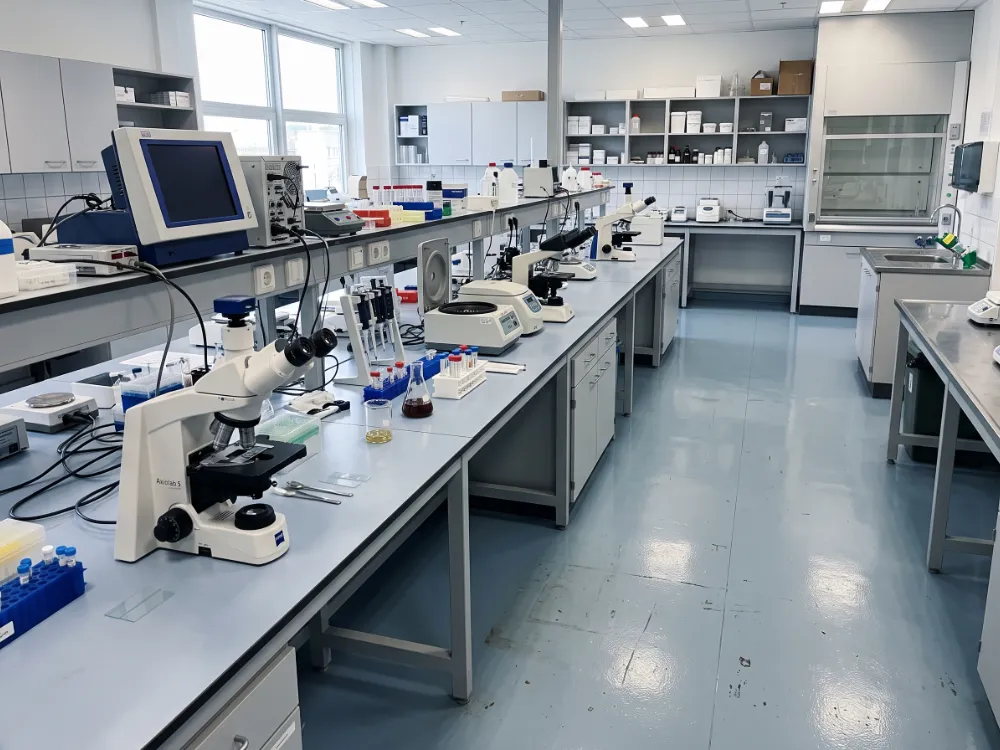
Labs embedded in manufacturing carry both worlds: bench chemistry on top, plant traffic at the door. The floor bridges them — lab-grade seamless surfaces inside the QC space, transitioning without a joint to the industrial systems on the production floor. Sample carts roll smooth across the boundary, chemistry stays contained where it belongs, and the whole path from line to lab holds one cleanability standard.
Teaching & Medical Labs
Teaching labs multiply every hazard by inexperience, which makes the floor’s forgiveness part of the safety plan: seamless and non-porous under every student spill, chemical-resistant beneath the reagent shelves, and textured where sinks and eyewash stations keep the floor wet. Medical and diagnostic labs add the disinfection regimen — the same seamless logic, specified for biological rather than chemical exposure.
Installed Without Pausing the Program
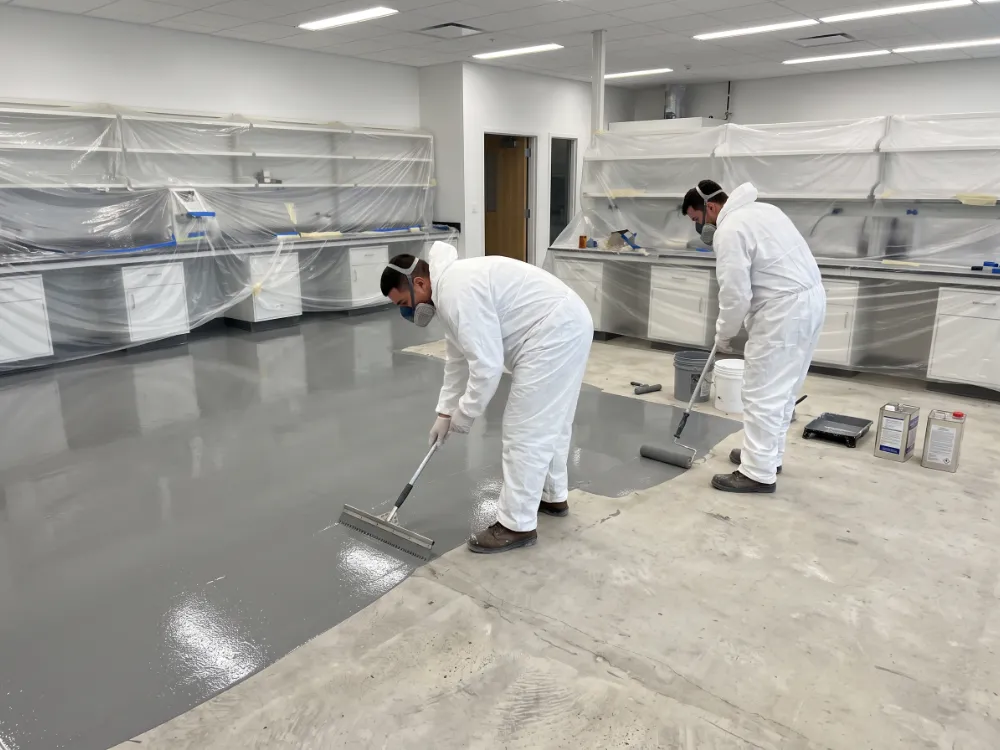
Research does not stop for renovation, so lab floors install the way lab work is done — contained, scheduled, documented. Occupied labs phase zone by zone behind containment with benches protected in place; cleanroom work follows gowning-and-containment discipline; TI projects slot into the fit-out schedule between trades. Low-odor, VOC-free chemistry keeps adjacent spaces working through every phase, and each zone reopens on a posted cure schedule.
Frequently Asked Questions
How do you decide which flooring chemistry our lab needs?
From your reagent list. The walk-through maps what each zone is actually exposed to — solvents, acids, disinfectants, temperatures — and the formulation follows: standard lab-grade epoxy where it serves, Novolac where the chemistry is aggressive. The resulting specification comes to you in writing.
What is Novolac and when is it required?
Novolac is a high-crosslink epoxy family engineered for chemical service — concentrated acids, solvents and oxidizers that etch or soften conventional epoxy. It is the specification for wet chemistry zones, acid storage, dispensing areas and anywhere the fume hoods work hard.
Can the floor act as secondary containment?
The seamless surface with integral cove bases functions as exactly that: spills stay on the floor plane, stop at the coved wall line and wipe or wash to the drain. Where formal containment detailing is required, slopes and berms are built into the system.
Does installation create dust or fumes that would threaten our work?
No — prep runs under vacuum-shrouded, contained grinding, the chemistry is VOC-free and low-odor, and occupied facilities are phased behind containment. Cleanroom and controlled-environment installs follow your gowning and protocol requirements.
Do you offer static-dissipative floors for instrumentation labs?
Yes — static-dissipative and ESD-grade systems are available where electronics, instrumentation or flammable-solvent handling make charge control part of the specification. The grounding details are engineered with your facilities team.
Can you work in an occupied, running lab?
Yes — zone-by-zone phasing behind containment is the standard for occupied labs. Benches and instruments are protected in place, programs continue in adjacent zones, and each section reopens on a posted cure schedule agreed with the lab manager.
How does the floor behave near autoclaves and cold rooms?
The formulations are specified for the temperature range they will see — autoclave-adjacent heat, cold-room service, and the cycling between them — without embrittling, softening or losing bond. Temperature exposure is part of the zone mapping.
What documentation do we receive?
Chemical-resistance data against your reagent list, slip ratings by zone, material data sheets and warranty terms — the package your EHS office and auditors expect to file with the facility records.
How long does a lab floor last?
Specified correctly to its chemistry, well over a decade of service, with high-traffic aisles refreshed by contained recoat. Material and workmanship carry our three-year commercial warranty as one obligation from one company.
What does laboratory flooring cost?
The chemistry mix drives it — a Novolac wet lab and a standard research bay price differently per square foot. Materials are our own manufacture, so pricing is distributor-direct, and the walk-through returns a per-zone figure with the specification attached.
From the Bench to the Cleanroom
Research bays, wet chemistry, controlled environments and teaching labs — one chemistry-mapped specification set, installed to lab discipline, under one three-year commercial warranty, across Los Angeles, Orange, Ventura and the surrounding counties.
Related: hospital flooring, manufacturing flooring, and the commercial and industrial overview.
FREE onsite Estimate
5 stars rated company
Get it done right the first time...


