
Transit Facility Epoxy Floor Systems
Train Station Flooring
Concourse to platform edge — coated between the last train and the first
Request a Free Estimate
Train Station Epoxy Flooring
Station floors take traffic in pulses — empty platform, arriving train, five hundred passengers in ninety seconds, repeat until the last service — and they take it on a surface that doubles as safety infrastructure. The platform edge marking, the stair nosings, the wayfinding that steers riders through transfers: in a well-designed station, all of it lives in the floor. Which is why transit systems worldwide put such deliberate specification into what everyone walks on and nobody looks at.
Seamless epoxy systems carry the whole brief. Concourses and ticket halls take terrazzo-look finishes — the classic railway-hall floor — over wear builds rated for pulse traffic that never really stops. Platforms get UV- and weather-rated systems with high-visibility tactile edge marking coated permanently in. Stairs and ramps take quartz traction with contrast nosings; wayfinding routes coat into the floor in transit-line colors that outlive every repainting budget. And because a station’s only quiet hours run from the last train to the first, that is exactly when the work happens — in phased night windows, section by section, with every zone open again before the morning service board lights up.
Top Epoxy Flooring manufactures its own VOC-free materials and installs with in-house crews across Southern California under a three-year commercial warranty. See the wider commercial and industrial flooring range or request a free on-site estimate below.
Systems for Transit Facilities

Terrazzo-Look Concourses
Terrazzo-look systems give concourses and ticket halls the classic railway-hall floor at coating cost and night-window speed.

UV & Weather-Rated Platforms
Platform systems are UV- and moisture-rated for open-air service — sun, rain and track grime are the design conditions.

High-Vis Edge Marking
High-visibility tactile edge marking coats permanently into the platform — the safety line that never wears off.

Quartz Stair & Ramp Traction
Quartz broadcast traction covers stairs, ramps and bridges, with contrast nosings coated into every tread edge.

Wayfinding Coated Into the Floor
Wayfinding routes, line colors and zone markings coat beneath the wear layer — the map becomes the floor.

Night-Window Scheduling
Night-window installation between last and first services — the timetable never changes for the floor.
Concourses & Ticket Halls
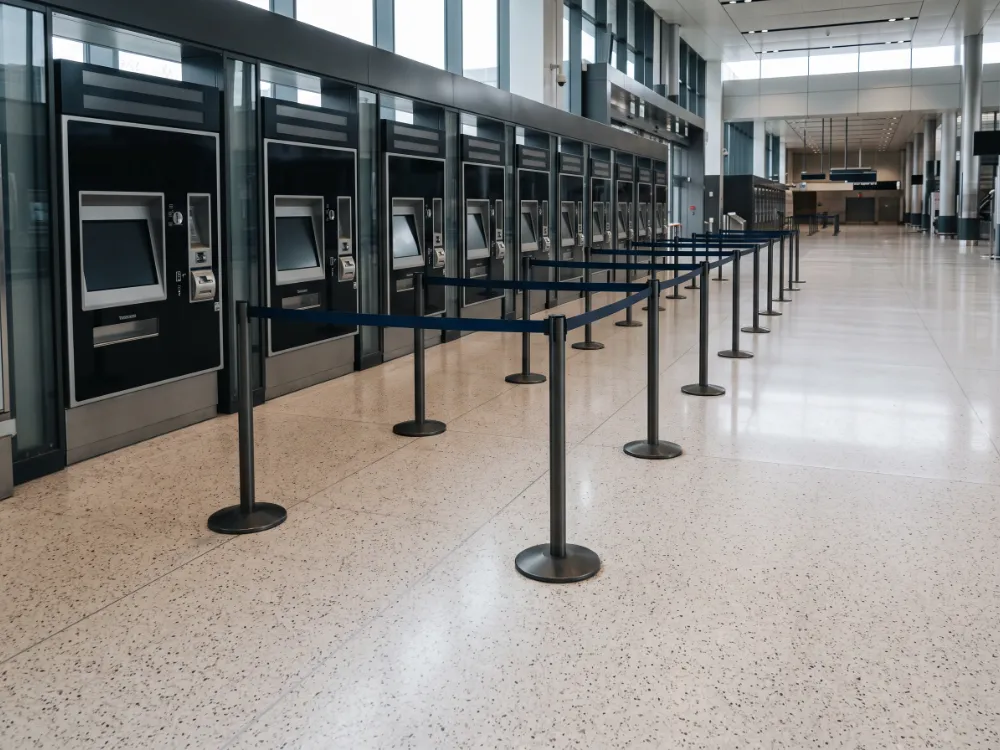
The concourse is the station’s civic room, and rail architecture gave it a floor tradition — terrazzo underfoot from the great terminals onward. A terrazzo-look epoxy system continues that language seamlessly: flecked, luminous under the hall’s volume, and rated for the tidal traffic of rush hours that would wear paths into stone. Ticket lines, machine zones and queue guides coat in where operations wants them, and the whole hall cleans in one overnight scrubber pass.
Platforms & Edge Safety
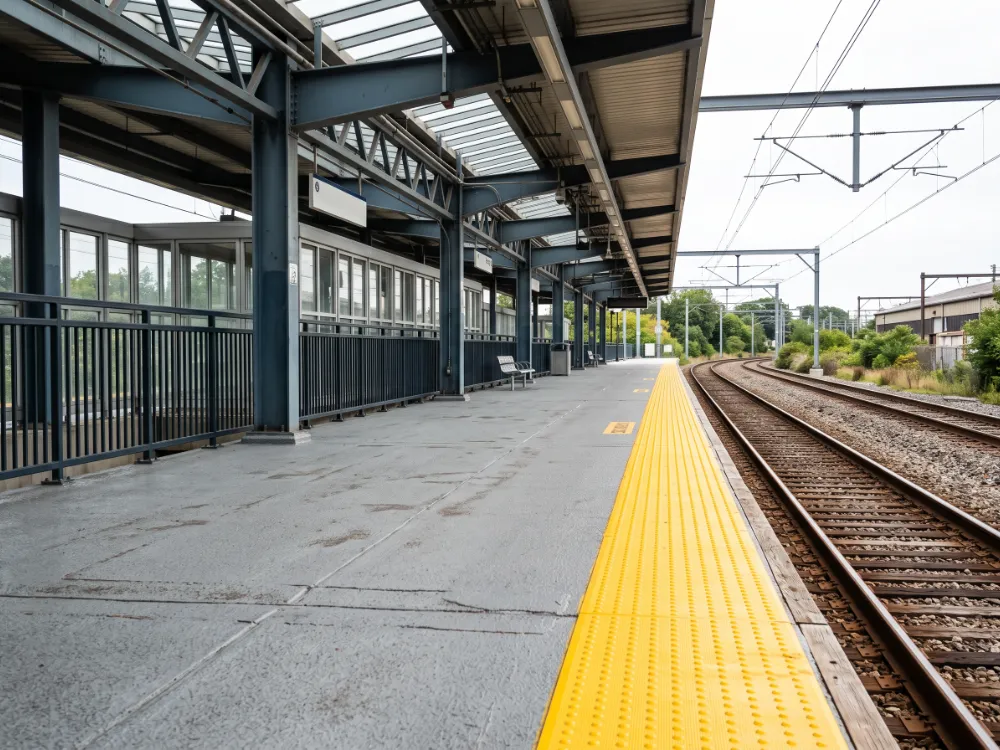
The platform is where flooring becomes safety equipment:
- High-visibility tactile warning strips coated permanently along the platform edge
- UV-stable, weather-rated systems for open and canopy-covered platforms
- Slip texture specified for wet weather and the sprint for a closing door
- Drainage-aware detailing so platforms shed rain instead of ponding it
Wayfinding in the Floor
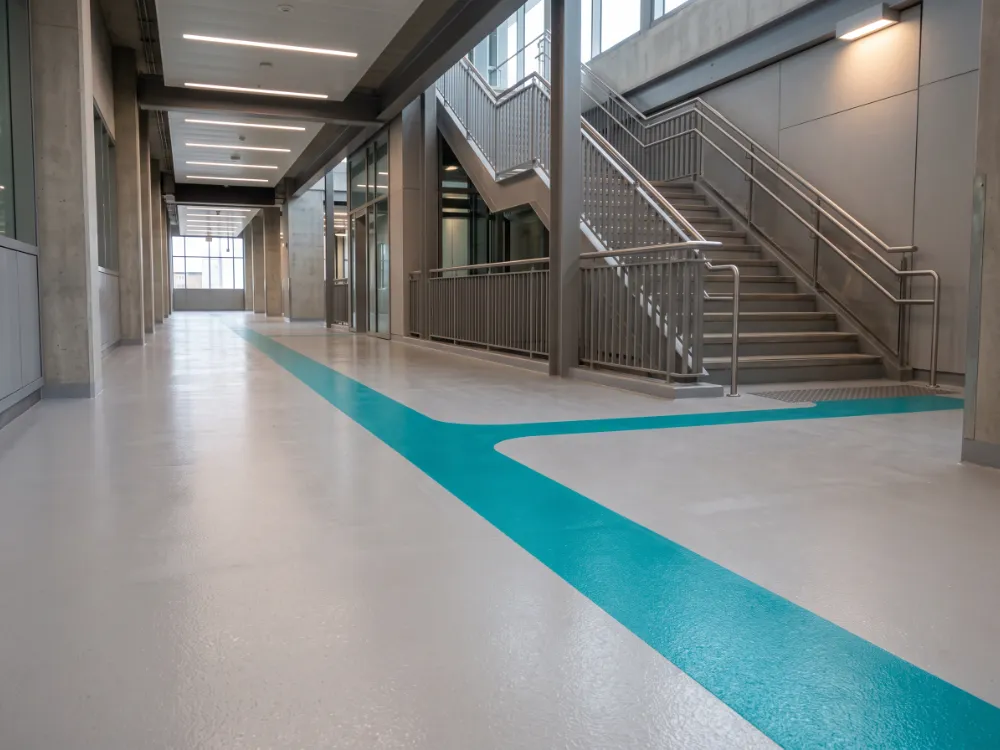
Modern transit design has rediscovered what the floor can do: route lines in transit colors guiding transfers, zone fields marking where doors open, contrast bands announcing level changes. Coated into the system beneath the wear layer, this wayfinding survives what painted versions cannot — millions of footsteps, scrubber passes and luggage wheels — keeping its legibility for the life of the floor. The floor stops being background and starts moving passengers.
Advantages for Transit Operators
Transit flooring is judged on the operator’s terms: safety documentation, timetable-proof installation, and surfaces that survive pulse loading for decades. The specification meets all three — and the schedule is built from your service board backward.
Pulse-Traffic Wear Ratings
Night-window phasing between services — every zone reopens before the first train of the morning.
Slip Specs On File
Edge marking, nosings and slip ratings documented in writing for the safety and compliance file.
Last Train Out, First Train In
Wear builds rated for pulse traffic — rush-hour tides, luggage wheels and cleaning machines, for years.
Stairs, Ramps & Pedestrian Bridges
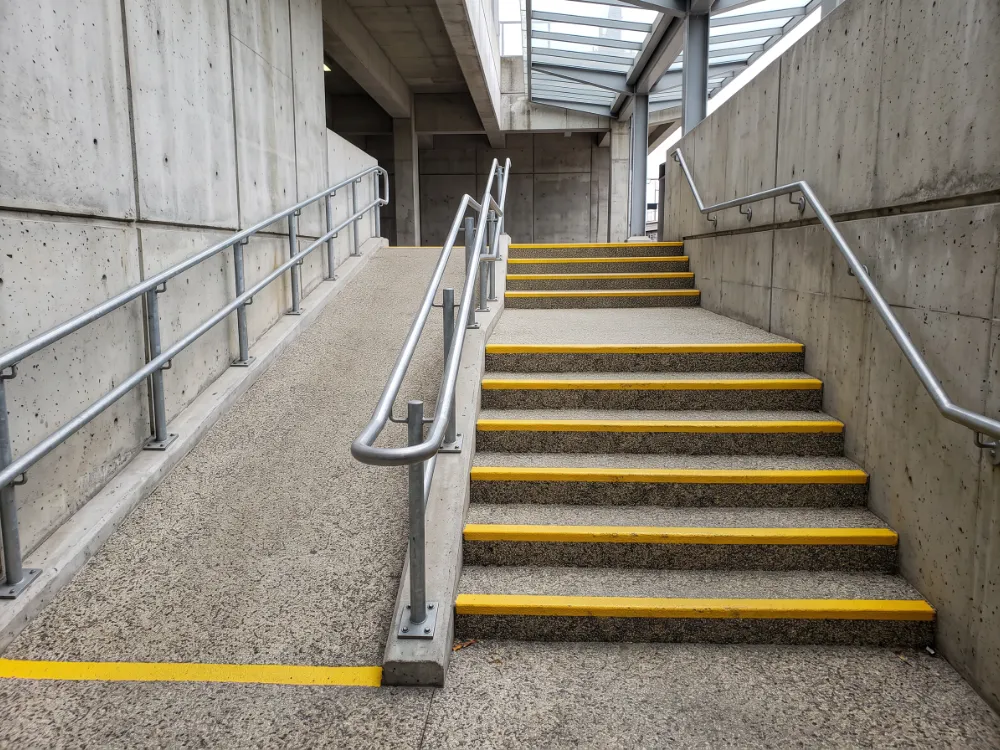
Vertical circulation concentrates every safety risk a station has: weather tracked onto smooth treads, crowds moving fast, sightlines fixed on phones. Quartz-textured systems with coated contrast nosings answer each — traction rated for wet shoes, tread edges announced in permanent high-contrast color, landings detailed for the pivot-and-turn wear that stairwells concentrate. Bridges and tunnels get the same treatment with moisture-rated chemistry.
Staff, Operations & Maintenance Areas
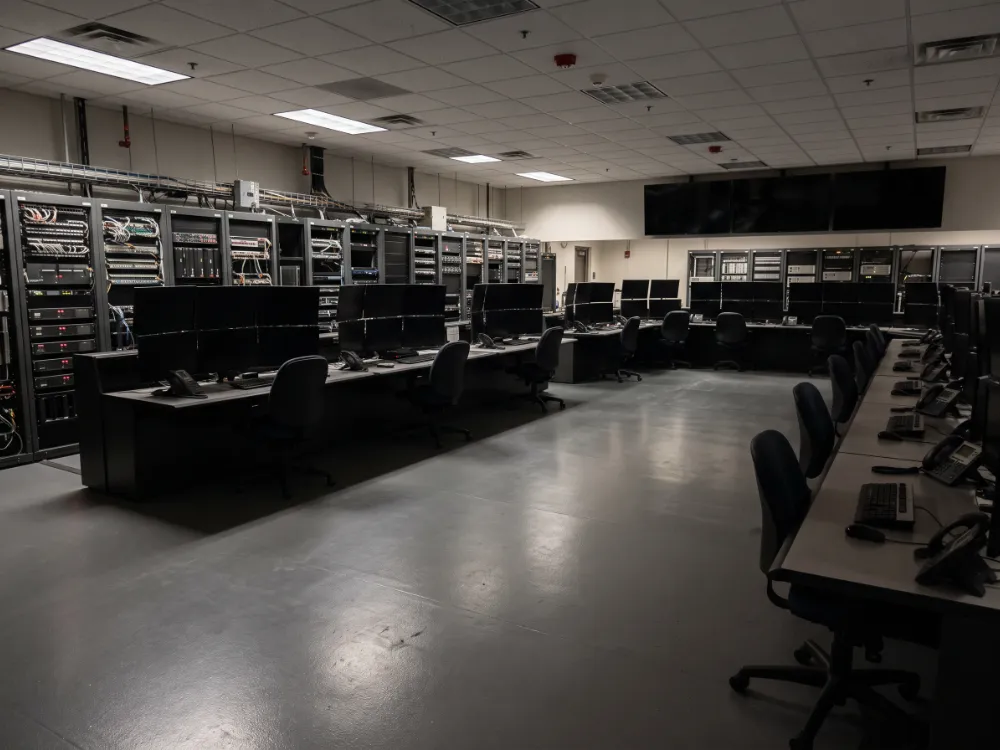
Behind the public station runs a working facility — operations rooms, crew quarters, maintenance shops, storage. Solid and flake systems keep these floors bright, sealed and cleanable on the station’s relentless schedule, with the maintenance shop stepping up to fluid-resistant industrial chemistry. One finish standard from the concourse to the crew room keeps the whole facility inspection-ready.
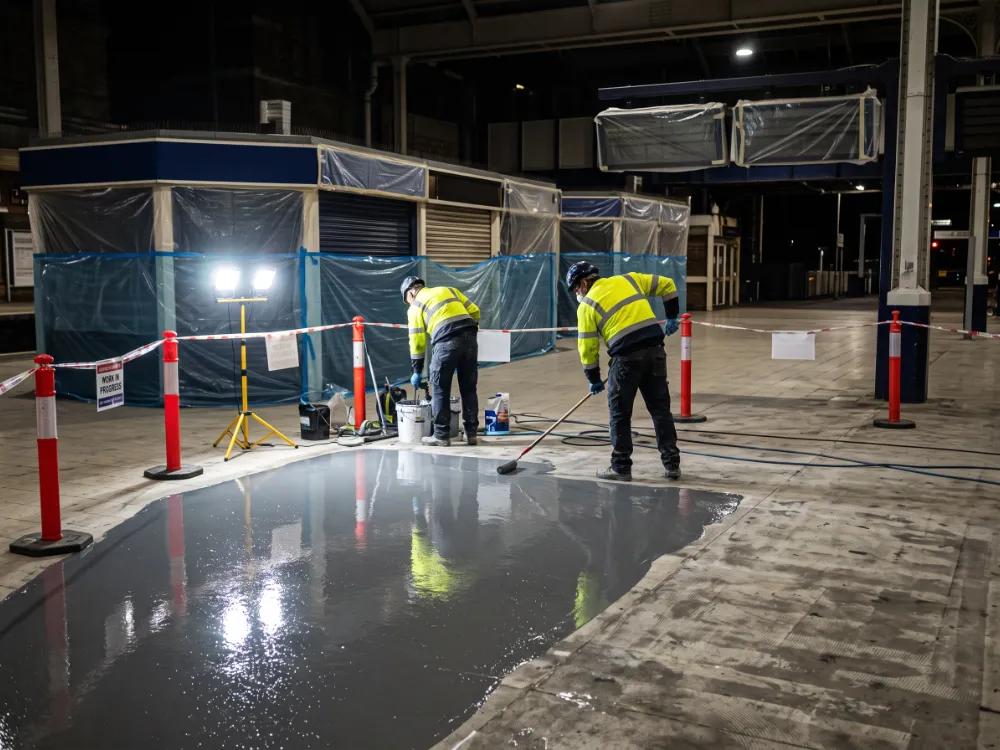
Installed Between the Last Train and the First
Stations have no closed season, only closed hours — and the installation plan lives entirely inside them. Concourse sections coat behind barriers after the last service and reopen before the first; platforms phase in halves so boarding never stops; stairs alternate so a route always exists. Fast-cure, VOC-free chemistry makes the night windows genuinely sufficient, and the phasing calendar is agreed with operations before the first barrier goes up.
Frequently Asked Questions
Can the work happen without disrupting train service?
Yes — the entire project lives in the night windows between the last and first services. Sections coat behind barriers overnight and reopen before the morning board lights up; platforms phase in halves so boarding never stops. The timetable is the fixed constraint everything else is planned around.
How is the platform edge marking applied?
High-visibility tactile warning strips — the yellow domed edge marking transit systems standardize on — are coated permanently into the platform system rather than surface-applied. Foot traffic polishes them instead of peeling them, and the safety line keeps its contrast for the life of the floor.
Do the platform systems survive outdoor exposure?
They are specified for it — UV-stable topcoats that hold color in direct sun, moisture-rated chemistry for rain and wash-downs, and drainage-aware detailing so platforms shed water. Open-air service is the design condition, not an exception.
Can wayfinding and line colors go into the floor?
Yes — route stripes in transit-line colors, door-zone fields, transfer guidance and level-change bands all coat beneath the clear wear layer, applied from your wayfinding drawings. It is the durable version of what paint and vinyl attempt.
What about stairs — they are our biggest slip exposure?
Stairs get the fullest safety specification: quartz traction rated for wet shoes, contrast nosings coated into every tread edge, and landings built for pivot wear. The slip documentation for every stair and ramp goes to your safety file in writing.
How does the concourse floor handle rush-hour crowds long-term?
The wear build is rated for pulse traffic — the tidal loading of arrivals and departures — which concentrates wear differently than steady retail footfall. High-tide paths get heavier wear coats, and years of rush hours leave no lanes.
Is there any odor issue for early-morning passengers?
No — the chemistry is VOC-free and low-odor, and every section is cured before it reopens. The first passengers of the morning walk a finished floor with nothing in the air.
Can heritage station floors be matched or preserved?
Adjoining new work can be color- and fleck-matched to existing terrazzo so old and new read continuously, and where original floors remain in service, our systems can pick up at their boundaries. Heritage constraints are handled zone by zone in the specification.
How long will station floors last?
Decades under pulse traffic, with the highest-tide paths refreshed by night-window recoat rather than closure. Material and workmanship carry our three-year commercial warranty as one obligation.
What does transit station flooring cost?
Zone mix drives it — a concourse terrazzo-look, a platform system and a stair package are different specifications. Materials are our own manufacture, so pricing is distributor-direct, and the walk-through returns per-zone figures with the night-window phasing plan attached.
Every Level of the Station
Concourses, platforms, stairs and operations rooms — one transit-grade specification set, installed in night windows, under one three-year commercial warranty, across Los Angeles, Orange, Ventura and the surrounding counties.
Related: terminals flooring, city hall flooring, and the commercial and industrial overview.
FREE onsite Estimate
5 stars rated company
Get it done right the first time...


