
Containment-Grade Epoxy Floor Systems
Mechanical Room Flooring
Boiler plants, pump rooms and chillers — the floor becomes the containment, with equipment online throughout
Request a Free Estimate
Mechanical Room Epoxy Flooring
Every building engineer knows what lives on a mechanical room floor: the glycol seep under the chiller, the fuel-oil shadow beside the day tank, the rust bloom where condensate has been finding the same low spot for a decade. Bare concrete absorbs all of it, stays wet-slick underfoot, and slowly feeds dust and moisture back to the equipment it is supposed to support. The room that keeps the building alive usually has the building’s worst floor.
A containment-grade epoxy system turns that logic around — effectively converting the room into a sealed, waterproof tub. A flexible membrane flows into every pore of the slab and rises up the walls and housekeeping pads as an integral cove, so a leak, a burst fitting or an overflowing drain pan stays on the floor, visible and contained, instead of migrating into the slab or the tenant space below. The chemistry is rated for glycol, fuel oil, boiler treatment and lubricants; quartz texture replaces the wet-slick concrete that endangers every wrench-carrying technician; and the bright sealed surface makes the room easier to inspect, easier to keep clean, and kinder to the equipment breathing its air. All of it installs in phases, with the plant online — because nobody shuts down a boiler room for paint.
Top Epoxy Flooring manufactures its own VOC-free materials and installs with in-house crews across Southern California under a three-year commercial warranty. See the wider commercial and industrial flooring range or request a free on-site estimate below.
Systems for Equipment Spaces

Waterproof Membrane Systems
Waterproof membrane construction seals every pore of the slab — the room becomes a containment vessel, not a sponge.

Coved Containment Perimeters
Integral coves rise up walls and housekeeping pads, so leaks stop at the perimeter instead of finding the slab edge.

Glycol & Fuel-Oil Chemistry
Chemistry rated for glycol, fuel oil, boiler treatment and lubricants — the fluids mechanical rooms actually spill.

Quartz Wet-Slick Traction
Quartz broadcast texture replaces wet-slick concrete — traction for technicians working around live water.

Dust-Proofed Over Equipment
Sealed slabs stop dusting into equipment intakes, motor windings and everything with a filter.

Moisture Testing First
Moisture and vapor testing before specification — mechanical slabs are wet by trade, and the system is built for the readings.
Boiler & HVAC Plants
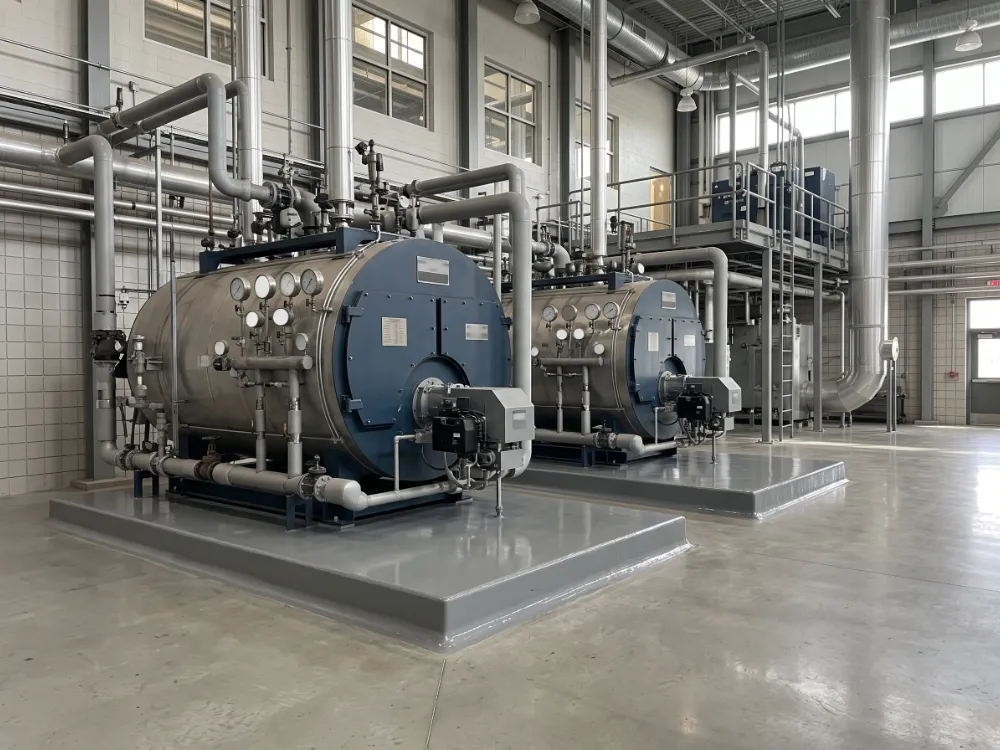
Boiler rooms combine heat, condensate, treatment chemicals and around-the-clock operation — and their floors show it first. A membrane system with coved housekeeping pads contains blowdown, drips and the occasional real failure; the chemistry shrugs off treatment compounds and fuel oil; and heat-tolerant formulations handle the ambient conditions a plant room lives at. The bright finished floor also does something subtler: it makes a well-run plant look like one, on every walkthrough.
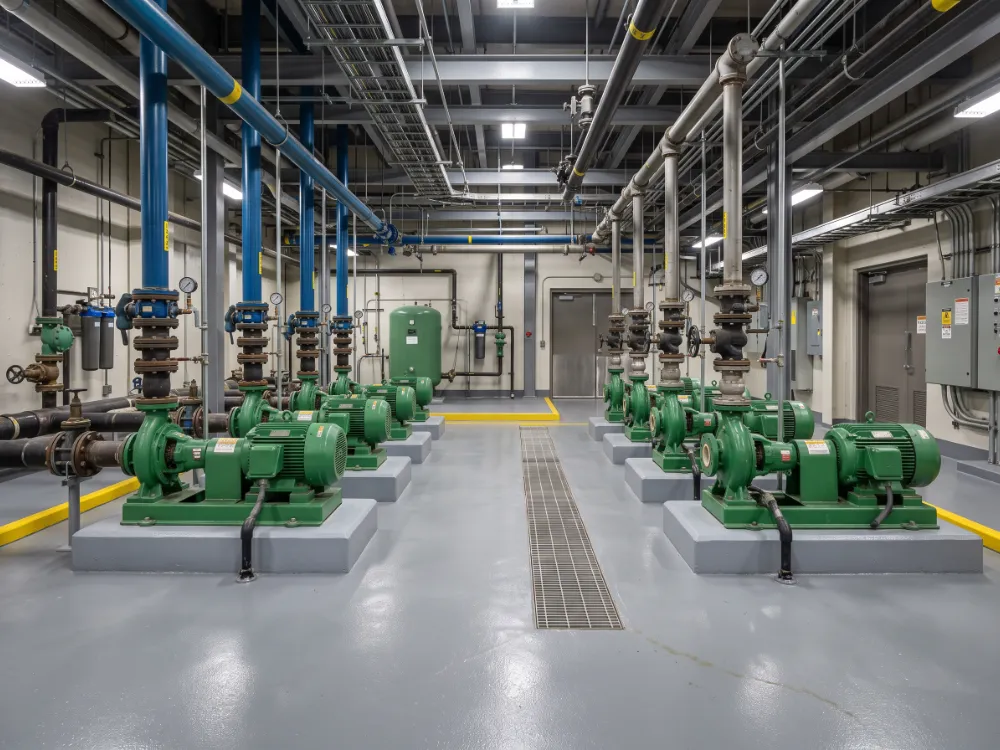
Pump & Chiller Rooms
Where the building’s water lives, the floor works wet:
- Drainage slopes corrected so seal weepage and condensate reach the drain, not the corner
- Glycol-rated chemistry under chillers and pump trains
- Coved pads that keep vibration-loosened drips contained at the source
- Quartz traction for technicians working around live, wet equipment
Electrical & Elevator Machine Rooms
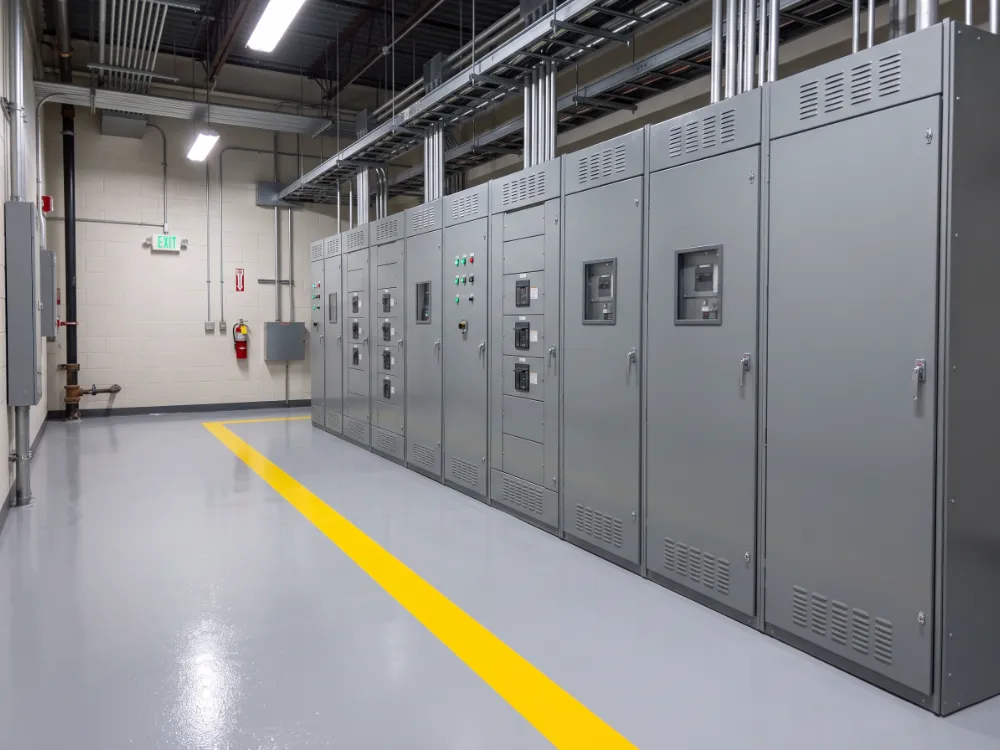
Dry equipment rooms have their own floor brief: dust control above all. Sealed epoxy stops the slab shedding conductive dust into switchgear, VFDs and elevator machines; arc-flash boundary lines and clearance zones coat permanently in front of the gear; and the light-reflective surface brightens rooms that were never given enough fixtures. Static-dissipative options cover the spaces where sensitive electronics demand them.
Advantages for Building Engineers
Mechanical room floors are judged at the worst possible moment — during a leak, an inspection or an insurance walkthrough. A contained, coved, sealed room passes all three, and the phased install means the plant never went offline to get there.
The Room Becomes a Tub
Leak events stay contained and visible on the membrane — not soaking through to the tenant below.
Equipment Stays Online
Phased installation with equipment online — the plant runs through every day of the project.
Leaks Contained, Not Absorbed
Slip, chemical and containment documentation in writing — for the risk file and the insurance conversation.
Housekeeping Pads & Containment Detailing
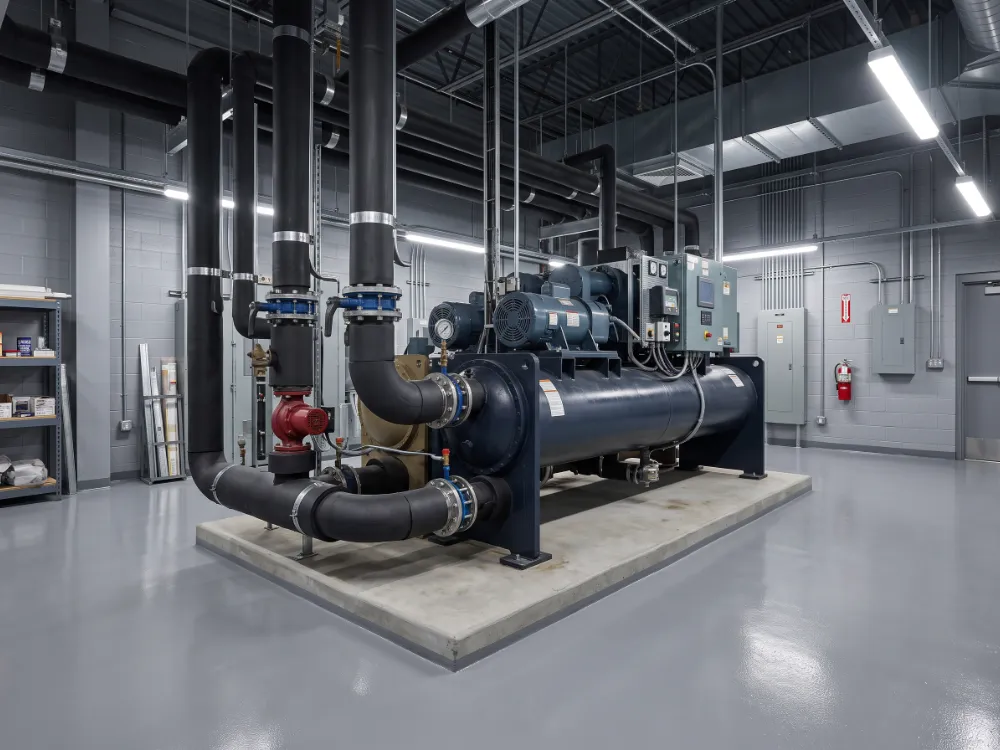
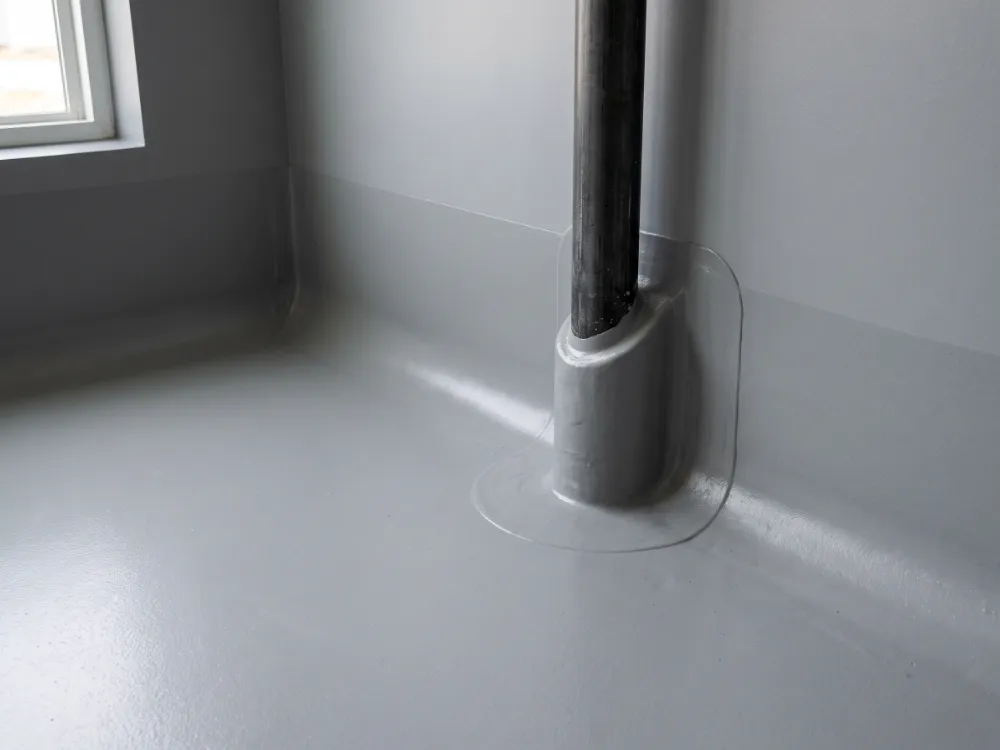
The details are the system in a mechanical room. Housekeeping pads are coated and coved as monolithic islands; pipe penetrations are wrapped and sealed; door thresholds get containment lips where the spill plan calls for them; and floor drains are detailed so the membrane delivers water to them instead of around them. It is flooring practiced as plumbing-adjacent engineering — which is exactly what the room needs.
Leak & Drainage Management
Most mechanical rooms drain by rumor — water finds paths the original slab never planned. The flooring project is the chance to fix it: slopes corrected with underlayment so every zone reaches a drain, low spots eliminated, and the sealed surface making even a small new leak instantly visible as a bead instead of a slowly spreading dark stain. Early leak detection is a maintenance benefit no one prices until it saves a compressor.
Installed With the Plant Online
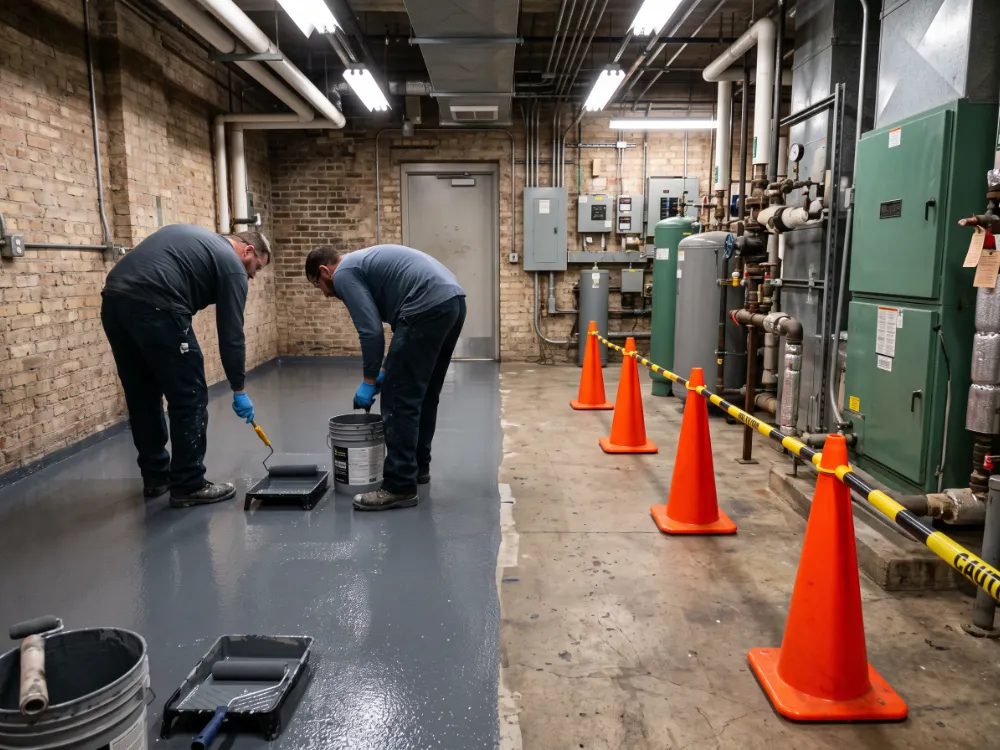
Mechanical rooms cannot take a day off, so the install is phased around live equipment: half the room at a time, equipment access corridors maintained, pads coated during scheduled service windows for each unit. VOC-free chemistry matters doubly here — these rooms feed air systems — and fast-cure systems return each zone to full traffic in hours. The phasing plan is built with the chief engineer before the first grinder starts.
Frequently Asked Questions
Can the work be done without shutting down the plant?
Yes — the room phases in halves or zones with equipment online and access corridors maintained throughout. Individual pads are coated during each unit’s scheduled service window, and no plant function goes offline for the floor.
How does the floor contain a real leak?
The membrane seals the slab completely and rises up walls and pads as an integral cove, so fluid from a failed fitting or overflowing pan stays pooled on the surface — visible, containable and cleanable — instead of soaking through the slab or migrating to the space below.
Will glycol, fuel oil or boiler chemicals damage it?
No — those are the design fluids. The chemistry is rated for glycols, fuel oil, treatment compounds and lubricants; they bead and wipe rather than staining, and chronic seep areas stop becoming permanent floor features.
Our mechanical room floor is always damp — will a coating bond?
That is why moisture and vapor testing comes first. The system is specified from actual readings, with moisture-tolerant primers and vapor barriers where the slab demands them — damp mechanical slabs are the assumed condition, not a surprise.
Does it help with the slip hazard around wet equipment?
Substantially — wet bare concrete is genuinely dangerous, and quartz broadcast texture replaces it with rated traction that works wet. The slip specification is documented for your safety file.
What about the housekeeping pads and pipe penetrations?
They are detailed as part of the system: pads coated and coved as monolithic islands, penetrations wrapped and sealed, thresholds lipped where containment planning requires. The details are where mechanical-room flooring succeeds or fails, so they get engineering attention.
Does the floor benefit the equipment itself?
Yes, two ways: the sealed slab stops shedding dust into intakes, filters and windings, and contained, visible leaks get caught early — a bead on a membrane instead of a stain discovered during a failure. Both show up in maintenance costs over time.
Can electrical rooms get arc-flash boundary markings?
Yes — boundary lines and clearance zones coat permanently into the floor in front of switchgear, applied from your safety layout, with static-dissipative system options where the equipment calls for them.
How long does a mechanical room floor last?
These rooms are low-traffic and high-abuse — the systems typically serve well over a decade, with pads and traffic paths refreshed during service windows. Material and workmanship carry our three-year commercial warranty as one obligation.
What does mechanical room flooring cost?
Room size, containment detailing and drainage scope set it — a boiler plant with coved pads prices differently than an electrical room seal. Materials are our own manufacture, so pricing is distributor-direct, and the walk-through with your engineer returns a figure with the phasing plan attached.
The Rooms That Run the Building
Boiler plants, pump and chiller rooms, electrical and elevator spaces — one containment-grade specification set, installed with equipment online, under one three-year commercial warranty, across Los Angeles, Orange, Ventura and the surrounding counties.
Related: manufacturing flooring, warehouse flooring, and the commercial and industrial overview.
FREE onsite Estimate
5 stars rated company
Get it done right the first time...


