
UV-Stable One-Day Floor Coating Specialists
Polyaspartic Floor Coating
From bare concrete to a sun-proof, drive-on floor in a single day — installed by the company that makes the coating
Request a Free Estimate
Polyaspartic Floor Coating
Polyaspartic is the chemistry that solved epoxy's two oldest complaints: the wait and the yellowing. As an aliphatic polyurea, it cures in under an hour instead of overnight, and its molecular structure simply does not react to sunlight — the finish you see on day one is the finish you see in year ten. That combination is why polyaspartic has become the standard for one-day garage floors and the only resin we trust as the final wear layer on outdoor concrete.
Top Epoxy Flooring manufactures, supplies and installs its own polyaspartic coatings across Los Angeles, Orange, Ventura, San Bernardino, Riverside and San Diego counties. There is no distributor between you and the material and no product label to argue with if something goes wrong — the company that made the coating is the company that ground your slab, built your system and signed your warranty. Every material we use is VOC-free.
There is also more than one way to build a polyaspartic floor, and the right way depends on your concrete. Most companies sell a single recipe; we test your slab first and then build the version your floor actually needs — a distinction explained below that makes the difference between a floor that lasts decades and one that blisters in its first summer.
What Goes Into Every Polyaspartic Floor

Diamond Grinding Preparation
Every install starts with diamond grinding — cutting the surface open into a bonding profile the basecoat can anchor into. Never acid etching, never coating over sealed concrete.

Slab Moisture Testing
Before a single gallon is mixed, the slab is tested for rising moisture vapor. The result decides which of the two system builds your floor gets — this step is not optional.

Moisture-Barrier Epoxy Basecoat
Damp or unverified slabs get a moisture-vapor-barrier epoxy basecoat engineered to hold back ground moisture that would blister a pure polyaspartic build.

Full-Rejection Flake Broadcast
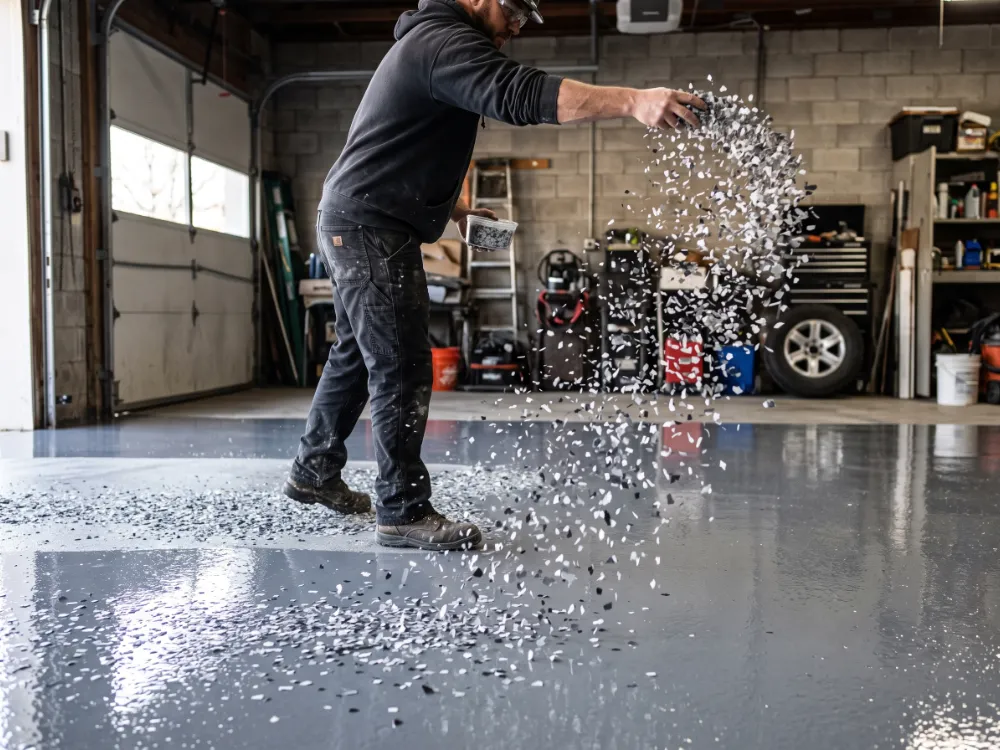
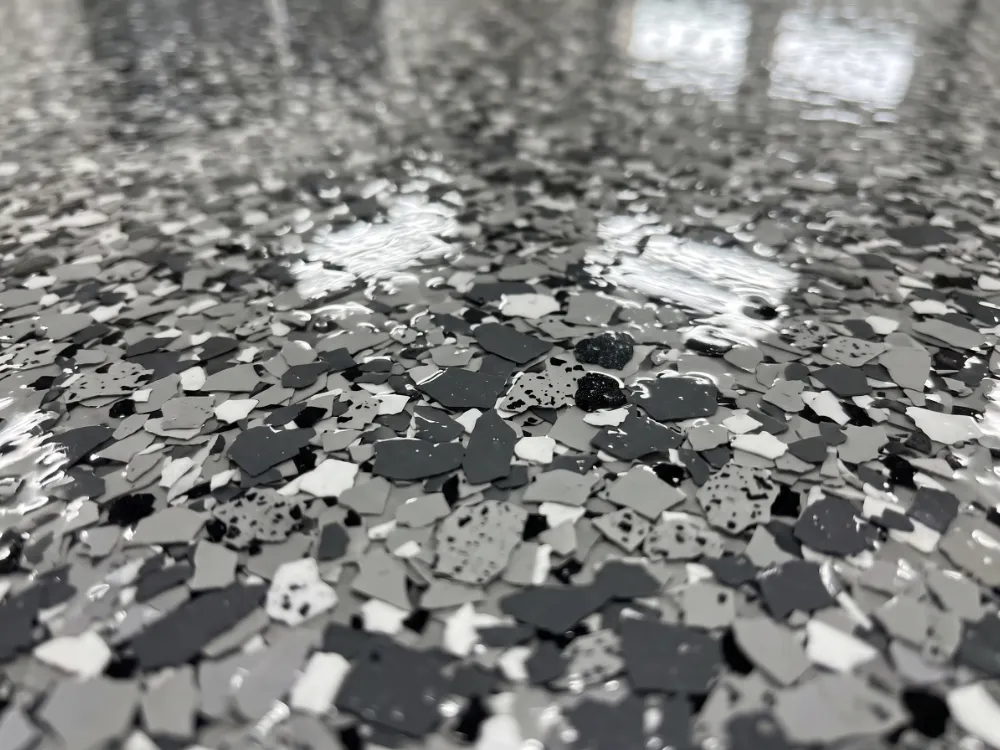
Vinyl flakes are broadcast into the wet basecoat until the surface rejects any more — full coverage, uniform texture and a thicker, more forgiving floor than a light scatter.

UV-Stable Polyaspartic Topcoat
The wear surface is a UV-stable polyaspartic clear coat: it will not yellow, chalk or fade, in a dark garage or on a south-facing driveway.

VOC-Free, Manufacturer-Direct
We manufacture the coatings we install, so you get distributor-level pricing, VOC-free materials and a warranty backed by the maker — not a middleman.
One Day, Three Layers, Done
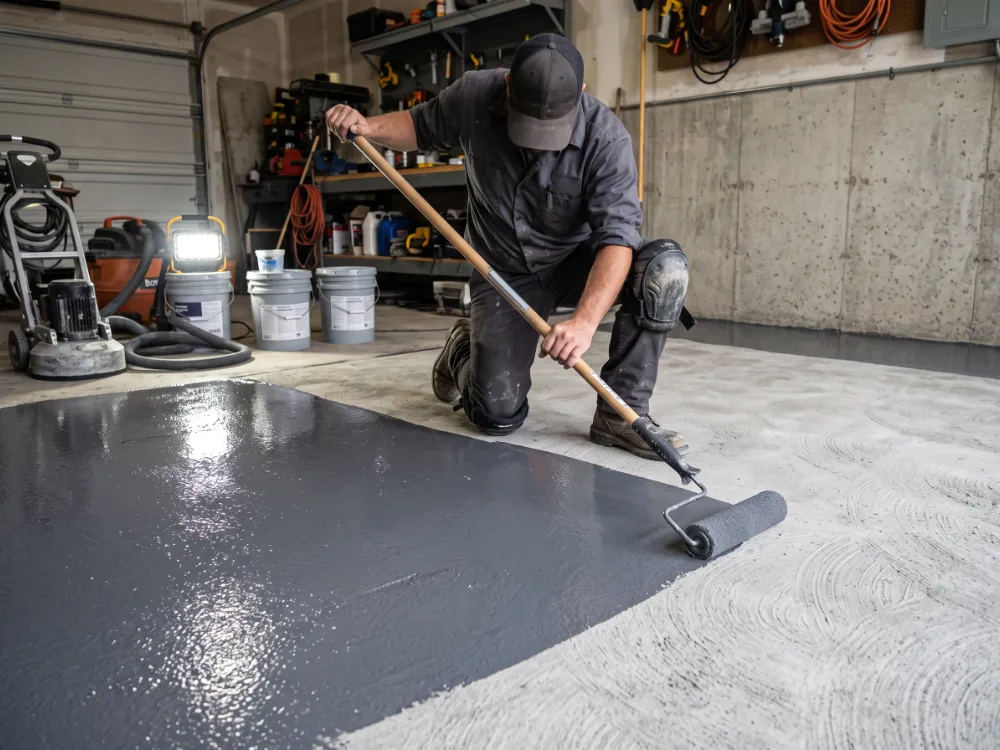
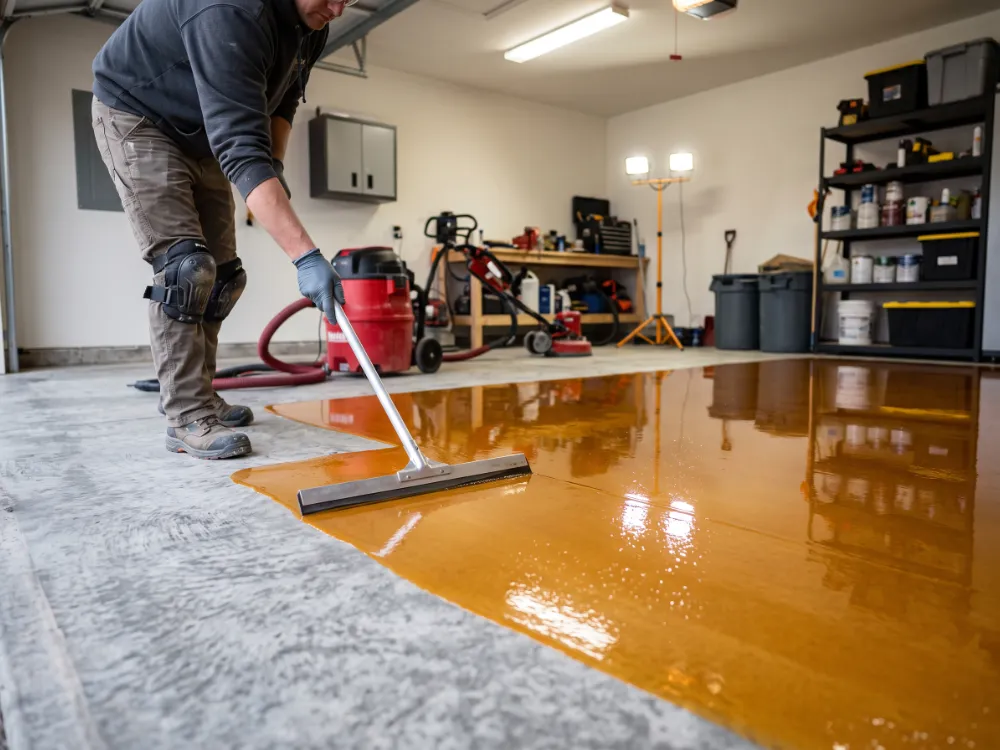
The residential system is three layers: a basecoat matched to your slab, a full-rejection flake broadcast, and a UV-stable polyaspartic topcoat. Because polyaspartic sets in 30 to 60 minutes, those layers stack in hours instead of days — grinding in the morning, basecoat by midday, flakes into the wet coat, scrape and vacuum, topcoat by afternoon.
You walk on the floor that evening and park on it in about a day. For a working garage, a shop that cannot close or a rental turnover on a deadline, that speed is the whole argument — with none of the durability trade-offs that used to come with fast floors.
Two Ways to Build It — Your Slab Decides
The same three-layer floor can be built two different ways, and the difference is invisible on the surface but critical underneath:
- Moisture-barrier build — a moisture-vapor-barrier epoxy basecoat goes down first, then the flake broadcast, then the polyaspartic topcoat. This is the default for slabs on grade, older concrete and any floor that tests damp: the epoxy layer blocks ground moisture that would otherwise push the coating off.
- Full-polyaspartic build — a pigmented polyaspartic basecoat replaces the epoxy entirely, so every layer in the floor is polyaspartic. It is the fastest possible install, but it is reserved for concrete that tests dry, because pure polyaspartic will not tolerate rising moisture.
This is why the moisture test comes first. A company with one recipe will sell you that recipe regardless of what your slab says — we build the version your concrete can actually hold.
Built for Southern California Sun
Most coating failures in this region are not traffic — they are sunlight. Standard epoxy ambers visibly within a year on a sun-struck floor, and the west-facing half of a garage can end up a different color than the shaded half. Polyaspartic's aliphatic structure is immune to that chemistry: no yellowing, no chalking, no gradual dulling.
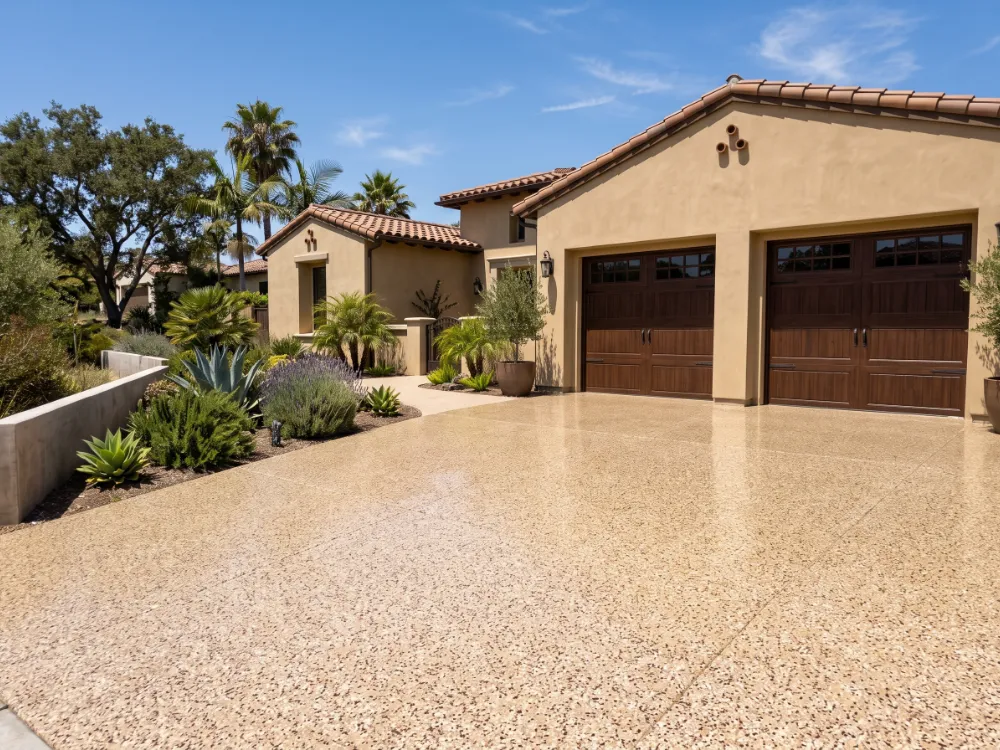
That stability is why every system we install — flake, solid or metallic, indoors or out — finishes under a polyaspartic wear layer, and why the sun-baked driveways and patios of Los Angeles and San Diego are exactly where this resin earns its reputation.
Advantages of Polyaspartic Coatings
Speed without compromise: a floor that installs in one day, ignores the sun for decades and comes from a single company that manufactured the resin, ground the slab, built the system and stands behind all of it — with a limited lifetime warranty on residential installations.
Cured in Hours, Not Days
Layers recoat in under an hour and the finished floor takes foot traffic the same evening — a working garage is back to work in about 24 hours.
A Finish That Never Yellows
Aliphatic chemistry is UV-stable for life: the color and gloss you approve on install day survive direct Southern California sun without ambering.
One Manufacturer, One Warranty
We manufacture the coating, install it and warranty it — limited lifetime on residential floors, three years on commercial and outdoor work.
The Full-Polyaspartic System
When a slab tests dry, the entire floor can be built from one chemistry: a pigmented polyaspartic basecoat wets into the ground concrete, the flake broadcast lands in it while it is still open, and the clear polyaspartic topcoat locks everything down. No epoxy anywhere in the build.
The payoff is the fastest, most flexible floor we install — every layer cures at polyaspartic speed and moves with the slab as one material. The catch is the qualifier: this build has no defense against ground moisture, which is precisely why it is only offered after your concrete has passed a moisture test, never as a one-size-fits-all pitch.
Polyaspartic vs Epoxy — an Honest Comparison
We manufacture both resins, so we have no horse in this race. Epoxy builds thicker per coat, tolerates slab moisture better and costs less — it remains the right body for high-build solid-color floors, moisture barriers and industrial systems. Polyaspartic cures faster, flexes with the concrete, and owns every situation where UV exposure or downtime matters.
In practice the best floors use each where it is strongest: an epoxy moisture barrier under a polyaspartic wear surface, or a full-polyaspartic build where the slab allows it. Anyone selling one resin as universally superior is selling what they stock — we spec what your floor needs.
Beyond the Garage
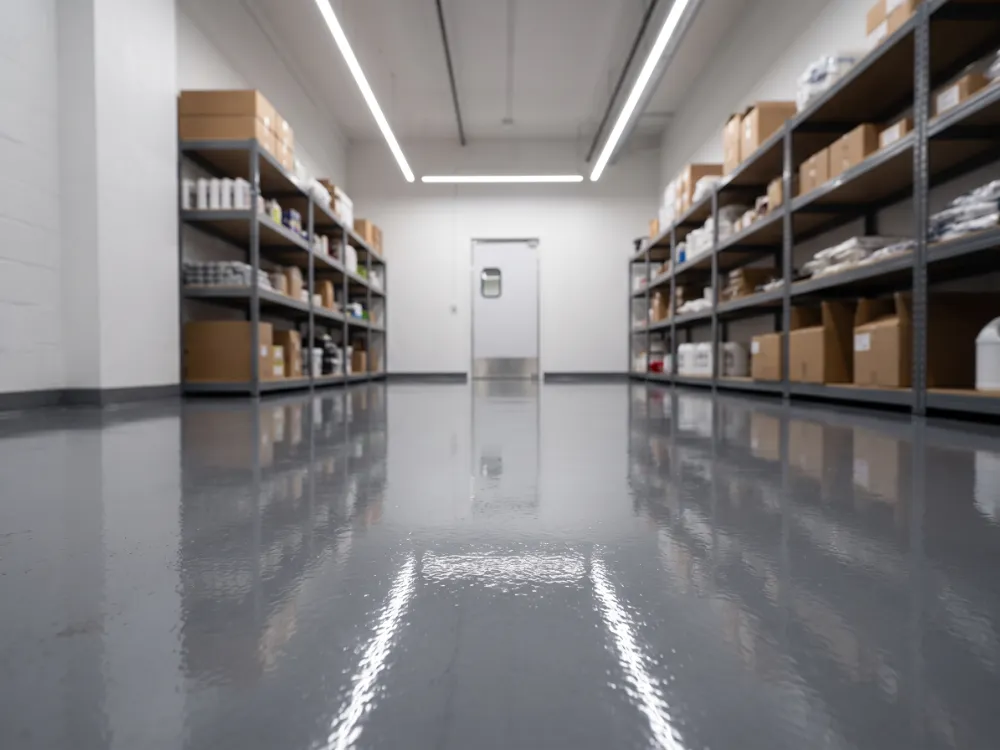
Polyaspartic's cure speed makes it the low-downtime answer for commercial spaces — retail back-of-house, showrooms and shop floors that can be coated overnight and open the next morning. The same fast turnaround that spares a homeowner a week without a garage spares a business a week of lost trade.
Outdoors it anchors our five-layer exterior system for driveways, patios, pool decks and balconies: moisture vapor barrier, pigmented polyaspartic basecoat, flake broadcast, polyaspartic topcoat and a final urethane topcoat with slip-resistant additive. Sun, sprinklers and hundred-degree summers are the design brief, not the failure mode.
Frequently Asked Questions
What is a polyaspartic floor coating?
Polyaspartic is an aliphatic polyurea — a resin engineered to cure fast, stay flexible and shrug off sunlight. Applied over prepared concrete it forms a dense, non-porous film that resists stains, abrasion and UV fading, which is why it has become the topcoat of choice for garage floors and outdoor concrete.
How is polyaspartic different from epoxy?
Epoxy cures slowly into a rigid, thick film and can yellow in direct sun. Polyaspartic cures within hours, stays slightly flexible so it moves with the slab, and is UV-stable for life. We install both, in the same system: epoxy where its build and moisture tolerance help, polyaspartic where speed and sunlight matter.
How can you finish a garage floor in a single day?
Polyaspartic chemistry sets in 30 to 60 minutes, so each layer of the three-layer system — basecoat, full flake broadcast, topcoat — can follow the previous one the same day. We diamond-grind in the morning, coat through midday and you typically walk on the floor that evening and park on it in about 24 hours.
What are the two ways to build the three-layer system?
Either a moisture-vapor-barrier epoxy basecoat followed by flakes and a polyaspartic topcoat, or a full-polyaspartic build where a pigmented polyaspartic basecoat replaces the epoxy entirely. The full-polyaspartic version is reserved for slabs that test dry, because pure polyaspartic will not tolerate ground moisture pushing up through the concrete.
When is a moisture barrier required?
Whenever testing shows vapor rising through the slab — common in older Southern California homes, slabs on grade without vapor barriers underneath and any concrete with a history of dampness. In those cases the first layer must be a moisture-barrier epoxy basecoat; skipping it is how coatings blister and peel.
Will a polyaspartic floor yellow in the sun?
No. Polyaspartic is an aliphatic chemistry, meaning its molecular structure does not react to ultraviolet light. Colors and clear coats hold their appearance through years of direct sun, which is why we use polyaspartic topcoats on driveways, patios and pool decks as well as garages that face south.
Does polyaspartic resist hot-tire pickup?
Yes. Hot-tire pickup happens when heat from tires softens a cheap coating and peels it away. A properly ground floor with a penetrating basecoat and a polyaspartic wear layer forms a bond and a film hardness that hot tires cannot separate — and our residential installations carry a limited lifetime warranty against exactly that failure.
Are polyaspartic floors slippery?
A smooth, high-gloss coating can be slick when wet, so we build traction into the system: a full flake broadcast leaves a subtle orange-peel texture, and where floors see water regularly we add a slip-resistant additive to the topcoat. You choose the balance of texture and sheen before we install.
How long does a polyaspartic floor last?
Installed over diamond-ground concrete with the correct basecoat, a polyaspartic system is a decades-long floor. The wear layer resists abrasion, chemicals and UV, and because we manufacture the coatings we install, residential floors are backed by a limited lifetime warranty rather than an installer pointing at a product label.
Can polyaspartic be used outdoors?
It is the best resin for outdoor concrete. For driveways, patios, pool decks and balconies we install a five-layer exterior flake system — moisture vapor barrier, pigmented polyaspartic basecoat, flake broadcast, a polyaspartic topcoat and a final urethane topcoat with slip-resistant additive — engineered for sun, sprinklers and temperature swings.
Where Polyaspartic Fits in Our Work
Polyaspartic is the topcoat over nearly everything we install — explore the systems it protects and the surfaces it serves.
Garage floor coating · Epoxy flake flooring · Polyurea garage floor coating · Driveway coating · Patio coating · Pool deck coating · Commercial & industrial flooring · Color chart
FREE onsite Estimate
5 stars rated company
Get it done right the first time...


