
Waterproof Deck Coating Specialists
Balcony & Deck Waterproofing
The right system for your substrate — plywood or concrete — finished as beautifully as you want
Request a Free Estimate
Balcony & Deck Waterproofing
A balcony is a roof you walk on, and waterproofing one is a specified system, not a coat of deck paint. The right system depends on one question first: what is the deck built from? Plywood walking decks — the standard construction over living space in Southern California — take lath-reinforced acrylic systems engineered for wood's movement, with ICC certification and a 1-hour fire rating. Concrete decks take cementitious, fiberglass-mat or moisture-cured urethane systems built for mineral substrates. We install both families, matched to your deck after inspection.
Top Epoxy Flooring waterproofs balconies, walkways, stairs and rooftop decks across Los Angeles, Orange, Ventura, San Bernardino, Riverside and San Diego counties — from single homes to the multi-building repair projects that follow SB326 and SB721 inspections. System warranties run up to 20 years depending on the build, backed by our own workmanship on every installation.
And when the waterproofing is done, the deck doesn't have to look industrial: our decorative flake finish — a polyaspartic basecoat, flake broadcast and two topcoats — goes over the completed system as a wear surface. To be precise about what that finish is: it is the appearance and traction layer only. The waterproofing lives in the system beneath it, which is why the finish needs no moisture barrier of its own.
What Goes Into Every Waterproof Deck

Substrate-Matched Systems
The system is matched to the substrate — lath-reinforced acrylic builds for plywood decks, cementitious, fiberglass-mat or urethane systems for concrete.

Metal & Fiber Lath Reinforcement
Plywood systems are reinforced with metal lath — and fiber lath or fiberglass where structure movement demands extra crack resistance.

ICC-Rated, 1-Hour Fire Systems
The AL-family plywood systems are ICC-certified with a 1-hour fire rating — a code-level credential for multi-unit buildings.

Seamless Elastomeric Membranes
Every system cures into a seamless elastomeric membrane that moves with the building instead of cracking against it.

Decorative Flake Finish Option
Optional decorative finish: polyaspartic basecoat, flake broadcast and two topcoats over the completed waterproofing — the look, not the protection.

Slip-Resistant Wear Surface
Finished surfaces carry slip-resistant texture — in the system itself and in the flake finish when you choose it.
Plywood Decks: Lath-Reinforced Systems
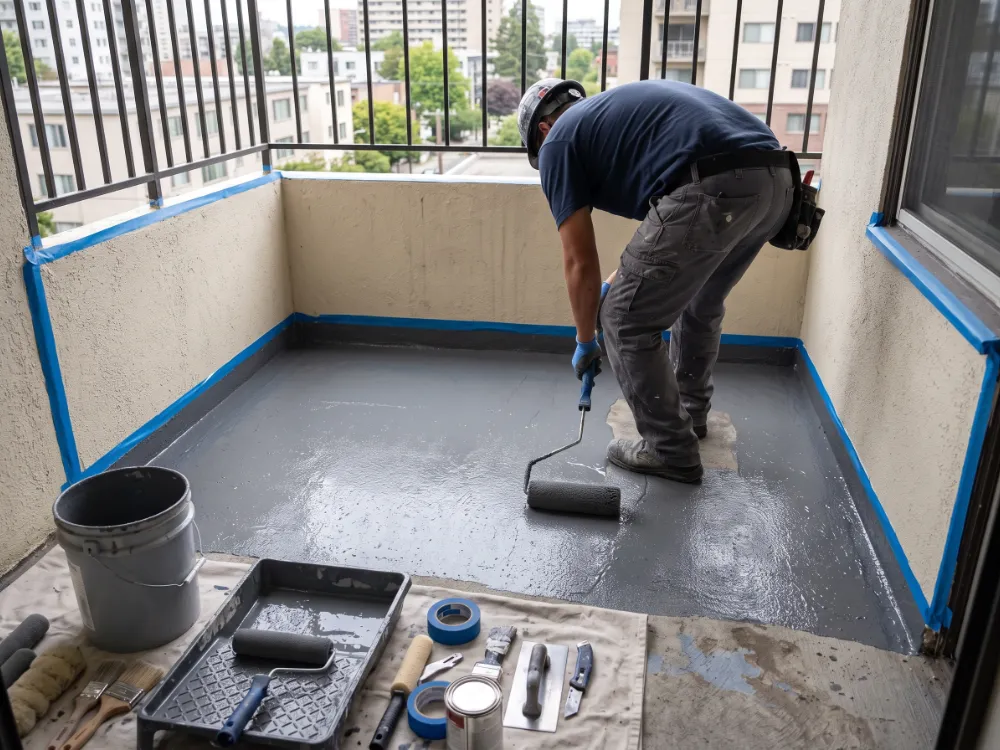
Most Southern California balconies are plywood walking decks over living space — the construction SB326 and SB721 exist to protect. Ours get the lath-reinforced acrylic family: AL, the industry-standard metal-lath system, ICC-certified with a 1-hour fire rating, built for high-traffic balconies and stairways; AL-Flex, which adds fiberglass and resin for buildings on settling or soft soil where crack resistance is the priority; and AMAC, integrating metal and fiber lath for the heaviest duty — carrying up to a 20-year system warranty.
Lath reinforcement is the point: it turns the coating into a reinforced membrane that spans plywood's seams and seasonal movement instead of telegraphing them.
Concrete Decks: Three Ways to Waterproof
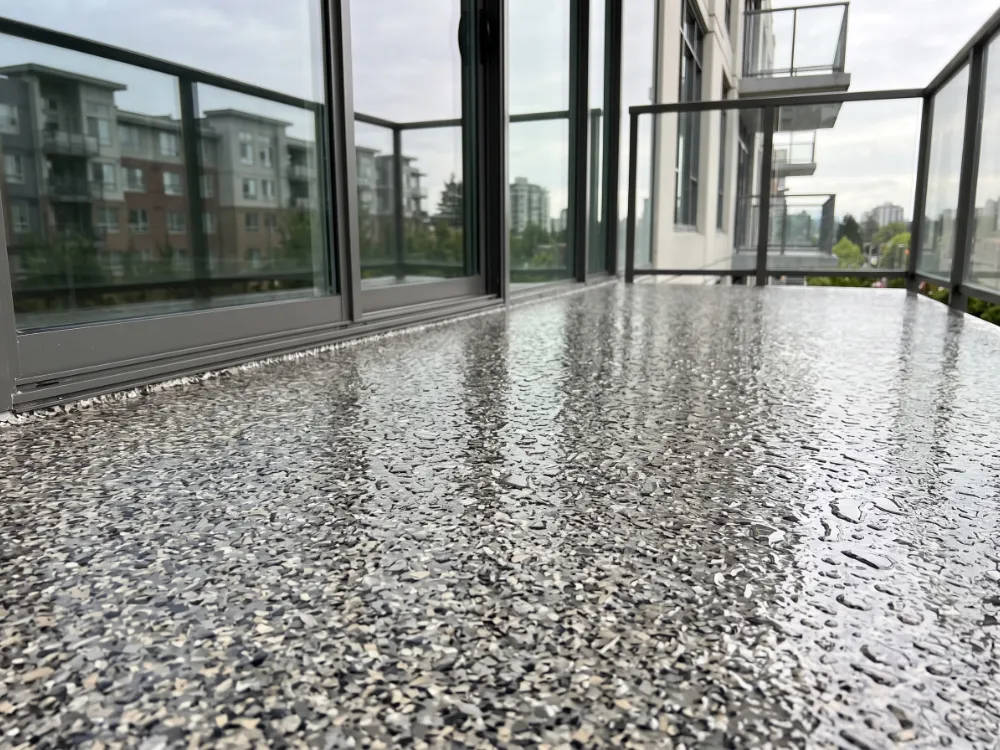
Concrete balconies, corridors and plazas take a different family. The MC system is fiber-reinforced and cementitious: four water-based acrylic applications bonded with an acrylic emulsion, sealed under a 100% acrylic topcoat — extremely flexible, with 5 and 10-year warranty options. The FM system waterproofs with a fiberglass mat and four acrylic coats — the economical build, easy to repair, available heat-reflective. The LD-2000 is a moisture-cured elastomeric urethane laying down a monolithic, chemical- and UV-resistant surface on accelerated two-day cycles — the answer for plazas, sun decks and parking structures that cannot stay closed.
Which one fits is an inspection call — exposure, traffic, movement and schedule all vote.
Built for California's Balcony Laws
SB721 (apartments, six-year cycles, deadline extended to January 1, 2026) and SB326 (condos and HOAs, nine-year cycles, first deadline January 1, 2025) put every elevated balcony, walkway and stair on mandatory inspection — because water intrusion into wood framing was collapsing decks that looked fine from above. When an inspection flags a deck, the structural repair is half the job; the other half is a waterproofing system that keeps the next report clean.
That second half is ours: code-recognized, fire-rated systems installed after the repairs, phased so residents keep their access routes on multi-building projects.
Advantages of Our Deck Systems
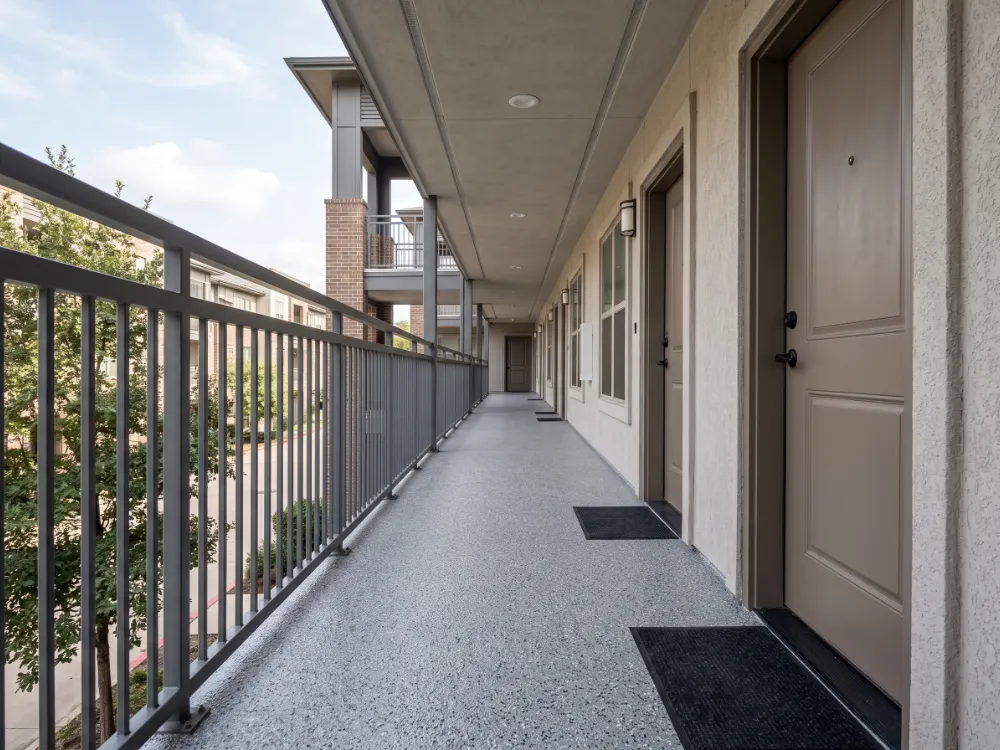
Real waterproofing, specified to the substrate: ICC-rated lath systems on plywood, proven cementitious and urethane builds on concrete, system warranties up to 20 years — and a decorative flake finish available on top, so protection never has to look like a repair.
Waterproofing First, Beauty Second
Substrate-matched engineering — plywood and concrete get the systems built for them, never one recipe for every deck.
Inspection-Repair Ready
Code-level credentials: ICC certification and 1-hour fire ratings on the plywood systems multi-unit buildings need.
One Company, One Warranty
System warranties up to 20 years, plus our workmanship — membrane and finish from one responsible company.
The Decorative Flake Finish — the Look, Not the Waterproofing
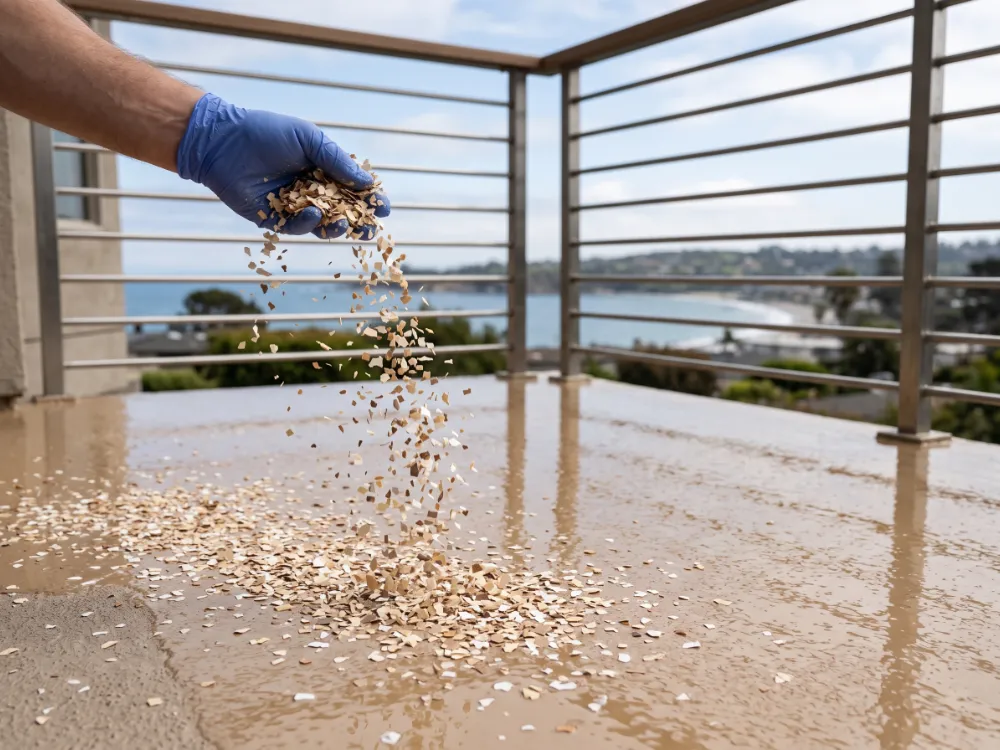
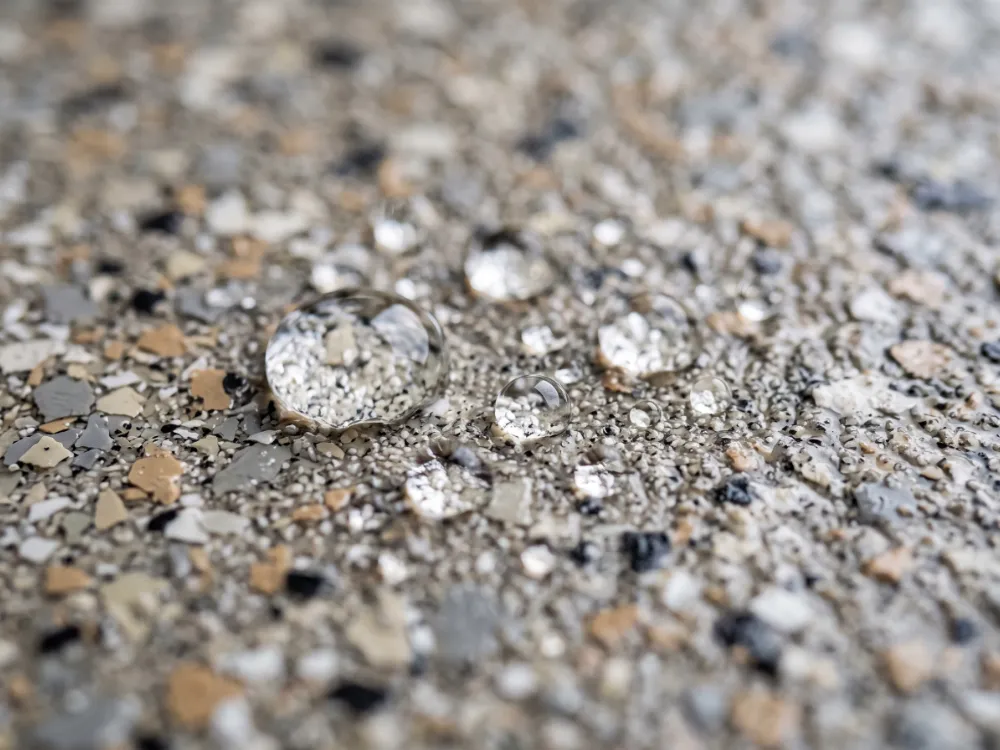
Waterproof decks don't have to look utilitarian. Over the completed system we can install our decorative flake finish: a polyaspartic basecoat, a full flake broadcast in any blend on the color chart, and two protective topcoats. It reads like our garage and patio floors — decorative, uniform, slip-resistant.
One distinction matters enough to repeat: this finish is the wear surface only, never the waterproofing system itself. It contains no moisture barrier because it needs none — the membrane beneath it is doing the waterproofing. Anyone selling flakes-over-primer as "deck waterproofing" is selling a floor finish where a building code system belongs.
Balconies, Walkways, Stairs and Rooftops
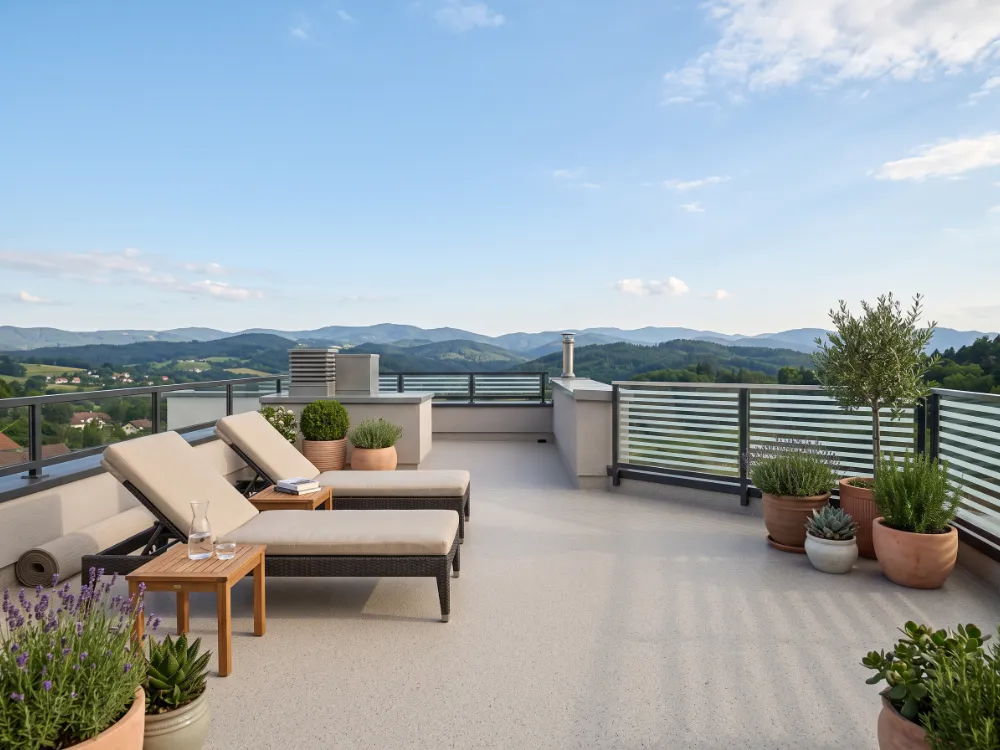
The same substrate logic covers every elevated surface a building owns: private balconies, shared corridor walkways, exterior stairs and landings, and rooftop decks and terraces. Plywood surfaces get the lath-reinforced builds; concrete gets its three systems; and heat-reflective options keep sun-baked rooftops walkable.
For buildings unifying multiple surfaces, one system family with one finish palette keeps the whole property consistent — and one vendor responsible for all of it.
For HOAs and Property Managers
Multi-unit deck work is its own discipline: inspection reports to translate into scope, residents who still need their doors, boards that need documentation. We scope from the inspector's findings, phase buildings so access never fully closes, and hand the association a clean file — substrates, systems installed, warranties and dates.
When the next inspection cycle arrives, a deck wearing an ICC-rated, warrantied system is a line item, not a finding.
Frequently Asked Questions
Which waterproofing system does my deck need?
Your substrate decides. Plywood walking decks — the most common balcony construction in Southern California — take lath-reinforced acrylic systems: AL, AL-Flex or AMAC. Concrete decks take the MC fiber-reinforced cementitious system, the FM fiberglass-mat system or the LD-2000 moisture-cured urethane. We inspect the deck, its movement and its exposure, then match the system — never one recipe for every deck.
What are the plywood deck systems?
Three lath-reinforced builds. AL combines metal lath with a series of acrylic applications — the ICC-certified, 1-hour fire-rated standard for balconies and stairways. AL-Flex adds fiberglass and resin for decks on settling or soft-soil structures that need extra crack resistance. AMAC integrates metal lath with fiber-lath technology and carries up to a 20-year system warranty.
What are the concrete deck systems?
MC is a fiber-reinforced cementitious system: four water-based acrylic applications bonded with an acrylic emulsion and sealed under a 100% acrylic topcoat, with 5 and 10-year warranty options. FM waterproofs with a fiberglass mat and four acrylic coats — economical, easy to repair, and available heat-reflective. LD-2000 is a moisture-cured elastomeric urethane that installs on accelerated two-day cycles — the pick for plazas, patios and parking structures.
Can the deck be finished with your decorative flakes?
Yes — and this is worth stating precisely: the flake finish is a decorative wear surface over the waterproofing, never the waterproofing itself. Over the completed system we apply a polyaspartic basecoat, broadcast the flakes, and seal them under two topcoats. No moisture barrier is used in this finish because none is needed — the waterproof system beneath is already doing that job. The flakes are the look; the system underneath is the protection.
What do California's balcony laws require?
SB721 puts apartment buildings of three or more units on a six-year inspection cycle (initial deadline extended to January 1, 2026); SB326 puts condominiums and HOAs on a nine-year cycle (first deadline January 1, 2025). Both target water intrusion into elevated wood structures — exactly what these waterproofing systems exist to stop. We handle the recoat/waterproofing scope after any structural repairs an inspection requires.
How do I know if my balcony or deck is leaking?
Water staining or rust streaks on the underside, soft or spongy spots underfoot, peeling surface coatings, cracks or ponding, and staining near the door threshold inside. Any of these means water is getting past the surface — and on a plywood deck, the structure beneath is on the clock.
Is the finished surface slip-resistant?
Yes, in both directions you can take it: the waterproofing systems themselves finish with slip-resistant texture, and the optional decorative flake finish adds its own — the flake broadcast's natural grip plus texture in the final topcoat. Wet balconies, stairs and walkways keep their footing.
Do these systems carry a fire rating?
The plywood systems — AL, AL-Flex and AMAC — are ICC-certified with a 1-hour fire rating, which matters on multi-unit buildings where exterior elevated elements are part of the building's fire path. It is one more reason deck coatings are a specified system, not a bucket of deck paint.
How long is a balcony out of service?
Typically two to four days depending on the system — the LD-2000 urethane runs accelerated two-day cycles, while lath-reinforced builds need their cure stages. On multi-unit projects we phase walkways and units so residents keep access throughout.
What warranty applies?
System warranties run with the build: up to 20 years on AMAC plywood systems and 5 or 10-year options on the MC concrete system — plus our own workmanship warranty on the installation. One company installs the waterproofing and the finish, so there is no gap between the membrane's promise and the surface you walk on.
The Rest of the Outdoor Work
Deck waterproofing is the engineered end of our outdoor family — the decorative coatings live on their own pages.
Pool deck coating · Patio coating · Driveway coating · Epoxy flake flooring · Polyaspartic floor coating · Epoxy floor repair · Commercial & industrial flooring · Color chart
FREE onsite Estimate
5 stars rated company
Get it done right the first time...


