
Outdoor Living Surface Specialists
Patio Coating
Your backyard's living room deserves a real floor — sealed, slip-resistant and sun-proof
Request a Free Estimate
Patio Coating
In Southern California the patio is not seasonal — it is the second living room, working ten months a year under dinner parties, planters, barbecue grease and unbroken sun. Bare concrete answers that duty by cracking, staining and growing moss shadows in the sprinkler line. A proper coating system turns the same slab into a finished outdoor floor that rinses clean and keeps its color for years.
Top Epoxy Flooring coats patios across Los Angeles, Orange, Ventura, San Bernardino, Riverside and San Diego counties with the same five-layer outdoor system we build on pool decks and driveways: moisture vapor barrier, pigmented polyaspartic basecoat, full flake broadcast, polyaspartic topcoat and a urethane wear coat with slip-resistant additive. Every layer is manufactured in-house, VOC-free, and covered by a three-year outdoor warranty.
Most patio-coating advice online comes from DIY kits that quietly skip the two questions that decide whether an outdoor coating survives: what stops ground moisture from underneath, and what keeps the sun from destroying it from above. Our answers are layers one and five — and they are explained in full below.
What Goes Into Every Patio

Diamond Grinding Preparation
Diamond grinding strips old paint, sealers and stains to sound concrete, and cracks and spalls are repaired flush before any coating.

Moisture Vapor Barrier On-Grade
Patios sit on grade, so the first layer is a moisture vapor barrier — the defense against ground moisture wicking up through the slab.

Pigmented Polyaspartic Basecoat
A pigmented polyaspartic basecoat bonds the system's color and body into the prepared surface, flexible through seasonal swings.

Full Flake Broadcast
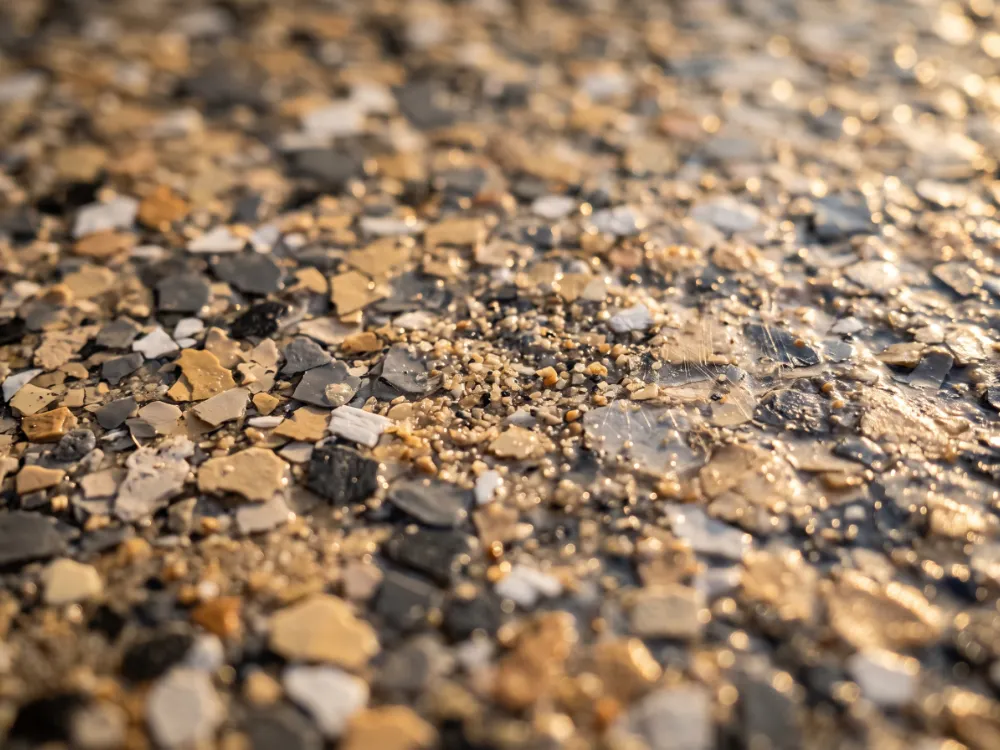
The full flake broadcast builds texture and looks — blends chosen to pair with your stucco, pavers and planting.

Urethane Slip-Resistant Topcoat
The final urethane topcoat carries slip-resistant additive — sure footing for wet feet, party shoes and sprinting dogs.

Mold & Mildew Resistant Surface
The sealed surface gives mold, moss and mildew nothing to root into — the green shadow on shaded concrete simply can't form.
Five Layers for Outdoor Life
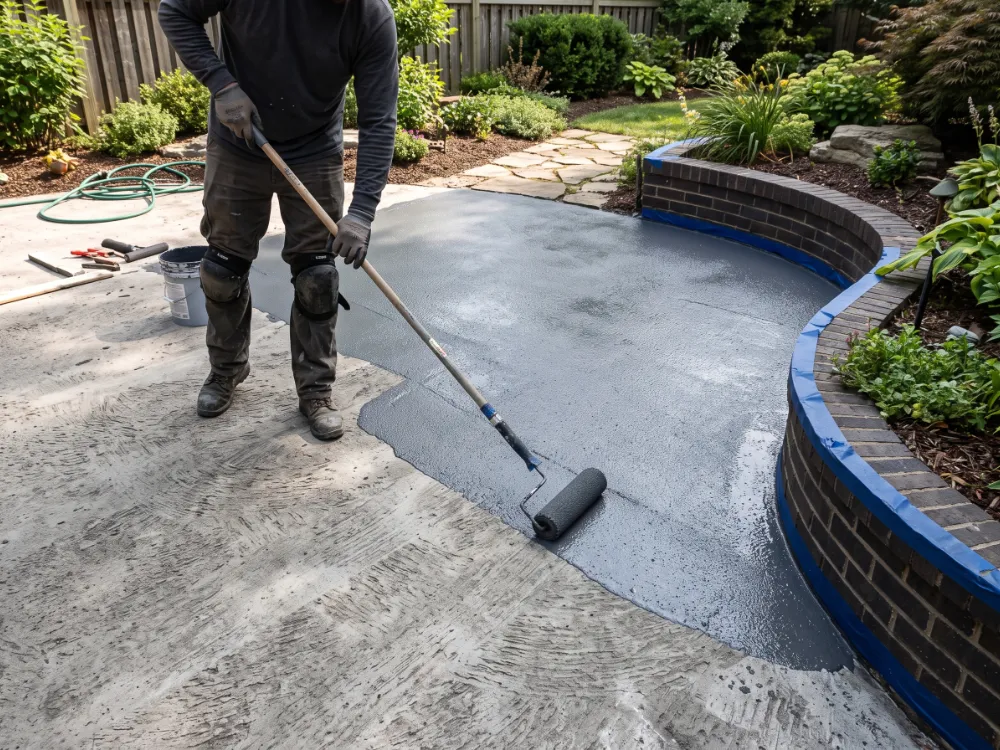
The patio gets our full exterior stack — moisture vapor barrier, pigmented polyaspartic basecoat, flake broadcast, polyaspartic topcoat and slip-resistant urethane wear coat. Bottom layer against the ground, top layer against the sky, decoration safely in the middle.
Deck paints and DIY kits ask one film to survive soil moisture, UV, furniture and pool splash simultaneously — and their peeling is the most common before-photo in our estimate folder. The layered system endures because each material only does the job it was engineered for.
Uncovered and Unbothered
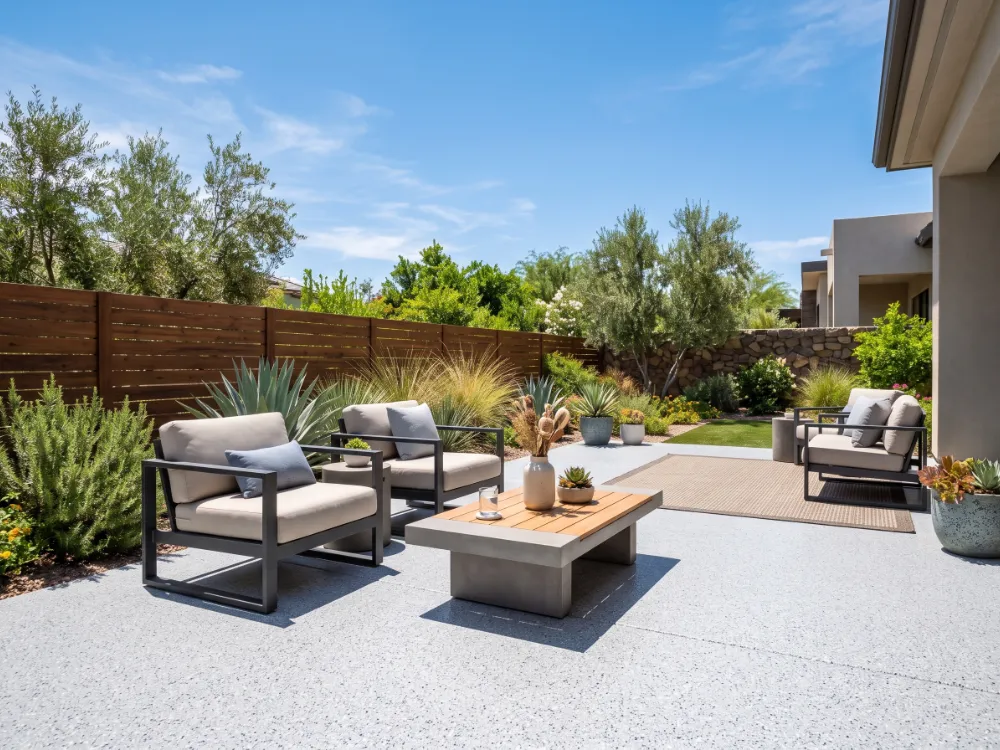
An uncovered patio takes more UV annually than almost any floor a home owns. That exposure chalks acrylic sealers into dust and turns interior-grade epoxy amber within a season — the two failures that gave 'painted patios' their reputation.
Our exposed layers are aliphatic polyaspartic and urethane: chemistries that do not react to sunlight at all. Full-sun patios in the Valley and the Inland Empire keep their chosen blend summer after summer, with no maintenance recoat propping up the color.
Traction for Barefoot Territory
Patios live wet — sprinkler overspray, hose-downs, spilled drinks, the splash zone of every kiddie pool — and they are barefoot territory all summer. So grip is standard: the flake broadcast's fine orange-peel texture plus a slip-resistant additive locked into the urethane wear coat.
The result holds a wet foot confidently but stays comfortable to sit and kneel on — texture calibrated for skin and dinner-party heels alike, not the aggressive grit of a boat deck.
Advantages of Our Patio System
An outdoor floor that finally matches how the space is used: sun-proof color, wet-weather grip, spill-proof entertaining and a hose for maintenance — five manufactured-in-house layers over a properly repaired slab, warrantied for three years outdoors.
An Outdoor Room, Finished
UV-stable polyaspartic and urethane layers keep the blend true through full-sun summers — no fade, no amber, no chalk.
Ground Moisture, Solved
Slip-resistant texture as standard turns the sprinkler zone and poolside path into sure footing, barefoot or not.
Sun-Proof by Chemistry
Non-porous surface: grill grease, wine and planter rings rinse off instead of soaking in. Maintenance is a hose.
Tired Slabs Welcome
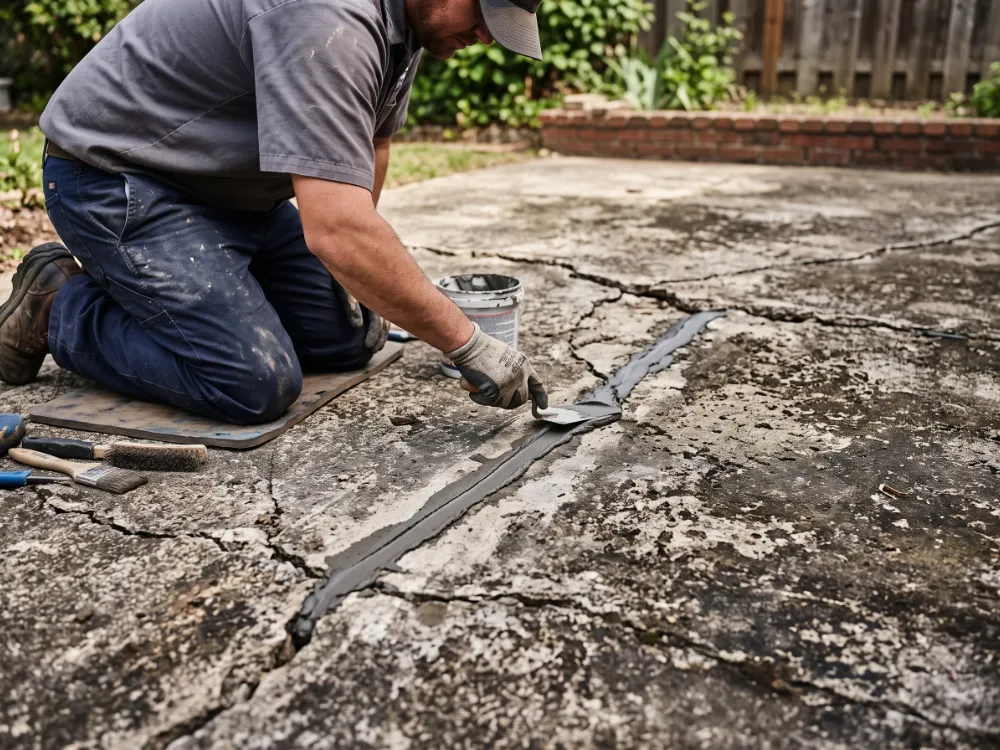
The typical patio we coat has history — hairline cracks from decades of sun cycles, spalled corners, paint someone tried in 2009, moss in the shade line. All of it is addressed first: coatings ground off, cracks routed and filled, spalls patched level, the slab unified into one sound plane.
Then the broadcast erases the evidence. Repair lines vanish under uniform flake texture, and the patio that looked beyond saving reads as brand-new hardscape at a fraction of demolition-and-repour cost.
Blends That Belong in Your Yard
The flake stage is where the patio joins the design of the house:
- Sand and adobe tones — the natural partners for stucco walls and clay pavers.
- Gray-white minerals — crisp against modern hardscape, steel and concrete planters.
- Warm earth mixes — forgiving of leaves, soil and dog traffic between sweepings.
- Custom blends — we manufacture the flake, so larger projects can match a specific palette.
Light blends also stay cooler underfoot in open sun — worth weighing for uncovered south-facing patios.
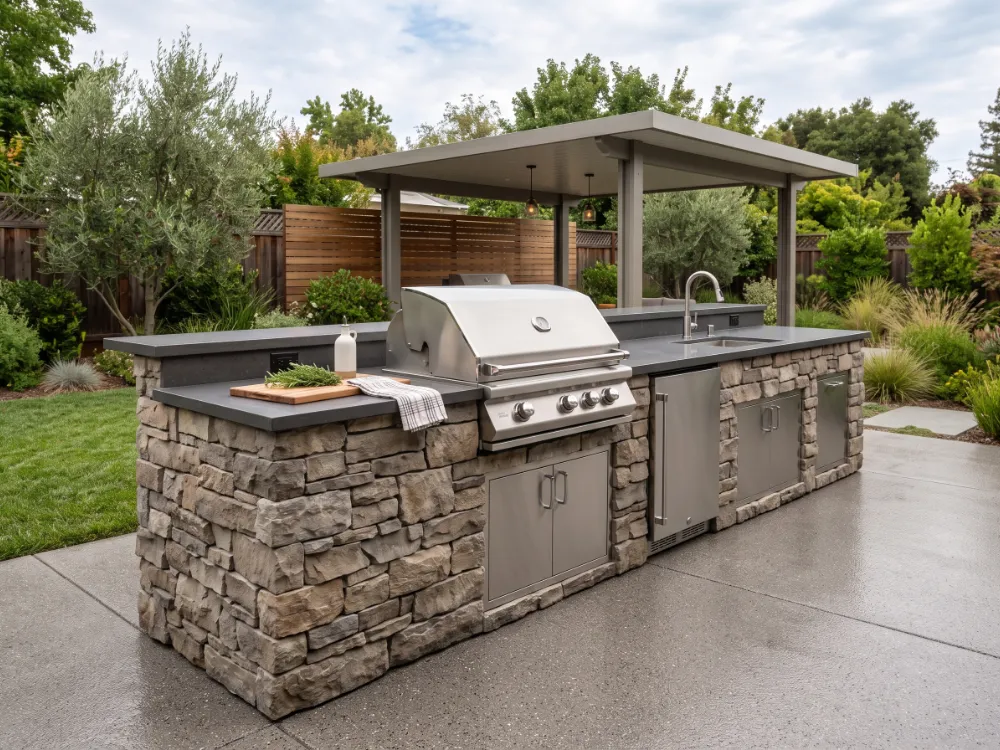
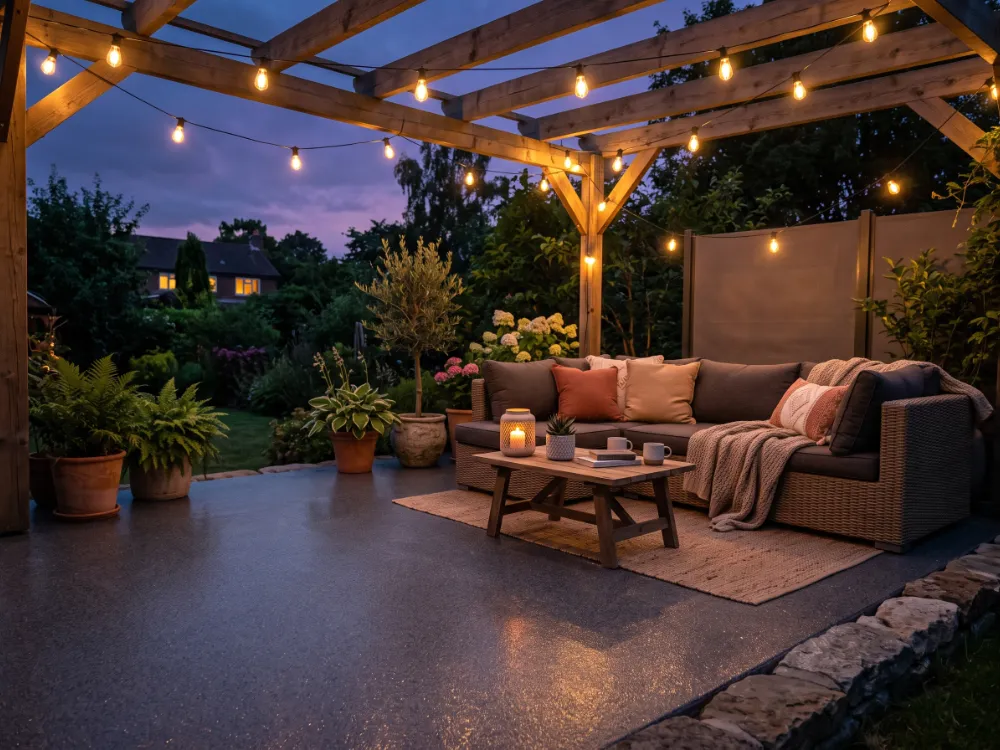
Evenings Are the Payoff
A coated patio earns its keep at golden hour: string lights and lanterns reflect in the satin surface, the space reads as a furnished room rather than a slab, and cleanup after guests is a five-minute sweep. For covered patios that open from the house, the same finish family can continue indoors, blurring the line the sliding door used to draw.
It is the least expensive room addition a Southern California home can make — because the room was already there, waiting under the weathered concrete.
Frequently Asked Questions
Will a coated patio fade or yellow in the sun?
Not with the right chemistry. Standard interior epoxy ambers quickly outdoors, which is why it never appears as a visible layer in our exterior work — the patio's exposed coats are UV-stable polyaspartic and urethane, aliphatic chemistries that simply do not react to sunlight. The color you choose is the color that stays.
Why does a patio need a moisture vapor barrier?
Because patios sit on grade, directly over soil, and ground moisture wicks up through the slab year-round. Coatings applied without a barrier get pushed off from below — the mystery blisters and peeling patches old painted patios always develop. Our system's first layer is the barrier, so the decorative layers never fight the ground.
Can you coat over an old painted or stained patio?
Yes — after the old surface comes off. Failed paint, flaking sealers and tired stains are diamond-ground away to sound concrete, cracks and spalls are repaired flush, and the system is built on a clean bond. Coating over a failing layer only inherits the failure, so grinding first is non-negotiable.
Is the surface slippery when wet — around sprinklers or after rain?
It is engineered not to be. The flake broadcast leaves a fine texture and the final urethane coat carries a slip-resistant additive as standard on outdoor work. Wet bare feet, party guests carrying plates and dogs at a sprint all hold their footing better than on smooth troweled concrete.
How does it handle furniture, planters and the BBQ?
Daily outdoor-living duty is the design brief. Dragged chairs and heavy planters ride on a sacrificial urethane wear layer; grill grease, wine and sunscreen sit on the non-porous film and rinse off. Planter rings and rust shadows — the tattoos of bare patios — cannot form on a sealed surface.
Can a cracked patio slab be coated?
Nearly always. Cracks are routed and filled, settled spalls patched level, and the slab ground to one plane before coating — then the flake broadcast hides every repair line under uniform texture. Only structural failure, like severe settling or heaving, calls for slab work beyond coating.
How long before we can use the patio?
Typically two to three days from grind to walkable cure. Foot traffic returns about a day after the final coat and furniture a day later. Fast-curing outdoor chemistry keeps the backyard closure short — and we schedule around the events on your calendar.
What colors and blends are available?
The full flake chart — sand and adobe tones that pair with stucco and pavers, gray-whites for modern hardscape, warm earth blends that hide leaves and dust between sweepings. Because we manufacture the flake and resin, larger projects can even match a custom palette to the house.
How do I clean and maintain a coated patio?
A hose or a broom covers the routine; a mop with pH-neutral cleaner handles the barbecue aftermath. There is no seasonal sealing, no scrubbing mildew out of pores — the surface is non-porous, so mold and moss have nothing to root into. Maintenance is genuinely the hose.
What warranty covers patio work?
Three years on all outdoor installations, covering the full five-layer system. We manufacture every coat we apply, so the material warranty and the workmanship warranty are the same signature — no product label to argue with if anything ever needs attention.
Finish the Whole Yard
The patio system is one face of our five-layer outdoor family — the rest of the exterior can match.
Pool deck coating · Driveway coating · Balcony & deck waterproofing · Epoxy flake flooring · Polyaspartic floor coating · Garage floor coating · Concrete resurfacing · Color chart
FREE onsite Estimate
5 stars rated company
Get it done right the first time...


