
Decorative Concrete Color Specialists
Stained Concrete Flooring
Color that becomes part of the concrete — variegated, permanent and impossible to peel
Request a Free Estimate
Stained Concrete Flooring
Staining is the one decorative concrete finish that adds nothing on top: the color happens in the slab itself. Acid stains react with the concrete's own minerals to produce mottled, marbled earth tones that read like aged stone; water-based stains deposit precise color into the surface pores for a more uniform, modern palette. Either way there is no film of color to chip or peel — just concrete, permanently transformed, under a renewable protective sealer.
Top Epoxy Flooring stains and seals concrete across Los Angeles, Orange, Ventura, San Bernardino, Riverside and San Diego counties, and brings something to it most staining outfits cannot: a diamond-grinding operation that preps slabs properly, a full bench of alternative systems for floors that should not be stained, and sealers matched to the room rather than whatever is on the truck. Materials are VOC-free and the advice is honest — staining is beautiful, and it is not right for every slab.
What follows covers both stain chemistries, where each shines, the preparation that decides the result, and the sealing choices that determine how the floor looks and lives for the next decade.
What Goes Into Every Stained Floor

Slab Evaluation & Test Patch
Every project starts with slab evaluation and real test patches on your concrete — stain results are slab-specific, so we prove the color before committing the room.

Diamond Grinding Preparation
Diamond grinding removes old coatings, adhesives and sealers so the stain can actually reach and react with the concrete.

Crack & Surface Repairs
Cracks and surface damage are repaired first, with honest guidance — patches take stain differently, and we say so before you choose.

Acid or Water-Based Stain
The stain goes down by sprayer and brush — reactive acid chemistry or precision water-based pigment, per the design.

Neutralize & Rinse
Acid-stained floors are neutralized and rinsed completely, so the reaction stops on schedule and the sealer bonds cleanly.

Protective Sealer Coat
A protective sealer — matte, satin or gloss, slip-additive optional — becomes the floor's renewable wear surface.
Acid Stain: Chemistry as Artistry
Acid staining is a controlled chemical reaction. Metallic salts in the stain react with the lime and minerals in your slab, and over hours the surface transforms — ochres, ambers, terracottas and browns blooming in variegated, marbled patterns dictated by the concrete's own history. The color penetrates roughly a sixteenth of an inch and becomes part of the slab: it cannot peel, because there is nothing on the surface to peel.
The trade-off is control. Every slab reacts differently, which is why the look is unrepeatable — and why our process starts with test patches on your actual floor, never a brochure promise.
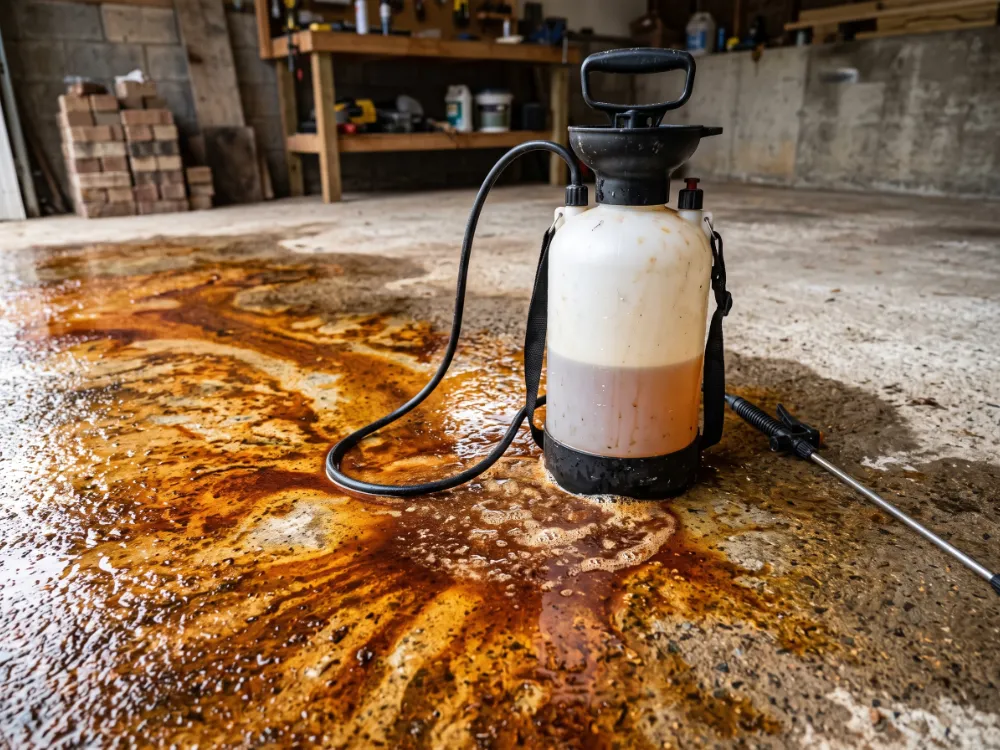

Water-Based Stain: Color With Precision
Where acid stain is a reaction, water-based stain is a decision: non-reactive pigments carried into the concrete's pores, delivering the color chosen — including the grays, charcoals, blues and greens acid chemistry cannot produce — with far greater uniformity from wall to wall. It is the choice for modern interiors that want stained concrete's honesty without its unpredictability.
Water-based systems are also low-odor and VOC-free, install faster (no neutralizing step), and layer well — subtle two-tone treatments and border work are all in reach.
Inside the Home
Stained and sealed concrete is the original California modern floor: living rooms and dining spaces with the slab's own character on display, warmed by earth tones or cooled into soft gray, finished satin so lamplight pools rather than glares. It pairs naturally with wood, leather and plants — the organic look epoxy deliberately covers, staining deliberately celebrates.
Underfoot it lives like tile without grout: dust-mop, damp-mop, and a rug where comfort wants one. The sealer takes the wear and is renewed in an afternoon, years apart.
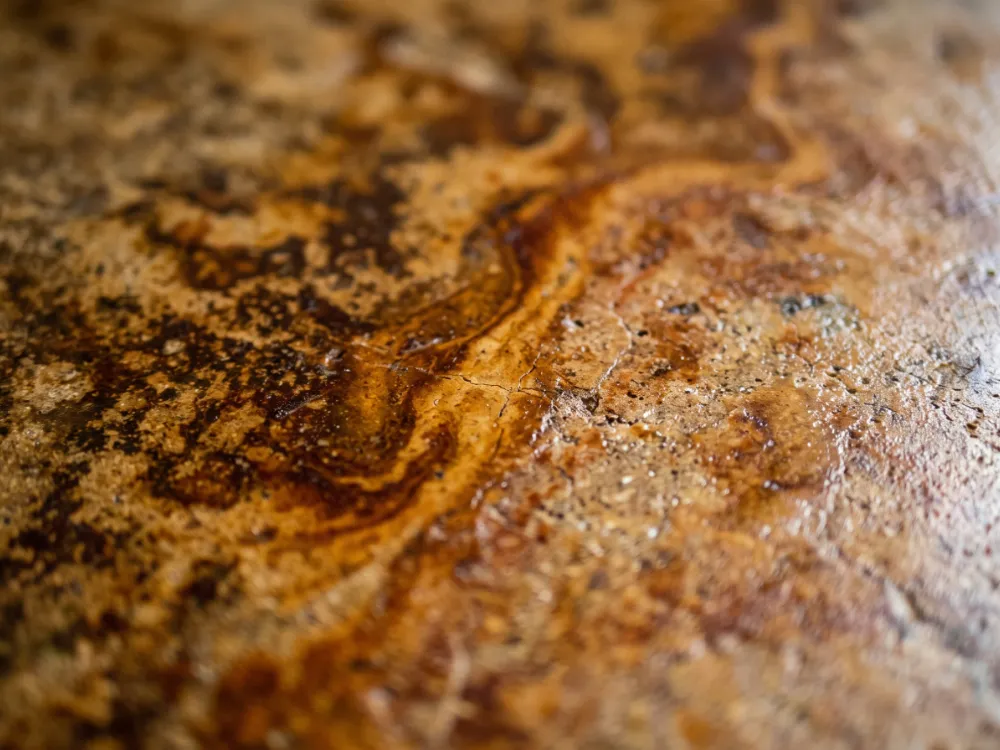
Advantages of Stained Concrete
Permanent, unrepeatable color in the concrete itself — no film to peel, a renewable sealer as the only wear item, and preparation by a company with the grinding fleet to do it right and the alternative systems to be honest when staining is the wrong call.
Color That Cannot Peel
The color is in the slab, not on it — it cannot chip, peel or delaminate, ever.
Every Slab Stains Differently
Acid variegation makes each floor one of a kind; water-based systems deliver exact, uniform color when the design demands it.
Honest System Advice
Diamond-ground preparation and matched sealers — plus honest advice from a company that installs every alternative too.
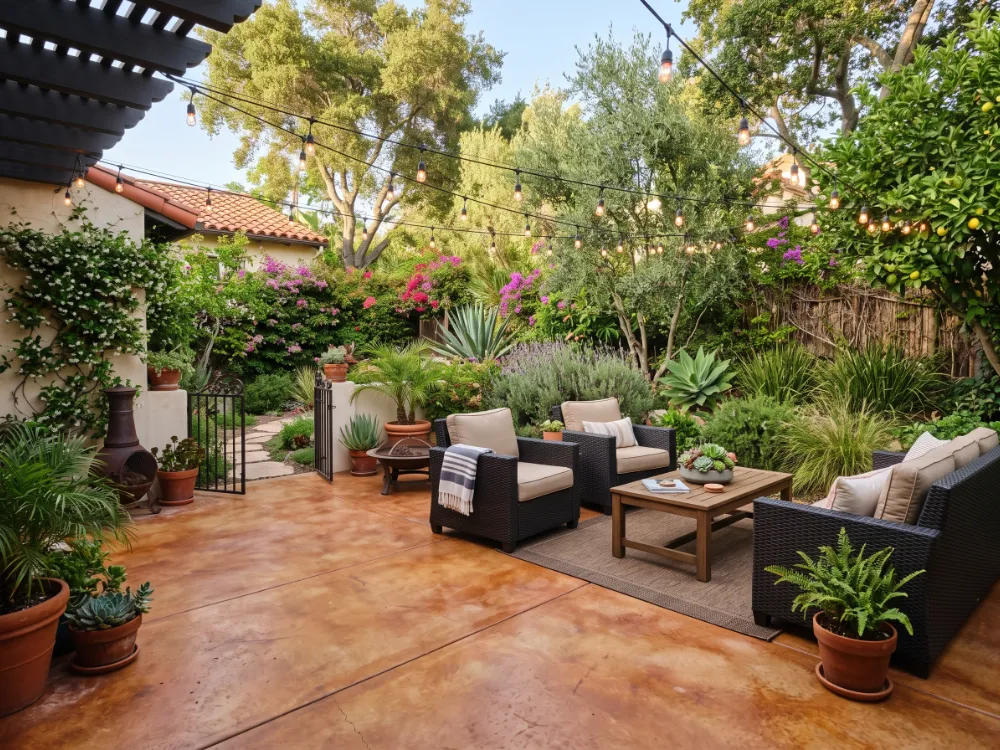
Stained Patios and Outdoor Concrete
Outdoors, stain gives patios, walkways and porches the look of aged terracotta or quarried stone at a fraction of hardscape cost — and because the color is in the concrete, sun and traffic cannot wear it off. The exterior sealer does the protecting: UV-stable, renewable, and specified with a slip additive wherever sprinklers and pool splash visit.
Earth tones weather most gracefully in full Southern California sun, developing character the way natural stone does rather than fading the way paint does.
Preparation Decides the Result
Staining is transparent honesty — whatever the slab carries shows through the color. So the work begins subtractively: old sealers, paints and adhesives diamond-ground away, cracks addressed, oil contamination evaluated, and test patches applied where the finished floor will actually live. The patches answer the only question that matters: what will your concrete do?
And when the answer is "not enough" — heavily patched, deeply stained or badly worn slabs — we say so, and point to an overlay, solid color or flake system that will make you happier. Selling the wrong finish twice is not a business model.
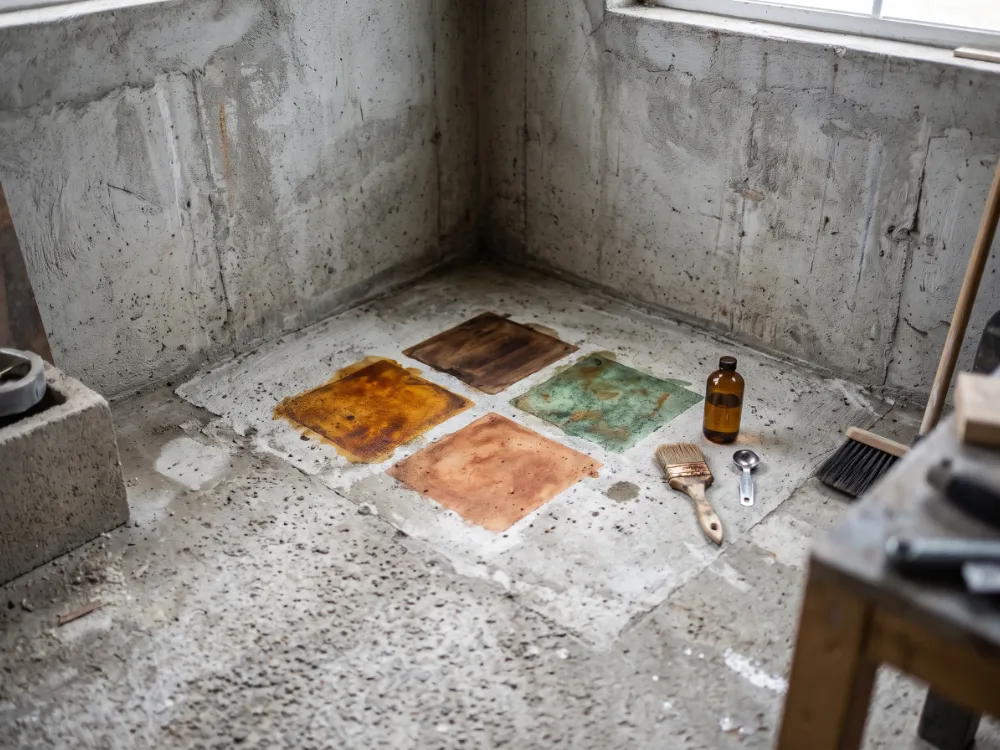
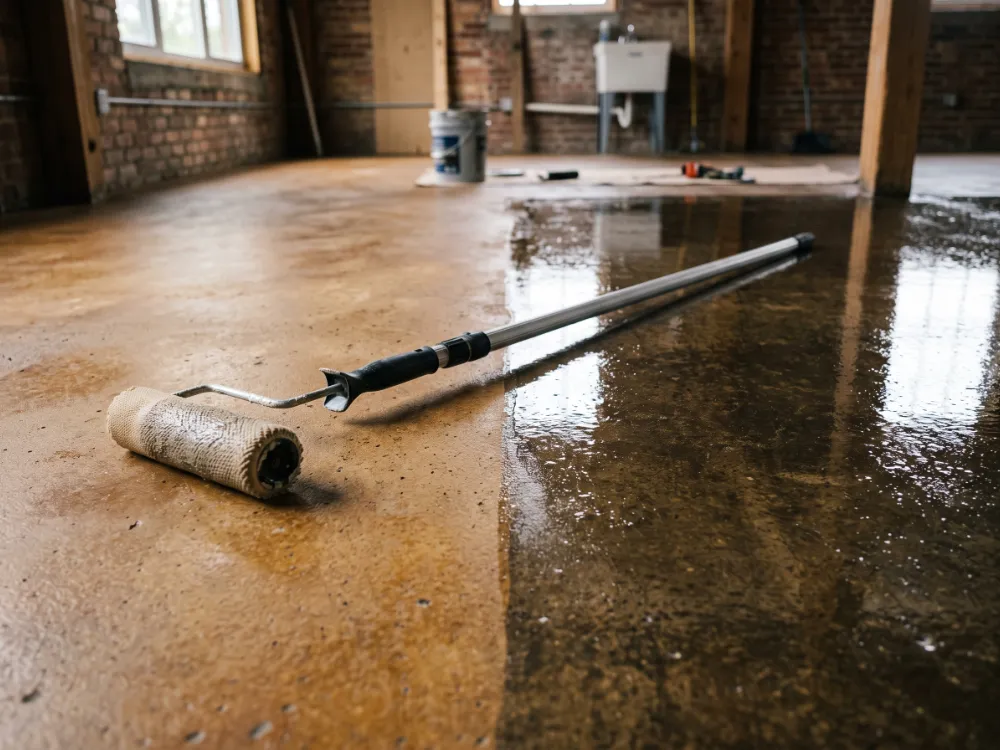
Sealed to Suit the Room
The sealer is where the floor's personality and durability are set:
- Matte — the raw-concrete look, most natural underfoot, favorite of modern interiors.
- Satin — the all-rounder: soft luster, easy cleaning, forgiving of dust and paw prints.
- Gloss — maximum depth and color saturation, showroom energy.
- Slip additive — specified for kitchens, baths and all outdoor work.
Sealers are the renewable part of the system: a refresh coat every few years keeps decade-old stained floors looking newly finished.
Frequently Asked Questions
What is the difference between acid stain and water-based stain?
Acid stain is a chemical reaction: it reacts with the minerals in your slab and permanently changes the concrete's color about a sixteenth of an inch deep, producing variegated, marbled earth tones no two slabs repeat. Water-based stain is a pigment deposited into the surface pores — non-reactive, far wider palette including grays, blues and greens, and much more uniform. We install both; your slab and your design goals pick the winner.
Can stained concrete peel or chip like a coating?
The color itself cannot — that is staining's superpower. Acid stain becomes part of the concrete chemistry and water-based stain lives in the pores, so there is no color film to peel. The protective sealer on top is the sacrificial layer, and resealing it every few years is the entire long-term maintenance story.
Will my floor match the photos I've seen?
With acid stain, close but never identical — the reaction depends on your slab's minerals, age and finish, which is exactly what makes each floor unique. This is why we always apply test patches on your actual concrete before committing the room. Water-based stains are far more predictable if an exact color target matters.
Can an old, painted or glued-over slab be stained?
Often, after honest evaluation. Old coatings, adhesives and sealers are diamond-ground away first — stain cannot penetrate concrete it cannot touch. But grinding also removes the slab's aged surface patina that acid stain reacts with, and patched areas take stain differently. Where a slab is too scarred, we say so and recommend an overlay or epoxy system instead of a stain you would regret.
How long does a staining project take?
Typically two to four days: grinding and repairs, stain application (acid stains then need to dwell, neutralize and rinse), full drying, and one or two sealer coats with cure time between. Furniture returns a day or two after the final coat, depending on the sealer.
Does stained concrete work outdoors?
Yes — patios, walkways and porches are classic stained-concrete territory. Outdoors we pair the stain with a UV-stable exterior sealer, and for full-sun exposure we advise earth tones, which weather most gracefully. The sealer, not the stain, is what sun and sprinklers slowly consume — and it is renewable.
Is sealed, stained concrete slippery?
A gloss-sealed smooth floor can be when wet, so the finish is chosen to the room: satin and matte sealers for living areas, and a fine slip-resistant additive in the sealer for kitchens, bathrooms and outdoor surfaces. Traction is a specification, not luck.
How do I maintain a stained floor, and how often does it need resealing?
Dust mop, damp mop with pH-neutral cleaner, and protect high-wear paths with rugs if you like. The sealer is the wear item: interior floors typically want a fresh coat every few years, outdoor surfaces somewhat more often. Resealing is quick and inexpensive — and it renews the floor's original luster each time.
Stained concrete or metallic epoxy — they look similar in photos?
They rhyme visually — both are variegated, one-of-a-kind finishes — but differ in construction. Stain colors the concrete itself and keeps its industrial, organic character; metallic epoxy builds a new resin layer with far more gloss, depth and color range, plus a thicker wear surface. Rustic and architectural, choose stain; dramatic and luminous, choose metallic. We install both, so the recommendation is unbiased.
When is staining the wrong choice?
When the slab's condition would show through: heavy patching, large repairs, deep oil saturation or badly spalled surfaces all telegraph straight through translucent stain. Those floors are better served by an overlay, a solid color system or a flake floor that hides history. We tell you which side of that line your slab is on before any color is ordered.
More Decorative Directions
Staining is one voice in the decorative concrete choir — hear the others before you choose.
Decorative concrete · Concrete grind & seal · Concrete polishing · Metallic epoxy floors · Living room epoxy flooring · Patio coating · Concrete resurfacing · Concrete grinding & surface prep
FREE onsite Estimate
5 stars rated company
Get it done right the first time...


