
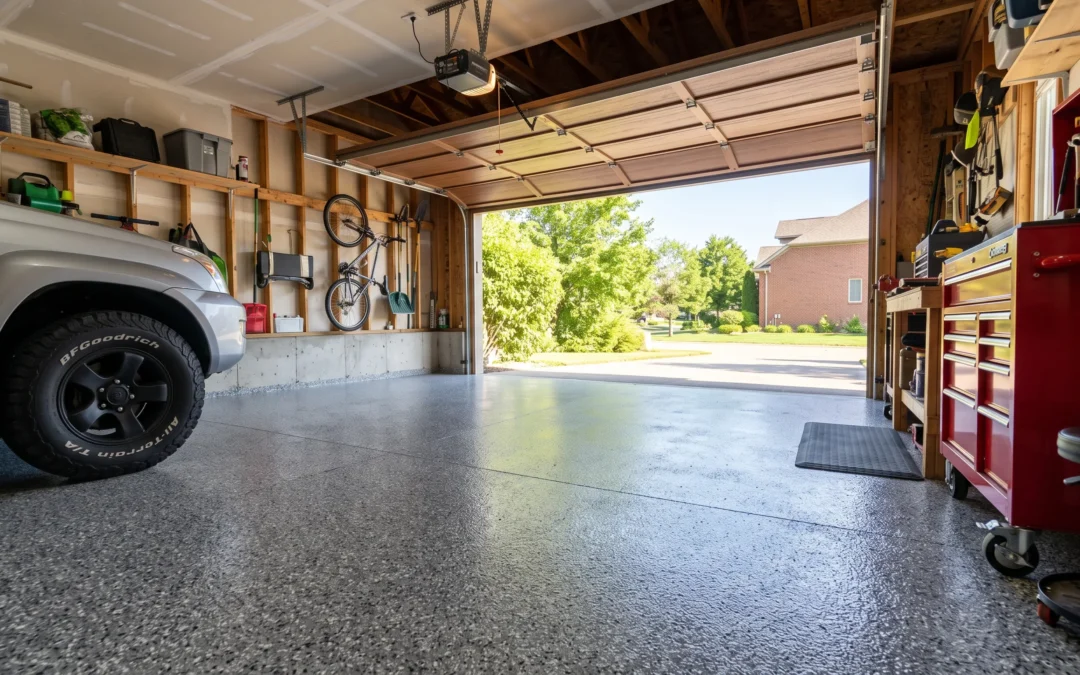
Garage floor epoxy is a multi-layer coating system — not a paint — that bonds into diamond-ground concrete and cures into a surface engineered for the specific abuse a garage dishes out: hot tires, dripping oil, road salt, dropped tools and parked vehicles. A professional residential system stacks a 100% solids epoxy basecoat, a decorative flake broadcast, and a UV-stable polyaspartic topcoat over mechanically prepared concrete, and the whole installation typically takes one day. The distinction matters, because the phrase “garage epoxy” also gets slapped on thin hardware-store paints that share almost nothing with the real thing except the word on the label.
Epoxy in general is a big topic; our garage floor coating service page shows what the finished product looks like. This post is about how the garage version works — because the garage is its own animal.
A Garage Is the Hardest Room in the House on a Floor
No other residential floor faces this combination of punishment. Tires roll in hot from the freeway — in Southern California summers, tread temperatures well over 140°F — then sit for hours, softening and tugging at whatever they’re parked on. That’s the mechanism behind hot-tire pickup, the classic failure where a coating comes up in tire-shaped patches. Add motor oil, brake fluid, coolant and gasoline drips; road grime and salts carried in on the undercarriage; a 4,000-pound vehicle pivoting its steering on one contact patch; and the occasional dropped breaker bar. Then throw in direct sun across the apron every afternoon.
Interior-grade coatings and floor paints fail here quickly, and bare concrete quietly loses too — it dusts, absorbs every fluid, and etches under salt. Garage floor epoxy exists because this room needs a floor built like shop equipment.
What’s Actually in a Garage Epoxy System
Every layer answers one of those attacks. Here’s the stack, bottom to top, as we install it:
- Diamond grinding. Industrial grinders cut the slab’s surface open, removing sealers and laitance and leaving a bonding profile the resin can lock into. This is the layer you can’t see and the one that decides everything.
- Repairs. Cracks, spalls and pitting get filled and profiled flush so the finished floor is monolithic.
- The basecoat. A 100% solids epoxy — on slabs with vapor drive, a moisture-vapor-barrier epoxy basecoat — that becomes the structural body of the coating and the glue for the layer above.
- Full-rejection flake broadcast. Vinyl color flakes are thrown into the wet basecoat until it literally cannot accept another chip. Full rejection means full coverage: uniform color, uniform thickness, uniform texture.
- Scrape and vacuum. Once cured, the loose excess is scraped off and vacuumed up, leveling the surface.
- UV-stable polyaspartic topcoat. The clear wear layer that takes the tires, the sun and the spills — and doesn’t yellow at the sun-washed garage door line the way bare epoxy would. More on that chemistry on our polyaspartic floor coating page.
Why Flake Systems Rule the Garage
You can put a solid color or even a metallic finish in a garage, but roughly nine out of ten garage projects end up as flake flooring, for practical reasons rather than fashion. The flake blend hides the dust, tire marks and small debris a working garage generates daily, so the floor looks clean between cleanings. The overlapping chips build extra thickness and leave a light, even texture that grips when the floor is wet. And the color options — dozens of blends from granite grays to bold customs — let the floor match the house instead of looking industrial. It’s the rare case where the toughest option is also the most forgiving to live with.
How Does a One-Day Install Work?
The one-day timeline surprises people, so here’s the shape of it. Morning: grinding, vacuuming and repairs — the loud part. Midday: basecoat down, flakes broadcast wall to wall while it’s wet. Afternoon: scrape, vacuum, topcoat. The polyaspartic topcoat is the enabler; it cures in hours instead of days, which is exactly why we finish with it. You’re walking on the floor the next morning and parking on it within a few days.
Compare that with grinding out a failed coating later — removal costs more than doing it right the first time. Timeline honesty: one day is the flake-system number. Decorative upgrades like metallic take three to four days because their design layers each need cure time.
Garage Floor Epoxy vs. the Kit on the Store Shelf
The box kits sold next to the paint rollers are usually water-based epoxy at a fraction of professional thickness, with a bag of flakes to scatter by hand and acid to etch the slab instead of grinding it. They cost little, and for a rarely used garage they can look decent for a while. But the physics are stacked against them: thin film, weak bond, no UV-stable wear layer — hot-tire pickup is practically their signature. We’ve laid out the full honest comparison in is a DIY garage floor epoxy kit worth it. You’ll also see “polyurea” marketed as epoxy’s successor; the truth is more useful than the slogan, and we cover it under polyurea garage floor coating — a well-built hybrid system uses each resin where it’s strongest.
What Should You Expect an Estimate to Cover?
We keep dollar figures off the blog on purpose — no two slabs are the same job, and a number that ignores yours would be a guess dressed up as information. What you should expect is that a real estimate is built from specifics: the square footage, the condition of the concrete (cracks, pitting, old coatings that need grinding off), a moisture check, and the system you choose. Ask any bidder to itemize exactly that. If a quote arrives by text without anyone looking at the floor, or leans on the phrase “one coat of commercial-grade epoxy,” you’ve learned what you needed to know about the system behind it. Because we manufacture our own materials, there’s no distributor markup baked into ours — one of the practical perks of buying from the source. The estimate itself is free and on-site, which is also the moment to see flake samples against your actual concrete and daylight.
Frequently Asked Questions
How long does garage floor epoxy last?
A professional system over diamond-ground concrete typically runs 15–20+ years in a residential garage — ours carries a limited lifetime residential warranty. Store-bought kits usually show failure within one to three years, which is where epoxy’s undeserved short-lived reputation comes from.
Can I park on it right away?
You can walk on a polyaspartic-topcoated floor the next day, move stationary items back within a couple of days, and park on it typically within about three days. Full chemical cure continues for a week or so, but normal garage life resumes fast.
Does garage floor epoxy work on old, stained concrete?
Almost always, yes. Diamond grinding removes the stained surface layer entirely, and oil-soaked spots get spot-treated so the coating bonds to clean concrete. Cracks and pitting are repaired during prep — an aged slab usually finishes as beautifully as a new one.
Is garage floor epoxy slippery?
A flake system isn’t — the broadcast leaves a light, even texture across the whole floor that grips even with wet tires dripping on it. Smoother finishes can add anti-slip grit to the topcoat. We cover the details in our post on whether epoxy flooring is slippery.
Top Epoxy Flooring manufactures its own VOC-free garage coating systems and installs them in one day across Southern California, backed by a limited lifetime residential warranty. Call (818) 945-0915 for a free estimate.
Recent Comments