
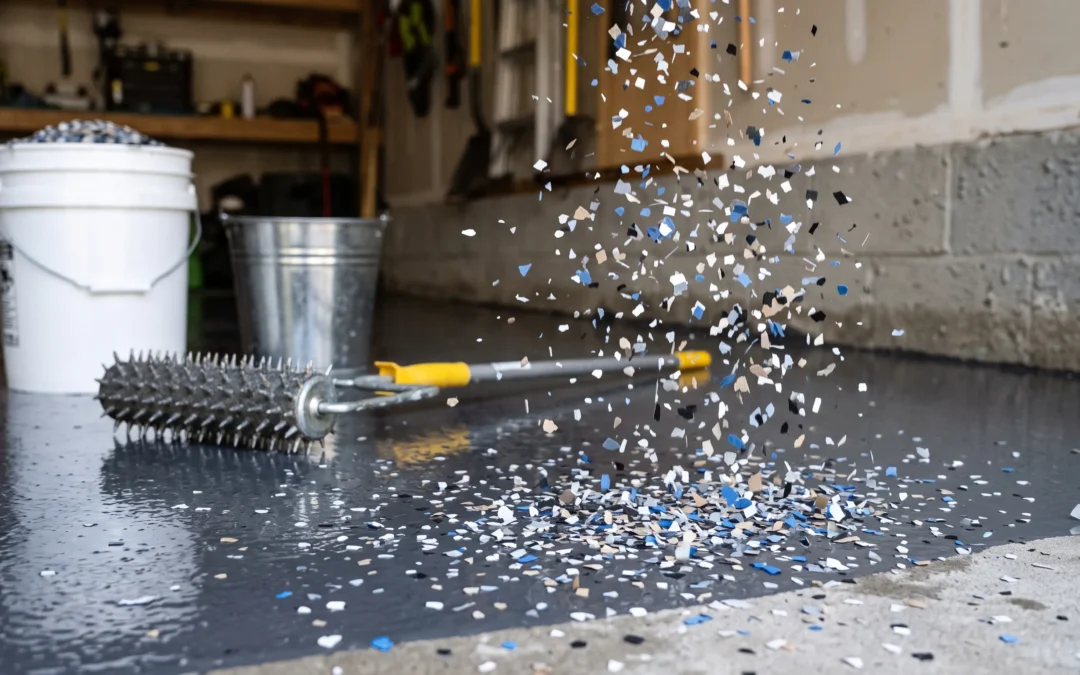
Epoxy flooring with flakes is a three-layer system: a pigmented resin basecoat bonded to ground concrete, a broadcast of vinyl color chips thrown into that basecoat while it’s still wet, and a clear protective topcoat locking everything down. The flakes aren’t sprinkled on for decoration alone — they add thickness, build slip-resistant texture, and camouflage the dust and drips a floor collects between cleanings. Done properly, the whole system goes into a residential garage in one day and outlasts the cars parked on it. Here’s what actually matters when you’re evaluating a flake floor, from someone who manufactures the materials as well as installs them.
What the Flakes Are — and What They’re Doing
The chips are thin, irregular pieces of colored vinyl, typically sized from a fine 1/16-inch up to a chunky 1-inch, blended from several colors so the finished floor reads like speckled stone. Functionally they do four jobs at once:
- Build. A full broadcast roughly doubles the coating’s thickness, adding impact resistance the resin alone wouldn’t have.
- Traction. The overlapping chip edges create micro-texture under the topcoat, so the floor grips even when wet — no added grit required for most garages.
- Camouflage. A multicolor pattern visually absorbs dust, pet hair, tire marks and small stains. This is the single most underrated reason flake garages stay looking clean.
- Repair insurance. Years down the road, a patched spot blends into the random pattern instead of announcing itself the way a patch does on a solid color.
Full Broadcast vs. Partial: The Decision That Defines the Floor
Flake density is the fork in the road. A partial broadcast scatters chips sparsely over a colored basecoat, leaving the base visible between them — cheaper on material, but the thin spots wear first and the look dates quickly. A full-rejection flake broadcast throws chips until the wet basecoat literally cannot accept another one; excess flakes sit loose on top and are scraped and vacuumed off before topcoating. The result is 100% coverage with uniform thickness everywhere. We install full-rejection exclusively on our flake flooring systems, and if you’re comparing quotes, this is the first question to ask each bidder — “full rejection or partial?” separates system installers from painters faster than any other question.
The Layers Under the Flakes Matter More Than the Flakes
Chips are the visible personality; the chemistry beneath decides the lifespan. A properly built system stacks up like this:
- Diamond grinding opens the concrete’s bonding profile — a mechanical texture the resin keys into. Acid etching, the shortcut in DIY kits, doesn’t come close.
- A moisture-vapor-barrier epoxy basecoat bonds to that profile and blocks the ground moisture that pushes up through every slab. Skip this layer and vapor pressure will eventually shove the coating off from below.
- The flake broadcast into that wet basecoat, so chips are anchored in resin rather than glued on top of it.
- A UV-stable polyaspartic topcoat — the clear wear layer. Polyaspartic resists sunlight yellowing, cures fast, and shrugs off hot-tire pickup, the failure where warm tires peel weak coatings on contact. Our polyaspartic floor coating page covers why this chemistry took over the topcoat job from epoxy.
How Textured Is a Flake Floor, Really?
People ask this in two opposite directions — some want grip, others fear a rough floor that’s hard to sweep. The honest answer: a standard full broadcast under one topcoat leaves a gentle orange-peel texture, enough for wet traction but smooth enough that a dust mop glides. Want it smoother? A second topcoat flow-fills the texture toward glass. Want it grippier for a pool deck or exterior stair? Aluminum-oxide grit goes into the topcoat. Texture is a dial, not a fixed property — specify it during the estimate, not after installation.
Where Flake Systems Fit Best
The garage is home turf: chemical resistance against oil and brake fluid, camouflage against road grime, one-day installation. But the same system carries into laundry rooms, workshops, commercial back-of-house, school corridors and — with exterior-rated materials — driveways and patios. Where flake is the wrong call: showpiece interiors that want the flowing depth of metallic, and heavily rutted slabs that need resurfacing before any coating goes down.
Living With One: Maintenance and Longevity
Routine care is a soft-bristle sweep or dust mop, plus a mop with neutral cleaner when needed — no wax, no sealers, no special products. Grit is the only real enemy; tracked-in sand acts like sandpaper under tires, so garages near the beach benefit from a walk-off mat. The system itself carries our limited lifetime residential warranty, and the practical service life question is really about the topcoat: after many years of hard use it can be refreshed with a new clear coat without disturbing the flakes below. Our maintenance guide covers the full routine in a page.
Choosing a Blend Without Regret
Bring home physical samples and view them in the actual room, at the actual times of day you use it. Mid-tone blends with three or more colors are the most forgiving; very light blends brighten dark garages but show tire marks sooner; very dark blends look dramatic and reveal every speck of sawdust. Match undertones to what’s fixed in the space — cabinets, house trim, driveway concrete. The full range of blends and chip sizes is on our color chart, and we’ll pour a sample of any blend you’re torn between.
Frequently Asked Questions
How long does a flake epoxy floor installation take?
One day for a typical residential garage. Diamond grinding, repairs, basecoat, full flake broadcast, scrape-back and topcoat all happen in sequence, and fast-curing polyaspartic chemistry means you can usually walk on it the next morning, with vehicles back a few days after.
Do the flakes make the floor rough or hard to clean?
No — a standard broadcast under one clear coat leaves a light orange-peel texture that grips shoes yet lets a dust mop glide. If you prefer a smoother feel, a second topcoat levels the surface further; if you need more grip, anti-slip grit is added instead.
What does “full-rejection flake broadcast” mean?
It means flakes are thrown into the wet basecoat until the surface physically can’t hold any more — the excess is rejected, then scraped and vacuumed off before topcoating. This guarantees complete, uniform chip coverage with no thin spots, unlike partial broadcasts where the basecoat shows through.
Can flake epoxy go over cracked or stained concrete?
Usually, yes. Cracks and spalls are ground out and filled during preparation, and stains that penetrate the slab get sealed beneath the basecoat. Severely damaged or unlevel slabs may need resurfacing first — a proper inspection during the estimate determines that before any materials arrive.
Top Epoxy Flooring builds full-rejection flake systems with materials we manufacture ourselves — VOC-free, one-day residential installation, limited lifetime warranty. Call (818) 945-0915 for a free estimate anywhere in Southern California.
Recent Comments