
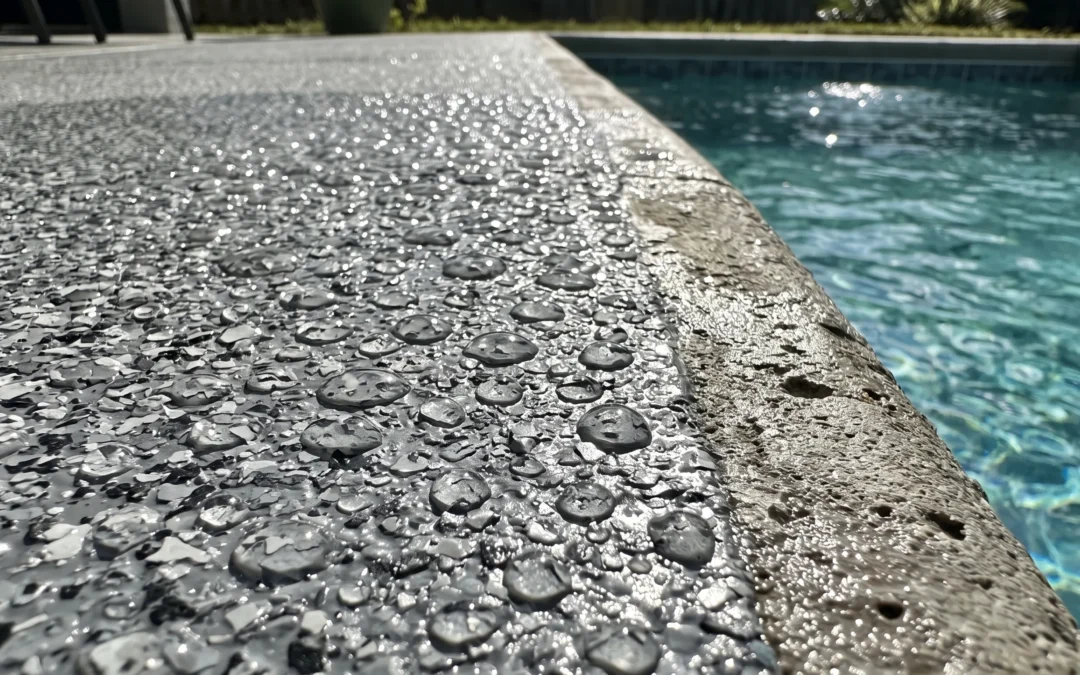
Every epoxy floor can be made slip-resistant — the question is which of five methods fits your space. From mildest to most aggressive: the natural texture of a flake broadcast, micronized polymer grit in the topcoat, glass microspheres, broadcast silica or colored quartz, and aluminum oxide for industrial extremes. Each buys grip at a different cost in feel and cleanability, and matching the method to the room is the whole game: a pool deck, a garage, and a loading dock should not get the same answer. We manufacture our own coating systems, so every one of these options is ours to mix — here’s the honest comparison.
Why Smooth Epoxy Gets Slippery in the First Place
A cured epoxy or polyaspartic surface is dense and non-porous — that’s exactly what makes it stain-proof and easy to clean, and exactly what makes it slick when water, oil, or dust sits on top. Dry, a glossy floor grips fine; add a wet shoe or a film of dust and the coefficient of friction drops fast. So every anti-skid strategy does the same thing: it interrupts the glass-smooth plane with micro-texture that gives shoes something to bite. The methods differ only in what does the interrupting and how coarse it is.
The Five Options, Mildest to Most Aggressive
- 1. Flake texture (built-in). A full-rejection flake broadcast leaves natural, gentle texture under the clear coat — the chips themselves create low-profile relief. For most residential garages this is already enough, and it’s why an epoxy flake floor is a meaningfully safer surface than smooth painted concrete before any additive is even discussed. Comfortable barefoot, easy to clean.
- 2. Micronized polymer grit. Fine polymer beads stirred into the final topcoat. Nearly invisible in the finish, soft underfoot and on knees, and gentle on mops — the standard upgrade when a client wants extra grip without changing how the floor looks or feels. The main limitation: as the topcoat wears over many years, the grit wears with it.
- 3. Glass microspheres. Tiny transparent beads suspended in the clear coat. Slightly more bite than polymer grit, still almost invisible, and they hold up well underfoot. A good middle option for interior wet-adjacent spaces like laundry rooms and entries.
- 4. Broadcast silica or colored quartz. Real aggregate scattered into the coating — serious, sandpaper-like traction that works even with standing water. Plain silica suits back-of-house and industrial floors; colored quartz delivers the same grip with a finished decorative look, which is why quartz is our default around water. The trade: coarser texture catches more dirt and asks more of cleaning.
- 5. Aluminum oxide. The industrial extreme — extremely hard granules that out-wear the coating around them. Maximum grip for ramps, wash bays, and grease-prone work zones. Overkill anywhere people walk barefoot; it’s genuinely abrasive.
Matching the Option to the Space
Garages: flake texture alone for most; add polymer grit if the driveway slopes or the garage doubles as a wash area. Interior rooms and basements: polymer grit or microspheres — invisible safety. Outdoors is where anti-skid stops being optional. A pool deck coating is a wet, barefoot surface by definition, so it gets a quartz or fine-aggregate texture engineered to grip soaked feet while staying comfortable to walk on. A patio coating faces morning condensation, rain, and sprinkler overspray and gets a textured finish tuned a step milder. Driveways and exterior steps sit in between — textured enough for wet shoes and tires, mild enough to sweep easily. Commercial and industrial: broadcast aggregate or aluminum oxide, chosen by what rolls and spills there; these floors are covered in depth in our commercial and industrial systems.
The Honest Trade-Off: Grip vs. Cleanability
There is no free traction. Every step up in texture is a step down in how easily the floor releases dirt and mop fibers — a truth worth hearing before you order the most aggressive option “to be safe.” The right call is the mildest texture that genuinely handles your wet condition: enough grip for the real risk, no more. This is also a place where being the manufacturer matters practically: we blend the additive into the topcoat at the ratio the space calls for rather than shaking a retail jar over the floor and hoping, so the texture comes out uniform — no slick patches, no gravel patches. And because the additive rides in a UV-stable polyaspartic topcoat over a moisture-vapor-barrier basecoat bonded to concrete prepared by diamond grinding, the grip lasts as long as the floor: limited lifetime warranty on residential installs, three years on commercial and outdoor work, VOC-free throughout.
Can You Add Anti-Skid to an Existing Floor?
Often, yes. If an existing coating is sound — bonded tight, not peeling — it can be scuff-sanded and recoated with a gripped topcoat, which is the quickest path to a safer surface. If the coating is failing, adding texture on top just texturizes a failure; the floor needs proper repair and recoating first. The honest assessment takes minutes on site, and it’s part of every estimate we run.
Frequently Asked Questions
What is the best anti-slip additive for epoxy floors?
For homes, micronized polymer grit — it adds real grip while staying invisible, soft underfoot, and easy to mop, which is why it’s the default residential upgrade. Glass microspheres are a close second with slightly more bite. Aggressive options like silica, quartz, and aluminum oxide are better matched to outdoor, commercial, and industrial floors.
Are epoxy garage floors slippery when wet?
Smooth ones can be; flake floors much less so. The chip broadcast under the clear coat leaves natural texture that grips wet shoes far better than glossy paint or bare sealed concrete. For sloped garages or wash areas, a polymer grit additive in the topcoat closes the remaining gap without changing the floor’s look.
What anti-slip texture is used on pool decks?
Colored quartz or fine aggregate broadcast, tuned to grip soaked bare feet without being harsh to walk on. Pool decks are the one surface where anti-skid is non-negotiable — the coating is wet by design — so the texture is engineered in as part of the system rather than added as an afterthought.
Does anti-skid texture make an epoxy floor harder to clean?
The aggressive kinds do — coarse aggregate grabs dirt and mop fibers, which is the price of maximum traction. Mild additives like polymer grit and microspheres barely affect cleaning at all. The right approach is the mildest texture that handles your actual wet conditions, not the most aggressive one available.
Top Epoxy Flooring manufactures and installs its own coating systems across Southern California, and slip resistance is engineered into every outdoor floor we build. Call (818) 945-0915 for a free estimate and an honest read on how much grip your space really needs.
Recent Comments