
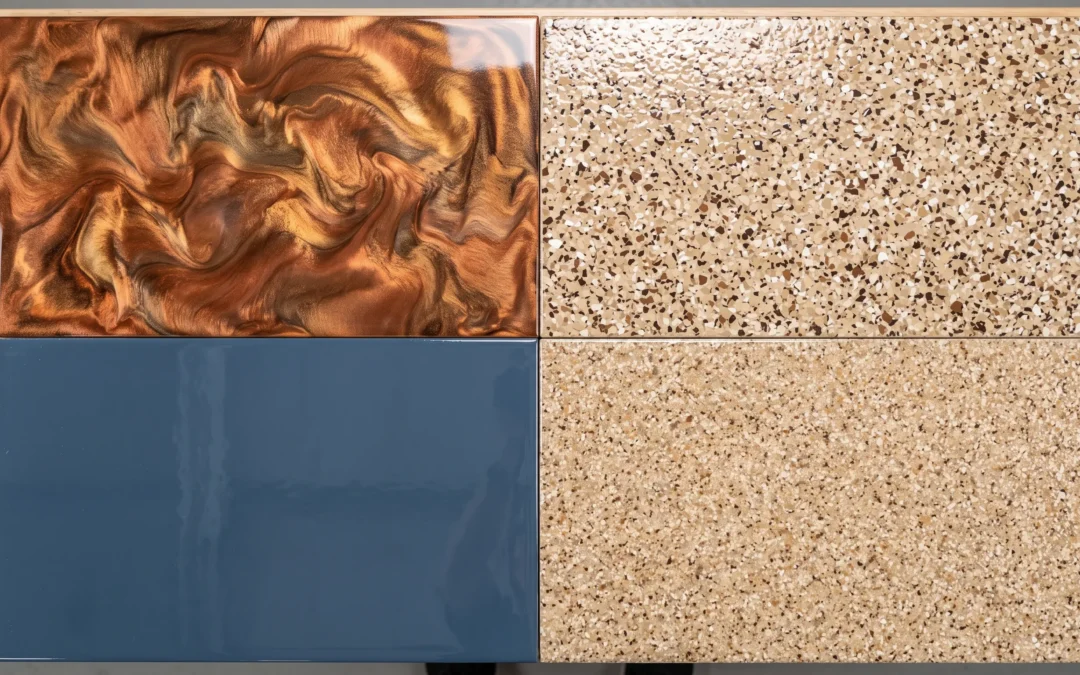
Decorative epoxy flooring covers five distinct families: flake systems, metallic pours, quartz broadcasts, tinted solid colors, and clear-sealed decorative concrete. Each starts from the same foundation — a prepared slab and a chemically bonded resin system — but they produce completely different rooms. The right idea for your project depends less on what looks good in a photo and more on how the space gets used, because every decorative option carries its own texture, sheen and maintenance personality. As a company that manufactures the coatings we install, we get to see all five families go down week after week; here is the honest tour, organized by the effect you’re actually after.
Start With the Effect, Not the Product
Homeowners usually shop decorative floors backwards — they pick a product name first, then discover its look doesn’t suit the room. Flip the order. Decide which of these four effects you want, and the product picks itself:
- Speckled stone texture — you want a floor that reads like granite or terrazzo, forgives dirt, and grips underfoot. That’s a flake or quartz system.
- Flowing, one-of-a-kind depth — you want people to stop and stare. That’s a metallic pour.
- Clean, uniform color — you want a gallery backdrop that puts your cars, furniture or merchandise forward. That’s a tinted solid-color system.
- The concrete itself, elevated — you like the raw slab and want to keep its character. That’s stain, dye or grind and seal under a clear protective coat.
Everything below is a variation on one of those four moves.
Flake Systems: The Workhorse That Happens to Be Beautiful
A flake epoxy floor broadcasts colored vinyl chips into a wet basecoat, then locks them under a clear topcoat. The decorative payoff is a randomized, multi-tone surface with genuine visual texture — no two square feet repeat. Ideas that work especially well:
- A tonal blend two shades away from your wall color, which makes a garage or basement feel designed rather than coated.
- A high-contrast blend in a laundry room or workshop, where the busy pattern absorbs years of real life without ever looking tired.
- An outdoor-rated flake texture on a patio or pool surround, where the chips double as slip resistance.
Flake is also the fastest decorative system to live with — a residential garage is typically installed in a single day.
Metallic Pours: When the Floor Is the Design
Metallic epoxy suspends pearlescent pigment in clear resin and lets the installer move it — the result resembles polished stone, weather systems, or molten metal, and it cannot be duplicated even by the same hands on the same day. Decorative ideas here are really color stories: copper and charcoal for a moody den, silver and white for an airy studio, deep blue drifted with pearl for a space that wants to feel like water. Plan on a three-to-four-day installation, because each artistic layer cures before the next goes on. One placement tip from experience: metallics reward open sightlines. The bigger the uninterrupted floor plane, the more the movement reads.
Quartz Broadcasts: Texture You Can Specify
Quartz systems broadcast colored sand into the resin instead of vinyl chips. The finished surface looks like fine granite and feels slightly gritty in the best way — it’s the decorative option we steer people toward when a floor must be both handsome and genuinely slip-resistant while wet. Think pool decks, exterior steps, dog runs and commercial kitchens. Installation typically runs one to two days, and the color range covers everything from warm sandstone to cool salt-and-pepper.
Solid Colors: The Understated Power Move
A solid color epoxy floor sounds like the plain option until you see one executed well. A uniform, glossy field of color does something no patterned floor can: it disappears as a surface and becomes light. Slate gray under a classic car, warm white in a home gym, even a saturated brand color in a retail space — the decorative statement is restraint. Two ideas that elevate solids further: a contrasting painted border line to frame the room, and a satin rather than gloss topcoat where you want the color without the mirror. Solid systems generally take two to three days start to finish.
Decorative Concrete: Let the Slab Speak
Not every decorative floor needs pigment. Stained concrete reacts color into the slab itself for a mottled, organic finish, and a grind and seal exposes the concrete’s own aggregate before capping it with a clear coat. Both suit modern, industrial-leaning interiors where perfect uniformity would feel wrong. The decorative concrete route is also the most honest one for older slabs with history in them — cracks and patches become character instead of flaws to hide.
How Do You Choose Between Them?
Ask three questions in order. First, how dirty does this room get? High-traffic and high-mess spaces favor flake and quartz, whose patterns camouflage everything between cleanings. Second, how much visual attention should the floor claim? Metallics dominate a room; solids and clear-sealed concrete defer to it. Third, is the surface ever wet? If yes, build in texture — a full broadcast or an anti-slip additive in the topcoat. Whatever direction you land on, pick actual colors from our color chart rather than from screen photos, because resin color reads differently under your lighting than under a photographer’s. And insist on real preparation: every decorative system on this page only performs when it’s bonded to diamond-ground concrete with an opened bonding profile, not painted over a smooth slab.
Frequently Asked Questions
What is the most popular decorative epoxy flooring style?
Flake systems are the most installed decorative option by a wide margin, because they combine a stone-like multicolor finish with slip resistance, one-day residential installation and the best dirt-hiding ability of any resin floor. Metallic pours are the fastest-growing choice for interior living spaces.
Can decorative epoxy be used outdoors?
Yes, with the right chemistry. Outdoor decorative systems use a UV-stable polyaspartic topcoat so the finish won’t yellow in sunlight, and they’re built with texture for wet-weather grip. Patios, pool decks and entry steps are all routine decorative installations; warranty coverage for outdoor work runs three years.
Which decorative epoxy floor hides dirt best?
A mid-tone, multi-color flake blend hides dirt better than any other finish — the randomized pattern visually swallows dust, pet hair and dropped debris between cleanings. Dark solid colors are the least forgiving, showing every footprint and lint speck on their glossy surface.
Do decorative epoxy floors work in living areas, or just garages?
They work throughout the home. Metallic and stained-concrete finishes are common in living rooms, kitchens and basements, while flake systems handle laundry rooms and mudrooms. Interior installations use the same bonded system as garages — VOC-free materials and a limited lifetime residential warranty included.
From flake to metallic to stained concrete, Top Epoxy Flooring manufactures its own VOC-free coating systems and installs them across Southern California with a limited lifetime residential warranty. Call (818) 945-0915 to talk through ideas and get a free estimate.
Recent Comments