
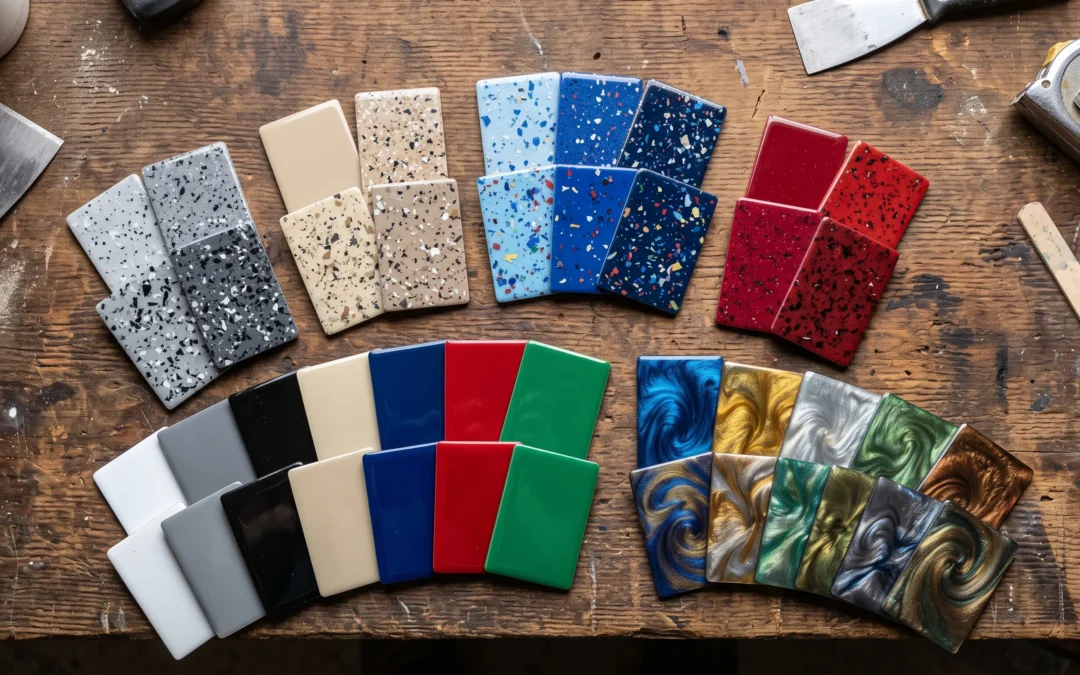
Epoxy flooring comes in effectively unlimited colors, but every option on the market belongs to one of four systems: solid color, flake, metallic, or quartz. The system decides how the color behaves — how it hides dirt, how it handles light, how it feels underfoot — and the pigment or chip blend decides the shade. Most companies hand you a supplier’s chart and sell what’s on it. We manufacture our own coatings, so our palette is whatever we mix, and this post is the full tour: what each system offers, the shades people actually order, and how to think past “what color” to “which color in which system.”
Solid Color Epoxy: One Clean Tone
A solid color epoxy floor is pigmented resin applied as a smooth, uniform surface — the look of a commercial showroom or a modern gallery. Because the pigment is mixed into the coating itself, any tone is possible, but the perennial orders are:
- Grays — light, medium, and charcoal; the default for garages and commercial space
- Whites and off-whites — maximum brightness for studios and showrooms; shows everything, so it’s a display-space color
- Tans and beiges — warm neutrals that flatter Southern California homes
- Black — dramatic and glossy, best for showpieces rather than working floors
- Safety and brand tones — reds, blues, greens, and yellows for facilities that color-code zones or match a company palette
Solid color installs in 2–3 days. It’s the crispest look in the lineup and the least forgiving of debris — a fair trade in spaces that stay tidy.
Flake Blends: Color With Camouflage
The flake system is the residential favorite, and it multiplies the palette: instead of one pigment, you’re choosing a blend of vinyl chips — usually three to five colors — broadcast to full rejection over a tinted basecoat. The result reads as speckled granite or terrazzo, and the multi-tone surface hides dust, tire marks, and small drops between cleanings. The blend families:
- Gray family — gray/black/white blends; the modern standard
- Tan and earth family — saddle tan, desert sand, brown-cream mixes; the SoCal natural
- Blue family — navy through blue-gray; cool and professional
- Red and black family — the automotive statement blends
- High-contrast blends — black-and-white, or dark bases with bright accent chips
Because the basecoat is tinted to complement the chips, even the spaces between flakes carry the palette. Flake installs in a single day, which is why it dominates garage floor coating projects.
Metallic Epoxy: Color in Motion
Metallic epoxy replaces flat pigment with reflective mineral pigments that are moved by hand through the wet resin. The color options here aren’t shades so much as effects: ocean blues that look like standing water, coppers and bronzes that look like poured metal, silver-and-charcoal marbling, red-black lava. You choose a base color and one or two accent metallics, and the installer works them into currents and veining — meaning every metallic floor is a one-off that can’t be duplicated, even by us. It’s the choice for showrooms, man caves, interior spaces, and anyone who wants a floor people photograph. Installation runs 3–4 days.
Quartz: Color You Can Grip
The quartz system broadcasts colored quartz granules into the coating instead of vinyl chips. The palette leans natural — sand, stone, pewter, and blended earth tones — and the payoff is texture: quartz builds the most slip-resistant decorative surface in the lineup, which is why it shows up around pool decks, in commercial kitchens, and anywhere water is part of daily life. It’s the option for people who want color and grip in the same layer. Quartz installs in 1–2 days.
How the Same Color Changes Across Systems
Here’s the insight that a flat color chart can’t show: “gray” is four different floors. Solid gray is sleek and architectural. Gray flake is practical and stone-like. Gray metallic is liquid smoke. Gray quartz is textured sandstone. When you’re browsing options, pick the system first — based on how the space is used — and the shade second. A working garage points to flake; a showpiece points to metallic or solid; a wet area points to quartz. Then confirm the shade with physical samples in your own lighting, because garage fluorescents, LED shop lights, and open-door daylight each shift colors noticeably. Our color chart organizes the palette by system for exactly this reason, and we bring physical samples to every estimate.
The Layer That Protects Every Color
Whatever you choose, the color’s lifespan is decided by the stack underneath and above it. Every floor we install starts with diamond grinding to open a bonding profile in the concrete, followed by a moisture-vapor-barrier epoxy basecoat that stops slab moisture from pushing the coating off from below. On top, a UV-stable polyaspartic topcoat seals the color under a clear layer that doesn’t amber — the failure that slowly yellows bargain floors near the garage door. All materials are VOC-free, we manufacture every layer ourselves, and residential installations carry a limited lifetime warranty (commercial and outdoor work carries three years). Color is the fun part; the stack is why it still looks good in a decade.
Frequently Asked Questions
What colors does epoxy flooring come in?
Effectively any color. Solid color epoxy can be pigmented to any tone, flake systems combine three to five chip colors into custom blends, metallic epoxy creates flowing multi-tone effects, and quartz systems offer natural stone tones with built-in texture. The practical question isn’t what’s available — it’s which system suits the space, since each renders color differently.
What is the most popular epoxy floor color?
Gray flake blends lead overall — gray with black and white chips is the modern default for garages. Tan and earth-tone blends run a close second in Southern California because they hide the region’s light-brown dust and match stucco exteriors. Among metallics, blues and silver-charcoal combinations are the most requested.
Can epoxy be custom color matched?
Yes. Because we manufacture our own coatings, basecoats can be tinted to match a paint chip, a brand color, or an exterior finish, and flake blends can be assembled from individual chip colors rather than picked off a fixed chart. Custom matching matters most for commercial brand standards and for homeowners coordinating the floor with cabinetry or house colors.
Which epoxy color system is most durable?
Durability comes from the system stack more than the color: diamond grinding, a moisture-vapor-barrier epoxy basecoat, and a UV-stable polyaspartic topcoat determine lifespan. Among decorative options, flake and quartz add a little extra wear mass and hide scuffs best, while any properly built system carries our limited lifetime residential warranty.
Top Epoxy Flooring manufactures and installs its own epoxy, polyaspartic, and quartz systems across Southern California — the whole palette on our chart comes out of our own production. Call (818) 945-0915 for a free estimate and a look at real samples.
Recent Comments