
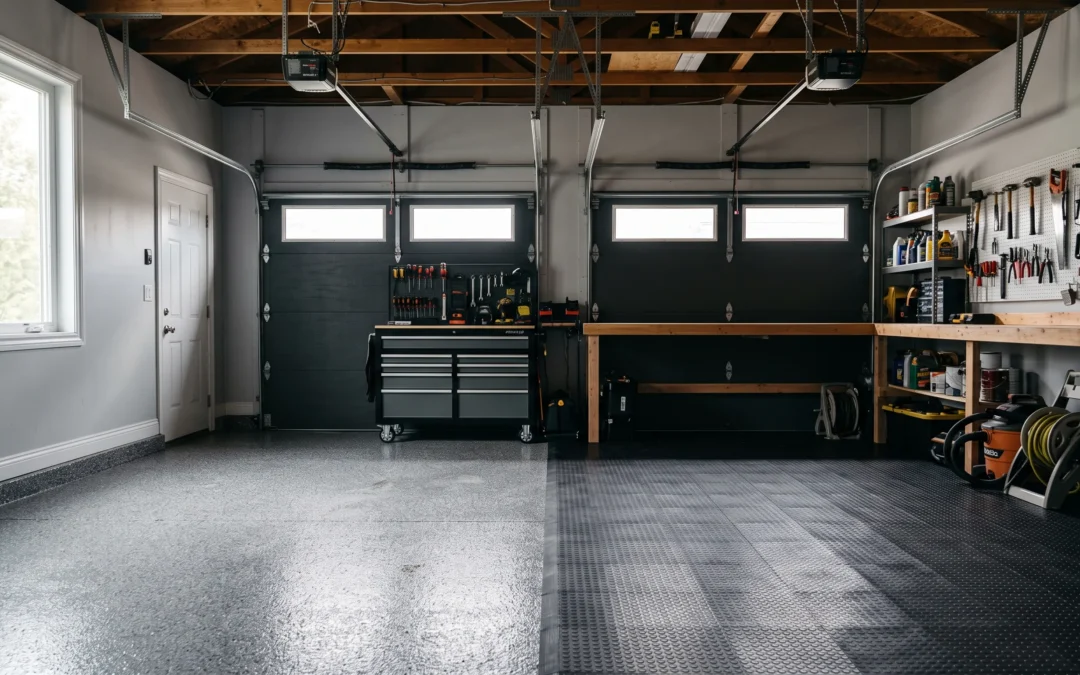
For a garage you plan to keep, epoxy beats tile on almost every count that matters in that room: it bonds permanently to the slab, leaves nowhere for oil and water to hide, and carries jack stands and hot tires without shifting or staining. Tile earns its place in two situations — you need a floor down this afternoon, or you can’t (or don’t want to) deal with the slab underneath. We install coatings for a living, so weigh that as you read — but the pros and cons below are the same ones we walk homeowners through before they hire anyone.
The Two Options, Defined
“Epoxy” here means a professional coating system, not a paint kit: the slab is prepared by diamond grinding, a moisture-vapor-barrier epoxy basecoat bonds into the concrete, a decorative layer like a full-rejection flake broadcast goes down, and a UV-stable polyaspartic topcoat seals the wear surface. The result is a single seamless floor that is physically part of the slab.
“Tile” in a garage usually means interlocking modular tiles — rigid PVC or polypropylene squares that snap together and float over the concrete, unattached. Some homeowners also consider porcelain tile, mortared down like an indoor floor; it’s a premium look with its own caveats, and we’ll flag where it differs.
Garage Floor Epoxy: The Pros
- Seamless and non-porous. There are no joints, so oil, coolant, and rain dripping off the car have nowhere to go but a rag. Nothing collects underneath because there is no underneath.
- Bonded, not floating. A coated garage floor can’t shift under a turning tire, lift at the edges, or creep out of square. Floor jacks and jack stands sit on solid slab.
- Built for automotive chemistry. Brake fluid, gasoline, road salts, and battery acid wipe off a properly topcoated floor. That’s the environment the material was engineered for.
- Easy to actually keep clean. Dust mop, occasional wash, done. No seams to scrub, no tiles to pull up and hose off. Our maintenance guide is short because there isn’t much to say.
- Brightens the whole garage. A light flake blend or solid color reflects overhead light dramatically better than dark modular tile, which most garage tile is.
- Fast professional installation. A typical flake system goes in — grinding to topcoat — in one day.
- Longevity in writing. Our residential installations carry a limited lifetime warranty. Tile warranties cover the tiles; nobody warranties what happens beneath them.
Garage Floor Epoxy: The Cons
An honest list, because every option has one:
- It’s only as good as the prep. A coating over unground, acid-etched, or moisture-heavy concrete will fail — hot-tire pickup is what that failure looks like. This is a hire-the-right-installer problem, but it’s real.
- The garage is out of service during installation. One day for a flake system, longer for metallics — and cars stay off while it cures.
- Spot repairs take skill. A gouge from a dropped engine block can be repaired, but blending it invisibly is professional work, not a snap-in replacement.
- DIY versions poison the well. The thin kits sold in hardware stores fail early and often, and they’re the reason “epoxy peels” has become garage-forum folklore. If you’re weighing that route first, read our take on whether DIY epoxy kits are worth it.
Garage Floor Tile: The Pros
- Speed and simplicity. Interlocking tiles go down in an afternoon with no curing, no chemistry, and no crew. It’s the fastest path from bare slab to finished-looking floor.
- Covers a bad slab without fixing it. Cracks, spalling, old stains — tiles hide them all from view (though not from existence).
- Modular repair. Damage one tile, snap in a new one. No skill required, assuming the color is still made.
- Portable. Renters and short-term owners can take the floor with them. A coating stays with the house.
- Comfort underfoot. Softer tile formats are gentler for long hours standing at a bench, and quieter than bare concrete.
Garage Floor Tile: The Cons
- The seams are the story. Hundreds of joints, none of them sealed. Oil, water, and washdown runoff drain through and sit between tile and slab — trapped moisture that breeds mildew, odors, and staining you can’t see until you pull the floor up. Coastal and humid garages make this worse.
- They move. Floating tiles can creep under turning tires, flex under point loads, and chatter underfoot. Jacking a car means putting plywood down first or lifting on bare slab.
- Hot tires and chemicals still win. PVC tiles can stain and distort under hot tires, and spilled solvents attack plastic. The failure is slower than a bad paint job, but it’s cosmetic decline you can’t recoat away.
- Cleaning is worse than it looks. The textured, seamed surface holds grit, and a serious spill means disassembling a section of floor to clean under it.
- Thermal expansion. Plastic tile grows and shrinks with temperature; a floor fitted tight in winter can buckle in a summer heat wave without expansion gaps at the walls.
- Porcelain’s specific risks. Mortared porcelain is handsome and hard, but grout lines stain in a garage, and a dropped tool or a jack point can crack a tile — a repair that means chiseling out mortar, not snapping in a square.
Which Should You Choose?
Match the floor to your situation, not to a feature list:
- You own the home and the garage works for a living — cars parked daily, projects, weights, storage: coating. Permanent bond, sealed surface, one day of installation, lifetime warranty.
- You’re renting, or you’ll move within a couple of years: tile. Take it with you; a coating is an improvement to someone else’s slab.
- Your slab is badly cracked and you won’t repair it: tile hides it. But know that a coating installation actually fixes the slab first — grinding, crack repair, then the system — which is the difference between covering a problem and ending it.
- Moisture comes up through your slab: coating, specifically because of the moisture-vapor-barrier basecoat. Tile over a damp slab is a mildew farm with a lid on it.
- You want a showroom look: compare a metallic or flake system against porcelain in person. Most people are surprised which one reads as more custom — and only one of them has zero grout lines.
Frequently Asked Questions
Can I install garage tiles over a failed epoxy coating?
Physically yes — floating tiles don’t care what’s under them, and covering a peeling coating is a common reason people buy them. Just understand you’re sealing the problem in: the old coating keeps flaking underneath, and any slab moisture that helped it fail is still there. The better fix is removing the failed coating and starting from sound concrete, which is exactly what proper repair looks like — see our guide on fixing peeling epoxy flooring.
Do interlocking tiles damage the concrete underneath?
The tiles themselves don’t, but what collects beneath them can. Water and oil that drain through the seams sit against the slab with no airflow, and over years that means staining, mildew, and in freeze-prone areas surface spalling. If you go with tile, pull a section every season and let the slab dry out — it’s the maintenance step the packaging doesn’t mention.
Can I use a floor jack on an epoxy-coated garage floor?
Yes — the coating is bonded to the slab, so the load path is straight into the concrete, the same as jacking on bare slab. Steel jack wheels rolling under load can scuff any finish, so a square of plywood under the wheels is cheap insurance, but jack stands and ramps are routine. On floating tile, jacking directly is a bad idea; the tiles flex and shift under concentrated load.
Which adds more value when selling the house?
A professionally coated floor, in our experience — it presents as a finished, permanent upgrade, it’s spotless in listing photos, and the warranty transfers a story of care to the buyer. Tile reads as an accessory: some buyers like it, others see a removal project and wonder what’s underneath. Neither will change an appraisal by itself, but only one makes the slab itself better than the day before.
Top Epoxy Flooring manufactures and installs its own VOC-free coating systems across Southern California, with most flake garage floors installed in a single day and backed by a limited lifetime residential warranty. Weighing your garage options? Call (818) 945-0915 for a free on-site estimate and an honest look at your slab.
Recent Comments