
Choosing an epoxy floor color comes down to five questions, in order: How much light does the space get? How big is it? What kind of dirt lands on the floor? Will you sell the house someday? And only then — what do you actually like? Most people start at question five and end up re-litigating the decision for weeks. Work the list top to bottom and the palette narrows itself to two or three finalists in about ten minutes. Here’s the framework we walk homeowners through at estimates, refined over thousands of Southern California installations of coatings we manufacture ourselves.
Question 1: How Much Light Does the Space Get?
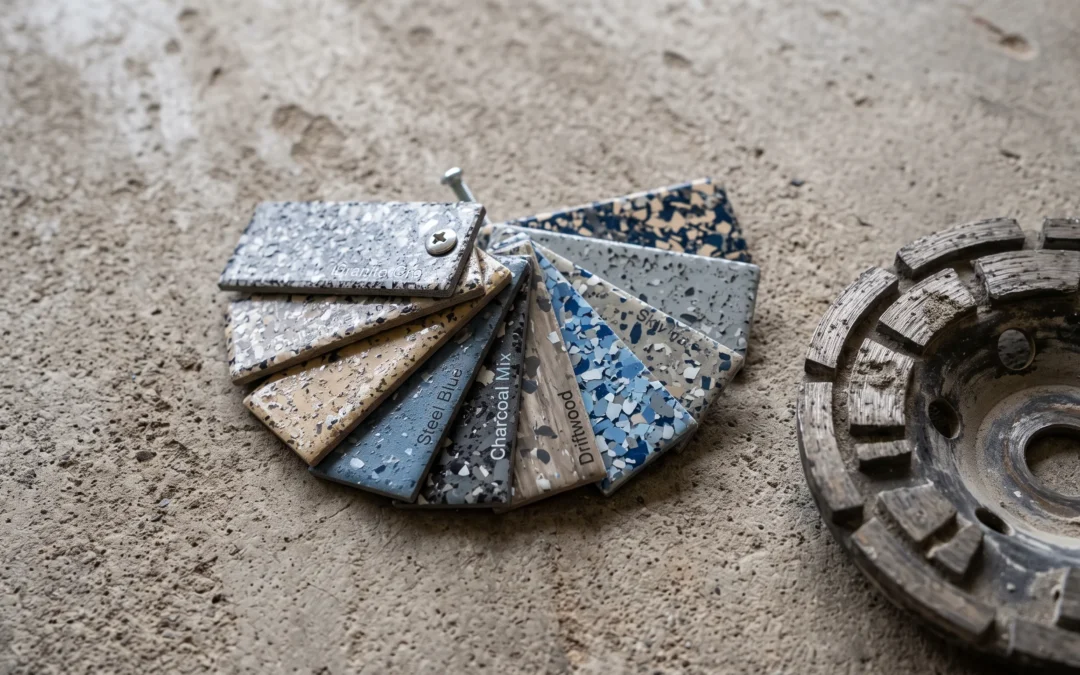
Lighting changes color more than any other factor. A gray that looks soft on a sample chip goes cold and bluish under old fluorescent tubes, warms up under LED shop lights, and looks different again in the daylight flooding through an open garage door. Two rules follow. First, dim spaces want lighter floors: a light gray, greige, or tan floor can visibly brighten a garage with a single bulb, because the floor becomes the biggest reflector in the room. Second, never choose from a screen. Phone displays are backlit and calibrated for nothing; physical samples viewed in your actual space, at the times of day you actually use it, are the only honest test. We bring sample chips to every estimate for exactly this reason.
Question 2: How Big Is the Room?
Floor color moves walls. Light tones expand a space — a one-car garage or a small basement reads noticeably larger under a light floor. Dark tones do the opposite: they anchor and shrink, which can feel cozy in a big space and cave-like in a small one. Glossy finishes amplify the effect in both directions because reflections add perceived depth. Practical translation: small or windowless spaces lean light to medium; three-car garages and open commercial floors can carry charcoal, navy, or black without feeling closed in.
Question 3: What Kind of Dirt Lands on This Floor?
This is the question people skip and then live with. Every space has a signature mess, and the winning color camouflages yours specifically:
- Light dust and pollen (most SoCal garages): tan, greige, and medium gray blends absorb it. Dark floors report it daily.
- Tire marks, oil, workshop grime: charcoal and dark blends conceal it. Light solids broadcast it.
- A bit of everything: a mid-value flake blend — the speckle scatters the eye so nothing reads as a stain.
- Food, water, pet traffic (kitchens, laundry, indoor spaces): mid-tone solids or fine-textured blends wipe clean and don’t show water spots the way dark gloss does.
Note the pattern: flake blends in the middle of the value range are the all-terrain answer, which is why they dominate residential work.
Question 4: Are You Selling Someday?
If there’s any chance the house goes on the market in the next decade, weight the decision toward neutral: gray, greige, and tan blends photograph well in listings, match any buyer’s belongings, and read as “finished garage” rather than “previous owner’s personality.” A wild metallic or a bold team-color floor can genuinely delight the right buyer and give the wrong one a renovation line-item. This isn’t a reason to be boring — it’s a reason to put the personality where it’s reversible (cabinets, walls, lighting) and keep the permanent surface broadly likable. If you’re staying put, ignore this question entirely and enjoy yourself.
Question 5: Now Pick What You Love
With the field narrowed, taste gets the final vote — and this is where system choice re-enters. The same shade lives differently in different systems: a solid color is crisp and architectural, a flake blend is practical stone, and a metallic turns the color into a one-of-a-kind liquid effect. Browse the full palette on our color chart, shortlist two or three, then judge physical samples in your own light. One more tip from long experience: when a household is split between two finalists, a blend that contains both tones — greige for the gray-versus-tan standoff, blue-gray for blue-versus-gray — settles it more often than debate does.
What Doesn’t Depend on Color at All
Whichever finalist wins, the floor’s lifespan was never on the ballot. Longevity is decided by preparation and chemistry: diamond grinding the slab to open a bonding profile, a moisture-vapor-barrier epoxy basecoat to keep slab moisture from pushing the coating off, and a UV-stable polyaspartic topcoat so the color you agonized over doesn’t amber in the sun. Every layer is manufactured by us, VOC-free, and backed by a limited lifetime residential warranty. Choose the color with your eyes; the system is already chosen with engineering.
Frequently Asked Questions
What should I consider first when choosing an epoxy floor color?
Start with lighting, not preference. Dim spaces need lighter floors to feel bright, and every color shifts under fluorescent, LED, and daylight — so judge physical samples in your own space before anything else. After lighting, work through room size, the kind of dirt your floor collects, and resale plans; your taste picks from whatever survives.
Do light or dark epoxy floors show dirt more?
Both show dirt — different dirt. Light floors show oil, tire marks, and dark stains; dark floors show dust, pollen, and lint. Mid-value flake blends show the least of everything because the multi-color speckle visually scatters debris, which is why medium gray, greige, and tan blends are the standard recommendation for working garages.
What epoxy floor colors are best for resale value?
Neutral mid-tones — gray, greige, and tan flake blends. They photograph well, match any buyer’s cars and storage, and read as a premium finished surface rather than a personal statement. Save bold colors and dramatic metallics for homes you plan to keep, or confine personality to reversible elements like cabinets and wall paint.
Can I see epoxy colors before committing?
Yes, and you should insist on it. We bring physical sample chips to every free estimate so you can view finalists on your own slab, under your own lighting, at the time of day you use the space. Screens distort color badly, and a ten-minute sample comparison in place prevents years of second-guessing.
Top Epoxy Flooring manufactures and installs its own coating systems across Southern California, and we’ve talked thousands of homeowners through this exact framework. Call (818) 945-0915 for a free estimate — samples come with us.
Recent Comments