
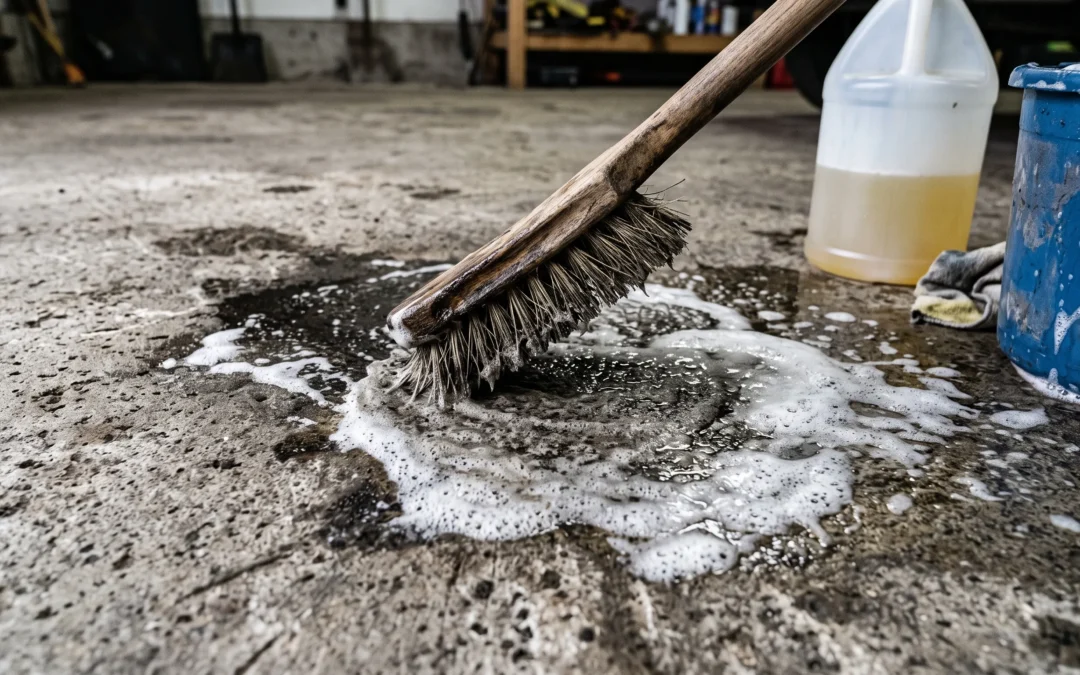
Cleaning a garage floor before epoxy is really decontamination: getting oil, grease, silicone, rust and old residue out of the concrete — not just off it — so nothing sits between the slab and the coating. Sweeping and mopping make a floor look clean; epoxy doesn’t care how it looks. Resin bonds to mineral, and anything oily or filmy in the pores is a release agent waiting for its moment. This post covers only the cleaning stage, contaminant by contaminant, plus the one test that tells you when you’re actually done. Grinding and repairs are their own topics; cleaning is what makes them work.
Why “Looks Clean” Isn’t “Bond-Ready”
Concrete is porous, and a garage slab has spent years absorbing what landed on it. Motor oil wicks in and keeps rising back to the surface long after the visible stain is gone. Tire dressings and sprayed lubricants leave silicone films you can’t see at all. Even the dust from ordinary use packs into the pore structure. Epoxy applied over any of this bonds to the contaminant instead of the concrete — and the contaminant isn’t attached to anything. When we strip a failed floor, the peeled patches map the old stains with unsettling accuracy. Cleaning is cheap insurance against becoming a case study on our peeling epoxy repair page.
Start Dry: Sweep and Vacuum First
Counterintuitively, the wash comes later. Start with the garage completely empty, then sweep and shop-vac the whole slab — corners, the door track, along the stem walls. Two reasons for the dry start: wet-mopping loose dirt just turns it into paste that fills the pores, and you need to see the slab’s actual condition — every stain, drip, and mystery patch — before you decide what each one needs. Make a quick map of what you find. Each contaminant below gets its own treatment.
Treating Each Contaminant
Motor oil and grease
The main event. Apply a concrete degreaser generously to each spot, let it dwell ten to fifteen minutes without drying out, scrub hard with a stiff-bristle brush, then rinse — hot water if you can manage it. Now the real test: watch how rinse water behaves on the spot. Beading means oil is still present; repeat the cycle. Old, deep stains can take three or four rounds, and for spots that have been fed oil for years, an enzyme-based cleaner left to work over several days digests what solvents can’t reach. Expect the worst spots to also need aggressive grinding afterward — cleaning gets the oil out of the surface, grinding removes the surface it lived in.
Silicone, tire shine and spray lubricants
The invisible one. Overspray from tire dressing and penetrating lubricants leaves a film that repels coatings completely, and no amount of soap touches silicone. Scrub the parking-spot zones and anywhere you’ve ever sprayed anything with a dedicated residue remover or solvent wipe, and assume contamination is wider than you think — overspray travels. This is the contaminant most DIY floors never address because nobody can see it until the coating fisheyes over it.
Rust stains and paint drips
Rust marks from tools and shelving get a rust remover and a scrub; what matters isn’t the cosmetic shadow (the coating hides that) but any scaly buildup that would sit under the film. Paint drips and splatters must come off entirely — scrape them, and note that whatever paint refuses to release will be handled by grinding anyway. Big painted areas are beyond cleaning; that’s mechanical removal territory.
General grime
Finish with a whole-floor wash: a stiff push broom, a strong alkaline cleaner or concrete detergent, and a thorough rinse — a pressure washer does the rinse best. The goal of this pass is to leave zero cleaner residue behind; detergent film is itself a bond-breaker, so rinse until the runoff is completely clear.
Drying: the Step Impatience Ruins
After the final rinse, the slab needs to dry through, not just surface-dry — 24 hours minimum, 48 in cool or humid weather, with the garage door cracked for airflow. Concrete that looks dry can still hold wash water in its pores, and coating over it traps that water under the film. If your project timeline can’t absorb two drying days, that’s worth knowing now: it’s one reason professional crews clean, grind and coat on a schedule built around dry mechanical prep — our concrete grinding process removes the contaminated surface layer without soaking the slab at all.
The Final Test: Water Tells the Truth
When you believe the floor is clean, pour a little water on every former stain and a few random control spots. Bond-ready concrete drinks it: the water soaks in and darkens the slab within a minute. Any spot where water beads, sits, or spreads without darkening is still contaminated or sealed — mark it and repeat its treatment. This one-minute test outranks every visual judgment you’ll make on this job, and it’s the same check our crews run before any garage floor coating goes down.
One honest boundary to end on: cleaning is necessary and not sufficient. A perfectly decontaminated slab still needs its surface mechanically opened before epoxy can key into it — cleaning removes what blocks the bond; grinding creates the bonding profile the bond lives in. Do both, in that order, and the coating on top finally gets to perform the way the chemistry intends. And once the new floor is in, keeping it clean becomes almost comically easy — see our epoxy floor maintenance guide.
Frequently Asked Questions
Will a pressure washer alone get a garage floor ready for epoxy?
No. Pressure washing rinses surface dirt brilliantly but doesn’t extract oil from the pores, doesn’t touch silicone films, and leaves the slab soaked for a day or two. Use it as the rinse stage after degreasing and scrubbing — not as the cleaning method itself.
What removes old motor oil from concrete before coating?
Repeated cycles of concrete degreaser with dwell time, hard scrubbing, and hot rinsing — verified each round by whether water still beads on the spot. For years-old stains, enzyme cleaners left to work over several days reach oil that solvents can’t, and deep spots should still be ground aggressively afterward.
How long should the floor dry after washing before epoxy?
At least 24 hours, and 48 in cool or humid conditions, with air moving through the garage. The slab must be dry through its surface layer, not just dry to the touch — coating over pore-held wash water is a direct route to blisters and haze.
Does a spotless floor still need grinding before epoxy?
Yes. Cleaning and profiling solve different problems: cleaning removes the contaminants that block adhesion, while diamond grinding opens the sealed, troweled surface so resin can mechanically key into it. Epoxy over clean-but-closed concrete still peels — it just peels clean.
Top Epoxy Flooring handles decontamination, grinding and coating in one professional visit, using VOC-free systems it manufactures itself — limited lifetime warranty on residential floors across Southern California. Call (818) 945-0915 for a free estimate.
Recent Comments