
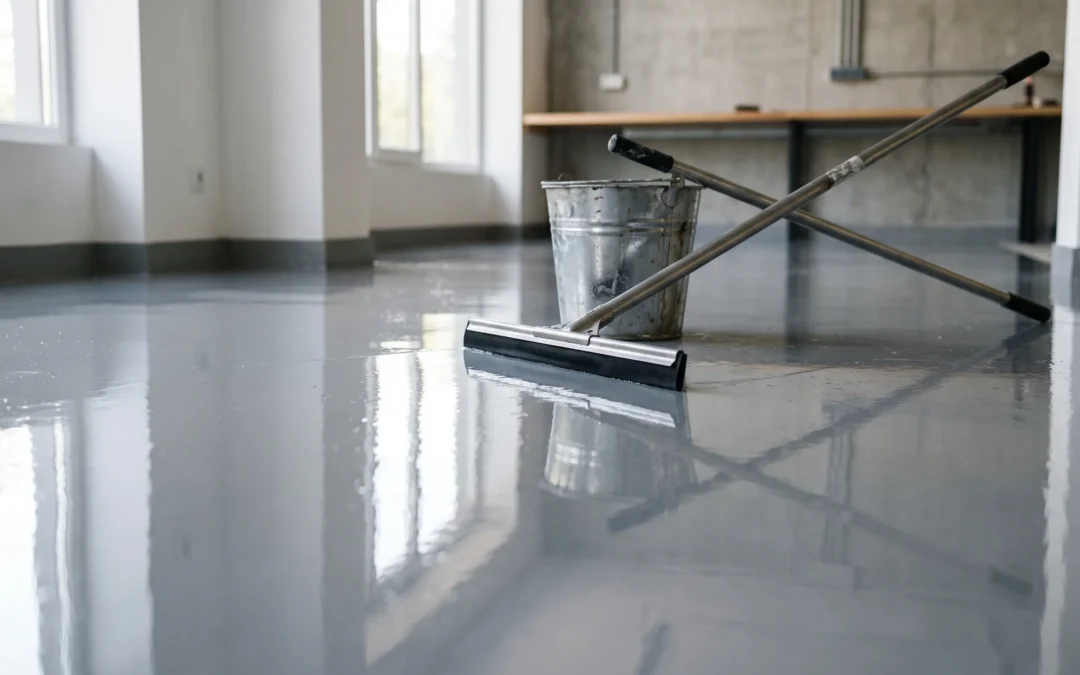
Epoxy flooring is a floor surface created by mixing two liquid components — an epoxy resin and a hardener — and spreading the blend over prepared concrete, where a chemical reaction cures it into a hard, seamless plastic layer bonded directly to the slab. It is not paint. Paint dries by evaporation and sits on the surface; epoxy cures by reaction and becomes part of the floor. The result is a coating many times thicker and harder than any floor paint, resistant to oil, chemicals, abrasion and moisture, and available in finishes that range from plain industrial gray to decorative floors that look like polished stone.
We manufacture and install our own epoxy systems here in Southern California, so this guide comes from the side of the industry that actually formulates the material — not from a marketing page. Here is what epoxy flooring really is, how it works, and where it belongs.
The Chemistry, Without the Chemistry Degree
Every true epoxy is a two-part product. Part A is the epoxy resin. Part B is the hardener — usually an amine compound. On their own, both stay liquid indefinitely. Mixed together, they start an irreversible reaction called crosslinking: the molecules link into a dense three-dimensional network, giving off heat as they go.
That crosslinked network is why a cured epoxy floor behaves nothing like dried paint. You cannot re-dissolve it with water or solvent. It doesn’t soften on a hot day. Dropped tools, rolling toolboxes, and parked vehicles press against a rigid plastic shell rather than a film of pigment. The reaction is also why timing matters during installation — once the two parts meet, the clock is running, and the material must be mixed, spread and detailed before it stiffens in the bucket.
One number tells you a lot about any epoxy product: its solids content. A 100% solids epoxy is all resin — everything in the bucket stays on the floor as cured material. Water-based and solvent-based versions carry the resin in a liquid that evaporates, so a coat that goes on thick can dry down to a fraction of that thickness. This single difference explains most of the gap between a professional floor and a peeling weekend project.
A Coating or a System? Both Words Get Used
People say “epoxy floor” to mean two different things, and it’s worth separating them:
- An epoxy coating is one or two layers of epoxy applied over concrete — a relatively thin build measured in mils (thousandths of an inch). This is what most residential and light commercial floors are.
- An epoxy flooring system is a stack of engineered layers: mechanical preparation of the slab, a basecoat (often a moisture-vapor-barrier epoxy basecoat on slabs that need one), a decorative or functional broadcast layer, and a protective topcoat. Thick industrial versions — self-leveling overlays and troweled slurries — can reach a quarter inch.
Almost everything that goes wrong with epoxy comes from skipping the system and applying only the coating. Epoxy bonds mechanically, into the pore structure of the concrete, which is why professional installation starts with diamond grinding the slab to open it up and create a bonding profile. Coat a sealed, smooth, or contaminated slab and even excellent material will let go.
What Finishes Can Epoxy Flooring Have?
The base chemistry is the same; the look comes from what gets built into the layers. Four decorative systems cover most of what homeowners and business owners choose:
- Flake — colored vinyl chips broadcast into the basecoat until it rejects any more, then locked under a clear topcoat. Textured, forgiving, and the standard for garage floor coatings. Learn more on our flake flooring page.
- Metallic — metallic pigments manipulated in clear epoxy to create marble, lava and pearl effects. No two metallic epoxy floors are alike.
- Solid color — a uniform pigmented finish, clean and architectural. The workhorse for showrooms and commercial space.
- Quartz — colored quartz sand broadcast into the resin for a dense, extremely hard-wearing, slip-resistant surface.
Beyond looks, specialty formulations handle specific abuse: novolac epoxies for harsh chemical exposure, conductive systems for electronics environments, and urethane cement where thermal shock and steam cleaning would destroy ordinary resins.
Where Epoxy Flooring Is Used
Epoxy earned its reputation in factories and aircraft hangars, but the same properties translate everywhere concrete takes abuse:
- Garages — the most common residential application, because a proper system shrugs off hot-tire pickup, oil drips and road grime.
- Commercial and industrial space — warehouses, showrooms, restaurants, breweries and manufacturing floors, where seamless, chemical-resistant surfaces are often a code or hygiene requirement. See our commercial and industrial flooring page.
- Interior living space — basements, laundry rooms and increasingly kitchens and modern living areas, where a seamless decorative floor replaces tile and grout.
- Exteriors — patios, driveways and pool decks, with one caveat: straight epoxy ambers in sunlight, so outdoor work is finished with a UV-stable polyaspartic topcoat or built as a different resin system entirely.
How an Epoxy Floor Actually Gets Installed
Whatever the finish, a professional installation follows the same skeleton. The slab is mechanically prepared — diamond grinding, never just acid etching — then vacuumed clean. Cracks and spalls are repaired. The basecoat goes down and, on decorative systems, media is broadcast into it while it’s wet. Once cured, the excess is scraped and vacuumed off, and the clear topcoat seals everything. On a typical garage that whole sequence takes a single day; metallic floors run three to four days because the design layers each need cure time.
The step people underestimate is the first one. Grinding is loud, dusty work that requires industrial equipment, and it is the difference between a floor that lasts decades and one that peels in a year. It is also the step every shortcut product tells you to skip.
How Long Does Epoxy Flooring Last?
A professionally installed residential system routinely lasts fifteen to twenty years and beyond — long enough that we warranty our residential installs for the life of the floor. Commercial floors under forklifts and constant traffic see a shorter but still impressive service life, and worn topcoats can be recoated without redoing the whole system. The full breakdown, including what shortens or extends those numbers, is in our guide to how long epoxy flooring lasts.
What kills epoxy early is almost never the epoxy. It’s poor preparation, thin bargain material, or moisture pushing up through a slab that needed a vapor barrier and didn’t get one. Choose the system to match the slab and the traffic, and epoxy is one of the most durable finished floors you can put on concrete.
Frequently Asked Questions
Is epoxy flooring the same as epoxy paint?
No. “Epoxy paint” is usually ordinary paint with a small amount of epoxy added, applied in a thin coat that dries by evaporation. True epoxy flooring is a two-part thermoset resin that cures by chemical reaction into a far thicker, harder layer. The two products fail and perform completely differently.
Can epoxy be applied over any concrete floor?
Most structurally sound slabs can be coated after diamond grinding, crack repair and a moisture evaluation. Slabs with heavy moisture vapor need a moisture-vapor-barrier epoxy basecoat first, and badly deteriorated concrete may need resurfacing before any coating goes down.
Is epoxy flooring safe to have inside a home?
Yes. Once cured, epoxy is an inert, easy-to-clean surface that doesn’t harbor dust mites, mold or allergens the way carpet and grout can. Our systems are also VOC-free, so installation doesn’t fill the house with solvent fumes.
What does epoxy flooring cost?
It depends on the condition of your concrete, the square footage, and the system you choose — a one-day flake garage and a multi-day metallic great room are very different projects. The honest answer is a measured quote: we provide free on-site estimates so the number reflects your actual slab.
Top Epoxy Flooring manufactures and installs its own VOC-free epoxy and polyaspartic systems across Southern California, backed by a limited lifetime residential warranty. Call (818) 945-0915 for a free estimate.
Recent Comments